
Roof Leak Repair vs. Full Replacement: How to Decide
Roof leak repair versus full replacement how to decide: get clarity on costs and lifespan. Call (833)-700-4293 for trusted contractor quotes.

By Jessica Reis
Learn more about Roof Repair or Maintenance for guides, costs, and what to expect.
Compare Roof Repair or Maintenance Pros Near You

Enter your ZIP code to compare top-rated local professionals and request free quotes.
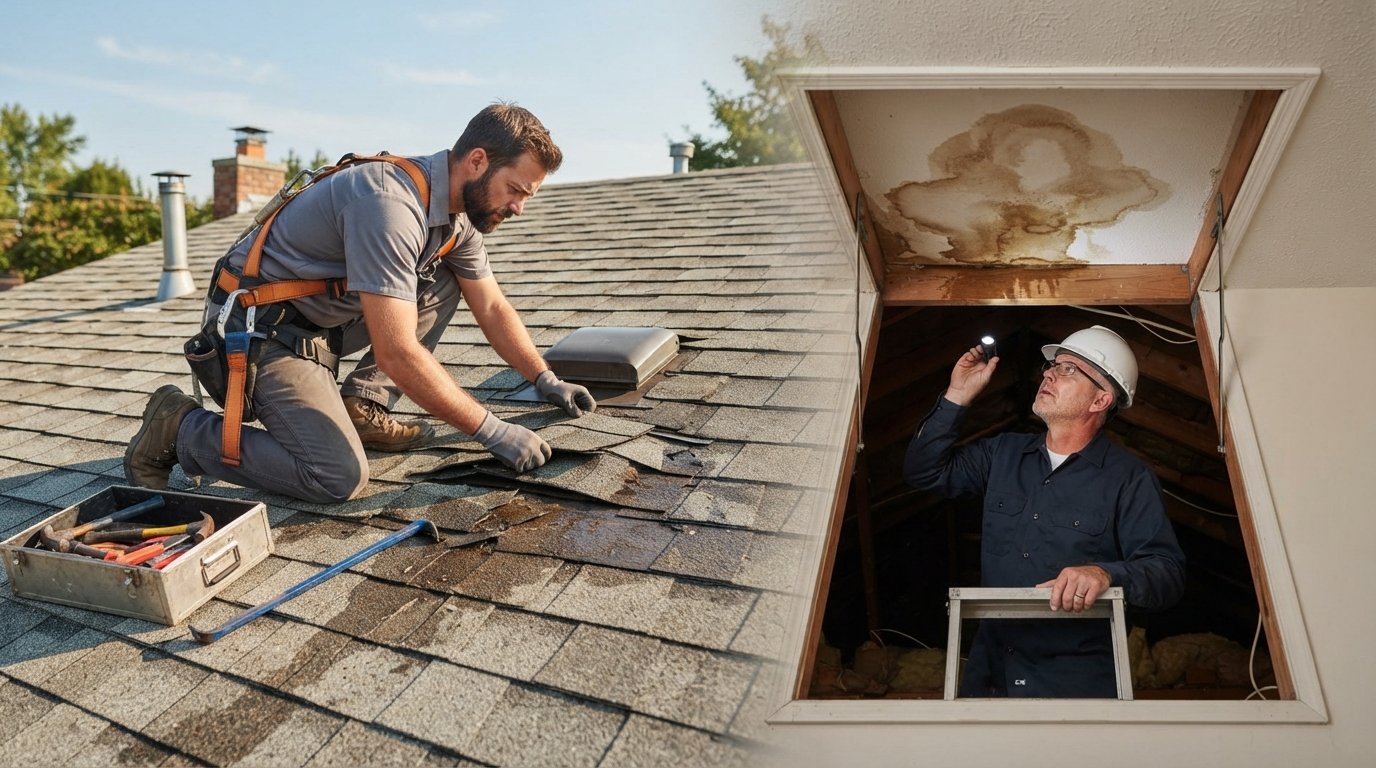
That brown stain spreading across your ceiling is more than an eyesore. It is a warning sign that your roof is failing somewhere, and every rainstorm makes the damage worse. The moment you spot a leak, you face a decision that could cost a few hundred dollars or tens of thousands: should you patch the problem or replace the entire roof? The answer is not always obvious, and the wrong choice can lead to repeated repairs, hidden structural damage, or a premature investment in a roof that had years of life left. This guide walks you through the factors that matter, from roof age and leak location to insurance claims and contractor quotes, so you can make a confident, informed decision.
Start With the Three Non-Negotiables: Age, Location, and Decking
Before you call anyone, gather three key pieces of information: the age of your roof, the exact location of the leak, and the condition of the decking beneath the shingles. These three factors drive nearly every repair-or-replace decision, and they are the first things a professional inspector will assess.
Roof age is the simplest indicator. Asphalt shingles typically last 20 to 25 years, while metal roofs can last 40 to 70 years and tile can last 50 or more. If your roof is already near the end of its expected lifespan, a repair is often a bandage on a failing system. You may fix one leak only to find another next season. Conversely, a 10-year-old roof with a single isolated leak is usually a strong candidate for repair.
Leak location matters just as much. Leaks around chimneys, skylights, vents, and valleys are often caused by failed flashing, which is a localized issue that can be repaired without touching the entire roof. However, leaks that appear in the middle of a roof plane, especially if they are widespread or recurring in different spots, suggest that the underlayment or shingles are failing across a larger area. Multiple leaks in a short period are a red flag that replacement may be more cost-effective than chasing one repair after another.
Decking condition is the hidden wildcard. When water penetrates the shingles, it can rot the wooden decking underneath. Soft, spongy decking or visible water stains in the attic indicate that the damage has spread beyond the surface. If the decking is compromised, a simple patch will not solve the problem; the rotted wood must be replaced, and that often tips the scale toward a full replacement. An inspector should always check the attic and, if possible, probe the decking from above or below to assess its integrity.
What a Professional Inspection Should Cover Beyond Visible Shingles
A thorough roof inspection goes far beyond a quick glance from the ground. A qualified roofer will examine the entire roofing system, including the layers you cannot see. Here is what a proper inspection should include:
- Flashing and seals: Check the metal flashing around chimneys, skylights, vents, and wall intersections for rust, gaps, or loose fasteners.
- Attic and insulation: Look for water stains, mold, or damp insulation, which can reveal leaks that are not yet visible on the ceiling.
- Decking integrity: Probe for soft spots and check for delamination or rot, especially around penetrations.
- Gutter and drainage: Ensure water flows away from the roof properly; poor drainage can cause water to back up under shingles.
- Granule loss and shingle condition: Excessive granule loss, curling, or cracking indicates aging shingles that may not hold up to repair.
Ask the inspector to document their findings with photos and a written report. This documentation is valuable not only for your decision but also for insurance claims and for comparing quotes from multiple contractors. If an inspector only looks at the roof surface and gives you a verbal estimate, consider it a red flag. A professional should be willing to get into the attic and on the roof to give you an honest assessment.
The Cost Equation: Short-Term Repair vs. Long-Term Replacement
Money is often the deciding factor, but the cheapest option upfront is not always the most economical over time. A typical roof leak repair, such as replacing a few shingles or re-flashing a chimney, might cost $300 to $1,500 depending on the complexity and your location. A full roof replacement, on the other hand, can range from $5,000 to $15,000 or more for an average home, with larger or steeper roofs costing significantly more.
To decide, calculate the remaining life of your roof. If your roof is 15 years old and has a 25-year lifespan, you have roughly 10 years left. A $500 repair that buys you a few more years might be worthwhile, but if the roof is 22 years old, that same repair is likely throwing good money after bad. Consider the cost per year of remaining life: a $10,000 replacement on a roof with 10 years left costs $1,000 per year, while a $500 repair that lasts two years costs $250 per year. However, if that repair fails and you end up replacing the roof anyway, you have wasted the repair cost.
Another factor is the risk of collateral damage. A leaking roof can lead to mold growth, ruined insulation, and damaged drywall, which can add thousands to your total cost. If the leak has already caused interior damage, replacing the roof may be the only way to prevent further issues. For homeowners dealing with other plumbing or water issues, our guide on pipe leak repair offers additional insights into managing water damage.
Insurance Claims: When Storm Damage Changes the Math
If your leak was caused by a specific storm event, such as hail, wind, or fallen debris, your homeowner's insurance may cover part or all of the replacement cost. In that case, the decision shifts: you may be able to replace the entire roof for little more than your deductible, making repair less attractive. However, insurance companies are wary of claims for old, worn-out roofs, so documentation is critical.
Here is what to do if you suspect storm damage:
- Document the damage immediately: Take photos of missing shingles, dents, or debris impact, and note the date of the storm.
- Schedule a professional inspection: Ask the roofer to provide a detailed report that distinguishes storm damage from normal wear and tear.
- Contact your insurer: File a claim and provide the inspection report; an adjuster will assess the damage.
- Get multiple contractor quotes: Even with insurance, you want to ensure the scope of work is accurate and fair.
Keep in mind that insurance typically covers sudden, accidental damage, not maintenance-related leaks. If your roof is simply old and worn, a claim will likely be denied. Be honest with your inspector and your insurer about the age and condition of your roof to avoid surprises.
Gathering Quotes: What to Ask and How to Compare
Once you have a clear picture of the damage, get at least three quotes from licensed roofing contractors. But do not just compare bottom-line numbers; ask for itemized scopes of work so you can see exactly what each contractor proposes. Here is what to look for in each quote:
- Repair scope: Which shingles will be replaced? Will flashing be reused or replaced? Is decking repair included?
- Replacement scope: Will they remove the old roof or layer over it? What underlayment and shingles are specified? Is ventilation addressed?
- Warranty: What is covered and for how long? Is the warranty transferable?
- Timeline and payment terms: When can they start, and what is the payment schedule?
Also ask about their license, insurance, and local references. A contractor who is evasive about these details is not worth your time. To simplify the process of finding vetted professionals, consider using a directory like PlanRemodel, which connects homeowners with pre-screened contractors in their area. This can save you hours of research and help you get multiple quotes quickly.
When comparing quotes, beware of unusually low bids. They often indicate cut corners, such as reusing underlayment or skipping decking repairs. A reputable contractor will explain why their price is what it is and will be transparent about what is included. If one quote is significantly lower, ask what they are omitting.
Making the Decision: A Step-by-Step Framework
To bring it all together, follow this simple decision framework:
- Assess age and remaining life: If your roof is more than 75% through its expected lifespan, lean toward replacement.
- Evaluate leak location and frequency: A single, isolated leak in an otherwise sound roof is a repair candidate; multiple leaks or widespread issues point to replacement.
- Inspect the decking: If the decking is soft or rotted, replacement is usually necessary to ensure a proper fix.
- Consider insurance: If storm damage is involved and covered, replacement may be more affordable than you think.
- Get itemized quotes and compare: Use the quotes to see the true cost of each option, including warranties and future maintenance.
If after this analysis you are still on the fence, ask a trusted roofer for their honest recommendation. A good contractor will not push a replacement if a repair will genuinely solve the problem, but they will also tell you if a repair is just delaying the inevitable.
Remember that your roof protects your entire home. A leak is a symptom, not the disease. Fixing the symptom without addressing the underlying cause is a recipe for repeat problems. Whether you choose repair or replacement, make sure the solution addresses the root of the issue, whether that is flashing, decking, or simply the end of the roof's service life.
When you are ready to move forward, reach out to a qualified roofing professional through a trusted platform like USremodel. Their network of independent contractors can provide you with customized quotes, helping you compare options and make the best choice for your home and budget.