
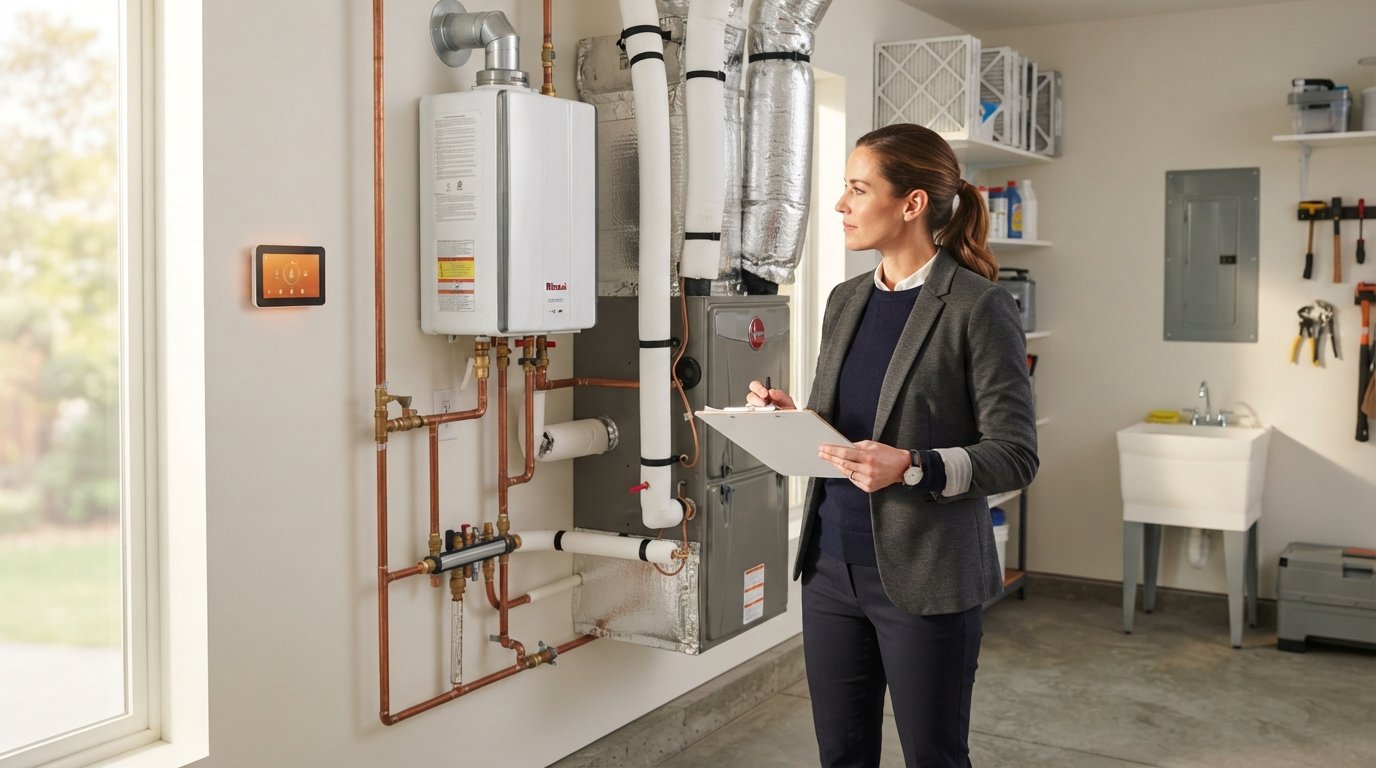
Energy Efficient Appliance and HVAC Upgrades: Best Payback
Which energy efficient appliance and HVAC upgrades with best payback actually cut bills? Call (833)-700-4293 to compare options and get free quotes.

By Jessica Reis
Learn more about Heating System Installation or Replacement for guides, costs, and what to expect.
Compare Heating System Installation or Replacement Pros Near You

Enter your ZIP code to compare top-rated local professionals and request free quotes.
Your old refrigerator hums all day, your water heater groans, and your HVAC system works overtime just to keep the house comfortable. You know upgrades could help, but which ones actually pay you back? With so many options and claims, it is hard to separate hype from real savings. This guide cuts through the noise. We will show you how to prioritize energy efficient appliance and HVAC upgrades with the best payback, so you can lower your bills, boost comfort, and make smart investments that fit your budget and timeline.
Why Payback Matters More Than Ever
Energy costs are unpredictable, and homeowners are feeling the pinch. According to the U.S. Department of Energy, heating and cooling account for over half of a typical home's energy use. Appliances like water heaters, refrigerators, and washers add another significant chunk. Upgrading to efficient models can slash those costs, but the upfront price varies widely. Payback period, the time it takes for energy savings to equal the installation cost, is the clearest way to compare options. A short payback means your investment returns quickly, while a long one ties up capital for years. In 2026, with new tax credits and rebates available, the math is more favorable than ever, but only if you choose wisely.
Compare Payback: Heat Pumps, Water Heaters, Insulation, and Windows
Not all upgrades are created equal. Some deliver fast returns, while others are long-term plays. Here is how the most common improvements stack up based on national averages and real-world data.
Heat Pumps: The Efficiency Champion
Heat pumps are having a moment. They heat and cool your home using electricity, moving heat rather than generating it. Modern heat pumps can be two to four times more efficient than furnaces or baseboard heaters. The payback period typically ranges from 5 to 10 years, depending on your climate and current fuel source. In milder regions, payback can be even faster. With federal tax credits of up to $2,000 for qualified heat pumps through 2026, the effective cost drops significantly. If you are replacing an old electric resistance system or an aging AC and furnace combo, a heat pump is often the top contender for best payback.
Water Heaters: Quick Wins with Heat Pump Models
Water heating is the second-largest energy expense in most homes. Traditional tank water heaters waste energy keeping water hot 24/7. Heat pump water heaters (HPWHs) use about 60% less electricity than standard electric models. The payback period for a HPWH is usually 4 to 8 years, and many utilities offer rebates that shorten it further. If your current water heater is over 10 years old, upgrading to a HPWH is one of the fastest payback moves you can make. Tankless gas models also offer savings, but their payback is longer and depends on gas prices.
Insulation and Air Sealing: The Envelope First
Before you spend thousands on a new HVAC system, look at your home's envelope. Leaky ducts, insufficient insulation, and air leaks can undermine even the most efficient equipment. Adding insulation in attics and crawl spaces, and sealing gaps around windows and doors, often costs far less than a major appliance upgrade and can cut heating and cooling bills by 10% to 20%. Payback is frequently under 3 years, making it the undisputed king of quick returns. Many utilities offer free or low-cost home energy audits to identify exactly where your home leaks.
Windows: A Long Game
Replacing single-pane windows with ENERGY STAR certified models improves comfort and reduces drafts, but the payback period is long, often 15 to 25 years. That is because windows are expensive and their energy savings, while real, are modest compared to other upgrades. Unless your windows are broken or you are remodeling for aesthetic reasons, it is usually better to invest in insulation and air sealing first. If you do replace windows, choose models with a low U-factor and solar heat gain coefficient appropriate for your climate.
To summarize, here is a quick ranking of typical payback periods for common upgrades:
- Insulation and air sealing: 2 to 5 years
- Heat pump water heater: 4 to 8 years
- Heat pump HVAC: 5 to 10 years
- Window replacement: 15 to 25 years
These are averages; your actual payback will vary based on local energy prices, climate, and how you use your home. The key is to start with the envelope, then move to appliances and HVAC.
How Home Envelope Leaks Undercut Appliance Efficiency Gains
Imagine installing a top-of-the-line heat pump only to have conditioned air escape through gaps in your attic and ducts. That is a common scenario. Your home's envelope, the barrier between indoor and outdoor air, must be tight for HVAC and appliances to perform at their rated efficiency. Leaky ducts alone can waste 20% to 30% of the energy your system produces. Similarly, poor insulation forces your system to run longer and work harder. Before upgrading any equipment, invest in a blower door test and duct sealing. Many contractors will include these diagnostics in their quotes. Fixing envelope issues first ensures that every dollar you spend on efficient appliances delivers maximum savings.
Rebates and Tax Credits: Check Before You Buy
In 2026, homeowners have access to a range of incentives that can dramatically improve payback. The federal Inflation Reduction Act offers tax credits for qualified heat pumps, heat pump water heaters, insulation, and windows. State and local programs add rebates on top. For example, many utilities offer $500 to $1,500 for heat pump water heaters and several thousand for whole-home heat pumps. Before you purchase, check the Database of State Incentives for Renewables and Efficiency (DSIRE) and your utility's website. Also, ask your contractor if they handle rebate paperwork; some do. These incentives can turn a marginal project into a stellar one. For a deeper dive into available credits, see our guide on energy efficient HVAC upgrades: tax credits for 2026.
Sizing Mistakes That Erase Efficiency Gains
Even the most efficient equipment will underperform if it is incorrectly sized. An oversized air conditioner will short-cycle, failing to remove humidity and wasting energy. An undersized unit will run constantly and never keep up. Proper sizing requires a Manual J load calculation, which takes into account your home's square footage, insulation, windows, and local climate. Many contractors skip this step and simply replace like-for-like. Insist on a load calculation before signing a contract. The same applies to water heaters: a heat pump water heater that is too small for your household will struggle, while an oversized one wastes money. Correct sizing is free (it is part of a good quote) and is essential for achieving the payback you expect.
Getting Contractor Quotes That Include Efficiency Ratings and Load Calculations
When you request quotes, ask for specific details. A reputable contractor will provide equipment efficiency ratings (such as SEER2 for ACs, HSPF2 for heat pumps, and UEF for water heaters) and a load calculation summary. They should also explain how the new equipment integrates with your existing ductwork and insulation. Do not accept vague promises of savings. Instead, ask for a projected annual energy cost based on your current usage and the new system's efficiency. Get at least three quotes to compare. USremodel can connect you with licensed contractors in your area who provide detailed, no-obligation estimates. By comparing efficiency ratings and load calculations side by side, you can identify which upgrades offer the best payback for your specific home.
If you are also considering solar to offset your new electric appliances, exploring free solar power quotes can help you understand how solar could further reduce your energy bills and improve overall payback.
Upgrading your home's energy efficiency is one of the smartest financial moves you can make. By focusing on upgrades with the best payback, starting with your home's envelope, taking advantage of incentives, and insisting on proper sizing and detailed quotes, you can enjoy lower bills and greater comfort for years to come. Ready to take the next step? Reach out to USremodel to get matched with qualified contractors who can help you prioritize your projects and maximize your savings.