
Solar Plus Battery Storage Planning for Homeowners
Plan your solar plus battery storage with confidence. Call (833)-700-4293 to compare quotes and maximize savings.

By Justin Blake
Learn more about Solar Panel Installation and Repair for guides, costs, and what to expect.
Compare Solar Panel Installation and Repair Pros Near You

Enter your ZIP code to compare top-rated local professionals and request free quotes.
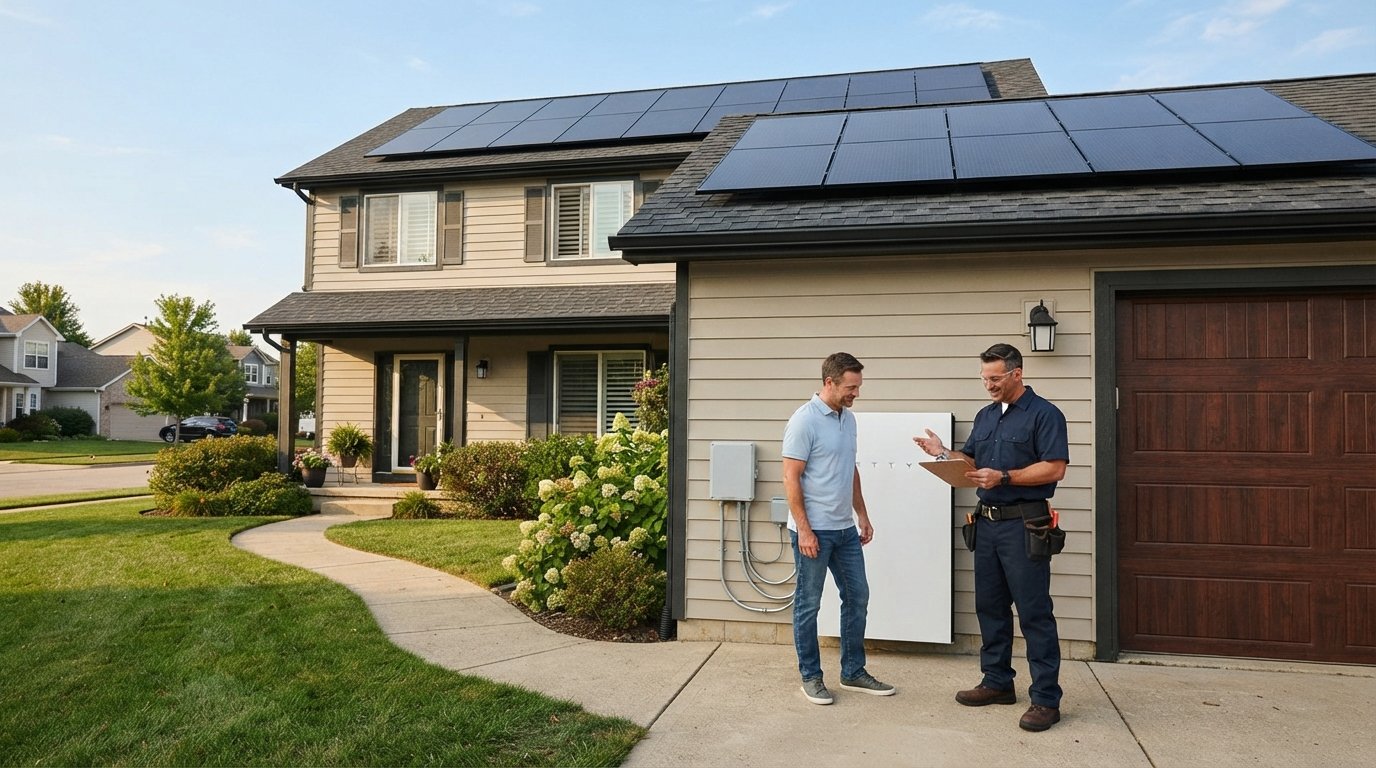
When you picture a solar-powered home, you probably imagine panels on the roof and a lower electric bill. But for many homeowners, the real game-changer is adding battery storage. A solar-plus-storage system doesn't just generate electricity; it stores it for when you need it most, whether that's during a blackout or at night when utility rates spike. If you're considering panels, planning for battery storage from the start can save you money, headaches, and future retrofits. This guide walks you through the critical decisions, from evaluating your roof to comparing installer proposals, so you can make an informed investment.
Why Battery Storage Changes the Value of Solar
Solar panels alone reduce your reliance on the grid during daylight hours, but without storage, excess energy is sent back to the utility (often for a credit under net metering). Battery storage lets you keep that energy for later use, which is especially valuable if your utility's net metering policies change or if you want backup power during outages. In many regions, utilities are moving away from full retail net metering, meaning the credits you earn for exported solar are lower than the retail rate. A battery allows you to self-consume more of your solar production, maximizing savings.
Moreover, battery storage provides resilience. With extreme weather events becoming more common, having a backup power source can keep your lights on, refrigerator running, and medical devices operational. For homeowners in areas with unreliable grids, this peace of mind is priceless. But to get the most out of your investment, you need to plan carefully. The decisions you make now about system size, equipment, and installation will determine how well your system performs for decades.
Assessing Your Home's Solar Readiness
Before you even think about battery models, you need to ensure your home is a good candidate for solar. The condition of your roof is paramount. If your roof is nearing the end of its life (typically 20-25 years for asphalt shingles), it's wise to replace it before installing solar panels. Otherwise, you'll face the costly process of removing and reinstalling panels when the roof needs replacement. A solar installer will typically inspect your roof for structural integrity, age, and shading.
Shading is another critical factor. Even partial shading on a panel can significantly reduce its output. Installers use tools like shade analysis to determine the best placement. You may need to trim trees or choose microinverters or power optimizers to mitigate shading issues. Also, consider the orientation and tilt of your roof. South-facing roofs are ideal in the Northern Hemisphere, but east or west-facing roofs can still work well, especially with battery storage to shift production to evening hours.
Beyond the roof, evaluate your electrical panel. Older homes may have panels that cannot accommodate the additional solar and battery circuits. An upgrade might be necessary, adding to the cost. It's also important to think about where the battery will be installed. Batteries are large and heavy; they can be installed indoors (garage, utility room) or outdoors, but temperature extremes can affect performance. Ensure the location meets local building codes and manufacturer specifications.
Understanding Utility Interconnection and Net Metering
Connecting your solar-plus-storage system to the grid involves a process called interconnection. Your utility company must approve the system before it can be turned on. The rules vary widely by state and utility, so it's essential to research local requirements early. Some utilities have capacity limits for solar systems, and adding a battery may require additional approvals. Your installer should handle the paperwork, but you should understand the key questions to ask.
Net metering is a major financial consideration. Under traditional net metering, you receive a credit for each kilowatt-hour (kWh) you export to the grid at the retail rate. However, many utilities are transitioning to lower export rates or time-of-use (TOU) rates. With TOU rates, electricity is more expensive during peak demand periods (e.g., late afternoon and evening). A battery allows you to store excess solar during the day and use it during peak times, avoiding high rates. Ask your utility: What is the current net metering policy? Are there different rates for solar customers? Will adding a battery affect my eligibility? These questions will help you model potential savings accurately.
Incentives and Financing for Solar Plus Storage
The federal solar Investment Tax Credit (ITC) currently offers a 30% tax credit for solar and battery storage systems installed through 2032. This credit applies to the total cost of the system, including equipment and installation. Many states and local jurisdictions offer additional incentives, such as rebates, property tax exemptions, or sales tax holidays. Combining these incentives can significantly reduce your upfront cost.
Financing options include cash, solar loans, leases, and power purchase agreements (PPAs). Cash purchases offer the best long-term return, but not everyone has the capital. Solar loans work like a home improvement loan, with monthly payments that may be offset by energy savings. Leases and PPAs allow you to pay a monthly fee for the solar energy produced, often with no upfront cost, but you may not own the system and may miss out on tax credits. For battery storage, some lenders offer specific green loans. Be sure to compare terms and consider how long you plan to stay in your home.
Comparing Installer Proposals: What to Look For
When you request quotes from solar installers, you'll likely receive proposals with different equipment, production estimates, and pricing. It's crucial to compare them apples-to-apples. Here's what to scrutinize:
- Equipment quality: Look up the brands of panels, inverters, and batteries. Tier-1 manufacturers with strong warranties are preferable. Battery storage should have a warranty of at least 10 years.
- Production estimates: Installers use modeling software to predict annual energy production. Ensure they account for shading, local weather, and system losses. Ask for the assumptions behind the numbers.
- System size and battery capacity: A larger system may produce more, but battery capacity determines how much backup you have. Match the battery size to your critical loads (e.g., refrigerator, lights, internet) and desired backup duration.
- Warranties and service: Check the workmanship warranty and the manufacturer warranties on components. Also, ask about monitoring and maintenance services.
- Financial projections: Review the expected savings and payback period. Be wary of overly optimistic assumptions about utility rate increases or net metering.
Don't hesitate to ask for references and to visit installed sites if possible. A reputable installer will be transparent and patient with your questions. For a deeper dive into costs and savings, see our guide on solar panel installation cost and savings.
Designing Your System for Resilience and Savings
When sizing your battery, consider your backup needs. Do you want to power your whole home during an outage, or just essential circuits? Whole-home backup requires a larger battery and possibly a smart electrical panel to manage loads. Essential circuit backup is more affordable and can still keep your critical devices running. Work with your installer to define your priorities.
Also, think about future expansion. If you plan to add an electric vehicle or heat pump later, you may need a larger solar array and battery. Some inverters and batteries are modular, allowing you to add capacity later. However, it's often cheaper to install a larger system upfront than to retrofit. Discuss your long-term plans with your installer.
Finally, consider the role of energy management. Many battery systems come with apps that allow you to monitor production and consumption, and some can automatically switch to battery power during peak rate periods. This smart functionality can maximize your savings. Ensure the system you choose supports the features you want, such as time-of-use optimization and storm watch (which pre-charges the battery when a storm is forecast).
Common Pitfalls to Avoid
Homeowners often make mistakes during the planning phase that can cost them later. One common pitfall is ignoring roof condition. As mentioned, replacing a roof after solar installation is expensive. Another is underestimating battery capacity; a battery that's too small won't provide meaningful backup. Also, don't overlook the importance of a reputable installer. Poor installation can lead to performance issues, safety hazards, and voided warranties. Always verify licenses, insurance, and reviews. For maintenance and repairs beyond solar, such as roofing or electrical work, you can find vetted professionals through platforms like Repairmen, which connects homeowners with local service experts.
Another pitfall is failing to understand the fine print of financing. Some solar loans have dealer fees that increase the principal, or balloon payments. Read the terms carefully. And be cautious of high-pressure sales tactics; take your time to compare multiple quotes.
Steps to Plan Your Solar Plus Battery System
To streamline the process, follow these steps:
- Evaluate your energy usage: Review 12 months of utility bills to understand your consumption patterns and identify times of high usage.
- Assess your roof and site: Hire a roofing professional if needed, and have a solar installer perform a shade analysis.
- Research incentives and financing: Explore federal, state, and local incentives, and get pre-approved for financing if needed.
- Request multiple quotes: Obtain at least three proposals from reputable installers, and compare equipment, warranties, and production estimates.
- Review contracts carefully: Ensure all promises are in writing, including timelines, warranties, and performance guarantees.
- Schedule installation and interconnection: Once you choose an installer, they will handle permits and utility interconnection.
By following these steps, you can avoid common mistakes and ensure a smooth installation.
Maximizing Your Return on Investment
A solar-plus-storage system is a significant investment, but with proper planning, it can pay for itself through energy savings and provide valuable backup power. To maximize your ROI, consider the following strategies: take advantage of all available incentives, size the system appropriately for your current and future needs, choose high-quality equipment with strong warranties, and work with an experienced installer who can optimize system design. Also, monitor your system's performance regularly and perform routine maintenance, such as cleaning panels and checking battery health.
Finally, stay informed about changes in utility rates and policies. As net metering evolves, having battery storage will become even more valuable. By planning ahead, you can future-proof your investment and enjoy the benefits of clean, reliable energy for years to come.
Ready to take the next step? Contact us at (833)-700-4293 to discuss your solar-plus-storage options and get connected with trusted local installers.