
Which Home Repairs Are Safe to DIY and Which Require a Pro
Know which home repairs are safe to DIY and which require a pro. Call (833)-700-4293 to compare licensed contractors and avoid costly rework.

By Eric Andrew
Learn more about Handyman for guides, costs, and what to expect.
Compare Handyman Pros Near You

Enter your ZIP code to compare top-rated local professionals and request free quotes.
Every homeowner eventually faces a repair that looks simple enough to tackle alone, until a small leak becomes a flooded basement or a swapped outlet turns into a code violation. The real question is not whether you are handy, but whether the specific job carries hidden risks that outweigh the savings. Understanding which home repairs are safe to DIY and which require a pro comes down to a clear framework: permits, safety hazards, and the true cost of a failed attempt. This guide breaks down that framework so you can decide with confidence, protect your investment, and know exactly when to call in a licensed contractor.
The Three Tests That Separate Safe DIY From Risky DIY
Before you pick up a tool, run the project through three filters. The first is the permit test. Most municipalities require permits for structural changes, electrical work beyond swapping a light fixture, plumbing alterations, and any addition or removal of walls. If a permit is required, the work typically must be inspected, and many jurisdictions only allow licensed professionals to pull certain permits. Skipping that step creates a paper trail problem that can surface years later during a sale or insurance claim.
The second is the safety test. Ask whether a mistake could cause fire, flooding, structural collapse, or injury. Electrical work, gas lines, roof work above one story, and anything involving load-bearing walls fail this test immediately. The third is the hidden damage test. Some repairs look cosmetic but sit on top of systems that are expensive to fix once disturbed, such as tile over a failing waterproof membrane or siding over rotted sheathing. When any of these tests raises a red flag, the job belongs in the professional column.
Here is a quick reference for common projects and where they usually land:
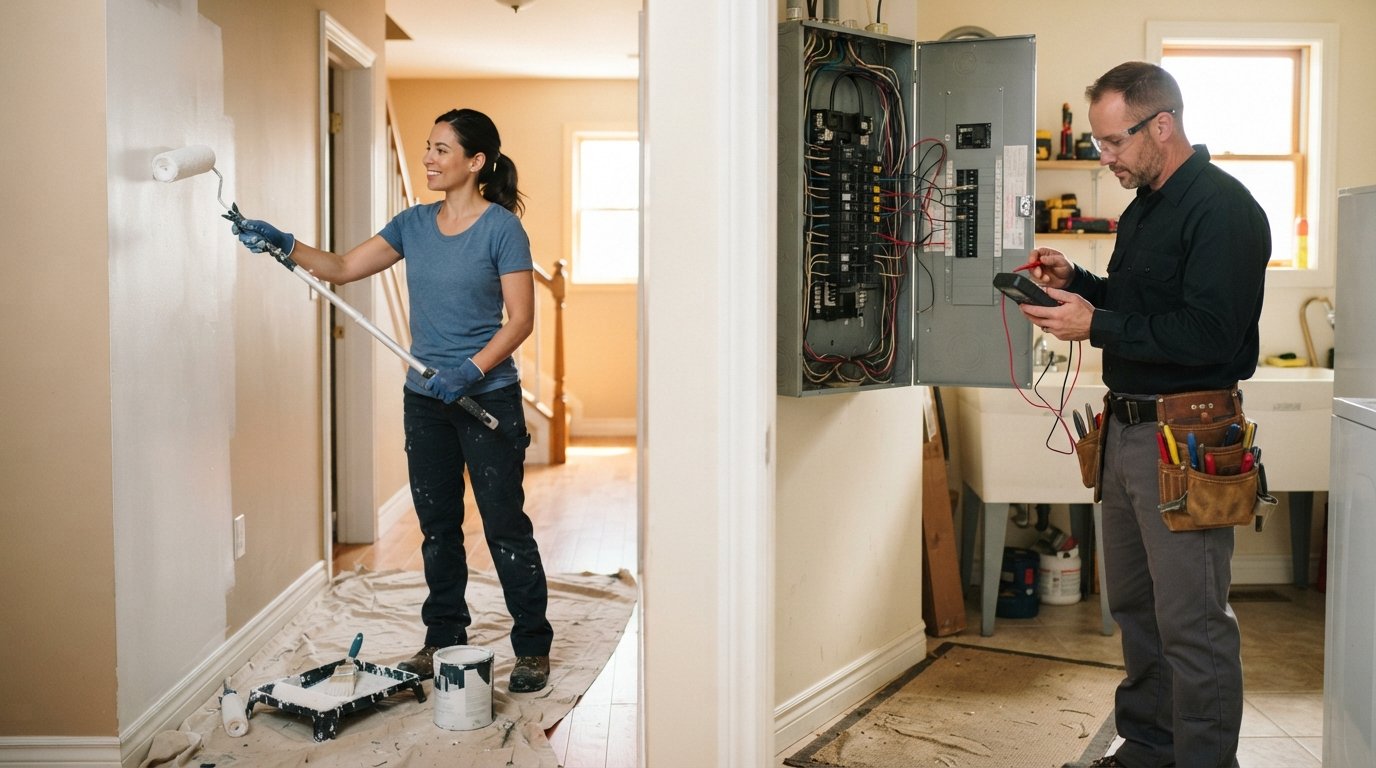
- Safe for most homeowners: painting, caulking, replacing a toilet seat or showerhead, patching small drywall holes, installing shelves with proper anchors, and swapping light bulbs or fixtures that plug in.
- Proceed with caution: replacing a faucet, installing a dishwasher, laying laminate flooring, and assembling flat-pack cabinetry, all of which are doable but unforgiving of measurement or connection errors.
- Hire a pro: electrical panel work, gas appliance installation, roof repairs, foundation cracks, load-bearing wall removal, and any plumbing inside walls.
This list is a starting point, not a substitute for local rules. Your city or county building department website lists exactly which projects need permits, and a five-minute phone call can save you thousands in rework. If a project sits near the line, treat the permit requirement as the deciding vote.
Where a Failed DIY Job Costs More Than Hiring Out
The math on DIY is seductive: a $200 faucet versus a $500 plumbing bill. But that math only works if the job succeeds on the first attempt. When a DIY repair fails, the cost is rarely limited to redoing the work. Water damage from a poorly connected supply line can run into the thousands once drywall, flooring, and cabinetry are involved. An improperly wired outlet can overheat and start a fire inside a wall, a failure that insurance companies may investigate closely. Roof patches done without proper flashing often leak at the next storm, and by then the decking underneath has begun to rot.
There is also the time cost. A professional plumber replaces a shutoff valve in under an hour because they carry the right parts and have done it hundreds of times. A first-time DIYer may make three trips to the hardware store, damage the pipe threads, and still need to call someone. When you add up materials, tool purchases, and your weekend, the savings often evaporate. The projects where DIY genuinely pays off are the ones with low material cost, low risk, and high labor hours: painting, landscaping, simple carpentry, and cosmetic updates.
For a deeper comparison of when to pick up the tools versus when to delegate, our guide on DIY vs hiring a professional contractor walks through the tradeoffs in more detail. The short version: DIY wins on cosmetic, reversible projects, and professionals win whenever the work touches water, electricity, gas, structure, or anything that requires an inspection.
Insurance and Resale Consequences of Unpermitted Work
Unpermitted work is one of the most expensive mistakes a homeowner can make, and the damage often stays hidden until the worst possible moment. If a fire or flood originates in work that was done without a permit, your insurer may deny or reduce the claim on the grounds that the work was noncompliant. Even when a claim is paid, the investigation can stall repairs for months while you prove what was done and when.
Resale is the other landmine. Most buyers, and virtually all mortgage lenders, require disclosure of unpermitted work. An inspection that reveals a finished basement without permits, a deck built without footings, or a bathroom added without plumbing inspection can kill a sale or force you to pay for retroactive permits and corrections. In competitive markets, buyers simply walk away rather than inherit the risk. The cost of doing it right the first time is almost always lower than the cost of fixing it under deadline pressure during escrow.
This is why the permit question belongs at the very start of any project, not the end. If you are planning work that touches major systems, it pays to line up licensed professionals who can pull permits, schedule inspections, and document the work. Platforms like ContractorHomeQuotes help homeowners compare local contractors and understand typical project costs before committing, which makes it easier to separate a fair bid from a suspiciously cheap one that skips permits.
How to Scope a Hybrid Project With a Contractor
Many projects are not fully DIY or fully professional. A kitchen refresh might involve you painting cabinets and the contractor handling electrical and plumbing. A bathroom update might have you demo the tile while a licensed plumber moves the drain. Hybrid projects can save real money, but only when the scope is divided cleanly and in writing. The most common failure is overlap: the homeowner starts demo before the contractor has capped the water lines, or the contractor arrives to find the homeowner already installed cabinets that are not level.
Follow a simple sequence to keep a hybrid project on track:
- Define the licensed work first. List every task that requires a permit or a licensed trade, and get bids for those items before you decide what to keep.
- Agree on the handoff points in writing. Specify who removes what, when the site must be clean, and what condition the space must be in before each phase begins.
- Schedule inspections around your own work. Never cover licensed work with drywall, tile, or flooring before it has been inspected and signed off.
- Keep a shared photo log. Document each stage so you have proof of the work performed, which matters for insurance and resale.
Be honest with your contractor about what you plan to do yourself. Good contractors will tell you where DIY creates risk for their warranty, and many will refuse to warranty work that abuts homeowner-installed systems. That is not gatekeeping; it is how they protect both of you. If you want the project to move faster and with fewer surprises, consider letting a single professional manage the full scope and using DIY only for the cosmetic finish work at the end.
Building Your Personal Decision Checklist
The most reliable way to answer which home repairs are safe to DIY and which require a pro is to build a short checklist you apply to every project. Start with the permit question, then the safety question, then the failure-cost question. If any answer points toward risk, get quotes before you buy a single material. This habit prevents the most common homeowner mistake: starting a job, discovering a hidden problem, and paying emergency rates to finish it.
It also helps to know your own limits. Confidence is not competence, and the projects that injure homeowners most often are the ones they felt sure about: ladders, roof edges, electrical panels, and gas connections. A good rule is that if the job requires working at height, opening a service panel, or touching a gas line, the answer is a professional, every time. For everything else, weigh the cost of materials and your time against a bid, and remember that a licensed contractor brings insurance, permits, and a warranty that a weekend attempt cannot match.
When you are ready to get real numbers, gather multiple quotes and compare scope line by line, not just the bottom line. The cheapest bid is often the one that omits permits or skimps on materials. A small amount of upfront research, including a clear list of what you will handle and what you will delegate, turns a stressful repair into a predictable project with no surprises.
Learn more about Handyman for guides, costs, and what to expect.
Compare Handyman Pros Near You
Enter your ZIP code to compare top-rated local professionals and request free quotes.