
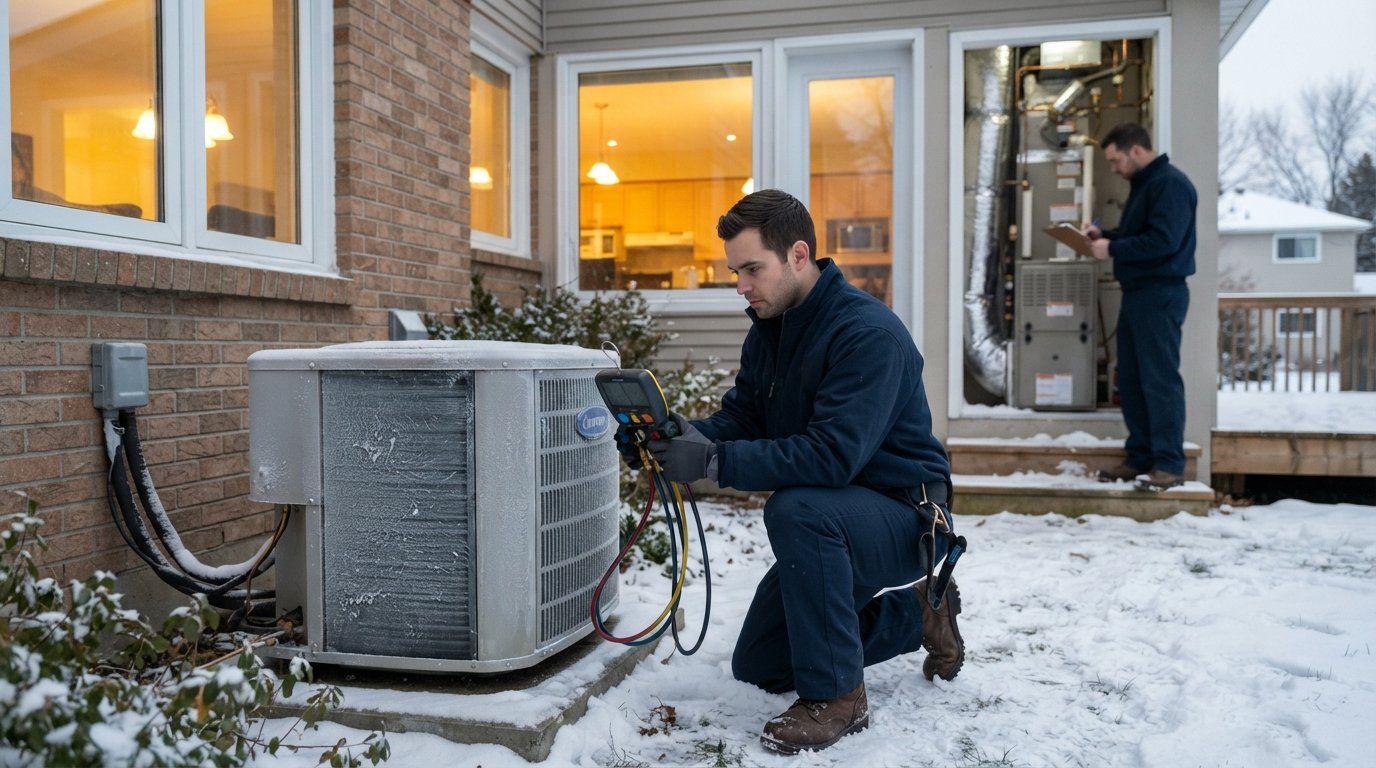
Heat Pump vs Furnace: Cold Climate Upgrade Guide
Compare heat pump vs furnace energy efficient upgrade for cold climates, including rebates and operating savings. Call (833)-700-4293 for trusted local HVAC quotes.

Learn more about Heating System Installation or Replacement for guides, costs, and what to expect.
Compare Heating System Installation or Replacement Pros Near You

Enter your ZIP code to compare top-rated local professionals and request free quotes.
When winter temperatures drop below freezing for weeks at a time, the choice between a heat pump and a furnace stops being a simple preference and becomes a serious financial and comfort decision. Homeowners in cold climates often hear conflicting advice: heat pumps are the future, furnaces are the tried-and-true workhorse, or some combination of both. The truth is that the right answer depends on your climate zone, your home's existing ductwork and insulation, available rebates, and how long you plan to stay in the house. This guide breaks down the real-world efficiency math, upfront costs, and long-term savings so you can make an informed upgrade decision with confidence.
How Cold Climate Zones Change the Efficiency Math
Heat pumps and furnaces are rated differently, and those ratings mean very different things once the outdoor temperature plummets. A furnace's efficiency is measured by its annual fuel utilization efficiency (AFUE), which typically ranges from 80% to 98%. That number stays relatively stable regardless of outdoor temperature because combustion happens inside the unit. A heat pump, by contrast, moves heat rather than generating it, and its efficiency is measured by coefficient of performance (COP) or heating seasonal performance factor (HSPF). The critical detail is that a standard air-source heat pump's capacity and efficiency decline as the outdoor air gets colder.
In mild climates, a heat pump can deliver two to four units of heat for every unit of electricity consumed, making it far more efficient than even a 98% furnace. But in a cold climate where design temperatures hit 5°F or lower, a standard heat pump may struggle to keep up, and its backup electric resistance strips kick in. Those strips are essentially 100% efficient, which sounds good until you compare them to a furnace or a cold-climate heat pump. Modern cold-climate heat pumps use variable-speed compressors and enhanced vapor injection to maintain capacity and efficiency at temperatures as low as -13°F, which changes the equation significantly.
Your actual climate zone matters more than any generic label. The U.S. Department of Energy divides the country into climate zones 1 through 8, with zones 5 through 8 representing cold and very cold climates. If you live in zone 5 or higher, you should specifically ask contractors for cold-climate heat pump models rated for your design temperature, not standard models that perform well only in mild weather. A qualified HVAC professional can run a Manual J load calculation to determine exactly how much heating capacity your home needs on the coldest day of the year, which is the only reliable way to compare systems fairly.
Upfront Cost vs. Long-Term Operating Savings
The sticker price of a new furnace is often lower than a heat pump, but that comparison is incomplete. A high-efficiency gas furnace might cost $3,500 to $7,000 installed, while a cold-climate heat pump system typically runs $6,000 to $12,000 or more depending on whether ductwork modifications are needed. However, a heat pump also provides central air conditioning, which means you may be replacing both your furnace and your air conditioner with a single system. When you factor in the avoided cost of a separate AC unit, the gap narrows considerably.
Operating costs depend heavily on local utility rates and how the system is configured. In regions with inexpensive natural gas, a 95% AFUE furnace can be cheaper to run than a heat pump during the coldest months, especially if the heat pump relies on electric resistance backup. In areas with high gas prices or expensive propane, a cold-climate heat pump often wins on annual operating cost. Many homeowners in cold climates choose a dual-fuel or hybrid setup: a cold-climate heat pump handles most of the heating season, and a gas furnace takes over only when temperatures drop below the heat pump's economic balance point. This approach captures the efficiency of the heat pump for the majority of the year while preserving the furnace's capacity for extreme cold.
To estimate your own savings, gather these inputs before you request quotes:
- Your local electricity rate per kWh and natural gas or propane rate per therm or gallon.
- Your home's annual heating load in BTUs (ask for the Manual J result).
- The rated COP or HSPF of the proposed heat pump at your design temperature.
- The AFUE of the proposed furnace and its fuel type.
- Any utility time-of-use rates or demand charges that affect heat pump operation.
With those numbers, a contractor can calculate the estimated annual operating cost of each option side by side. Be wary of any quote that compares a heat pump's efficiency at 47°F to a furnace's efficiency at design temperature; that is not an apples-to-apples comparison and will overstate heat pump savings in a cold climate.
Rebates and Incentives Homeowners Should Ask About
Federal, state, and utility incentives can dramatically change the payback period for a heat pump upgrade. The Inflation Reduction Act created a suite of tax credits and rebates that remain available in 2026, including a federal tax credit covering up to 30% of the cost of qualifying heat pump installations, capped at $2,000 per year for heat pumps. Many states and utilities add their own rebates on top of that, and some low- and moderate-income households qualify for point-of-sale rebates that can cover a substantial portion of the project cost. For a deeper breakdown of what is currently available, see this guide on energy efficient HVAC upgrades tax credits for 2026.
Furnaces also qualify for incentives in some cases, particularly high-efficiency condensing models, but the incentive landscape generally favors heat pumps more heavily. When you request quotes, ask each contractor specifically which rebates they can help you document and whether they participate in utility programs that require approved installer status. Some rebates require the contractor to be on an approved list, and some require specific equipment efficiency ratings that vary by region. A knowledgeable contractor will know which programs apply to your address and will include the paperwork in the project scope.
Do not overlook local utility programs and state energy offices. Many cold-climate states run aggressive heat pump incentive programs because heat pumps reduce peak demand and help meet climate goals. These programs sometimes include free or reduced-cost home energy assessments, which can identify insulation and air sealing improvements that should happen before or alongside the HVAC upgrade. Combining weatherization incentives with HVAC incentives often delivers a better return than either measure alone.
When Ductwork and Insulation Must Be Addressed First
A heat pump is only as good as the duct system and building envelope it works with. If your ducts leak 20% to 30% of conditioned air into the attic or crawlspace, a high-efficiency heat pump will not deliver the savings you paid for. Cold-climate heat pumps move a larger volume of air at a lower temperature than furnaces, which means duct sizing and sealing become even more critical. Oversized or undersized ducts can cause comfort complaints, premature equipment wear, and reduced efficiency. Before committing to any HVAC upgrade, ask for a duct leakage test and a static pressure measurement.
Insulation and air sealing are equally important. A home with poor attic insulation and significant air infiltration will lose heat faster than the HVAC system can replace it, regardless of the equipment's rated efficiency. In many cold-climate homes, the most cost-effective first step is a comprehensive energy audit followed by air sealing and insulation upgrades. These improvements reduce the heating load, which may allow you to install a smaller, less expensive heat pump or furnace and still maintain comfort. Some contractors will recommend a hybrid approach: weatherize first, then size and install the new system based on the improved load calculation.
If your home lacks ductwork entirely, a ductless mini-split heat pump system may be the best option. These systems avoid duct losses altogether and allow zone-by-zone control, which can be ideal for older homes or additions. The tradeoff is higher upfront cost per zone and the need for wall-mounted or ceiling-mounted indoor units. For homes with existing ductwork in poor condition, a contractor may recommend duct sealing, duct replacement, or a ductless system depending on the cost comparison.
Choosing the Right System for Your Cold Climate Home
The decision between a heat pump and a furnace is rarely all-or-nothing. In cold climates, the most practical and efficient upgrades often fall into one of three categories: a cold-climate heat pump as a standalone system, a dual-fuel hybrid system pairing a heat pump with a furnace, or a high-efficiency furnace with a separate air conditioner. Each has tradeoffs in upfront cost, operating cost, complexity, and comfort.
A standalone cold-climate heat pump makes the most sense when your home is well insulated, your ducts are in good condition, and your electricity rates are reasonable relative to gas or propane. It eliminates combustion equipment, provides both heating and cooling, and can deliver strong efficiency year-round. A dual-fuel system is a smart choice when you want heat pump efficiency for most of the year but need guaranteed capacity during extreme cold snaps, or when your existing furnace is relatively new and worth keeping. A high-efficiency furnace alone may be the right call if your home is poorly insulated, your electricity costs are very high, or your budget is tight and you need the lowest upfront cost.
Whichever path you choose, get multiple quotes from licensed and insured contractors who will perform a load calculation rather than simply matching the size of your old equipment. Ask each contractor to explain the assumptions behind their operating cost estimates, including the balance point they used for dual-fuel systems and the design temperature for your area. For help finding vetted, reviewed professionals in your area, you can connect with local service professionals who handle HVAC installation, maintenance, and related home repairs. A well-qualified installer will also walk you through warranty terms, maintenance requirements, and the expected lifespan of each option, which helps you compare total cost of ownership rather than just the installation price.
Finally, plan for maintenance. Heat pumps require regular filter changes and annual professional tune-ups to maintain efficiency, and furnaces need annual inspections to ensure safe combustion and heat exchanger integrity. A maintenance plan from your installer can protect your investment and keep the system operating at its rated efficiency for years.
Practical Next Steps for Homeowners
Start with an energy audit and a load calculation, then request at least three itemized quotes that separate equipment, labor, ductwork, and any weatherization work. Confirm which rebates and tax credits each contractor can document, and ask for the estimated annual operating cost at your local utility rates. If you are comparing a heat pump vs furnace energy efficient upgrade for cold climates, insist on cold-climate performance data at your design temperature, not generic efficiency ratings. With the right equipment, a properly sealed and insulated home, and a contractor who runs the numbers honestly, you can choose an upgrade that keeps you warm through the worst winter weather without overspending on energy bills.