
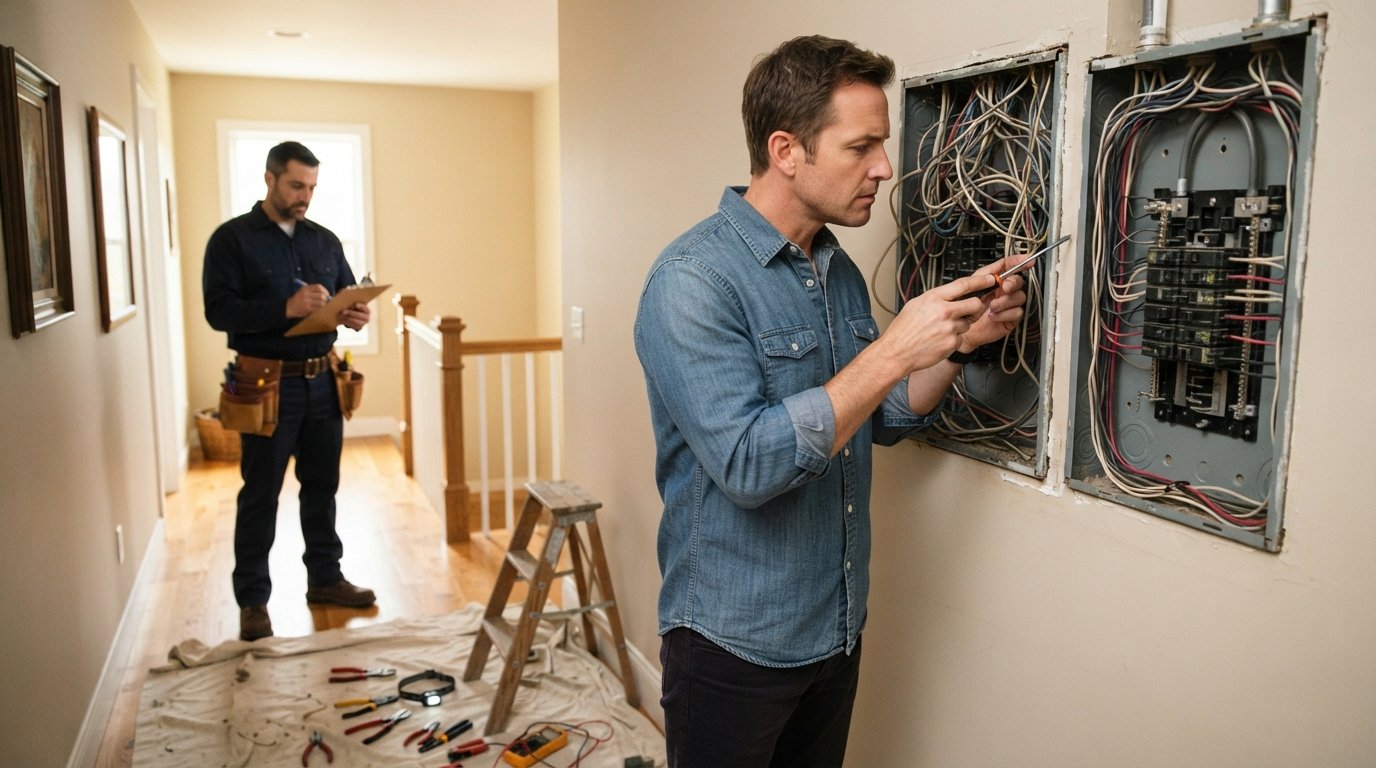
DIY vs Professional Electrical Work: When to Call an Electrician
Use this diy vs professional electrical work when to call an electrician guide to know which tasks are safe and which need a licensed pro. Call (833)-700-4293 for help.

By Justin Blake
Learn more about Electrical and Wiring Repair for guides, costs, and what to expect.
Compare Electrical and Wiring Repair Pros Near You

Enter your ZIP code to compare top-rated local professionals and request free quotes.
Every year, thousands of homeowners flip a breaker, pull out a screwdriver, and tell themselves the job looks simple enough. Sometimes they are right. Often they are not. The line between a safe DIY electrical fix and a dangerous mistake is thinner than most people realize, and crossing it can cost far more than hiring a licensed electrician in the first place. This guide walks through the real dividing line between do-it-yourself electrical work and professional electrical work, explains when to call an electrician without hesitation, and shows how to plan electrical scope into a larger renovation so your project stays safe, legal, and on budget.
The Real Difference Between DIY and Professional Electrical Work
The core distinction is not about how hard a task feels. It is about risk, code, and liability. A licensed electrician carries insurance, works to the National Electrical Code (NEC) and local amendments, pulls permits when required, and stands behind the work with a warranty. A homeowner doing the same task takes on every one of those responsibilities personally. If something goes wrong, the insurance company can deny a claim for unpermitted work, and a future buyer's inspector can flag it during a sale.
That said, not every electrical task is a hazard. Replacing a light bulb, swapping a lamp shade, or resetting a tripped breaker are genuinely safe for most homeowners. The trouble starts when people confuse a cosmetic swap with a system change. Changing a switch plate is cosmetic. Changing the switch itself involves line voltage. The moment you are working inside a box with live conductors, the risk profile changes completely.
A useful rule of thumb is this: if the task involves opening a panel, running new cable, adding a circuit, or connecting anything to the permanent wiring of the house, it belongs in the professional column. If it involves plugging something in, replacing a battery, or resetting a breaker, it belongs in the DIY column. Everything in between deserves a careful look at local rules and your own comfort level.
Tasks Homeowners Can Usually Handle Safely
There is a short list of electrical work that most jurisdictions allow homeowners to perform without a permit, and that carries minimal risk when done carefully. These tasks do not require opening walls, running new wire, or working near the service panel. They are the everyday maintenance items that keep a home running smoothly.
- Replacing light bulbs, including switching to LED bulbs in existing fixtures.
- Resetting tripped circuit breakers and ground fault circuit interrupter (GFCI) outlets.
- Swapping lamp shades, plug-in timers, and smart plugs that do not require wiring.
- Replacing a plug-in surge protector or power strip.
- Testing GFCI and arc fault circuit interrupter (AFCI) outlets using the test buttons.
Even on this short list, basic precautions matter. Turn off the device before touching it, never force a plug into a damaged outlet, and stop immediately if you smell burning or see scorch marks. Those are signs of a deeper problem that a qualified electrician should evaluate, not a maintenance task to handle alone.
When to Call an Electrician: The Non-Negotiable List
Some electrical work should never be a DIY project, no matter how confident you feel or how many videos you have watched. The following tasks involve permit requirements, inspection requirements, or hazards that can cause fire, shock, or death. For these, calling a licensed electrician is not optional.
- Anything that requires a permit. New circuits, panel upgrades, service changes, and most outlet or fixture additions in kitchens and bathrooms require permits in nearly every U.S. jurisdiction.
- Panel work of any kind. Opening the service panel, replacing breakers, adding a subpanel, or upgrading service amperage is dangerous and regulated.
- Running new wiring. Fishing cable through walls, adding outlets, or extending circuits falls under code and inspection requirements.
- Work in wet locations. Bathrooms, kitchens, laundry rooms, basements, and outdoors have strict GFCI and grounding rules that are easy to get wrong.
- Any sign of an unsafe older system. Aluminum wiring, knob-and-tube wiring, and ungrounded outlets require a professional assessment before any new work is added.
This is where the diy vs professional electrical work when to call an electrician question usually gets answered in practice. If the task appears on this list, the answer is professional. If it does not, the task may still warrant a call if you are unsure, if the home is older, or if the work touches anything beyond a simple fixture swap.
Permits, Inspections, and Why They Matter More Than You Think
Permits are not bureaucratic red tape. They are the mechanism that ensures electrical work is inspected by a third party who has no stake in the outcome. An inspector checks grounding, bonding, wire sizing, box fill, GFCI protection, and AFCI protection against the code that was adopted in your area. When work is done without a permit, none of that happens, and the risk is invisible until something fails.
The consequences of skipping permits are practical and financial. Insurance companies can deny claims for fires or shocks traced to unpermitted work. Buyers and their inspectors routinely ask for permit history during a sale, and unpermitted work can delay or kill a closing. Some municipalities fine homeowners for unpermitted work and require the walls to be opened for inspection after the fact, which turns a small job into a large one. A licensed electrician pulls the permit, schedules the inspection, and corrects any issues the inspector flags, which is exactly the protection a homeowner needs.
If you are planning a larger renovation, it helps to understand how permits fit into the broader project sequence. Our guide on DIY vs professional home repairs explains how to decide which parts of a renovation to handle yourself and which to hand to licensed trades, and it pairs well with the electrical decisions covered here.
Warning Signs of an Unsafe Older Electrical System
Older homes carry electrical systems that were designed for a different era of demand. A house wired in the 1950s was never expected to support central air, an electric vehicle charger, a home office, and a kitchen full of appliances. The system may still function, but function is not the same as safe. Certain warning signs should trigger a professional evaluation immediately, even if nothing has failed yet.
- Frequent breaker trips, especially when ordinary appliances are running.
- Warm or discolored outlet covers and switch plates.
- A burning smell near outlets, switches, or the panel.
- Two-prong outlets with no ground, or outlets labeled "no equipment ground."
- Aluminum branch wiring, knob-and-tube wiring, or a fuse box instead of a breaker panel.
- Buzzing, humming, or crackling sounds from the panel.
Any one of these signs suggests the system is under stress or was installed to standards that no longer apply. Adding new load to a system in that condition is how fires start. A licensed electrician can assess the service, recommend targeted upgrades, and tell you whether the panel can support the changes you are planning. This evaluation is especially important before a kitchen or bathroom remodel, where new appliances and GFCI requirements can push an aging system past its limits.
Panel Capacity Limits During Remodeling
Panel capacity is one of the most overlooked constraints in a remodeling project. Homeowners plan a new kitchen with an induction range, a double oven, a tankless water heater, and a hot tub, then discover the existing 100-amp panel cannot carry the load. Upgrading to a 200-amp service is common, but it is not a DIY task, and it is not free. It requires a permit, a utility disconnect and reconnect, and an inspection.
The math is straightforward but unforgiving. Every appliance and circuit adds load, and the NEC provides calculation methods that licensed electricians use to determine whether the existing service can handle the addition. If it cannot, the options are to upgrade the service, add a subpanel, or choose lower-demand appliances. Each option has a different cost and timeline, and the decision should be made during the planning phase, not after the walls are open.
Solar is a good example of how load planning intersects with remodeling. Adding solar panels, a battery, or an electric vehicle charger changes the load profile of the home and often requires a panel upgrade. Homeowners exploring solar alongside a remodel can use free solar power quotes to compare options and understand how system sizing interacts with their electrical service, which makes the conversation with the electrician far more productive.
How to Scope Electrical Work Into a Larger Renovation
Electrical scope is easiest to manage when it is planned at the same time as the rest of the renovation, not bolted on later. The sequence matters. Design decisions determine where outlets, switches, and fixtures go. Those decisions determine circuit layout. Circuit layout determines panel load. Panel load determines whether a service upgrade is needed. Skipping any step in that chain creates change orders, delays, and surprise costs.
A practical scoping process looks like this:
- List every electrical load. Include lighting, receptacles, appliances, HVAC equipment, and any future additions like an EV charger.
- Map the existing panel. A licensed electrician should document available breaker space and total service capacity.
- Decide on a service upgrade early. If the panel cannot support the plan, budget for the upgrade before construction begins.
- Build inspection milestones into the schedule. Rough-in inspection happens before drywall, and final inspection happens after fixtures are installed.
- Get the electrical quote before signing the general contract. Electrical is often the largest hidden line item in a remodel, and it should be priced up front.
When electrical work is scoped this way, the diy vs professional electrical work when to call an electrician question becomes much easier to answer. The professional handles the panel, the circuits, the permits, and the inspections. The homeowner handles the finish decisions and the simple maintenance tasks. That division of labor keeps the project safe, keeps the budget predictable, and keeps the inspection schedule on track.
The Cost of Getting It Wrong
The financial case for hiring a licensed electrician is stronger than most homeowners expect. An electrical fire can destroy a home and, in the worst cases, take lives. Even a near miss, such as a loose connection that arcs inside a wall, can cost thousands to diagnose and repair once the wall is closed. Insurance disputes over unpermitted work can leave a homeowner covering the entire loss out of pocket.
Against those risks, the cost of professional electrical work is modest. A licensed electrician charges for expertise, insurance, permits, and accountability. For small tasks, the fee may feel high relative to the task, but the fee buys protection that a DIY attempt cannot provide. For larger tasks, the professional is often faster and more accurate, which offsets much of the labor cost through fewer callbacks and fewer change orders.
Homeowners who want competitive pricing without sacrificing safety can get multiple quotes from vetted local electricians through USremodel. The platform connects homeowners with independent contractors, provides free and customized quotes, and simplifies the process of comparing options. That is a far better use of time than watching a tutorial and hoping the wiring is right.
Making the Call With Confidence
The diy vs professional electrical work when to call an electrician decision comes down to a few clear questions. Does the task require a permit? Does it involve the panel, new wiring, or a wet location? Is the home older, or is the system showing warning signs? Will the work add load beyond what the panel can safely carry? If the answer to any of these is yes, the right move is to call a licensed electrician.
For everything else, basic maintenance and simple swaps remain reasonable DIY territory, provided you turn off power, work carefully, and stop the moment something looks wrong. The goal is not to avoid professionals at all costs. The goal is to keep your home safe, your project legal, and your budget predictable. When electrical work is planned and scoped correctly, the professional handles the risk, and the homeowner gets to enjoy the result.