
DIY vs Professional for Home Repairs: When to Hire in 2026
DIY vs professional for home repairs when to hire: sort tasks by risk, permits, and skills, then call 8337004293 for vetted local pros.
By Margaret Sheridan
Learn more about Handyman for guides, costs, and what to expect.
Compare Handyman Pros Near You

Enter your ZIP code to compare top-rated local professionals and request free quotes.
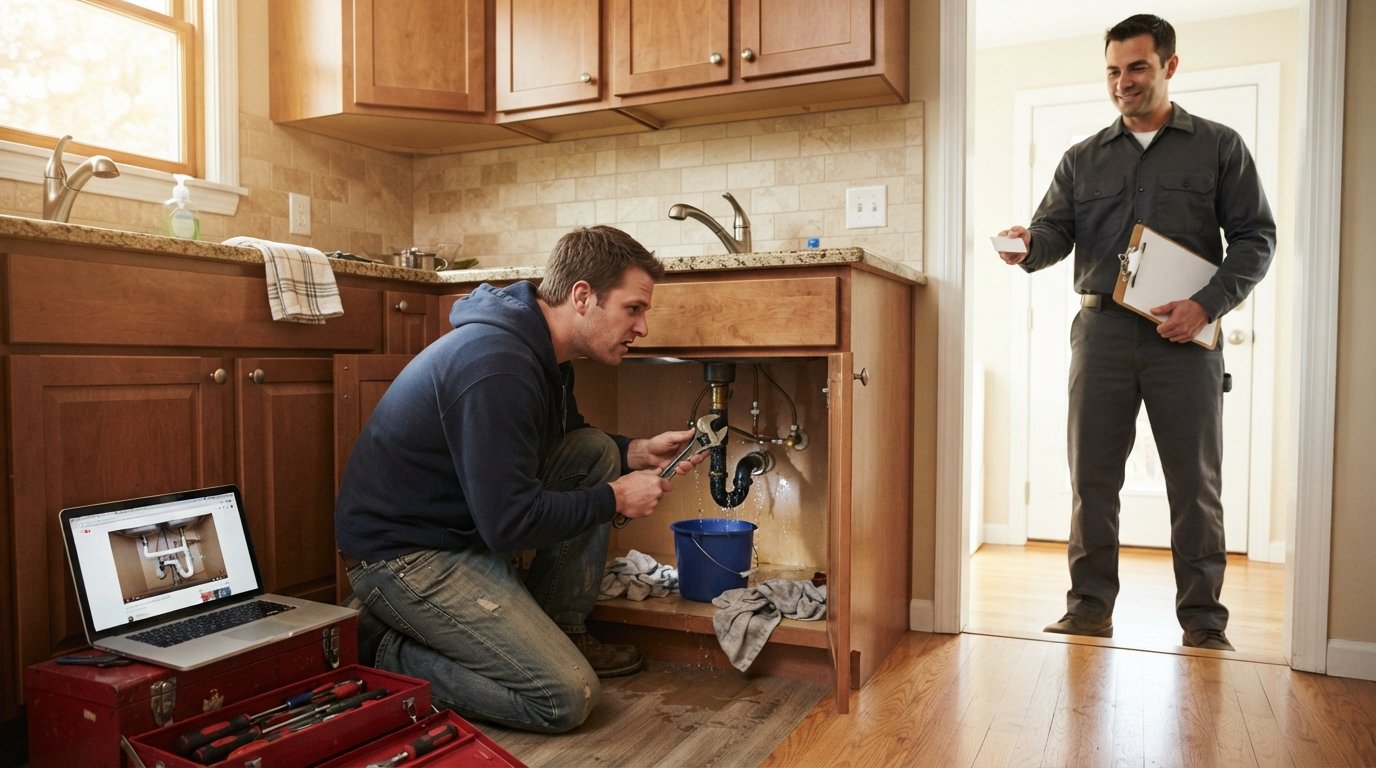
Your Saturday morning starts with a drip under the kitchen sink. By noon, you are watching a YouTube tutorial, holding a wrench, and wondering whether you should have called someone an hour ago. Every homeowner faces this fork in the road eventually: grab the toolbox or grab the phone. The DIY vs professional for home repairs when to hire decision shapes your budget, your safety, your timeline, and the long term value of your biggest asset. Get it right, and you save money without creating bigger problems. Get it wrong, and a simple fix can snowball into thousands of dollars in water damage, failed inspections, or voided warranties.
This guide breaks down exactly where the line sits between a satisfying weekend project and a job that belongs in the hands of a licensed pro. You will learn the real cost of mistakes, the repairs that legally require permits, the projects where DIY genuinely pays off, and a simple framework for deciding in under five minutes. Whether you are patching drywall in Dallas or planning a full bathroom overhaul in Denver, the same logic applies: match the task to your skills, your tools, and your risk tolerance, then act with confidence.
The Real Math Behind DIY vs Professional Home Repairs
Most homeowners compare DIY and professional repair costs using a single number: the contractor's quote versus the price of materials at the hardware store. That comparison misses half the equation. The true cost of any repair includes your time, the price of tools you do not own, the risk of doing it wrong, and the resale or inspection consequences down the road. A $400 contractor bill for a job that takes you three weekends and $250 in materials is not a $150 savings. It is a $150 savings minus 24 hours of your life, minus the risk that the fix fails, plus the value of a warranty you did not get.
Professional repairs also come with something DIY work rarely includes: accountability. A licensed contractor carries insurance, pulls permits when required, and stands behind the work in writing. If a pipe bursts behind the wall six months later, you have recourse. If your own solder joint fails, you own the cleanup, the mold remediation, and the insurance conversation. That asymmetry matters most on jobs involving water, electricity, gas, and structural load, where a small error compounds quietly before it shows itself.
That said, writing off DIY entirely is a mistake. Many repairs are genuinely simple, low risk, and even enjoyable. The goal is not to pick a side. The goal is to sort tasks into three buckets: do it yourself, do it yourself with caution, and call a professional. Here is how that split typically looks for the most common household repairs.
- Safe DIY territory: painting, caulking, replacing a toilet seat, swapping light fixtures on an existing circuit, patching small drywall holes, unclogging a drain, replacing faucet aerators, and installing shelving into studs.
- Caution zone (skills and permits matter): replacing a toilet, installing a dishwasher, swapping a thermostat, minor tile work, and replacing an existing outlet or switch.
- Call a professional: electrical panel work, gas line repairs, roof repairs above one story, foundation issues, sewer line problems, HVAC refrigerant work, and anything requiring a permit or inspection.
Notice the pattern. The riskier the system and the deeper it sits inside your walls, the stronger the case for hiring out. Surface level cosmetic work is forgiving. Work involving water pressure, high voltage, combustible gas, or structural load is not. If a mistake in that category could injure someone, flood your home, or fail an inspection, the math almost always favors a licensed professional, even when the quote stings.
When DIY Is the Smarter Choice
DIY wins when three conditions line up: the task is reversible, the consequences of failure are cosmetic or minor, and you actually have the time to do it properly. Reversible matters more than people realize. Painting a wall is reversible. Running a new electrical circuit is not, at least not without opening the wall again. Cosmetic consequences are tolerable; structural or safety consequences are not.
There is also a real emotional and financial upside to doing certain projects yourself. You learn your home, you build confidence, and you avoid the scheduling friction of waiting for a contractor to fit you in. For small repairs, the time spent finding, vetting, and scheduling a pro can exceed the time it takes to just do the job. Tightening a loose cabinet hinge or replacing a worn door sweep does not justify a service call.
A practical rule: if you can watch a 15 minute tutorial, complete the task with tools you already own, and undo it without damage if you mess up, DIY is probably fine. If any of those three conditions fails, pause. The moment you find yourself buying a specialized tool you will use once, or watching a 40 minute video twice, you are usually better off hiring someone who does this every day.
For homeowners who want to go deeper on how professionals approach larger projects, our guide on professional home remodelers explains how licensed contractors plan, sequence, and warranty their work, which is useful context even for small jobs.
Red Flags That Mean You Should Hire a Pro Immediately
Some repairs announce themselves as professional-only work. Others hide behind a simple symptom. A flickering light might be a loose bulb or a failing connection in the panel. A small ceiling stain might be a roof flashing issue or a slow supply line leak. In these cases, the visible problem is rarely the whole story, and a professional diagnosis often saves money by catching the root cause before it spreads.
Certain categories should trigger an automatic call, no deliberation required. Anything involving gas, main electrical service, structural movement, sewage, or roofing above a single story falls into this group. These systems are regulated for a reason: mistakes do not just cost money, they create safety hazards. Carbon monoxide leaks, electrical fires, and structural failures are not hypothetical risks, they are the documented outcomes of amateur work in these areas.
Permits are another clear signal. If your local building department requires a permit for the work, that is the code's way of saying this job needs oversight. Unpermitted work can complicate a home sale, void insurance claims, and force expensive retroactive corrections. When in doubt, a quick call to your city's permit office settles the question. If a permit is required, hire a licensed professional who pulls it.
Warning signs that should push you toward hiring out include:
- Water where it should not be, especially inside walls, ceilings, or the foundation.
- Burning smells, warm outlets, or breakers that trip repeatedly.
- Any gas smell or work on gas appliances and lines.
- Cracks in the foundation, sagging floors, or doors that suddenly stick.
- Roof damage, missing shingles, or active leaks.
- Anything that requires opening a wall, trenching a yard, or accessing the main panel.
If you spot any of these, stop and call a licensed contractor. The cost of an inspection is trivial compared to the cost of a missed problem. For homeowners who would rather not hunt for a contractor one by one, platforms like 180Remodel connect you with vetted local professionals who can assess the issue and quote the repair, often within a day.
A Five Minute Framework for Deciding
You do not need to agonize over every repair. A short, structured decision process handles most situations. Run each task through the following questions in order, and stop at the first one that gives you a clear answer. This keeps emotion and wishful thinking out of the equation.
- Does this involve safety systems? Gas, electrical service, structural elements, or sewage. If yes, hire a professional.
- Is a permit required? Check with your city or a licensed contractor. If yes, hire a professional.
- Can I undo this without damage if it goes wrong? If no, hire a professional.
- Do I have the right tools and at least two hours to spare? If no, hire a professional or reschedule.
- Is the worst case outcome cosmetic? If yes, DIY is reasonable. If no, hire a professional.
Most homeowners find that this framework resolves the decision in under five minutes. It also protects you from the most common trap: starting a job, discovering it is harder than expected, and finishing it badly because you are already committed. Knowing when to stop is a skill, and it is cheaper to stop before you start.
One more consideration: your time has value. If you earn $50 an hour and a repair takes you eight hours plus two trips to the store, you have spent $400 in time to save a $300 labor charge. For high earners or busy families, the professional route is often the financially rational choice even on simple jobs. DIY is not automatically cheaper once you account for opportunity cost.
Where Professional Help Pays for Itself
Hiring a professional is not just about avoiding mistakes. On many projects, it actively saves money. Licensed contractors buy materials at trade prices, complete work in a fraction of the time, and produce results that hold up to inspection and resale scrutiny. Their work often comes with warranties that transfer to future buyers, which can be a meaningful selling point when you list your home.
Energy related upgrades illustrate this well. HVAC repairs, window replacements, insulation, and solar installations all involve rebates, tax credits, and code requirements that change frequently. A professional who works in these categories daily knows which incentives apply, how to document the work for rebate programs, and how to size systems correctly. A DIY installation that misses a rebate deadline or fails to meet code can cost more than the professional install would have, before you even factor in performance.
Resale value is another factor. Buyers and inspectors scrutinize electrical, plumbing, roofing, and structural work. Documented professional repairs with permits and receipts reassure buyers and appraisers. Undocumented DIY work raises questions, and in some cases, lenders will require repairs before closing. If you plan to sell within a few years, professional work on major systems is usually the safer investment.
Finally, consider the cost of your own mistakes. A failed DIY plumbing repair can cause thousands in water damage. A miswired outlet can start a fire. A poorly installed roof can rot the decking beneath it. These outcomes are rare, but they are expensive enough that even a small probability makes professional help the better expected value on high risk jobs. Insurance may not cover damage caused by unpermitted or unprofessional work, which turns a small gamble into a total loss.
Making the Call with Confidence
The DIY vs professional for home repairs when to hire question does not have a single answer. It has a clear decision process. Sort each task by risk, reversibility, permit requirements, and your own skills and time. Handle the safe, reversible, cosmetic jobs yourself and take pride in them. Hand off anything involving safety systems, structural concerns, permits, or deep hidden work to a licensed professional. That split keeps your budget healthy, your home safe, and your weekends mostly free.
When you do decide to hire, do not settle for the first quote. Collect multiple estimates, check licenses and insurance, and ask about permits and warranties in writing. A few extra phone calls now prevent expensive surprises later. Your home is your largest investment, and the professionals you choose should treat it that way.