
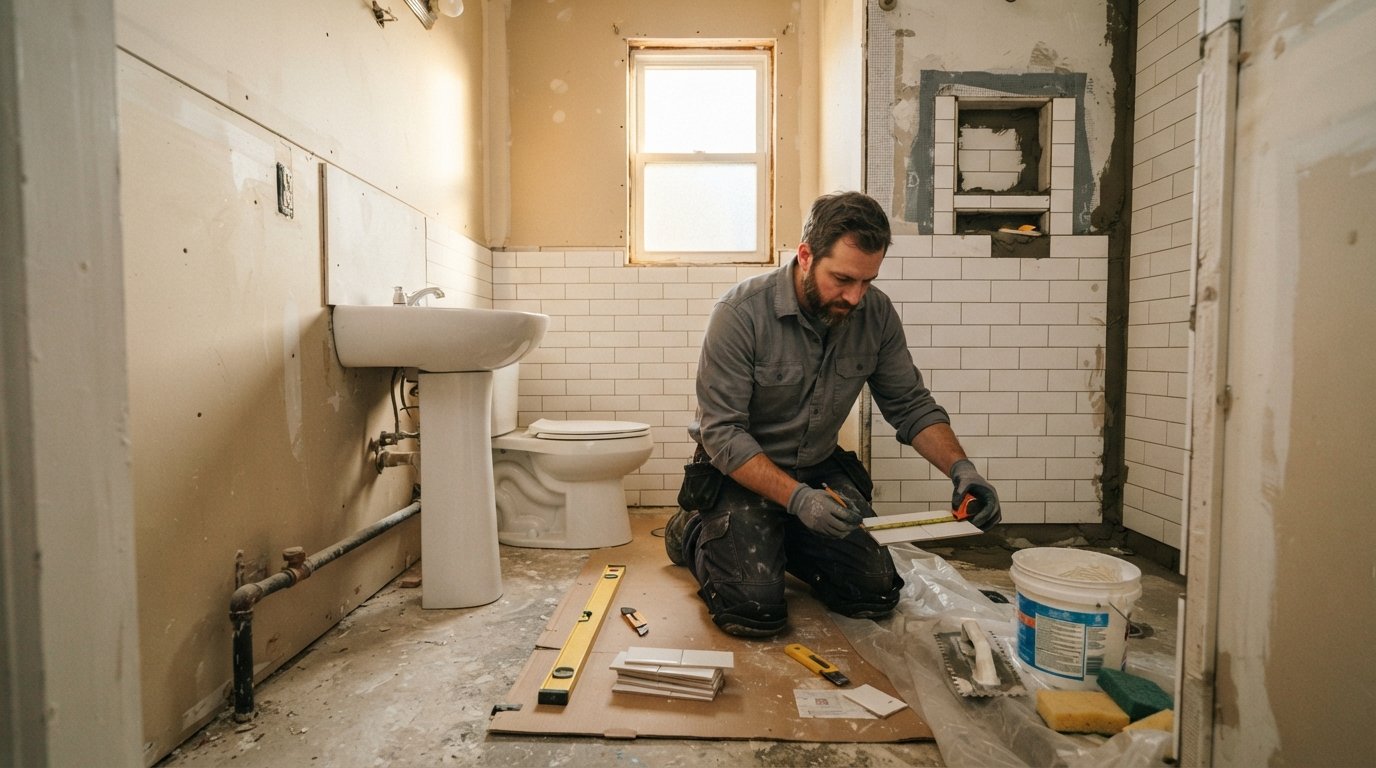
Small Bathroom Remodel Cost Breakdown for Homeowners
A small bathroom remodel cost breakdown for homeowners shows where every dollar goes and how to avoid surprise bills. Call (833)-700-4293 for expert help.

By James Morgan
Learn more about Bathroom Remodel for guides, costs, and what to expect.
Compare Bathroom Remodel Pros Near You

Enter your ZIP code to compare top-rated local professionals and request free quotes.
Planning a small bathroom renovation can feel like solving a puzzle where every dollar and every inch counts. Homeowners often assume that a compact space automatically means a tiny bill, but the reality is more nuanced. A small bathroom remodel cost breakdown for homeowners reveals that while total project costs may be lower than a spacious master bath, the price per square foot can be surprisingly high. Labor is compressed into tight quarters, fixtures must fit precise dimensions, and hidden issues like water damage can surface once walls are opened. Understanding where your money actually goes is the key to budgeting confidently and avoiding mid-project surprises. This guide walks you through the major cost components, explains why small bathrooms can be expensive, and shows you how to gather competitive bids from local professionals.
Why Small Bathrooms Can Cost More Per Square Foot
It sounds counterintuitive: a smaller room should cost less, right? In absolute terms, yes, a 40 square foot bathroom will usually cost less overall than a 100 square foot one. But when you divide the total cost by the square footage, the smaller room often carries a higher price tag per square foot. The reason lies in fixed costs and minimum charges. Many contractors have a minimum job fee regardless of room size, and material waste percentages run higher on small tile jobs because cuts and breakage represent a larger share of the total order. Fixtures like a toilet, sink, and shower are relatively fixed in price whether the room is large or small.
Access also plays a role. In a tight bathroom, workers cannot spread out, so tasks like demolition, plumbing rough in, and tile setting take longer per square foot. A two person crew might not fit comfortably, slowing progress. Additionally, small bathrooms often sit in older homes where layouts are cramped and mechanical systems are outdated, demanding extra labor to bring everything up to current code. The small bathroom remodel cost breakdown for homeowners must account for these hidden premiums, which is why comparing bids on a per square foot basis alone can be misleading.
To put it in perspective, consider a typical 35 to 40 square foot bathroom. A full gut renovation might range from 8,000 to 15,000 dollars depending on region and finishes, while a cosmetic refresh could land between 3,000 and 6,000 dollars. The per square foot cost for a full remodel can easily hit 250 to 400 dollars, rivaling or exceeding larger projects. This is not a reason to avoid remodeling, but it is a reason to plan carefully and prioritize the elements that matter most to you.
The Core Cost Drivers: Fixtures, Tile, and Waterproofing
When you break down the budget, three categories consistently dominate: fixtures, tile, and waterproofing. These are the components that define both the look and the longevity of your bathroom, and they are where homeowners have the most control over spending. Understanding each category helps you make trade offs that align with your priorities.
Fixtures
Fixtures include the toilet, sink, faucets, showerhead, and any tub or shower base. This category alone can account for 20 to 30 percent of your total budget. A basic toilet might cost 150 to 300 dollars, while a high end model with bidet features can exceed 1,000 dollars. Vanities range from a few hundred dollars for a stock unit to several thousand for custom cabinetry with stone tops. Faucets and shower trim can run from 50 dollars for a builder grade set to 500 dollars or more for designer styles. The key is to balance your wish list with the reality of your plumbing layout: moving a toilet or sink to a new location adds significant plumbing cost, often 500 to 1,500 dollars or more, because drain lines must be rerouted and vents adjusted.
Tile
Tile is another major line item, covering both material and installation. Material prices vary widely: ceramic tile can start around 1 to 3 dollars per square foot, porcelain from 3 to 8 dollars, and natural stone from 8 to 20 dollars or more. Installation labor typically runs 5 to 12 dollars per square foot depending on the complexity of the layout and the type of tile. Small bathrooms often use intricate patterns or mosaic tiles, which are more labor intensive to install. A simple 35 square foot floor might cost 300 to 600 dollars installed with basic ceramic, while a herringbone porcelain pattern could push that to 800 to 1,200 dollars. Wall tile around a shower adds another 400 to 1,000 dollars depending on height and material.
Waterproofing
Waterproofing is the unsung hero of any bathroom remodel. Without proper waterproofing, moisture will eventually damage framing, drywall, and flooring, leading to mold and costly repairs. In a small bathroom, waterproofing is even more critical because every square inch is exposed to splashes and steam. Costs for waterproofing materials and labor typically run 300 to 800 dollars for a standard shower area, but this investment protects thousands of dollars in finishes and structural work. Some contractors include waterproofing in their tile installation quote, while others list it separately. Always confirm that your bid includes a proper waterproofing membrane, such as a liquid applied or sheet membrane system, behind all tile in wet areas.
When planning your budget, it helps to allocate roughly 25 percent to fixtures, 20 percent to tile and waterproofing, and the remainder to labor, plumbing, electrical, and contingency. This small bathroom remodel cost breakdown for homeowners provides a starting framework, but your actual percentages will shift based on your choices.
Where Layout Constraints Force Premium Labor
Small bathrooms are often defined by their awkward layouts: a door that swings into the vanity, a toilet tucked under a sloped ceiling, or a window that limits where a shower can go. These constraints translate directly into labor premiums. Moving a fixture even a few inches can require relocating supply lines and drain pipes, which means cutting into walls and floors. In tight spaces, plumbers and electricians may need to work in cramped positions, slowing the pace and increasing the hours billed.
Another common premium comes from the need to meet current building codes. Older small bathrooms may lack proper ventilation, GFCI outlets, or adequate space around the toilet and shower. Upgrading to code often involves adding an exhaust fan, running new electrical circuits, or reconfiguring the layout to meet minimum clearances. These upgrades are not optional if you want a safe and legal renovation, and they can add 1,000 to 3,000 dollars to your budget depending on the scope.
Structural issues also surface in small spaces. A leaking shower pan may have rotted the subfloor, or a previous DIY tile job might have compromised the wallboard. Contractors cannot simply cover up these problems; they must repair the substrate before installing new finishes. A contingency fund of 15 to 20 percent of your total budget is essential to cover these unknowns. Homeowners who skip the contingency often find themselves making rushed, lower quality decisions when surprises arise.
To navigate these constraints, work with a contractor who specializes in bathroom remodels and is familiar with creative space saving solutions. For example, a curbless shower can make a small bathroom feel larger and eliminate a trip hazard, but it requires careful waterproofing and slope work, which adds cost. A wall hung vanity can free up floor space but may require blocking in the wall for support. Each of these choices has a labor implication, so discuss them openly during the bidding process.
How to Collect Comparable Bids from Local Contractors
Getting apples to apples bids is the single most effective way to control your small bathroom remodel cost. A breakdown for homeowners is only useful if you can compare proposals line by line. Start by defining your project scope in writing: list the fixtures you want, the tile you plan to use, and any layout changes you are considering. Include photos of the existing bathroom and note any known issues. The more detail you provide, the more accurate the bids will be.
Next, reach out to at least three licensed contractors who have experience with small bathrooms. Ask each to provide a written estimate that separates labor, materials, permits, and contingency. Be wary of any bid that is a single lump sum with no breakdown, as it leaves you unable to compare or adjust. During the walkthrough, ask questions about how they handle waterproofing, what their schedule looks like, and who will be on site each day. A reputable contractor will welcome your questions and provide clear answers.
Here is a simple framework to follow when collecting bids:
- Prepare a written scope of work that lists every fixture, finish, and task you expect.
- Contact at least three contractors and schedule on site walkthroughs.
- Request itemized bids that separate labor, materials, permits, and contingency.
- Check licenses, insurance, and references for each contractor before signing.
- Compare bids side by side and ask clarifying questions about any differences.
Once you have your bids, do not automatically choose the lowest price. A very low bid may indicate missing scope, such as waterproofing or permit fees, which will come back as change orders later. Look for the contractor who communicates clearly, has strong references, and provides a detailed, realistic estimate. This approach protects you from surprise bills and helps ensure your project stays on track.
If you are considering a spa inspired design for your compact space, you can explore spa style bathroom remodels for ideas on how to incorporate relaxation elements without expanding the footprint. Many of these upgrades, such as a rainfall showerhead or heated towel bar, can be added within a modest budget.
For homeowners who want to streamline the process of finding qualified professionals, platforms like ContractorHomeQuotes offer a way to request multiple quotes from local contractors in one place. This saves time and helps you compare options without making dozens of phone calls. Always verify that any contractor you consider is licensed and insured in your state, and ask for references from recent small bathroom projects.
Building a Realistic Budget and Avoiding Surprise Bills
A realistic budget is your best defense against stress. Start with the total amount you can comfortably afford, then subtract a 15 to 20 percent contingency fund. The remaining amount is your working budget. Allocate roughly 40 to 50 percent to labor, 30 to 40 percent to materials, and 10 to 15 percent to permits and other fees. This small bathroom remodel cost breakdown for homeowners is a starting point, but your contractor's itemized bid will give you the precise numbers.
Be transparent with your contractor about your budget from the beginning. A good contractor will help you prioritize spending and suggest alternatives that meet your goals without breaking the bank. For example, if you love the look of natural stone but your budget is tight, consider a porcelain tile that mimics stone at a fraction of the cost. If you want a custom vanity but cannot afford it, a stock vanity with upgraded hardware can deliver a similar aesthetic for less.
Finally, plan for the unexpected. Even the most carefully planned small bathroom remodel can uncover hidden issues. By setting aside a contingency fund and choosing a contractor who communicates openly, you can handle surprises without derailing your project. Remember that the goal is not just to save money today, but to invest in a bathroom that functions well and adds value to your home for years to come.
In summary, a small bathroom remodel cost breakdown for homeowners shows that size alone does not determine price. Per square foot costs can be high due to fixed expenses, layout constraints, and premium labor. By understanding the core cost drivers, collecting comparable bids, and building a budget with a healthy contingency, you can navigate your remodel with confidence and achieve a beautiful, functional space that fits your financial plan.