
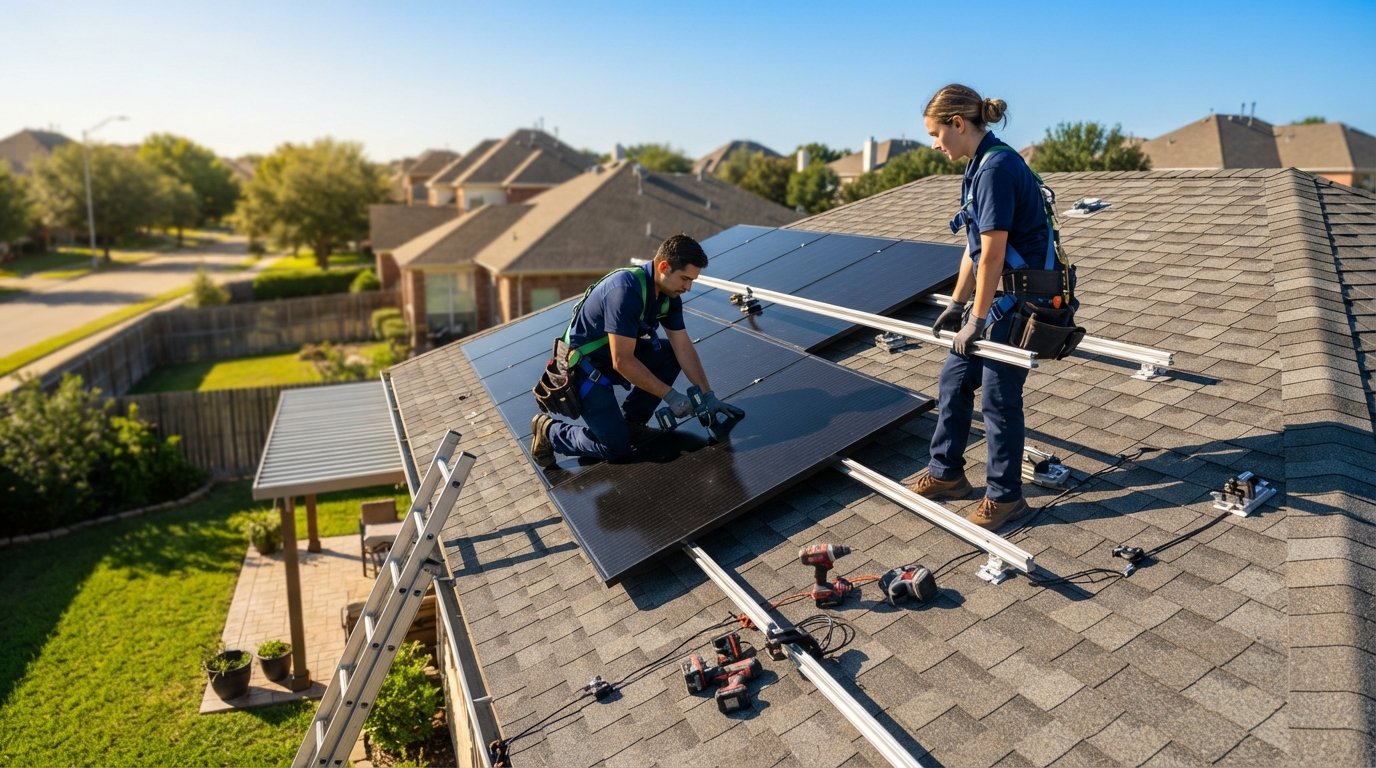
Solar Panel Installation Cost and Savings for Homeowners
Solar panel installation cost and savings for homeowners explained, from upfront pricing to lifetime utility savings. Call 8337004293 for local installer quotes.
By Margaret Sheridan
Learn more about Solar Panel Installation and Repair for guides, costs, and what to expect.
Compare Solar Panel Installation and Repair Pros Near You

Enter your ZIP code to compare top-rated local professionals and request free quotes.
Solar panels have moved from a niche environmental upgrade to a mainstream home improvement decision, and for good reason. Between rising electricity rates, federal tax incentives, and a wider pool of qualified installers, the math now works in favor of many homeowners who once dismissed solar as too expensive. Still, the question that stops most people cold is simple: what does it actually cost, and how much can I realistically save? The answers depend on where you live, how much power you use, the condition of your roof, and how you finance the project. This guide walks through the real numbers so you can decide whether solar panel installation makes sense for your home.
What Solar Panel Installation Typically Costs in 2026
Nationally, the average cost of a residential solar panel installation lands between $16,000 and $30,000 before any incentives, with most homeowners paying somewhere near $21,000 for a mid-sized system. That figure covers panels, inverters, mounting hardware, wiring, permits, and labor. The price tag rises or falls based on system size, panel efficiency, roof complexity, and local labor rates. A straightforward ranch home in a sunny state will cost far less than a three-story home with a steep, shaded roof in a dense urban market.
System size is the biggest driver. Most homes need somewhere between 6 kilowatts and 12 kilowatts of capacity to offset their annual electricity use. At a typical installed cost of $2.50 to $3.50 per watt, a 6 kilowatt system runs roughly $15,000 to $21,000, while a 12 kilowatt system can push past $30,000. Add-ons like battery storage, critter guards, or electrical panel upgrades can add several thousand dollars on top.
Where you live matters just as much as what you install. States with high electricity rates, strong incentive programs, and competitive installer markets tend to deliver better value. Here is a quick look at how four major markets compare:
- California: High electricity rates and abundant sun, but higher labor costs push average installations above $22,000.
- Texas: Lower labor costs and no state income tax incentives, with average systems around $18,000 and very competitive installer pricing.
- Colorado: Solid sunshine, moderate rates, and average installations near $20,000.
- Florida: Strong sun and steady demand, with average systems between $19,000 and $24,000.
These are averages, not quotes. The only way to know your real number is to collect multiple bids from licensed local installers who can assess your roof, your utility rate structure, and your household energy profile. Platforms like 180Remodel connect homeowners with vetted contractors across these service categories, which makes comparing solar quotes far less painful than cold-calling installers one at a time.
Incentives That Reduce Your Upfront Cost
The single largest discount available to most homeowners is the federal residential clean energy credit, which covers 30 percent of the total installed cost of a solar system. That credit applies to panels, labor, inverters, wiring, and even battery storage in many cases. On a $21,000 system, that is roughly $6,300 back when you file your taxes, which drops your effective cost to about $14,700. There is no cap on the credit, and it can be carried forward if you cannot use the full amount in one year.
Beyond the federal credit, many states, utilities, and municipalities layer on their own incentives. These can include state tax credits, property tax exemptions, sales tax waivers, and utility rebates for installing battery storage or enrolling in net metering programs. Some states also allow solar renewable energy credit (SREC) sales, which pay you for the environmental attributes of the power you generate.
The incentive landscape shifts every year, so verify current programs before signing a contract. A reputable installer will provide a written incentive summary and explain which credits you qualify for based on your tax situation. If an installer promises you a rebate you cannot find documented anywhere, treat that as a red flag and get a second opinion.
How Much You Can Save on Electricity
Savings depend on three variables: how much electricity you use, what you pay per kilowatt-hour, and how much of your usage the system offsets. A well-sized system in a sunny state can cover 90 to 100 percent of a home's annual electricity needs, which means your monthly utility bill could drop to a small connection fee. In less sunny regions or on shaded roofs, expect coverage in the 60 to 85 percent range.
Consider a homeowner paying $180 per month on average, or about $2,160 per year. If a solar system offsets 90 percent of that usage, the annual savings land near $1,944. Over 25 years, that is roughly $48,600 in avoided utility costs, before factoring in rate increases, which have historically averaged 2 to 4 percent per year. With rising rates factored in, the lifetime savings figure grows considerably.
Payback period, the time it takes for savings to equal your net investment, typically falls between 7 and 12 years depending on your market. After payback, the remaining 15 to 20 years of system life represent pure savings. Solar panels generally carry 25-year performance warranties and continue producing power well beyond that, though output declines slowly over time.
Financing Options and Their Impact on Savings
How you pay for solar changes your savings math dramatically. A cash purchase delivers the highest lifetime savings because you avoid interest and own the system outright, which also means you capture the full federal credit. Most homeowners, however, do not have $20,000 sitting in a savings account, so financing becomes the practical path.
Solar loans work much like auto loans: you borrow the full system cost, make fixed monthly payments, and own the equipment. If your loan payment is $130 per month and your electricity savings are $160 per month, you are cash-flow positive from day one. Leases and power purchase agreements (PPAs) require no upfront cost, but the third party owns the system and you typically pay a fixed rate per kilowatt-hour that escalates annually. Those arrangements often reduce lifetime savings substantially and can complicate a home sale if the buyer does not want to assume the contract.
A home equity loan or line of credit is another option, especially if you are already planning other improvements. If you are weighing solar alongside a broader renovation, our guide on home remodeling cost planning explains how to sequence projects and budget for major upgrades without overextending your finances.
Hidden Costs and Factors That Change the Math
The sticker price on a solar quote rarely tells the whole story. Several factors can push your real cost higher or lower than the initial estimate, and homeowners who plan for them avoid unpleasant surprises.
- Roof condition: If your roof is more than 15 years old, you may need to replace it before or alongside solar installation. Doing both at once saves on labor and re-installation costs later.
- Electrical panel upgrades: Older homes often need a service panel upgrade to handle solar, adding $1,500 to $3,000.
- Tree removal or trimming: Shading dramatically reduces production, and removing a mature tree can cost $500 to $2,000.
- Battery storage: Adding a battery for backup power or time-of-use optimization typically adds $8,000 to $15,000 before incentives.
- Utility interconnection fees: Some utilities charge application or meter fees that range from $100 to $1,000.
On the positive side, solar can increase your home's resale value. Studies have consistently found that homes with solar sell for a premium compared to comparable homes without it, though the exact amount varies by market. Buyers in high-electricity-cost areas tend to pay more for a home with an owned solar system than one with a leased system, since they inherit the savings without the contract obligations.
Maintenance is minimal but not zero. Panels need occasional cleaning in dusty regions, and inverters typically need replacement once during the system's life, at a cost of $1,000 to $2,500. Factoring these costs into your savings projection keeps your expectations realistic.
Is Solar Worth It for Your Home?
Solar panel installation makes the most financial sense for homeowners who plan to stay in their home long enough to reach payback, live in areas with high electricity rates or strong incentives, have a roof in good condition with decent sun exposure, and can use the federal tax credit. If you plan to move within three years, or your roof is heavily shaded, the numbers may not work in your favor.
The smartest approach is to gather at least three quotes from licensed installers, review the production estimates they provide, and compare the net cost after incentives rather than the gross price. Ask each installer to show you the assumptions behind their savings projections, including utility rate escalation and system degradation. A quote that promises unrealistically high savings is a warning sign, not a bargain.
Solar is a long-term investment, and like any major home improvement, it rewards homeowners who do their homework before signing. Get the numbers in writing, understand your financing terms, and confirm that your installer is licensed, insured, and experienced in your local market. With the right system and the right deal, solar can cut your electric bill dramatically, increase your home's value, and pay for itself well within the time you own the home.