
Roof Replacement vs Repair When Insurance Covers Storm Damage
Navigate storm damage claims with confidence. Call (833)-700-4293 to compare roof replacement vs repair options and maximize your insurance recovery.

By James Morgan
Learn more about Roof Installation or Replacement for guides, costs, and what to expect.
Compare Roof Installation or Replacement Pros Near You

Enter your ZIP code to compare top-rated local professionals and request free quotes.
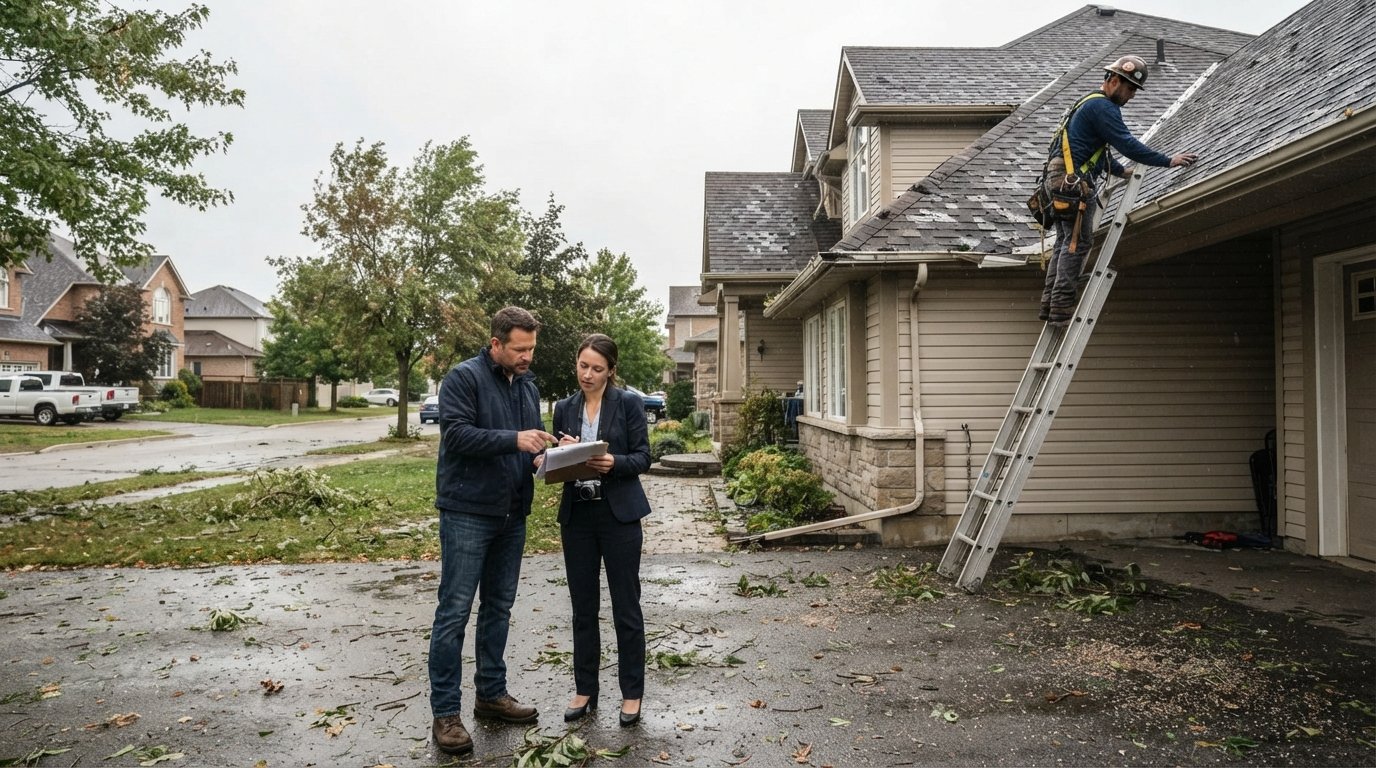
A single hailstorm can turn a quiet evening into a scramble of tarps, phone calls, and claim numbers. Once the adjuster leaves and the paperwork starts piling up, one question dominates every conversation: should you repair the roof or replace it, and who decides? The answer is rarely as simple as swapping shingles. Insurance carriers, roofing contractors, and local building codes each play a role in defining what gets approved, what gets denied, and what you may be on the hook for. Understanding how adjusters evaluate damage, what documentation your contractor must supply, and how to coordinate schedules with the insurer's timeline can mean the difference between a full replacement and a patch that fails before the next storm season. This guide walks through the decision framework homeowners actually need, with an emphasis on protecting your claim and your home.
How Adjusters Decide Between Repair and Full Replacement
Insurance adjusters do not simply look at a damaged shingle and call it a day. They apply a structured evaluation that weighs the extent of damage, the age and condition of the roof, and the cost of restoring it to a pre-storm condition. The core question is whether the roof can be returned to its prior state through localized repairs or whether the damage is widespread enough that replacement is the more economical and practical path. Most carriers use a threshold often described as the point where repair costs approach or exceed a significant percentage of replacement cost, though the exact formula varies by policy and state.
Adjusters typically inspect for specific indicators that signal whether a repair will hold. They look at the number of damaged shingles per slope, the presence of granule loss across large areas, cracked or bruised matting, and whether the damage is concentrated on one slope or scattered across multiple planes. Hail damage, for example, often creates a pattern of impact marks that can be counted and mapped. Wind damage tends to show lifted, creased, or missing shingles along edges and ridges. If the damage is isolated to a small section and the surrounding shingles are pliable and well-sealed, a repair may be approved. If the roof is older, brittle, or shows damage across multiple slopes, the adjuster is more likely to recommend replacement.
Another factor is matching. Even when damage is limited to one slope, replacing shingles on a weathered roof can create a visible mismatch that affects curb appeal and, in some cases, violates homeowner association rules. Many policies include provisions for matching, and some states require carriers to pay for replacement when a reasonable match cannot be achieved. Adjusters also consider whether repairs would compromise the roof's water-shedding ability or void the manufacturer's warranty. A patch on a roof nearing the end of its service life may be technically possible but functionally unwise, and adjusters are trained to recognize that distinction.
Homeowners should also understand the difference between actual cash value and replacement cost value policies. An actual cash value policy pays out the depreciated value of the damaged roof, which can leave a significant gap between the settlement and the cost of a new roof. A replacement cost value policy pays the full cost to replace with like kind and quality, often in two payments: an initial payment for the actual cash value and a recoverable depreciation payment after the work is complete. Knowing which type of policy you hold shapes the entire repair versus replacement conversation, because the financial math changes dramatically when depreciation is on the table.
Documentation Your Roofing Contractor Should Provide
The quality of your contractor's documentation often determines the outcome of a claim. Adjusters are busy, and claims with clear, organized evidence move faster and face fewer disputes. A professional roofing contractor should provide a written inspection report that goes beyond a simple estimate. This report should include photographs of every area of damage, marked with descriptions of what the photo shows and where on the roof it was taken. Close-ups of bruised shingles, lifted flashing, damaged vents, and granule accumulation in gutters are all valuable. Wide shots that show the overall condition of each slope help the adjuster understand context.
In addition to photos, the contractor should supply a detailed scope of work that itemizes materials, labor, and quantities. This scope should align with industry-standard estimating software so the adjuster can compare it line by line against their own estimate. A contractor who provides a one-page lump-sum bid is doing you a disservice, because it gives the adjuster nothing to evaluate and often results in a low initial offer. The scope should also note code requirements that may trigger additional costs, such as ice and water shield, drip edge, decking replacement, or permits. These items are frequently omitted from initial adjuster estimates but are often recoverable when documented properly.
Contractors should also provide a written narrative explaining why repair is not viable when replacement is recommended. This narrative can reference manufacturer guidelines, local building codes, or industry standards that support full replacement. For example, if the shingles are discontinued or the roof has multiple layers, the contractor can cite the reasons why a patch would not perform. This kind of professional justification carries weight with adjusters and can prevent a denial or a low offer. Homeowners should ask for this narrative in writing and review it before submitting anything to the insurer.
- Photo documentation with descriptions and locations for every area of damage
- Line-item scope of work using industry-standard estimating format
- Written justification for replacement when repair is not recommended
- Code and permit requirements that affect the total cost
- Copies of manufacturer specifications or warranty terms when relevant
Finally, the contractor should be willing to communicate directly with the adjuster. Many claims stall because the homeowner becomes a middleman, relaying information back and forth and losing details in the process. A contractor who is experienced with insurance claims can speak the adjuster's language, point out missed items, and request a reinspection when necessary. This coordination is one of the most valuable services a roofing professional provides, and it costs the homeowner nothing extra.
What Homeowners Should Not Sign Before Claim Approval
The pressure to get a roof fixed quickly can lead homeowners to sign documents they do not fully understand. One of the most common mistakes is signing a contract that assigns insurance benefits to the contractor, often called an assignment of benefits or AOB. While this arrangement can be convenient in some states, it transfers control of the claim to the contractor and can leave homeowners vulnerable to inflated costs, liens, or disputes they cannot resolve. Before signing anything that mentions assignment of benefits, homeowners should consult their policy and, if needed, a legal professional. Many states have tightened rules around AOBs, and some prohibit them entirely for residential roofing claims.
Another document to scrutinize is a contingency contract that requires the homeowner to pay the contractor's full price regardless of what the insurance carrier approves. A fair contract should be contingent on insurance approval and should clearly state that the homeowner is responsible only for the deductible and any upgrades they choose beyond the approved scope. Homeowners should also avoid signing a completion certificate or a direction to pay before the work is inspected and approved. Some contractors ask for these documents upfront to secure payment, but signing them early can remove the homeowner's leverage if problems arise.
It is also wise to avoid signing anything that waives the right to cancel within the cooling-off period required by many states. Door-to-door storm chasers sometimes pressure homeowners to sign immediately, promising that the price will increase tomorrow or that the insurance company will not approve the claim otherwise. These tactics are red flags. A reputable contractor will encourage you to review the contract, ask questions, and consult your insurer before committing. If a contractor refuses to provide a copy of the contract to review overnight, that is a sign to walk away.
Homeowners should also be cautious about signing a proof of loss or a sworn statement without reviewing it carefully. These documents are part of the formal claim process and carry legal weight. The amounts and descriptions should match the contractor's scope and the adjuster's estimate. If there are discrepancies, they should be resolved before signing. When in doubt, ask the adjuster to explain each line and provide a copy of everything you sign. Transparency is a reasonable expectation throughout the claims process.
Coordinating Contractor Scheduling With the Insurer Timeline
Once the claim is approved, the clock starts ticking on temporary repairs, material orders, and installation schedules. Most policies require homeowners to mitigate further damage, which means tarping or making temporary repairs promptly after a storm. The contractor should provide photos and an invoice for these temporary measures so they can be submitted as part of the claim. Delays in mitigation can give the insurer grounds to reduce the payout, so scheduling temporary repairs within the first few days is important.
The permanent repair or replacement should be scheduled in coordination with the insurer's payment schedule. Many carriers issue an initial payment for actual cash value and hold back recoverable depreciation until the work is complete and invoiced. The contractor should understand this two-payment structure and be willing to provide the documentation needed to release the depreciation funds. Homeowners should ask the contractor to confirm that the final invoice matches the approved scope and that any change orders have been pre-approved by the adjuster. Surprises at the end of the project are far more common when communication between the contractor and the insurer is poor.
Material lead times can also affect the timeline. After a widespread storm, shingle manufacturers may experience shortages, and installation crews may be booked weeks out. A contractor who orders materials early and provides a realistic schedule helps homeowners avoid gaps in coverage or extended temporary repairs. Homeowners should ask for a written timeline that includes material delivery, permit approval, installation dates, and final inspection. If the insurer requires a final inspection before releasing funds, the contractor should schedule that inspection as soon as the work is complete.
Finally, homeowners should keep a simple log of every communication with the insurer and the contractor, including dates, names, and what was discussed. This log is invaluable if a dispute arises or if the claim needs to be escalated. It also helps the contractor and adjuster stay aligned on what has been approved and what is still pending. When the process is organized, the repair or replacement moves faster and with fewer surprises. For homeowners who want to understand what a full replacement entails from start to finish, resources like this guide on roof replacement in Gilroy can provide useful context on timelines and expectations. Homeowners exploring energy-efficient upgrades during a roof project may also find value in renewable energy resources such as solar installation cost guides, which can help frame long-term savings alongside the immediate repair decision.
Navigating a storm damage claim does not have to be overwhelming. The key is to gather strong documentation, understand what you are signing, and keep the contractor and insurer working from the same playbook. When repair is genuinely sufficient, a well-documented claim supports it. When replacement is the right call, a contractor who can justify that recommendation to the adjuster makes all the difference. Homeowners who take an active, informed role in the process are far more likely to receive a fair settlement and a roof that performs for decades.