
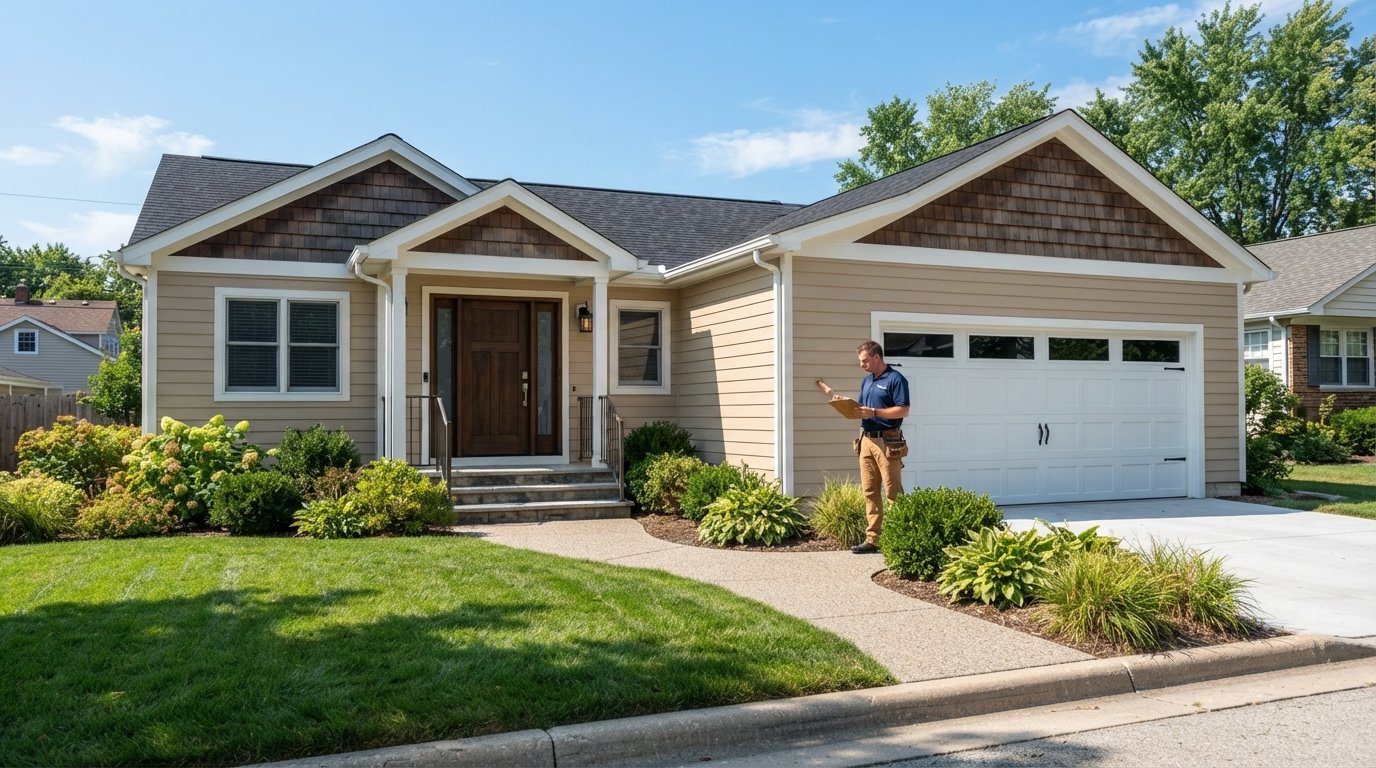
Home Value Boosting Exterior Upgrades Beyond Paint
Boost home value with exterior upgrades beyond paint, from siding to garage doors. Call (833)-700-4293 for expert contractor matching and free quotes.

By Alexia Mabel
Learn more about Home Remodeling for guides, costs, and what to expect.
Compare Home Remodeling Pros Near You

Enter your ZIP code to compare top-rated local professionals and request free quotes.
Paint is the easiest way to refresh a home's look, but it is rarely the upgrade that moves an appraisal or a sale price. When buyers and appraisers evaluate a property from the curb, they are reading signals about maintenance, quality, and long term durability. A fresh coat of paint can mask wear for a season, but siding, entry doors, garage doors, and roof condition tell a story that lasts for decades. According to industry cost versus value data, several exterior projects routinely recover a large share of their cost at resale, and some even deliver a positive return. The key is knowing which upgrades carry the most weight, how exterior condition affects negotiations, and how to sequence work so that each dollar builds on the last. This guide covers home value boosting exterior upgrades beyond paint, with practical guidance for homeowners who want to protect their investment and make smarter renovation decisions.
Siding, Entry Doors, and Garage Doors as Visible Value Signals
Few exterior features are scrutinized as closely as siding. It is the largest visible surface of the home, and its condition communicates whether a property has been maintained. Faded, cracked, or warped siding suggests deferred maintenance, which prompts buyers to discount their offers or request repairs. New siding, by contrast, signals a well kept home and often improves energy performance depending on the material chosen. Fiber cement and engineered wood products are popular because they resist rot and hold paint longer than traditional wood. Vinyl remains a budget friendly option, though premium buyers may view it as a lower tier material. The cost recovery for siding replacement tends to be strong, often in the range of 70 to 80 percent nationally, with variation by region and material.
Entry doors are another high impact upgrade. A new front door is one of the first things a buyer touches, and it shapes the first impression before anyone steps inside. Steel and fiberglass doors offer security, insulation, and a fresh look at a moderate cost. The cost recovery for entry door replacement is frequently among the highest of any remodeling project, sometimes exceeding 90 percent, because the investment is relatively small and the visual payoff is immediate. Garage doors follow a similar pattern. A worn, dented, or manually operated garage door is a red flag for buyers, while a new insulated door with modern hardware can transform the facade of a home. Garage door replacement also ranks well in cost recovery studies, making it a smart choice for homeowners who want visible value without a full exterior overhaul.
These three categories, siding, entry doors, and garage doors, share a common trait: they are large, visible, and easy for an appraiser to compare against similar homes. They also tend to be durable, so the improvement persists through multiple selling cycles. For homeowners planning to sell within a few years, prioritizing these upgrades often makes more sense than cosmetic interior changes that buyers may not value as highly. If you are considering a larger structural change, such as adding square footage, it helps to understand how additions factor into appraisals; our guide on whether home additions increase value explains the tradeoffs between cost, usable space, and resale returns.
How Exterior Condition Affects Buyer Negotiation
Exterior condition is a negotiation lever. Buyers who see peeling paint, missing shingles, or a sagging gutter often assume there are deeper problems behind the surface. Even if the issue is minor, the perception of risk gives buyers room to request credits, repairs, or a lower purchase price. Sellers who address exterior maintenance before listing reduce that leverage and often avoid last minute concessions. A clean roof, intact siding, functioning gutters, and a well maintained entry door tell buyers that the home has been cared for, which builds trust during showings and inspections.
Appraisers also weigh exterior condition heavily because it affects the home's effective age. A property that looks newer than its chronological age may appraise higher than a comparable home with visible wear. This is why exterior upgrades can influence financing as well as sale price. If the appraisal comes in low, buyers may struggle to secure a mortgage, and the deal can fall apart. By investing in visible exterior improvements, sellers protect their negotiating position and help ensure a smoother transaction. It is also worth noting that some exterior issues, such as roof damage or drainage problems, can worsen quickly and lead to interior damage, which multiplies repair costs. Addressing them early is both a value play and a risk management decision.
For homeowners who are not selling but want to refinance or tap home equity, exterior condition matters for the same reasons. Lenders order appraisals, and appraisers note deferred maintenance. A strong exterior presentation supports a higher valuation, which can improve loan terms or increase available equity. In this sense, exterior upgrades are not just about curb appeal; they are about financial flexibility. The table below summarizes how buyers and appraisers typically interpret common exterior conditions.
- New siding and trim: signals recent investment and low maintenance for years to come.
- Worn or mismatched siding: suggests incomplete repairs or budget constraints.
- New entry door: improves security and first impression, often noted in appraisals.
- Dented or outdated garage door: reads as a potential repair item and can date the home.
- Clogged gutters or stained soffits: hints at water management problems that buyers fear.
These signals are cumulative. A home with several small exterior issues may be perceived as a fixer upper, even if the interior is updated. Conversely, a home with a cohesive exterior presentation can command a premium and attract more offers. The lesson is that exterior condition is not a single data point; it is a narrative that buyers and appraisers construct as they walk up the driveway.
Projects with the Strongest Cost Recovery
Not all exterior upgrades are equal when it comes to resale returns. Cost recovery varies by project, region, and market conditions, but national averages provide a useful starting point. The projects that consistently rank highest include entry door replacement, garage door replacement, siding replacement, and manufactured stone veneer. These items combine moderate cost with high visibility and durability, which is why they perform well in cost versus value studies. Roof replacement is another important category, though its cost recovery is often lower because it is viewed as a necessary maintenance item rather than a discretionary upgrade. Still, a failing roof can derail a sale, so the effective return includes avoided concessions and delays.
Window replacement sits in a middle tier. It improves energy efficiency and curb appeal, but the cost is high and the visible change may be subtle from the street. Homeowners who replace windows often do so for comfort and utility savings rather than pure resale return. That said, new windows can be a strong selling point in older homes, especially if the originals are single pane or difficult to operate. Deck additions and fence replacements also add value, but their returns depend heavily on local demand and condition. In general, the strongest cost recovery comes from projects that are visible from the curb, require little maintenance, and appeal to a broad range of buyers.
Homeowners should also consider the concept of marginal return. The first dollar spent on exterior improvements often yields the highest return, because it addresses obvious deficiencies. Once a home is in good repair, additional spending produces diminishing returns. For example, replacing a worn garage door may recover most of its cost, but adding a custom carriage house style door to an otherwise average home may not. The goal is to bring the exterior up to the standard of the neighborhood, not to exceed it dramatically unless the market supports premium finishes. A local real estate agent or appraiser can provide guidance on where your home sits relative to comparable properties, which helps you avoid over improving for the area.
Sequencing Exterior Work with Interior Renovations
Exterior and interior renovations compete for the same budget, so sequencing matters. A common mistake is to spend heavily on interior finishes while neglecting the exterior, only to find that buyers discount the home because of curb appeal. A better approach is to address exterior envelope issues first, especially those that protect the interior. Roof repairs, gutter improvements, and siding replacement prevent water intrusion, which can destroy interior finishes. If you are planning a kitchen or bathroom remodel, it is wise to resolve exterior water management before installing new cabinets or flooring. This sequencing protects your interior investment and avoids the frustration of redoing work after a leak.
Once the exterior is sound, cosmetic exterior upgrades such as entry doors and garage doors can proceed alongside interior projects. These items are relatively quick to install and cause minimal disruption, so they can be coordinated with interior work without much conflict. If you are adding a room or expanding the footprint, the exterior work becomes part of the structural project, and the sequencing is handled by the contractor. For homeowners managing a tight budget, a phased approach works well: year one addresses roof and gutters, year two tackles siding and doors, and year three focuses on interior cosmetic updates. This spreads the cost and ensures that each phase builds on a solid foundation.
It is also important to consider how exterior upgrades interact with interior comfort. New siding with proper house wrap improves insulation and air sealing, which can make interior spaces more comfortable and lower energy bills. New entry doors reduce drafts. New windows, while costly, can improve both. When these exterior improvements are completed before interior finishing work, the interior spaces are better protected and more energy efficient. For homeowners who need help finding qualified professionals for each phase, platforms like Repairmen connect homeowners with vetted local contractors for remodeling, maintenance, and repair projects, which can simplify the process of coordinating multiple trades.
Budgeting and Contractor Selection for Exterior Upgrades
Exterior upgrades require careful budgeting because costs can escalate quickly, especially in older homes where underlying issues are discovered during demolition. A siding replacement project, for example, may reveal rotted sheathing or insufficient house wrap, which adds to the cost. Homeowners should build a contingency of 10 to 20 percent into their budget to cover unexpected repairs. It is also wise to obtain multiple quotes from licensed and insured contractors, compare scope and materials, and ask about warranties. The lowest bid is not always the best value if it excludes important prep work or uses lower grade materials.
Contractor selection is especially important for exterior work because it is exposed to weather and difficult to redo. Look for contractors with experience in your specific project type, check references, and verify licensing and insurance. Ask about lead times and scheduling, since exterior work is weather dependent and delays can push projects into unfavorable seasons. A written contract should specify the scope, materials, timeline, payment schedule, and warranty terms. Avoid paying large deposits upfront, and never pay in full before the work is complete and inspected. For homeowners who want to streamline the process of gathering quotes, USremodel offers a free platform that connects you with independent contractors in your area, allowing you to compare customized quotes and choose the best fit for your project.
Financing is another consideration. Some exterior upgrades, such as siding and windows, can improve energy efficiency and may qualify for rebates or incentives. Others, like roof replacement, may be covered in part by homeowners insurance if the damage is storm related. Homeowners should explore all options before committing to a payment plan. It is also helpful to think about the lifespan of each upgrade. A new roof may last 20 to 30 years, while paint may last five to ten. Investing in longer lived materials can reduce maintenance costs over time and provide a better return when you sell. The goal is to make decisions that align with your timeline, budget, and long term plans for the home.
Frequently Asked Questions About Exterior Value Upgrades
Which exterior upgrade adds the most value?
Entry door replacement and garage door replacement consistently rank among the highest for cost recovery, often returning more than 90 percent of the project cost at resale. Siding replacement also performs well, typically in the 70 to 80 percent range. The best choice depends on your home's current condition and your local market, but these three categories are reliable starting points.
Should I replace my roof before selling?
A failing roof can derail a sale or force a price reduction. If the roof is near the end of its life or shows signs of damage, replacing it before listing is often wise. Even though the direct cost recovery may be lower than other projects, the avoided negotiation losses and faster sale timeline can make it worthwhile. If the roof is in good condition, focus on other visible upgrades instead.
How can I prioritize exterior upgrades on a limited budget?
Start with projects that protect the home from water damage, such as roof repairs and gutter maintenance. Then address the most visible items, like entry doors and garage doors, which offer high visual impact at moderate cost. Siding replacement can follow when budget allows. A phased approach spreads the cost and ensures that each phase builds on a sound exterior envelope.
Do exterior upgrades help with appraisal value?
Yes. Appraisers consider exterior condition when estimating a home's value, and visible upgrades like new siding, doors, and roofs can support a higher valuation. They also reduce the perception of deferred maintenance, which can otherwise lead to lower appraisals and financing challenges for buyers.
Exterior upgrades beyond paint are an investment in both appearance and durability. By focusing on the projects that offer strong cost recovery, addressing exterior condition before it affects negotiations, and sequencing work to protect the home, homeowners can boost value and reduce risk. Whether you are preparing to sell or simply want to improve your home's long term performance, the right exterior upgrades can deliver returns that paint alone cannot match.
Learn more about Home Remodeling for guides, costs, and what to expect.
Compare Home Remodeling Pros Near You
Enter your ZIP code to compare top-rated local professionals and request free quotes.