
Spring Home Maintenance Checklist for Roof Gutters and Drainage
Use this spring home maintenance checklist for roof gutters and drainage to prevent costly water damage. Call (833)-700-4293 for expert help today.

By Alexia Mabel
Learn more about Gutter Cleaning and Maintenance for guides, costs, and what to expect.
Compare Gutter Cleaning and Maintenance Pros Near You

Enter your ZIP code to compare top-rated local professionals and request free quotes.
Winter is finally loosening its grip, and as the snow melts away, it reveals what months of freezing temperatures, ice dams, and heavy precipitation have done to your home's exterior. Your roof, gutters, and drainage system have taken the brunt of it, and what you do in the next few weeks will determine whether small issues stay small or turn into costly repairs by summer. This spring home maintenance checklist for roof gutters and drainage will walk you through every critical inspection and task, from attic rafters to downspout extensions, so you can protect your biggest investment before the spring rains arrive.
Why Spring Is the Most Important Season for Roof and Gutter Maintenance
Spring is not just about cleaning; it is about discovery. The freeze-thaw cycle of winter is uniquely destructive to roofing materials and drainage systems. Water seeps into tiny cracks, freezes, expands, and forces those cracks wider. Ice dams push water under shingles and into your attic. Snow and ice sit in gutters, loosening fasteners and warping metal. By the time temperatures rise, the damage is often already done, but it is still hidden.
Spring inspections catch that hidden damage before it compounds. A lifted shingle that seems minor in April can become a rotted roof deck by August. A clogged downspout that you ignore in May can send water into your foundation during a June thunderstorm, leading to basement flooding and foundation cracks that cost thousands to repair. The window between the last freeze and the first heavy spring rain is your best opportunity to act, and it is narrower than most homeowners realize.
There is also a practical scheduling advantage. Spring is when contractors are still relatively available. By late May and June, roofing crews and gutter specialists are booked solid with summer projects. If you schedule your professional inspections and repairs now, you beat the demand spike and often get more flexible scheduling and pricing. Think of spring maintenance as both damage control and smart logistics.
Roof, Flashing, and Attic Checks After Snow and Ice Season
Start at the top and work your way down. Your roof is the first line of defense, and winter is its toughest opponent. Before you do anything else, grab a pair of binoculars and do a ground-level visual scan of your roof. Look for missing, cracked, or curling shingles; dark patches that suggest granule loss; and any obvious sagging. If you see damage, resist the urge to climb up yourself, especially if your roof is steep or wet. Note the problem and plan to call a professional.
If you can safely access your roof from a stable ladder and the surface is dry, do a closer inspection. Check the flashing around chimneys, skylights, and vent pipes. Flashing is the metal sealing that prevents water from entering at joints, and it is one of the most common failure points after winter. Look for loose nails, peeling sealant, or rusted metal. Also inspect the rubber boots around plumbing vents; these degrade in UV light and freeze-thaw cycles and are inexpensive to replace but expensive to ignore.
Do not neglect your attic. This is where the story of your roof's winter really gets told. Grab a flashlight and look for water stains on the underside of the roof deck, along rafters, and on insulation. Check for daylight showing through the roof boards, which indicates gaps. Look for signs of ice dam damage: compressed or wet insulation near the eaves, peeling paint on interior walls near the ceiling, and mold or mildew growth. Proper attic ventilation and insulation are your best defense against ice dams, so if you see recurring problems, this is the year to address them.
Finally, inspect your gutters' attachment points from the ground. Look for sagging sections, pulled-away fasteners, or gutters that have separated from the fascia. These are signs that the weight of winter ice and debris has compromised the system, and they need attention before the spring rains test them further.
Gutter and Downspout Clearing Plus Grading for Water Runoff
Once you have assessed the roof, it is time to focus on drainage. Gutters and downspouts are your home's primary defense against water damage, and winter leaves them full of debris, ice, and sometimes damage. Clearing them is one of the most important tasks on any spring home maintenance checklist for roof gutters and drainage.
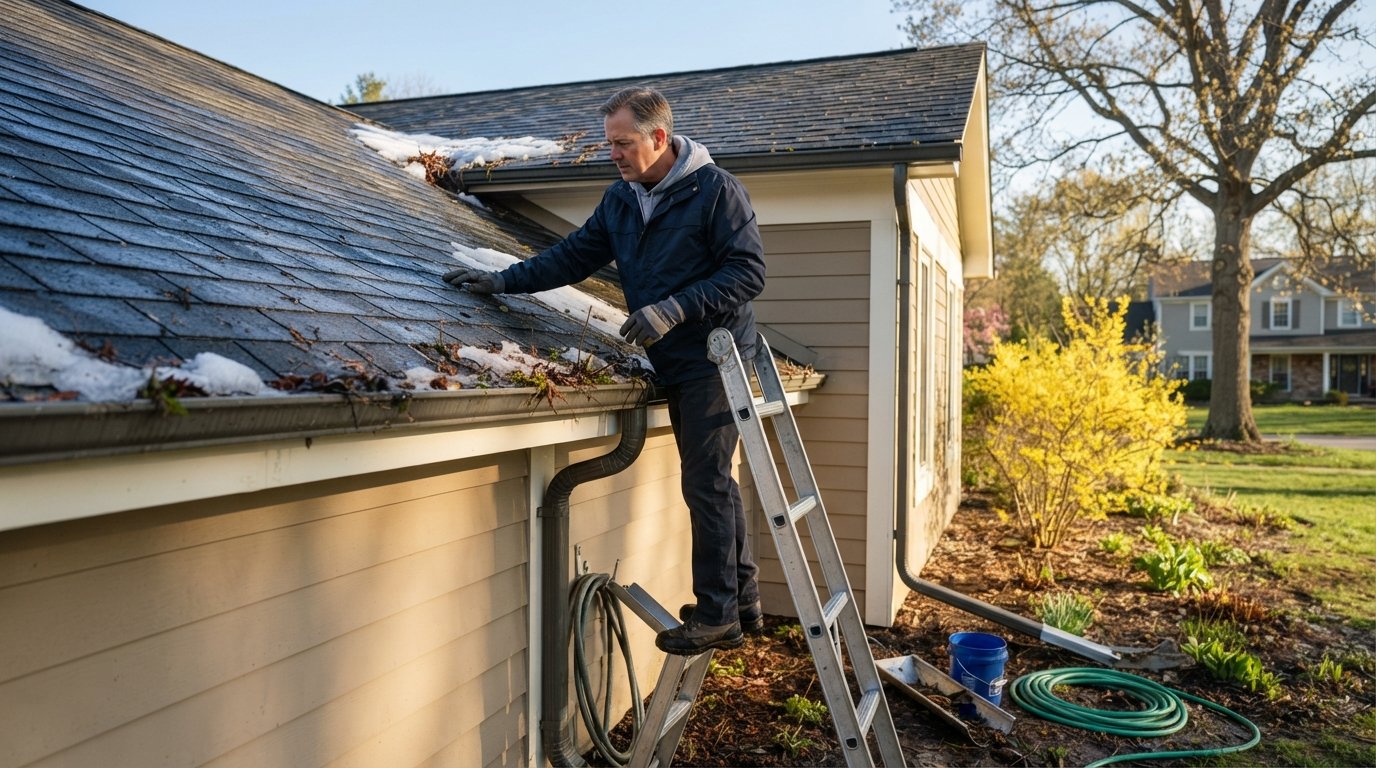
Start by clearing debris from the gutters. Wear gloves and use a sturdy ladder, and never work alone. Remove leaves, twigs, shingle granules, and any nests that have accumulated. Pay special attention to the corners and the areas near downspouts, where debris tends to collect. Once the gutters are clear, flush them with a garden hose to check for proper flow and to identify leaks or low spots where water pools. If water stands in the gutter, the pitch is off and needs adjustment.
Next, check the downspouts. Remove any blockages by flushing water through them from the top. If water does not flow freely, use a plumber's snake or a pressure hose to clear the clog. Make sure the downspouts are securely attached to the house and that all connections are tight. Then, check where the downspouts discharge. Water should be directed at least four to six feet away from the foundation. If your downspouts dump water right at the base of your house, add extensions or splash blocks to move it farther away. This single step can prevent thousands of dollars in foundation and basement water damage.
Grading is the final piece of the drainage puzzle. Walk around your home and check the slope of the soil. The ground should slope away from the foundation at a rate of about six inches over ten feet. If you find low spots or areas where water pools after rain, add soil to build up the grade. This is simple, inexpensive work that pays enormous dividends in foundation protection. While you are at it, check for signs of erosion near downspout outlets and around the foundation, and address any areas where water is carving channels.
If your gutters are old, damaged beyond repair, or constantly clogging despite regular cleaning, it may be time to consider gutter replacement. Seamless gutters or gutter guards can reduce maintenance and improve performance, and a professional can help you evaluate whether repair or replacement makes more sense for your home.
Siding, Caulking, and Exterior Paint Touch-Ups
Your home's exterior envelope, including siding, caulking, and paint, takes a beating in winter. Freezing temperatures cause materials to contract, and thawing causes them to expand. This cycle opens gaps, cracks, and seams that let water in. Spring is the perfect time to seal those entry points before the rainy season.
Walk around your home and inspect the siding for cracks, loose pieces, rot, or warping. Wood siding is especially vulnerable to moisture damage, so probe any soft spots with a screwdriver. If the wood is soft or crumbly, it needs to be replaced. Vinyl and fiber cement siding can crack or chip, so check for damage and replace any compromised pieces. Pay attention to the areas around windows, doors, and utility penetrations, as these are common leak points.
Caulking is your first line of defense against water intrusion at joints. Check the caulk around windows, doors, corner trim, and where different materials meet. Old caulk that is cracked, peeling, or missing should be removed and replaced with a high-quality exterior sealant. This is a small job that makes a big difference in preventing drafts, water damage, and pest intrusion. While you are inspecting, look for gaps around pipes, vents, and electrical boxes and seal them as well.
Paint is more than cosmetic; it is a protective barrier. Inspect painted surfaces for peeling, blistering, or fading. If you find areas where paint is failing, scrape away the loose material, prime the bare surface, and touch up with matching paint. If large areas are failing, it may be time for a full exterior repaint, which protects your siding and improves curb appeal. Spring is an ideal time to paint because temperatures are moderate and humidity is typically low, allowing for proper curing.
Do not forget to inspect your deck, porch, and fence as part of your exterior check. These structures also suffer from winter moisture and freeze-thaw cycles. Look for loose boards, popped nails, and signs of rot, and address them before they become safety hazards.
When to Call a Professional Versus Routine Homeowner Attention
Knowing what you can handle yourself and what requires a licensed professional is essential for both safety and effectiveness. Routine maintenance like clearing gutters, caulking, and minor paint touch-ups are well within the capability of most homeowners. These tasks are low-risk, require basic tools, and can be done in a weekend. However, some situations demand professional expertise.
Call a professional if you notice any of the following:
- Roof damage: missing shingles, sagging, leaks, or flashing problems. Roof work is dangerous and requires specialized knowledge and safety equipment.
- Structural issues: foundation cracks, bowing walls, or significant attic damage. These require engineering or specialized repair expertise.
- Extensive gutter damage: gutters that are pulling away from the house, rusted through, or poorly pitched need professional repair or replacement.
- Mold or moisture problems: persistent attic moisture, mold growth, or widespread water stains suggest ventilation or roofing issues that need a pro.
- Electrical or plumbing concerns: any work involving wiring, gas lines, or major plumbing should be handled by licensed professionals.
If you are unsure whether a problem is serious, err on the side of caution and get an inspection. Many roofing and gutter companies offer free or low-cost inspections, and catching a problem early is always cheaper than fixing it after it has caused secondary damage. For homeowners who need help finding qualified professionals, platforms like Repairmen connect you with vetted, licensed local service providers for appliance repair, remodeling, maintenance, and emergency repairs. You can also use USremodel to get free, customized quotes from multiple contractors in your area, which simplifies the process of comparing options and choosing the right pro for your project.
One more consideration: if your home has been through a severe winter storm with hail or high winds, it is worth having a professional inspection even if you do not see obvious damage. Hail can bruise shingles in ways that are hard to detect from the ground, and insurance claims often have deadlines. A professional inspection can document damage and help you decide whether to file a claim.
Booking Spring Contractor Inspections Before Summer Demand Spikes
Timing matters. If you wait until June to book a roofing or gutter inspection, you will likely face longer wait times, higher prices, and less availability. Spring is the sweet spot for scheduling professional services. Contractors are ramping up for the busy season but are not yet fully booked, and the weather is generally cooperative for exterior work.
Start by identifying the services you need. Based on your own inspection, you may need a roofer, a gutter specialist, a siding contractor, or a general handyman. If you are planning multiple projects, consider bundling them to save on mobilization costs. For example, if you need gutter repair and exterior painting, hiring contractors at the same time can be more efficient.
When you contact contractors, be specific about what you have observed and what you want. Ask for a written estimate that details the scope of work, materials, and timeline. Get at least three quotes for any significant project, and do not automatically choose the lowest bid; consider experience, reviews, insurance, and warranty. USremodel makes this easy by connecting you with multiple independent contractors who can provide customized quotes for your specific needs. You can also use their platform to research common project costs and read guides on hiring contractors, such as their article on professional cabinet installation, which offers insights that apply broadly to any home improvement project.
Before you book, verify that the contractor is licensed, insured, and bonded. Ask for references and check online reviews. A reputable contractor will be happy to provide this information. Also, confirm the warranty terms for both materials and labor. A strong warranty protects you if problems arise later.
Finally, put your spring maintenance tasks on a calendar. Schedule gutter cleaning for early spring, roof inspection for mid-spring, and any major repairs for late spring or early summer, depending on the contractor's availability. A little planning now ensures your home is ready for whatever the seasons bring.
Your Seasonal Maintenance Mindset
Spring maintenance is not just a checklist; it is a habit that protects your home year after year. By taking the time to inspect, clean, and repair now, you prevent small issues from becoming big expenses. The tasks in this spring home maintenance checklist for roof gutters and drainage are designed to be manageable and practical, but they are also critical. Whether you handle them yourself or bring in professionals, the key is to act before the spring rains arrive.
Remember that your home is a system. Roofs, gutters, drainage, siding, and foundations all work together. A problem in one area often affects others, so take a holistic approach. If you find a roof leak, check for gutter clogs and proper drainage. If you see foundation cracks, investigate your grading and downspouts. By thinking about how water moves around and through your home, you can address root causes rather than just symptoms.
Finally, do not be afraid to ask for help. Home maintenance can be overwhelming, but you do not have to do it alone. Use resources like USremodel to find qualified contractors, get multiple quotes, and make informed decisions. A well-maintained home is a safer, more valuable, and more comfortable place to live, and spring is the perfect time to make that happen.