
Deck and Porch Structural Inspection: Seasonal Checks
Seasonal deck and porch structural inspection what to check each season keeps your outdoor space safe. Call (833)-700-4293 for expert help.

By Chelsea Kris
Learn more about Deck or Porch Repair for guides, costs, and what to expect.
Compare Deck or Porch Repair Pros Near You

Enter your ZIP code to compare top-rated local professionals and request free quotes.
Your deck or porch is more than an outdoor living space; it is a structural system that carries people, furniture, and snow loads while enduring sun, rain, and frost. A single hidden rotted joist or a corroded ledger fastener can turn a quiet evening into a safety hazard. Seasonal inspections are the most reliable way to catch small problems before they become expensive repairs or catastrophic failures. This guide walks you through exactly what to check each season, from ledger boards and joists to railings, footings, and finish coatings, so you can protect your family, your investment, and your peace of mind.
Why Seasonal Inspections Matter for Decks and Porches
Wood, fasteners, and concrete all respond differently to changing weather. Spring thaw can reveal frost heave and water damage; summer sun dries and cracks wood; fall leaves trap moisture; winter freeze-thaw cycles stress every connection. A deck that looked fine in July may have loose railings by October. By inspecting on a seasonal schedule, you create a baseline and can track changes over time. You also satisfy a critical homeowner duty: catching structural deficiencies early enough to prevent injury. Many deck failures are linked to ledger board separation, rotted posts, or missing flashing, all of which are visible during a careful seasonal walkthrough.
Beyond safety, seasonal checks support financial planning. A $200 repair in spring can prevent a $2,000 post replacement in fall. If you are planning to sell your home, documented inspections show diligence and can smooth the buyer's inspection process. And if you ever need to file an insurance claim, a maintenance record demonstrates that you took reasonable care of the structure. The goal is not to become a structural engineer; it is to know the warning signs and act promptly.
Spring Inspection: Thaw, Moisture, and Foundation
Spring is the season of discovery. As snow melts and soil thaws, the ground around footings can shift, and moisture that entered over winter becomes visible. Start by walking the perimeter and looking at the ground beneath the deck. Soil should slope away from the house and from the posts. Puddles or eroded soil around footings suggest drainage problems that can undermine support. Check the post bases for frost heave: a post that has lifted or separated from its footing is a red flag. Probe the wood near the base with a screwdriver; if it sinks easily, rot is present.
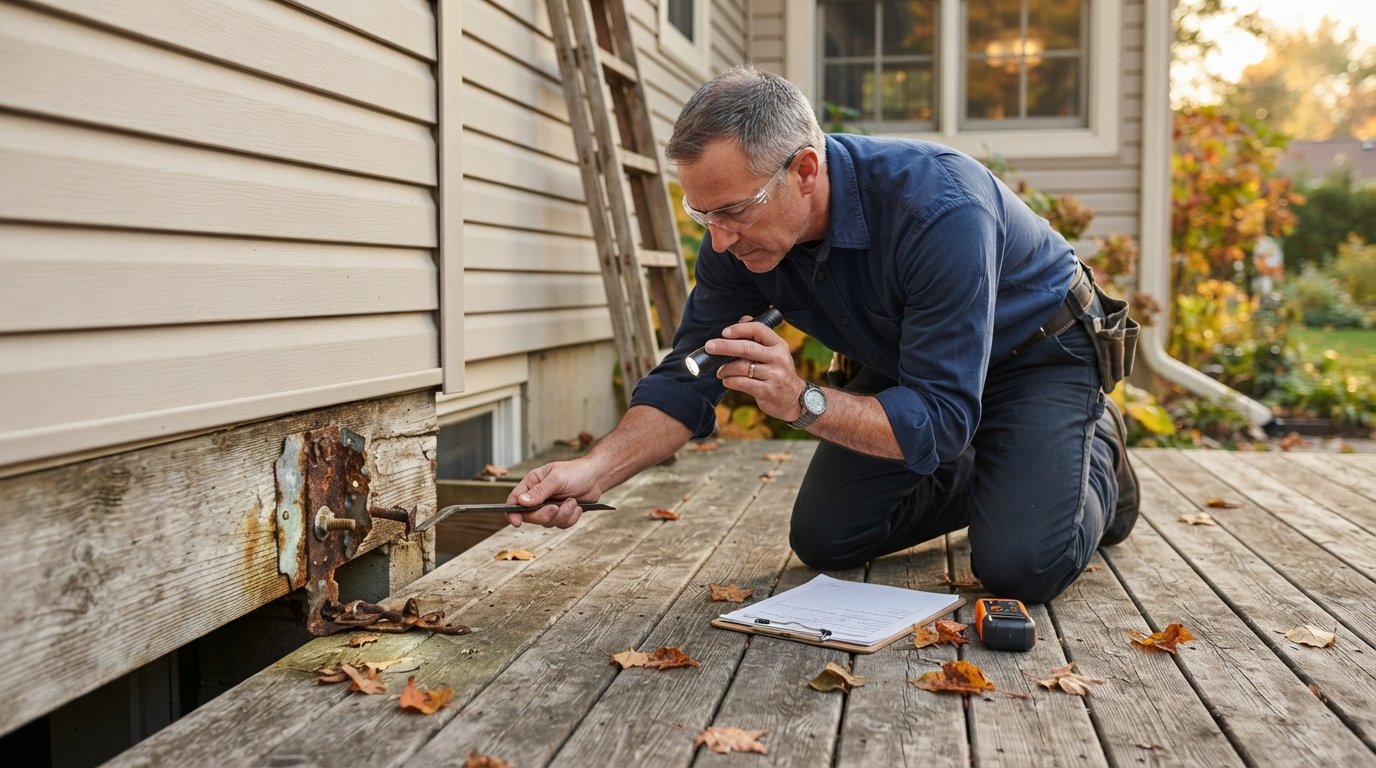
Next, inspect the ledger board, the critical connection between the deck and the house. Look for gaps, loose bolts, missing flashing, and water stains on the siding below. The ledger must be flashed to direct water away from the house; damaged flashing is a common cause of hidden rot. Check joist hangers and fasteners for rust or corrosion, especially if your deck is near saltwater or treated with harsh chemicals. Finally, clear debris from between joists and from the ledger area. Leaves and twigs hold moisture and create a perfect environment for wood decay.
Summer Inspection: Surface, Fasteners, and Finish
Summer heat and sun expose different vulnerabilities. Wood shrinks and cracks; sealants and stains break down under UV light. Run your hand along deck boards and railing caps to feel for splinters, checking for cracks and checking for raised fasteners. A nail or screw head that stands proud can trip someone or tear a bare foot. Corrosion is accelerated by humidity and pool chemicals, so inspect all metal connectors, joist hangers, and railing brackets for white rust or red rust. If you see rust, replace the fastener with a compatible, corrosion-resistant type, such as hot-dip galvanized or stainless steel.
Summer is also the best time to evaluate your finish. Water should bead on a properly sealed surface. If it soaks in immediately, it is time to clean and re-stain. For wood decks, the general interval is every 2 to 3 years for semi-transparent stains and every 1 to 2 years for transparent sealers, depending on traffic and sun exposure. Composite decks require less frequent sealing but still need annual cleaning to remove pollen and mildew. Check vinyl and aluminum railings for loose brackets and cracked welds. While you are at it, test the railing for stability: grab the top rail and push firmly in several directions. Any movement beyond slight flex indicates loose posts or fasteners.
Fall Inspection: Preparing for Winter Loads
Fall is your last chance to correct issues before snow and ice arrive. Clear leaves and debris from the deck surface, between boards, and from under the structure. Trapped organic matter holds moisture and can cause rot over winter. Check gutters and downspouts above the deck; overflow can dump water directly onto the ledger and posts. Inspect the entire structure for any new cracks, splits, or loose connections that appeared during summer. Pay special attention to stairs, which endure heavy traffic and are often the first component to fail. Verify that handrails are secure and that stair stringers are not cracked or sagging.
If you live in a region with heavy snow, consider how you will remove it. Never use a metal shovel on wood or composite; use a plastic shovel or a snow rake. Before the first snowfall, apply a fresh coat of water repellent if the surface is no longer beading. For porches with roofs, check the roof flashing and shingles, especially where the porch roof meets the house. A small leak in fall can become a major rot problem by spring. This is also a good time to schedule a professional inspection if you are unsure about any structural element.
Winter Inspection: Freeze-Thaw and Snow Load
Winter inspections are quick but important. After a heavy snowfall, check for sagging in the deck surface or roof. Snow load limits vary by design, but if you see noticeable deflection, remove snow carefully with a plastic shovel, working from the house outward. Avoid chopping ice; it can damage the surface and fasteners. Look for ice dams on porch roofs and around the ledger; these indicate heat loss or poor insulation and can force water into the structure. Check that railings remain solid and that no fasteners have popped due to freeze-thaw movement.
Inside the house, look for water stains on the ceiling or rim joist area adjacent to the deck. This can signal ledger flashing failure. If you see icicles hanging from the deck edge, it may be a sign of trapped moisture and poor drainage. Keep an eye on posts embedded in soil or concrete; frost heave can create gaps or cracks. Finally, avoid storing heavy items like planters or snow blowers on the deck during winter, as they add unnecessary load. A quick monthly visual check is usually sufficient unless you notice a problem.
Key Structural Components: What to Check Every Season
Regardless of season, certain components deserve consistent attention. Use this checklist as a mental framework for your walkthrough. Each item plays a role in the deck's load path and safety.
- Ledger board and flashing: Look for gaps, loose bolts, water stains, and deteriorated flashing. The ledger must be securely attached to the house with lag screws or through-bolts, and flashing must direct water away.
- Joists and hangers: Check for rot, cracks, and loose hangers. Joists should be straight and free of large knots or splits. Hangers must be properly sized and fastened with the correct nails or screws.
- Posts and footings: Ensure posts are plumb and free of rot at the base. Footings should be above grade and not cracked. Look for soil erosion or frost heave around the base.
- Railings and guardrails: Test for stability. Rails should be able to withstand a 200-pound concentrated load in any direction. Check baluster spacing (should not allow a 4-inch sphere to pass) and fastener tightness.
- Stairs and stringers: Inspect for loose treads, cracked stringers, and secure handrails. Stairs are a common location for trips and falls.
Any issue that compromises load capacity or safety warrants immediate attention. If you are unsure, err on the side of caution and consult a licensed professional. For a deeper dive into related exterior maintenance, including roof checks that affect your porch, see our winter roof inspection checklist.
Rot, Rust, and Fastener Corrosion: The Silent Killers
Wood rot and metal corrosion are the most common causes of deck failure, and both are often hidden until it is too late. Rot begins where water collects: at the ledger, post bases, stair stringers, and anywhere wood meets soil or concrete. Probe suspect areas with a screwdriver or awl; if the wood is soft or crumbly, it needs replacement. Pay attention to discoloration, soft spots, and a spongy feel underfoot. Even pressure-treated lumber can rot if water is trapped against it.
Fastener corrosion is equally insidious. A rusted nail or screw loses holding power, and a corroded joist hanger can fail without warning. Look for white or red rust on all metal connectors, especially if your deck is near the ocean or a pool. Replace any corroded fastener with one rated for exterior use and compatible with the wood treatment. Never mix galvanized and stainless steel in a way that causes galvanic corrosion. If you see widespread corrosion, it may be a sign that the entire fastening system needs an upgrade. In severe cases, a professional inspection is warranted to determine whether the structure can be repaired or must be rebuilt.
Staining and Sealing Intervals by Material
Protective finishes extend the life of your deck and make seasonal inspections easier. The right interval depends on the material and the product. Here are general guidelines, but always follow the manufacturer's recommendations and consider your local climate.
- Pressure-treated wood: Wait at least 6 to 12 months before the first stain to allow the wood to dry. Then reapply every 2 to 3 years for semi-transparent stains, or every 1 to 2 years for transparent sealers.
- Cedar and redwood: These woods are naturally resistant but still benefit from a penetrating oil or stain every 1 to 2 years.
- Composite decking: Most composites do not require sealing, but they should be cleaned annually with mild soap and water. Some manufacturers recommend a protective coating every few years.
- Vinyl and PVC: Clean annually with soap and water; no sealing is needed, but check for cracks and loose fasteners.
Before applying any finish, clean the surface thoroughly and allow it to dry. Test the finish on a small area first. If you are unsure which product to use, consult a professional contractor who can assess your specific material and climate. Proper finishing not only improves appearance but also reduces moisture intrusion, which is the root cause of most structural problems.
Repair vs. Rebuild: Decision Factors and Cost Ranges
When you find damage, the first question is whether to repair or rebuild. Minor issues like a few loose boards, surface rot, or corroded fasteners are usually repairable. But significant structural damage, such as multiple rotted joists, a failing ledger, or widespread post decay, may tip the balance toward a full rebuild. Consider the age of the deck: most wood decks last 10 to 15 years with proper maintenance, while composite decks can last 25 years or more. If your deck is near the end of its expected lifespan and has multiple problems, rebuilding may be more cost-effective in the long run.
Cost is another factor. A small repair, such as replacing a few boards or tightening railings, might cost $300 to $1,000. Replacing a ledger board or several joists can run $1,500 to $5,000. A full rebuild of a 200-square-foot deck typically ranges from $8,000 to $15,000, depending on materials and complexity. These are ballpark figures; actual costs vary by region and scope. To get accurate quotes from vetted local contractors, you can use a platform like Repairmen to connect with professionals who can assess your deck and provide customized estimates.
Permits and code considerations also influence the decision. Many repairs, especially structural ones, require a permit. If you modify the deck's footprint, height, or railing, you will almost certainly need a permit and inspections. Rebuilding may trigger current code requirements, such as updated railing height and baluster spacing. Always check with your local building department before starting work. A licensed contractor can guide you through the permitting process and ensure the work meets current codes.
When to Call a Professional
While seasonal inspections are a homeowner's job, some situations demand a professional eye. Call a licensed contractor or structural engineer if you notice any of the following: a sagging deck surface, a ledger board that is pulling away from the house, loose or wobbly railings, posts that are not plumb, or widespread rot. Also seek help if you are planning any structural modification, such as adding a hot tub, a pergola, or a second story. Professionals have the tools and expertise to assess load capacity and code compliance.
If you are unsure about the severity of a problem, it is always better to get an inspection. Many contractors offer free or low-cost assessments. For homeowners in the United States, USremodel can connect you with local deck and porch specialists who can perform a thorough inspection and provide repair or rebuild quotes. The platform is free for homeowners and helps you compare multiple offers, so you can make an informed decision. Regular seasonal checks, combined with professional help when needed, will keep your deck and porch safe and enjoyable for years to come.
Remember, your deck is an investment in your home's value and your lifestyle. A few hours each season can save you thousands in repairs and prevent accidents. Make seasonal inspections a habit, and you will enjoy your outdoor space with confidence.