
Hot Water Heater Leaking or Failing: Signs and Repair Options
Spot hot water heater leaking or failing signs early and compare repair options before a flood hits. Call (833)-700-4293 for vetted local plumbing quotes.

By Jessica Reis
Learn more about Water Heater Repair or Maintenance for guides, costs, and what to expect.
Compare Water Heater Repair or Maintenance Pros Near You

Enter your ZIP code to compare top-rated local professionals and request free quotes.
You step into the garage and notice a dark stain spreading across the concrete floor. Or maybe the shower runs cold after five minutes, and a low rumbling sound echoes from the utility closet. A hot water heater leaking or failing rarely happens without warning. The unit usually broadcasts its decline through water, noise, and inconsistent performance long before it quits entirely. Recognizing those signals early can mean the difference between a quick, affordable repair and a flooded basement, ruined belongings, and a frantic emergency call.
This guide walks through the most common failure signs, explains when a leak demands immediate attention versus a scheduled visit, compares tank and tankless replacement considerations, and outlines the permit and code requirements that govern water heater installation. You will also learn how to gather itemized plumbing quotes before the unit fails completely, so you are never forced into a rushed decision at the worst possible moment.
Common Signs Your Hot Water Heater Is Leaking or Failing
Water heaters are built to last, but they are not built to last forever. Most tank-style units have a lifespan of eight to twelve years, and tankless models can reach twenty years with proper maintenance. The trouble is that failure rarely announces itself with a single dramatic event. Instead, the unit degrades gradually, and homeowners often mistake early warning signs for minor quirks. Paying attention to the following indicators can help you act before a small problem becomes a costly emergency.
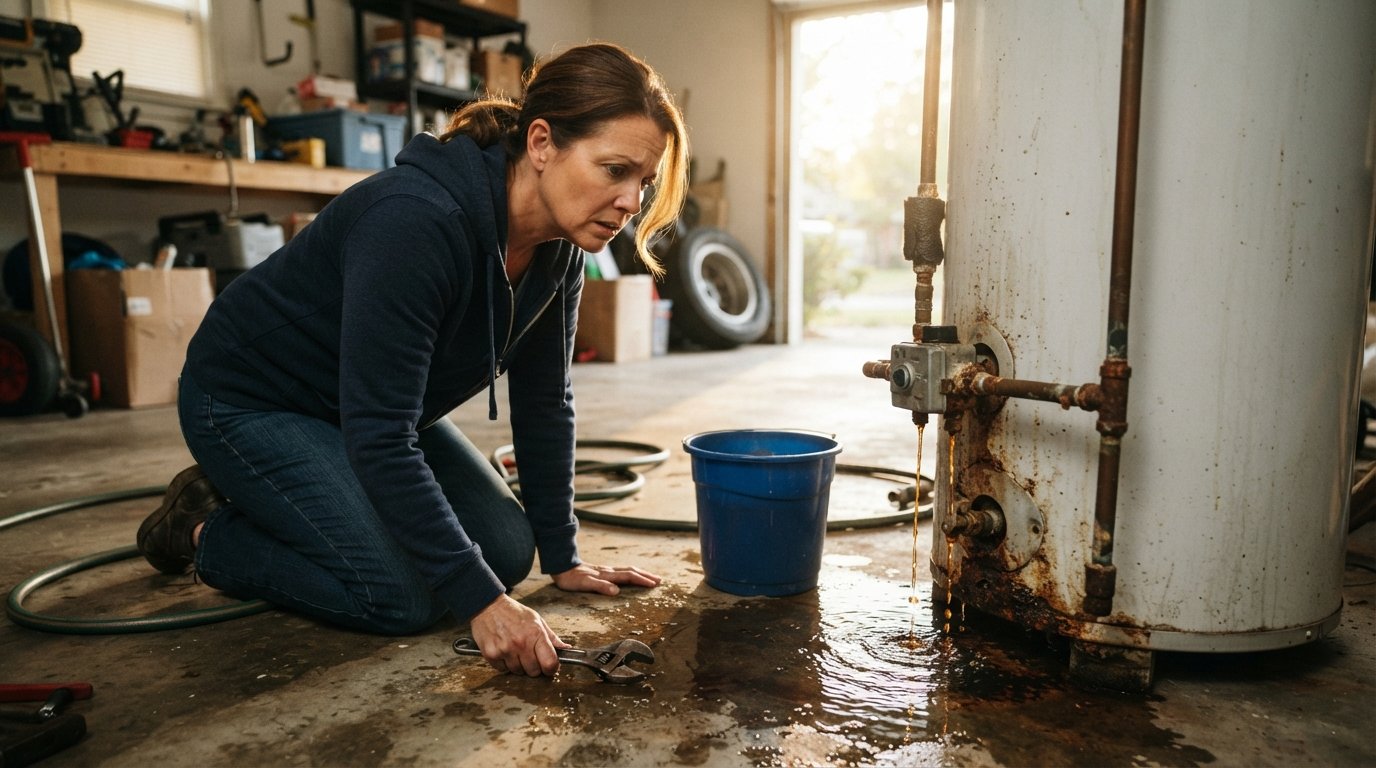
One of the earliest and most reliable signs is moisture around the base of the tank. A few drops might seem harmless, but any water pooling near the unit deserves investigation. Condensation on the exterior of a cold tank is normal in humid climates, but water that persists or accumulates on the floor is not. Similarly, rusty or discolored hot water, a metallic taste, or sediment in the tap are red flags. Rust inside the tank often signals internal corrosion, which is a terminal condition for most units.
Noise is another important clue. Popping, rumbling, or banging sounds coming from the heater usually indicate sediment buildup on the bottom of the tank. As the burner heats the water, trapped sediment creates steam pockets that pop and rumble. This is not just annoying; it reduces efficiency and can shorten the life of the unit. If you hear these sounds, a flush may help, but significant sediment usually points to a tank that is nearing the end of its service life.
Inconsistent hot water supply is a third major indicator. If your showers turn cold faster than they used to, or if the water temperature fluctuates unpredictably, the heating element, thermostat, or dip tube may be failing. In gas units, a yellow or flickering burner flame instead of a steady blue flame can signal combustion problems that require professional attention. Finally, visible corrosion on the tank body, fittings, or connections is a strong sign that replacement is on the horizon. A tank that is actively leaking from its body, rather than from a fitting or valve, cannot be repaired and must be replaced.
- Tank leaks: Water pooling at the base or seeping from the tank body indicates internal corrosion or a failed gasket.
- Rusty water: Discolored hot water or sediment at the tap points to a corroding tank or failing anode rod.
- Popping sounds: Rumbling or banging from sediment buildup reduces efficiency and stresses the tank.
- Short hot water: Showers that go cold quickly suggest a failing heating element, thermostat, or dip tube.
- Visible corrosion: Rust or mineral crust on the tank, fittings, or connections signals imminent failure.
Any one of these signs warrants a professional inspection. Two or more together usually mean the unit is on borrowed time. The key is to treat these warnings as an opportunity to plan rather than react, because a planned replacement is almost always cheaper and less stressful than an emergency one.
When a Leak Demands Emergency Plumbing Service
Not all leaks are created equal. A slow drip from a pressure relief valve or a loose fitting can often wait for a scheduled service call during business hours. But some leaks are genuinely urgent and require immediate attention to prevent water damage, mold growth, or safety hazards. Understanding the difference helps you make a smart, calm decision under pressure.
A leak from the tank body itself is the most serious scenario. Unlike a leaking valve or connection, the tank is a sealed vessel, and a leak in the body means the steel has corroded through. This cannot be patched or repaired. The unit must be replaced, and the water supply must be shut off immediately to prevent flooding. If you see water spraying, pooling rapidly, or soaking into drywall or flooring, shut off the cold water inlet valve and the gas supply or electrical breaker, then call a plumber right away. Water damage from a failed tank can easily exceed the cost of a new unit within hours.
Leaks near electrical components or gas connections are also emergencies. Water and electricity are a dangerous combination, and a gas leak poses obvious safety risks. If you smell gas or see water near the burner assembly, leave the area and call for emergency service. Similarly, if the leak is causing water to drip from the ceiling or into living spaces, the risk of structural damage and mold justifies immediate action.
On the other hand, a slow drip from a temperature and pressure relief valve, a drain valve, or a pipe fitting may be repairable with a simple part replacement. These issues still deserve prompt attention, but they do not usually require a middle-of-the-night call. The best approach is to shut off the water to the heater if possible, contain the drip with a bucket or towel, and schedule a service visit as soon as possible. If you are unsure whether a leak is urgent, err on the side of caution and call a professional for guidance.
Tank Versus Tankless Replacement Considerations
When a water heater fails, homeowners face a decision: replace it with another tank-style unit or upgrade to a tankless system. Both options have merit, and the right choice depends on your household's hot water demand, budget, space constraints, and long-term goals. Understanding the trade-offs helps you ask the right questions when you request quotes from contractors.
Tank water heaters are the most common choice in the United States. They store a large volume of hot water in an insulated tank, typically 40 to 80 gallons, and deliver it on demand. They are generally less expensive to purchase and install, and replacement is often straightforward because the existing plumbing, venting, and electrical or gas connections are already in place. However, tank units are less energy-efficient, they take up significant space, and they can run out of hot water during periods of high demand. They also have a shorter lifespan, typically eight to twelve years.
Tankless water heaters heat water on demand as it flows through the unit. They are more energy-efficient, take up far less space, and provide a continuous supply of hot water, which is ideal for large families or households with multiple bathrooms. They also last longer, often twenty years or more. However, tankless units have higher upfront costs, and installation can be more complex. They may require upgraded gas lines, electrical service, or venting, and they have a limited flow rate, so simultaneous use of multiple hot water fixtures can sometimes exceed capacity. Retrofitting a tankless system into an older home may also require plumbing modifications. If you are weighing the long-term efficiency and space savings against the higher initial investment, our guide on tankless water heater pros and cons breaks down the key factors in more detail.
For homeowners planning a replacement, it is worth considering the age of the existing unit, the size of the household, and future plans for the home. A professional contractor can perform a load calculation to recommend the right size and type of unit. They can also advise on rebates, tax credits, and energy-efficiency incentives that may offset part of the cost, particularly for high-efficiency models. If you are also exploring broader energy upgrades, resources like free solar power quotes can help you understand how solar energy solutions and incentives might complement your home's efficiency strategy.
Permit and Code Requirements for Water Heater Replacement
Replacing a water heater is not simply a matter of swapping out one unit for another. In most jurisdictions, water heater installation requires a permit and must comply with local building codes. These requirements exist to protect homeowners from unsafe installations, including improper venting, inadequate seismic strapping, missing pressure relief valves, and electrical or gas connections that do not meet current standards.
Permit requirements vary by state, county, and municipality. Some areas require a permit for any water heater replacement, while others only require one when the fuel type, location, or venting configuration changes. A licensed plumber or contractor will typically handle the permitting process as part of the project, but it is important to confirm this upfront. An unpermitted installation can create problems when you sell your home, and it may void your homeowner's insurance coverage if a failure occurs. It can also result in fines and the requirement to remove and reinstall the unit at your expense.
Code compliance involves several key elements. The unit must be properly sized and installed according to the manufacturer's instructions and local amendments. It must have a functioning temperature and pressure relief valve piped to a safe discharge location. Gas units must be properly vented to prevent carbon monoxide buildup, and electrical units must be on a dedicated circuit with proper grounding. In seismic zones, strapping is required to secure the tank to the wall. Many jurisdictions also require an expansion tank on closed plumbing systems to accommodate thermal expansion.
Before hiring a contractor, ask whether the quote includes permit fees and inspection coordination. A reputable professional will not hesitate to pull the required permits and will schedule the final inspection with the local authority. If a contractor suggests skipping the permit to save time or money, treat that as a red flag. The small cost of a permit is insignificant compared to the safety and resale value benefits of a compliant installation.
Getting Itemized Plumbing Quotes Before Failure
The best time to gather plumbing quotes is before your water heater fails, not after. When you are dealing with a leaking tank, standing water, and no hot water, you are more likely to accept the first available quote without comparing options. Planning ahead gives you leverage, clarity, and the ability to choose a contractor based on value rather than urgency.
Start by requesting quotes from at least three licensed plumbing contractors. An itemized quote should break down the cost of the unit, labor, permit fees, disposal of the old unit, and any necessary modifications to plumbing, venting, or electrical service. It should also specify the brand, model, capacity, and warranty terms of the proposed replacement. Be wary of quotes that provide only a single lump-sum figure without explaining what is included. That lack of detail makes it difficult to compare bids and can lead to surprise charges later.
When reviewing quotes, ask about the contractor's license, insurance, and experience with your type of unit. Confirm whether the quote includes hauling away the old heater and whether any drywall or flooring repair is covered if the replacement requires access work. Ask about the warranty on both the equipment and the labor, and get the terms in writing. It is also wise to ask how the contractor handles emergency calls and whether they offer any maintenance plans that can extend the life of the new unit.
Timing matters as well. Water heaters tend to fail at the worst possible moments, often during holidays or cold snaps when demand for plumbers is high. By researching contractors and collecting quotes while your current unit is still functioning, you can make an informed decision without pressure. You can also schedule a preventive inspection to assess the remaining life of your unit and plan a replacement on your own timeline. Many plumbers offer flush and maintenance services that can extend the life of a tank, but once corrosion or tank leaks appear, replacement is the only reliable option.
If you are unsure where to start, a platform that connects homeowners with vetted local contractors can simplify the process. You can request multiple customized quotes, compare itemized estimates, and choose a licensed professional who fits your budget and timeline. Taking that step now, while your water heater is still working, puts you in control of the project instead of at the mercy of an emergency.