
Tankless Water Heater Pros and Cons: A Homeowner Guide
Explore the pros and cons of a tankless water heater, including costs, energy savings, and installation tips to decide if it is right for your home.
By Margaret Sheridan
Learn more about Water Heater Installation or Replacement for guides, costs, and what to expect.
Compare Water Heater Installation or Replacement Pros Near You

Enter your ZIP code to compare top-rated local professionals and request free quotes.
Imagine stepping into a warm shower on a cold morning, knowing the hot water will last as long as you need it. No more waiting for a storage tank to refill and reheat. This is the everyday reality for homeowners who switch to a tankless water heater. Also known as on-demand water heaters, these compact units heat water directly as it flows through the device, rather than storing it in a bulky tank. While they offer clear benefits like endless hot water and energy savings, they also come with higher upfront costs and specific installation requirements. This guide walks you through the essential pros, cons, costs, and installation factors so you can decide if a tankless system is the right upgrade for your home.
For many families, the decision comes down to space, budget, and hot water usage patterns. A traditional tank water heater typically lasts 10 to 15 years, while a tankless unit can last 20 years or more. That longevity, combined with energy efficiency, makes it an attractive long-term investment. However, the initial price tag and the need for professional installation can be surprising. Understanding how these systems work, what they cost, and how they fit into your home's infrastructure will help you make a confident choice.
How a Tankless Water Heater Works
A tankless water heater uses high-powered burners or electric coils to heat water instantly. When you turn on a hot water tap, cold water travels through a pipe into the unit, where a gas burner or electric element heats it to the desired temperature. This means hot water is produced on demand, eliminating the standby energy losses associated with traditional storage tanks. You only pay for the hot water you actually use, which is a key reason these units are more energy efficient.
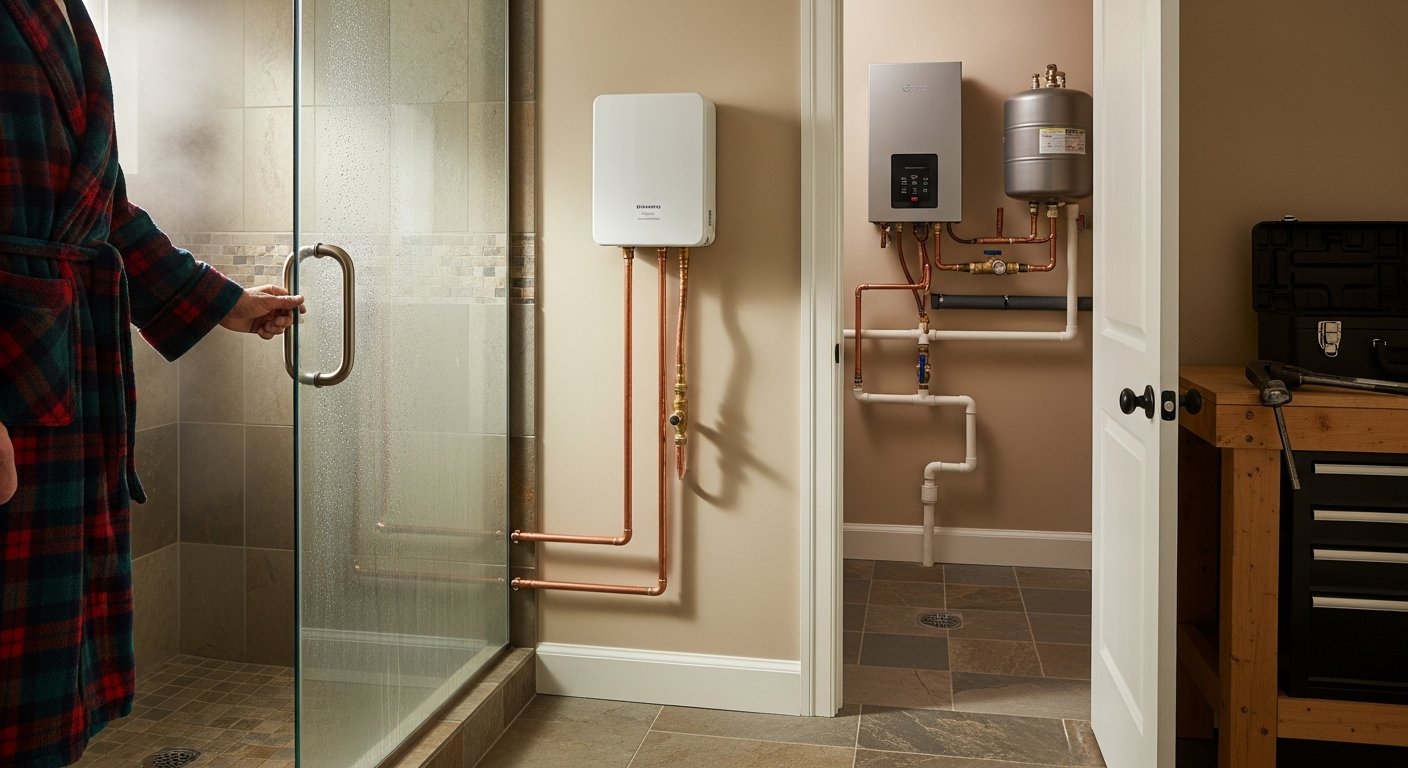
Because there is no storage tank, the unit is much smaller, often about the size of a small suitcase. This allows for flexible mounting on walls, in closets, or in crawl spaces, freeing up valuable floor space. Some advanced models even come with Wi-Fi connectivity, allowing you to monitor and adjust temperature settings from your smartphone. Whether you choose a gas or electric model, the core principle remains the same: heat water only when you need it, not around the clock.
However, it is important to understand the concept of flow rate. A tankless water heater can deliver a specific number of gallons per minute (GPM). If you are running multiple hot water appliances at once, like a shower and a washing machine, the unit might struggle to keep up unless it is properly sized. This is why professional sizing is critical. A contractor will evaluate your household's peak hot water demand to recommend the right model and capacity.
Key Benefits of Going Tankless
Switching to a tankless water heater offers several compelling advantages that go beyond simple convenience. For many homeowners, the appeal lies in the combination of efficiency, longevity, and space savings. Here are the primary benefits to consider:
- Endless hot water: As long as you stay within the unit's flow rate, you will never run out of hot water. This is perfect for households with multiple bathrooms or frequent guests.
- Energy efficiency: Tankless units are 24% to 34% more energy efficient than storage tank models for homes that use 41 gallons or less of hot water daily. Even for larger households, they are 8% to 14% more efficient.
- Longer lifespan: With proper maintenance, a tankless water heater can last up to 20 years, compared to 10 to 15 years for a traditional tank.
- Space saving design: The compact size can be mounted on a wall, freeing up valuable floor space in your utility room, garage, or basement.
- Reduced risk of water damage: Since there is no tank to leak, the risk of catastrophic flooding is significantly lower, which can also lower your insurance premiums.
These benefits translate into real savings over time, both in terms of energy bills and potential repair costs. For example, a family that uses a lot of hot water will see a noticeable drop in their monthly utility expenses. The absence of a tank also means no more waiting for the water to heat up after the tank has been drained, and no more rusty or sediment-filled water that comes from older tanks.
From a home value perspective, a modern, energy-efficient tankless system can be a selling point for potential buyers. Real estate agents often highlight such upgrades as premium features. If you are planning to sell your home in the next few years, this investment could make your property stand out in a competitive market.
The Drawbacks and Challenges
Despite their many benefits, tankless water heaters are not without their challenges. The most significant hurdle for most homeowners is the upfront cost. A high-quality tankless unit can cost anywhere from $800 to $2,500 or more, and installation can add another $1,000 to $3,000. This is considerably more than a traditional tank water heater, which typically totals between $500 and $1,500 installed.
Installation is also more complex. Gas models require larger gas lines and proper venting, while electric models may need a dedicated electrical circuit and increased amperage. In older homes, the existing infrastructure may not support these requirements, leading to additional costs for upgrades. Furthermore, the “endless hot water” promise has a caveat: it is limited by the unit's flow rate. If you try to run two showers and a dishwasher simultaneously, you might experience a drop in water pressure or temperature.
Another consideration is the initial “cold water sandwich” effect. When you turn the water off and then back on quickly, you may experience a burst of cold water as the unit restarts and reheats. While this is a minor inconvenience, it can be surprising for some users. Additionally, tankless units can be more sensitive to hard water, which can cause mineral buildup inside the heat exchanger. This means you may need to descale the unit annually, adding a maintenance task to your routine.
Finally, in the event of a power outage, gas-powered tankless units will not work without electricity, as the control panel and ignition system require power. This is a point often overlooked by homeowners who expect a gas appliance to function during a blackout. You would need a battery backup or generator to maintain hot water service in such situations.
Cost Analysis and Long-Term Savings
Understanding the full cost picture is essential before making a decision. The initial investment for a tankless water heater is higher, but the long-term savings can offset this over time. Here is a breakdown of the costs and savings you can expect:
Upfront Costs: The unit price varies based on brand, capacity, and fuel type. High-efficiency condensing models are more expensive but offer greater energy savings. Installation costs depend on the complexity of the job, including venting, gas line upgrades, or electrical work.
Operating Costs: Because tankless heaters are more efficient, your monthly energy bills will be lower. The exact savings depend on your hot water usage and local utility rates. On average, homeowners save between $100 and $200 per year on energy costs compared to a traditional tank.
Lifespan and Replacement: A tankless unit lasts up to 20 years, which is nearly twice as long as a tank model. This means you will avoid the cost of replacing the unit as often, and you will also save on the associated labor costs.
Maintenance: Annual descaling and cleaning are recommended to maintain performance and efficiency. This service typically costs between $100 and $300, depending on your location and whether you hire a professional.
To illustrate the financial picture, consider a household that spends $500 per year on water heating with a traditional tank. Switching to a tankless system could reduce that cost to $350, saving $150 annually. Over 10 years, that is $1,500 in savings, which can help offset the initial purchase and installation costs. Combined with the longer lifespan and reduced risk of water damage, the total cost of ownership often favors tankless in the long run.
Installation Considerations and Professional Help
Proper installation is the single most important factor in maximizing the performance and lifespan of your tankless water heater. This is not a DIY project for most homeowners. The complexity of venting, gas line sizing, and electrical wiring demands the expertise of a licensed plumber or HVAC technician. Attempting to install the unit yourself can lead to unsafe conditions, void warranties, and result in poor performance.
When hiring a professional, ask about their experience with tankless systems specifically. Not all plumbers are familiar with the unique requirements of these units. A qualified installer will perform a load calculation, ensure proper venting to the outside, and verify that your gas lines or electrical panel can handle the additional demand. They will also handle the necessary permits and inspections, which are often required by local building codes.
Before installation, your contractor will need to evaluate your home's water quality. If you have hard water, they may recommend a water softener or a descaling kit to protect the heat exchanger. They will also discuss the best location for the unit, considering factors like proximity to hot water fixtures to minimize heat loss and reduce wait times.
Once installed, professional maintenance is recommended annually. This includes flushing the heat exchanger with a descaling solution to remove mineral buildup. A well-maintained tankless heater will maintain its efficiency and longevity, providing you with reliable hot water for decades.
Is a Tankless Water Heater Right for Your Home?
Deciding whether to invest in a tankless water heater depends on your household's unique needs and your long-term plans for your home. If you value endless hot water, want to reduce energy bills, and have the budget for a higher upfront investment, a tankless system is an excellent choice. It is particularly well-suited for smaller homes or apartments where space is at a premium, or for larger families that frequently run multiple hot water appliances at once.
Conversely, if your budget is tight, or if your home has outdated plumbing or electrical systems that would require expensive upgrades, a traditional tank water heater might be more practical. Also, if you rarely use hot water, the energy savings from a tankless unit may not justify the higher initial cost. In such cases, a high-efficiency tank model could be a more cost-effective solution.
To make the best decision, it is wise to consult with a qualified contractor. They can assess your home's infrastructure, calculate your peak hot water demand, and provide a detailed quote for both the unit and installation. This will give you a clear picture of the total investment and the potential long-term savings. With the right information and professional guidance, you can choose a water heating solution that provides comfort, efficiency, and peace of mind for years to come.
As you weigh your options, remember that a tankless water heater is a significant home improvement that can enhance your daily comfort and your property's value. By understanding the pros, cons, costs, and installation requirements, you are now equipped to make an informed decision. When you are ready to move forward, consider reaching out to USremodel to connect with experienced, vetted contractors in your area who can provide a free, customized quote and ensure your new water heater is installed to the highest standards.
Learn more about Water Heater Installation or Replacement for guides, costs, and what to expect.
Compare Water Heater Installation or Replacement Pros Near You
Enter your ZIP code to compare top-rated local professionals and request free quotes.