
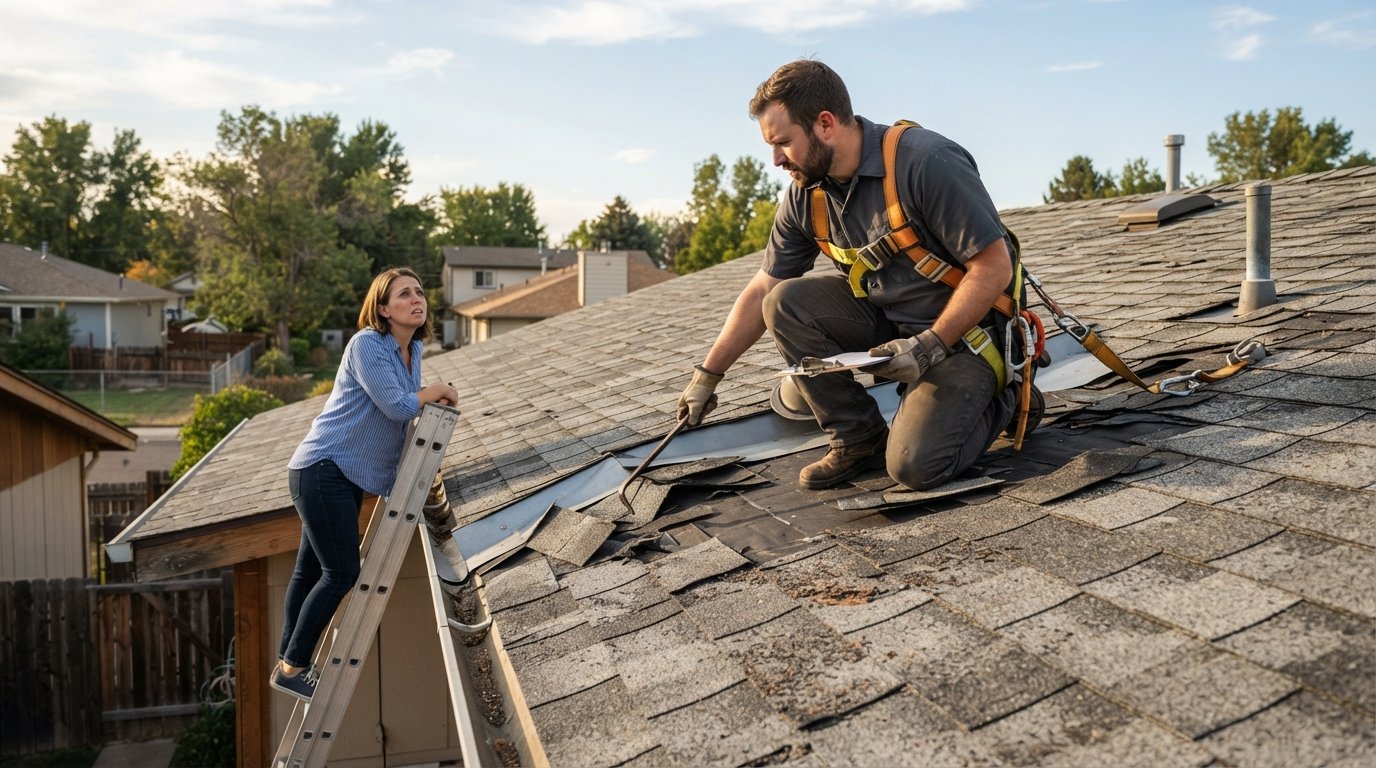
Roof Repair Cost Factors: What to Ask Contractors
Understand roof repair cost factors homeowners should ask contractors about to avoid surprise bills. Call (833)-700-4293 for vetted local pros.

By James Morgan
Learn more about Roof Repair or Maintenance for guides, costs, and what to expect.
Compare Roof Repair or Maintenance Pros Near You

Enter your ZIP code to compare top-rated local professionals and request free quotes.
A roof leak never waits for a convenient moment. It appears during a storm, drips into your living room, and suddenly you are scrambling to find a contractor while worrying about the final bill. Most homeowners focus on the visible damage, but the real story behind a roof repair estimate lies in the details that contractors may not volunteer upfront. Understanding the roof repair cost factors homeowners should ask contractors about empowers you to compare bids fairly, spot hidden fees, and avoid unpleasant surprises when the invoice arrives.
This guide breaks down the key cost drivers, from pitch and layers to underlayment and flashing, and explains how to read a written estimate line by line. You will also learn when a repair makes sense versus when a partial replacement is the smarter investment. By the end, you will know exactly which questions to ask so that every quote you receive is transparent and complete.
Why Roof Repair Quotes Vary So Much
Two contractors can look at the same damaged roof and return quotes that differ by thousands of dollars. The gap is rarely about greed or incompetence; it usually comes down to what each contractor includes in the scope of work. One bid may cover only the visible repair, while another accounts for underlying problems like rotten decking or inadequate ventilation. Without a clear breakdown, you cannot tell whether you are comparing apples to apples.
Labor is the largest variable in most roof repairs, often accounting for 40 to 60 percent of the total. Labor costs depend on the complexity of the job: the pitch of your roof, how many layers of old shingles must be removed, and how easily crews can access the work area. A steep roof requires more safety equipment and slower, more careful work. A roof covered in three layers of old shingles means extra tear-off time and disposal fees. Limited access, such as a narrow driveway or landscaping that blocks equipment, can also drive up labor charges.
Materials make up the rest of the bill, but their cost varies widely based on quality and availability. Architectural shingles cost more than three-tab shingles but last longer. Metal, tile, and slate repairs require specialized skills and materials that may need to be ordered. Even small repairs can become expensive if the replacement material must be custom-ordered to match your existing roof.
Labor Cost Drivers: Pitch, Layers, and Access
When discussing roof repair cost factors homeowners should ask contractors about, pitch is one of the first items to clarify. Roof pitch is measured as the vertical rise over a horizontal run. A low-slope roof might be a 3/12 pitch (3 inches of rise per 12 inches of run), while a steep roof could be 8/12 or higher. Contractors often charge more for steep roofs because they require additional safety measures, specialized equipment, and slower production rates. Ask your contractor how they factor pitch into their labor rate and whether there is a surcharge for steep sections.
The number of existing layers is another major cost driver. Building codes in many areas limit the number of shingle layers a roof can have, typically two. If your roof already has two layers, a repair may require tearing off the old shingles down to the deck before installing new material. This tear-off adds labor and disposal costs. Even for a small repair, if the damaged area has multiple layers, the contractor may need to remove all layers in that section, which takes more time and increases the bill.
Accessibility affects labor in ways homeowners often overlook. If your roof is easily reachable with a standard ladder and has a flat, open work area, labor will be lower. But if the roof is tall, surrounded by trees, or has valleys and dormers that complicate movement, expect higher labor charges. Contractors may need to set up scaffolding, use boom lifts, or take extra precautions to protect landscaping and windows. Ask whether the quote includes any access-related fees and how they plan to handle equipment placement.
Materials and Scope: Underlayment and Flashing
Underlayment and flashing are two critical components that bids often omit, yet they play a huge role in preventing future leaks. Underlayment is a water-resistant barrier installed beneath the shingles. It provides a secondary layer of protection if shingles are damaged or blown off. During a repair, if the underlayment is torn or deteriorated, it must be replaced in the affected area. Some contractors quote only the shingle replacement and skip underlayment to keep the price low, but that shortcut can lead to leaks down the road.
Flashing is the metal material used around roof penetrations like chimneys, skylights, and vents, as well as in valleys where roof planes meet. Flashing directs water away from vulnerable areas. If flashing is damaged or improperly installed, water can seep into the roof deck and cause rot. A thorough repair should include inspection and replacement of any compromised flashing. Ask your contractor to explicitly list underlayment and flashing work in the estimate, including the type and quantity of materials.
Other scope items to confirm include drip edge, ice and water shield (in cold climates), and ventilation. Drip edge is a metal strip along the roof edges that helps water drain away from the fascia. Ice and water shield is a self-adhering membrane used in areas prone to ice dams. Proper ventilation, such as ridge vents or soffit vents, prevents moisture buildup and extends the life of the roof. If these items are missing from a bid, ask whether they are included or available as an add-on.
Repair Versus Partial Replacement: Thresholds and Trade-Offs
One of the most important questions to ask is whether a repair is truly the best option or if a partial replacement makes more financial sense. As a rule of thumb, if the damaged area is less than 20 to 30 percent of the total roof surface, a repair is usually cost-effective. However, if damage is widespread, or if the roof is nearing the end of its expected lifespan, patching may be throwing good money after bad.
Consider the age of your roof. Asphalt shingles typically last 20 to 25 years. If your roof is 15 years old or older, a repair might be a temporary fix before a full replacement becomes necessary. In that case, a partial replacement of the damaged slope or section could be a better investment. Partial replacements cost more upfront than a simple patch, but they can extend the life of the roof and improve curb appeal.
Another threshold is the extent of underlying damage. If the decking is soft or rotted, a repair must include replacing the affected decking, which adds cost. If the damage is isolated to one area but the rest of the roof is in good condition, a targeted repair is sensible. Ask your contractor to assess the overall condition of the roof and provide a recommendation with a clear rationale. A reputable contractor will explain why they recommend repair versus replacement and give you options.
Comparing Written Estimates Line by Line
To make an informed decision, you need to compare written estimates line by line. A professional estimate should include a detailed breakdown of labor, materials, and any additional fees. It should specify the scope of work, including what will be removed and what will be installed. It should also list the quantity and type of materials, such as the brand and model of shingles, underlayment, and flashing. If an estimate is vague or lump-sum, ask for more detail.
Here are the key items to look for in each estimate:
- Labor breakdown: Does it separate tear-off, installation, and disposal? Are there surcharges for pitch or access?
- Material specifications: Are underlayment, flashing, drip edge, and ventilation included? What grades and brands?
- Decking inspection and repair: Is there a per-sheet price for replacing rotten decking if found?
- Permits and fees: Are permits required, and are they included in the quote?
- Warranty: What is covered, and for how long? Is it a manufacturer warranty, a workmanship warranty, or both?
After reviewing the line items, compare the totals. A lower bid might exclude underlayment or flashing, which could cost more later. A higher bid might include upgraded materials or a longer warranty, offering better value. Do not hesitate to ask contractors to clarify any discrepancies. A trustworthy contractor will welcome the questions and provide clear answers.
For a broader perspective on how remodeling costs are structured, including how contractors price labor and materials, see this home remodeling cost guide. It explains the factors that drive costs across different projects, which can help you contextualize your roof repair quotes.
Questions to Ask Before You Sign
Before committing to a contractor, ask a few pointed questions to ensure you are comparing quotes fairly and protecting yourself from surprises. Start with: "Can you walk me through this estimate line by line?" This forces the contractor to explain each charge and helps you spot missing items. Next, ask: "What is your policy on hidden damage? If you find rotten decking, how will you handle the additional cost?" You want a clear process for change orders and a written agreement on pricing for unforeseen work.
Also ask about licensing, insurance, and warranties. Verify that the contractor is licensed in your state and carries both general liability and workers compensation insurance. Ask for a copy of the certificate of insurance. Regarding warranties, clarify what is covered under the workmanship warranty and what is covered by the manufacturer. Get the warranty terms in writing.
Finally, ask for references from recent roof repair jobs similar to yours. A contractor who is proud of their work will be happy to provide references. You can also check online reviews and ratings. For a reliable way to find vetted, licensed contractors in your area, consider using a platform like Repairmen, which connects homeowners with reviewed professionals for repairs and remodeling projects.
Financing and Budgeting for Roof Repairs
Roof repairs can be a significant expense, and many homeowners need help managing the cost. Ask your contractor whether they offer financing options or payment plans. Some companies partner with lenders to provide low-interest loans or deferred payment plans. If you are working with an insurance claim, ask the contractor if they can help document the damage and communicate with your insurer. Keep in mind that insurance typically covers sudden damage, such as from storms, but not wear and tear.
Budgeting for a roof repair should include a contingency fund of 10 to 20 percent for unexpected issues. Even with a thorough inspection, hidden damage can be discovered once work begins. Having a cushion prevents you from having to choose between cutting corners and overextending your finances. It also gives you peace of mind.
When comparing quotes, do not automatically choose the lowest bid. The lowest price may come with lower-quality materials, excluded scope items, or a lack of insurance. Instead, evaluate the value each contractor offers: a detailed scope, quality materials, proper licensing, a solid warranty, and good communication. A slightly higher bid from a reputable contractor is often the better investment in the long run.
By asking the right questions and demanding transparent estimates, you can navigate roof repairs with confidence. Remember that the roof repair cost factors homeowners should ask contractors about are not just about price; they are about understanding what you are paying for and ensuring the job is done right. A well-informed homeowner is a contractor's best client, and a clear, detailed estimate is the foundation of a successful project.