
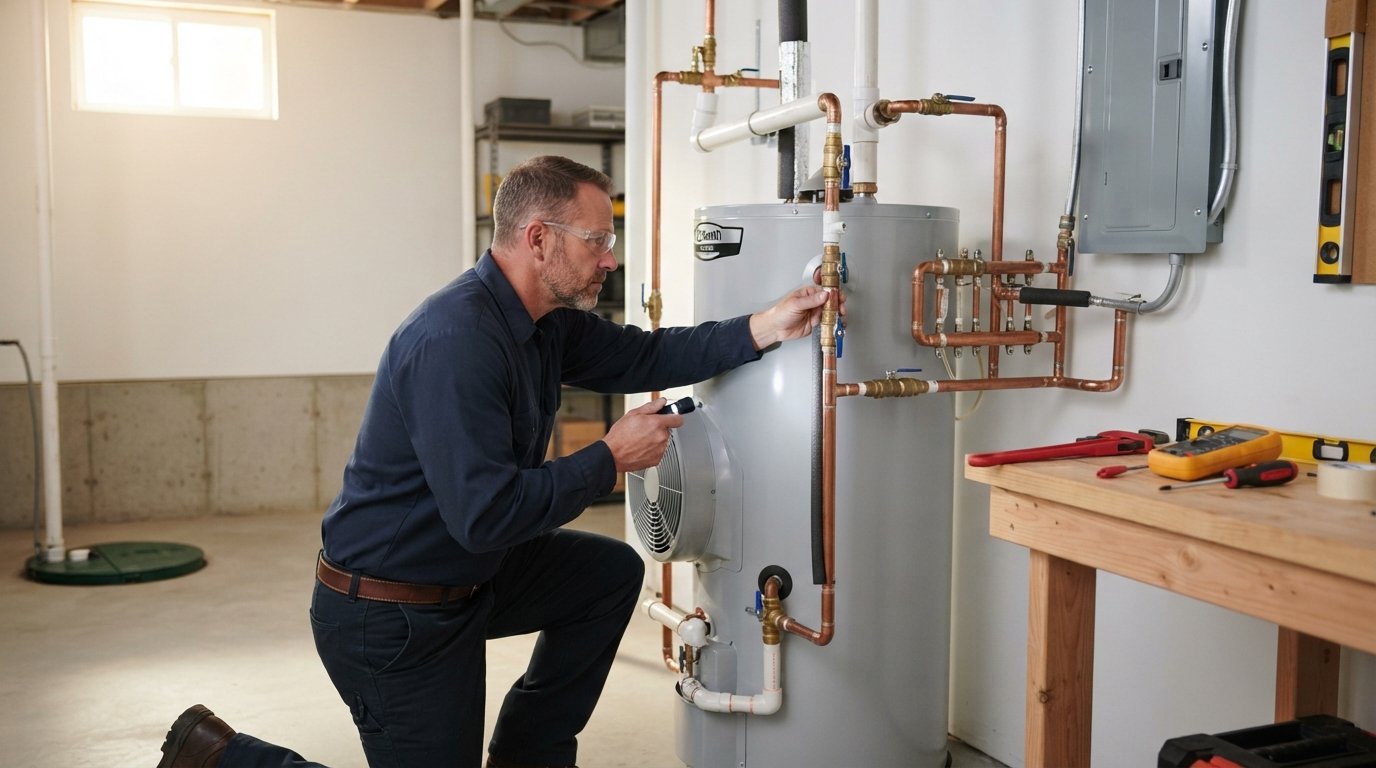
Heat Pump Water Heater Installation: Key Homeowner Considerations
Evaluate space, climate, and electrical needs before installing a heat pump water heater. Call (833)-700-4293 for vetted local pros and free quotes.

Learn more about Water Heater Installation or Replacement for guides, costs, and what to expect.
Compare Water Heater Installation or Replacement Pros Near You

Enter your ZIP code to compare top-rated local professionals and request free quotes.
Replacing a water heater is one of those home projects that sneaks up on you, often announced by a cold shower or a rust-colored puddle in the garage. If you are weighing your options, a heat pump water heater probably caught your attention for its promise of lower energy bills. But before you commit, it pays to understand what installation actually involves. This guide walks you through the practical, financial, and logistical factors that determine whether a heat pump water heater is the right fit for your home, and how to plan a smooth installation with a qualified professional.
Space, Climate, and Electrical Requirements
Heat pump water heaters do not generate heat the way a gas burner or a standard electric element does. Instead, they move heat from the surrounding air into the water tank, similar to how a refrigerator works in reverse. That operating principle shapes nearly every installation consideration, starting with where the unit can live.
Because the unit draws warmth from the air, it needs a space with adequate volume and airflow. A cramped closet or a sealed utility cabinet will starve the heat pump, forcing it to work harder and reducing efficiency. Manufacturers typically specify a minimum cubic footage, often around 700 to 1,000 cubic feet, though this varies by model. Garages, basements, utility rooms, and large closets are common locations. In colder climates, an unconditioned garage can actually be a benefit during summer, but in winter the unit may struggle to extract enough heat, so a basement or interior mechanical room is often preferable. If your home is tight on space, a split-system heat pump water heater, which places the compressor outdoors, can be a solution, though it costs more upfront.
Electrical capacity is the next checkpoint. Most heat pump water heaters require a dedicated 240-volt circuit, just like a standard electric tank. If you are replacing a gas unit, you may not have that circuit available, which means adding one. That work falls under electrical permitting and should be handled by a licensed electrician. Some models offer plug-in 120-volt options, but these are less common and typically have slower recovery rates. Before ordering anything, confirm your electrical panel has the capacity for the new circuit; older homes sometimes need a panel upgrade, which adds cost and time.
Operating Cost and Payback Versus Gas and Standard Electric Tanks
The financial case for a heat pump water heater is strongest when you are replacing a standard electric tank. Heat pump models are generally two to three times more efficient than conventional electric resistance heaters, which can translate to hundreds of dollars in annual savings depending on your local electricity rates and hot water usage. Compared with a gas tank, the picture is more nuanced. In regions with low natural gas prices, a gas tank may still cost less to operate, while in areas with high gas prices or strong incentives for electrification, the heat pump unit can come out ahead.
Upfront cost is the other half of the equation. A heat pump water heater itself typically costs more than a standard tank, and installation can add to that if electrical or plumbing modifications are needed. Federal tax credits, utility rebates, and state or local incentive programs can significantly offset the purchase and installation cost. Many homeowners find that combining a federal credit with a local utility rebate brings the net cost close to that of a conventional unit, shortening the payback period to just a few years. It is worth checking eligibility carefully, since some rebates require installation by a licensed contractor and proper permitting.
To estimate payback, gather three numbers: the installed cost after incentives, the estimated annual operating cost of the heat pump unit, and the estimated annual operating cost of the alternative you would otherwise choose. Divide the net installed cost by the annual savings to get a rough payback in years. If you plan to stay in your home long enough to clear that threshold, the math usually favors the heat pump model. If you are selling soon, the efficiency upgrade may still add appeal but is less likely to pay back during your ownership.
Noise, Condensate, and Placement in Tight Homes
Heat pump water heaters are not silent. The compressor and fan produce a hum that is often compared to a refrigerator or a small air conditioner, typically in the 45 to 60 decibel range. In a garage or basement, that noise is usually a nonissue. In a closet adjacent to a bedroom or living area, it can become annoying, especially at night when the unit may run during off-peak hours. If noise is a concern, look for models with lower decibel ratings and consider placing the unit away from sleeping areas. Some units offer a quieter mode that reduces fan speed at the expense of recovery time.
Condensate is another detail that catches homeowners off guard. As the heat pump removes heat from the air, it also dehumidifies, producing water that must be drained. Most units include a condensate pump or a gravity drain option. If gravity drainage is not possible, you will need a condensate pump and a route to a floor drain, utility sink, or exterior. In tight homes, planning that drain path is essential; a missing or poorly routed drain can cause water damage or trigger a shutdown. The dehumidification effect can be a bonus in damp basements, but in already dry homes it may slightly increase heating loads in winter.
Placement also affects performance and longevity. The unit needs clearance around it for airflow, and it should not be boxed in by stored items. In cold climates, an unconditioned space can cause the unit to operate less efficiently or switch to a backup electric resistance mode, which erodes savings. A licensed HVAC or plumbing contractor can assess your specific space and recommend whether a standard, split-system, or 120-volt model makes sense.
Rebates, Permits, and When a Licensed Installer Is Required
Heat pump water heater installation is not a casual DIY project for most homeowners. It involves plumbing connections, electrical work, condensate management, and often permitting. Many jurisdictions require a permit for water heater replacement, and some require proof of licensed installation to qualify for rebates. Even where permits are not strictly required, a licensed plumber or HVAC technician ensures the unit is installed to code and manufacturer specifications, which protects your warranty and your safety.
Rebates and incentives are a major reason to involve a professional. Utility rebate programs often have specific requirements about the model, the installer's credentials, and the documentation submitted. A contractor who regularly installs heat pump water heaters will know which paperwork to file and how to ensure you capture the full incentive. Before hiring, ask for a written quote that separates equipment, labor, permits, and any electrical upgrades, and confirm whether the contractor will handle rebate applications or leave that to you.
If you are comparing technologies, our guide on tankless water heater pros and cons can help you see how heat pump tanks stack up against on-demand systems in terms of space, cost, and performance. And when you are ready to find a qualified installer, platforms like Repairmen connect homeowners with vetted local professionals for plumbing, HVAC, and appliance work, which can simplify the process of getting multiple quotes.
Questions to Ask a Plumbing and HVAC Contractor
Not every contractor is experienced with heat pump water heaters, and the technology differs enough from conventional tanks that it is worth screening for expertise. A good contractor will ask about your hot water usage, the location of the current unit, your electrical panel, and your goals for savings. They should also be transparent about noise, condensate, and any potential need for backup heating in cold months.
Use this list as a starting point for your conversations:
- How many heat pump water heaters have you installed in the past year, and can you share references?
- Will my current electrical panel support the unit, or will I need a new circuit or panel upgrade?
- How will condensate be drained, and what happens if the drain clogs?
- What is the expected noise level, and where exactly will the unit sit?
- Which rebates and tax credits do you handle, and what documentation will I receive?
Beyond the list, pay attention to how the contractor answers. A clear, detailed explanation of the installation plan, including permits and inspection, is a good sign. Vague answers about electrical capacity or rebate paperwork are a reason to get another quote. It also helps to ask whether the contractor will remove and dispose of the old unit, and whether the quote includes any needed plumbing modifications such as a new expansion tank or shutoff valve.
Finally, confirm the warranty terms and who handles service calls. Heat pump water heaters have more components than a standard tank, including a compressor and fan, so having a local contractor who can service the unit matters. Ask about the labor warranty and whether the manufacturer's warranty requires professional installation. A few minutes of screening can save you headaches later and help ensure the unit performs as promised.
Choosing a heat pump water heater is a decision that blends efficiency, space, budget, and local climate. By evaluating your electrical capacity, planning for noise and condensate, understanding the payback math, and vetting your installer carefully, you can move forward with confidence. When you are ready to compare quotes, USremodel can connect you with independent contractors in your area who handle plumbing and HVAC projects, helping you get the information you need to make a well-informed choice.