
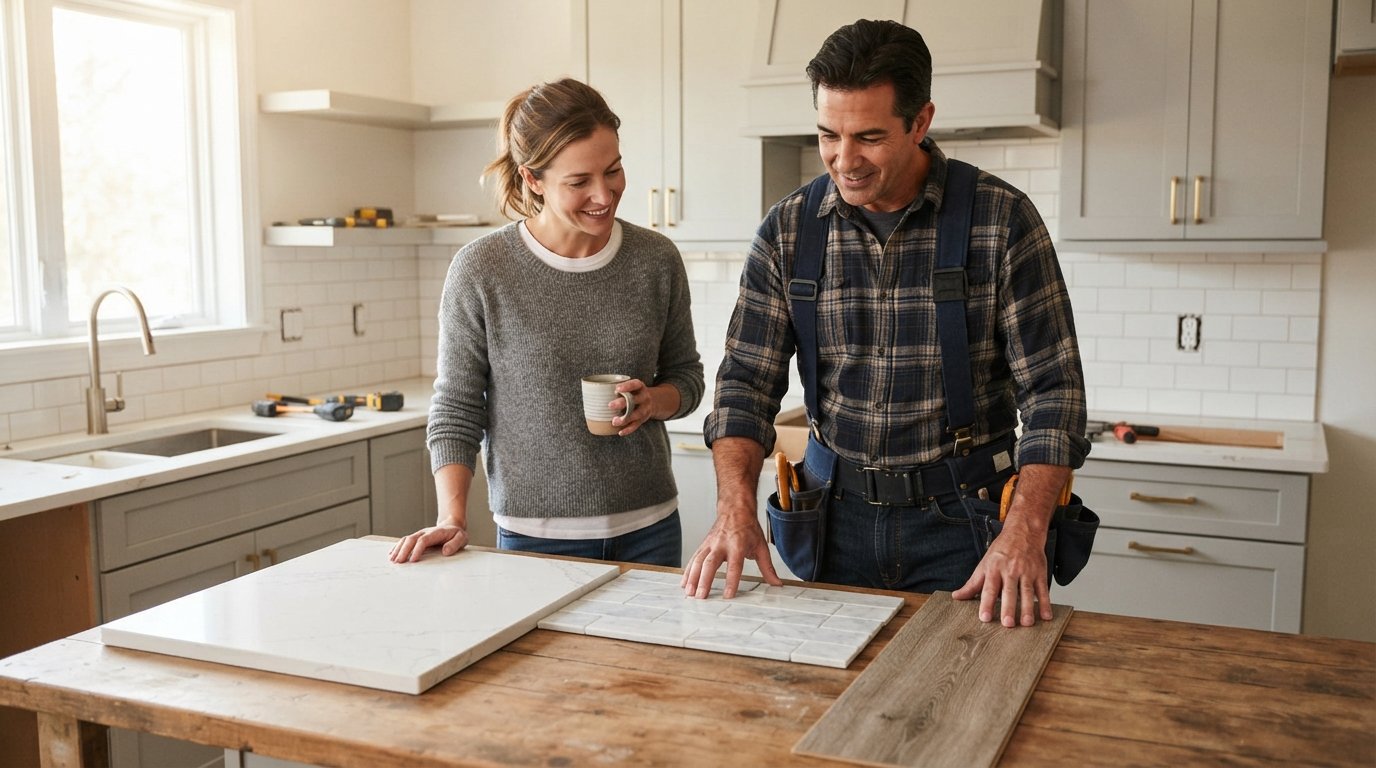
How to Choose Durable Kitchen and Bathroom Materials That Last
Select kitchen and bathroom materials that resist wear and moisture for decades. Call (833)-700-4293 for expert contractor quotes.

By Peter Hubert
Learn more about Home Remodeling for guides, costs, and what to expect.
Compare Home Remodeling Pros Near You

Enter your ZIP code to compare top-rated local professionals and request free quotes.
You have probably heard the story before: a homeowner splurges on a stunning kitchen remodel, only to watch the countertops chip, the grout discolor, and the cabinets swell within five years. The truth is that durability is not about brand names or trendy finishes. It is about matching the right material to the right conditions, understanding how installation quality affects lifespan, and asking contractors the right questions before the first tile is laid. Whether you are planning a full kitchen renovation or a bathroom refresh, this guide will walk you through how to choose durable kitchen and bathroom materials that last, so you avoid costly replacements and keep your investment looking great for decades.
Why Material Durability Matters More Than Ever
Kitchens and bathrooms are the hardest-working rooms in any home. They face daily moisture, heavy foot traffic, hot pans, spilled chemicals, and constant cleaning. According to industry data, the average kitchen remodel costs between $25,000 and $75,000, and a bathroom remodel can run from $10,000 to $30,000. When you are spending that kind of money, you want materials that will not need replacing in a decade. Durable materials reduce long-term maintenance costs, protect your home from water damage, and help preserve resale value. In fact, real estate experts consistently rank kitchen and bathroom upgrades among the top improvements for return on investment, but only if the materials hold up over time.
Durability also affects your daily life. A countertop that etches from lemon juice or a floor that warps from a minor leak creates ongoing frustration. By choosing materials with proven performance records and understanding how they respond to moisture, heat, and impact, you can make informed decisions that balance upfront cost with long-term value. This article will help you compare options, ask the right questions, and avoid common pitfalls. For a broader look at how kitchen and bathroom projects compare in scope and cost, see our guide on kitchen remodel vs bathroom remodel.
Comparing Countertop Materials: Wear, Maintenance, and Longevity
Countertops take a beating. They are cut on, chopped on, and exposed to heat, stains, and moisture. When evaluating countertop materials for durability, consider four factors: scratch resistance, heat tolerance, stain resistance, and maintenance requirements. Here is how the most common options stack up.
- Quartz (engineered stone): Non-porous, highly scratch-resistant, and available in many colors. It resists stains and does not need sealing, but it can be damaged by high heat (always use trivets). Expect 15 to 25 years of service life.
- Granite (natural stone): Extremely hard and heat-resistant, but requires periodic sealing to prevent stains. It can chip at edges but is repairable. Lifespan often exceeds 30 years with proper care.
- Solid surface (e.g., Corian): Seamless and repairable, but softer than stone and susceptible to scratches and heat damage. Lifespan of 10 to 20 years.
- Laminate: Budget-friendly and improved in recent years, but prone to chipping, peeling, and water damage at seams. Typically lasts 7 to 15 years.
- Butcher block: Warm and forgiving on dishes, but requires regular oiling and can harbor bacteria if not maintained. Lifespan of 10 to 20 years with diligent care.
For most homeowners prioritizing durability with minimal maintenance, quartz and granite are the strongest contenders. However, the quality of fabrication and installation matters as much as the material itself. A poorly seamed quartz countertop can fail at the joint, while a well-installed laminate can outperform a neglected stone surface. Always ask your contractor about edge profiles, seam placement, and substrate support, because these details determine how well the countertop handles daily stress.
Flooring Choices: Matching Material to Moisture and Traffic
Flooring durability depends heavily on where it is installed. Kitchen floors face dropped utensils, spills, and frequent sweeping, while bathroom floors deal with standing water, humidity, and bare feet. The same material that excels in one room may fail in the other.
In kitchens, porcelain tile and luxury vinyl plank (LVP) are top performers. Porcelain is virtually waterproof, scratch-resistant, and easy to clean, though it can be cold and hard underfoot. LVP offers warmth, water resistance, and easy installation, but lower-quality products can dent or peel. Hardwood adds warmth and value but requires careful maintenance and can be damaged by standing water. In bathrooms, porcelain and ceramic tile remain the gold standard for water resistance, but the grout lines require sealing and cleaning. Natural stone tile (such as slate or travertine) looks luxurious but is porous and needs regular sealing. Sheet vinyl and LVP are budget-friendly and water-resistant, but seams can be vulnerable.
When comparing costs, remember that installation quality often determines lifespan more than the material brand. A tile floor installed over an inadequate substrate will crack, regardless of tile quality. A vinyl plank floor installed without proper acclimation can gap or lift. Ask your contractor about substrate preparation, waterproofing membranes (especially in bathrooms), and expansion gaps. These steps add upfront cost but dramatically extend the life of the floor. For a deeper dive into flooring options and installation best practices, explore our resources on flooring installation.
Cabinet Materials and Construction: The Backbone of Durability
Kitchen and bathroom cabinets endure constant opening and closing, exposure to steam and grease, and the weight of dishes and supplies. The material and construction method matter more than the finish. Solid wood doors and drawer fronts offer excellent durability and repairability, but they can expand and contract with humidity. Plywood boxes are stronger and more moisture-resistant than particleboard, which can swell if water penetrates the finish. MDF (medium-density fiberboard) is smooth and stable but vulnerable to water damage if seams are not sealed.
Hardware also plays a critical role. Soft-close hinges and full-extension drawer slides from reputable manufacturers last far longer than bargain components. When evaluating cabinets, open and close doors and drawers to feel the weight and smoothness. Ask about the warranty on hinges and slides, as these are the first parts to fail. In bathrooms, consider moisture-resistant cabinet materials or a semi-custom vanity designed for humid environments. Proper ventilation in both rooms will extend cabinet life by reducing moisture buildup. If you are planning a full remodel, our guide on kitchen remodel vs bathroom remodel can help you prioritize where to invest.
Moisture and Humidity: Where Bathrooms Demand Different Choices
Bathrooms are unique because they combine high humidity, direct water exposure, and frequent temperature changes. Materials that perform well in a dry kitchen may fail in a bathroom. For example, standard drywall will crumble if used behind tile in a shower; cement backer board or waterproof foam board is required. Similarly, ordinary paint will peel in a humid bathroom; use bathroom-specific paint with mildewcide. Grout and caulk must be sealed regularly to prevent water intrusion behind tiles.
When choosing bathroom materials, prioritize non-porous or sealed surfaces. Porcelain tile, glass, and solid surface materials excel. Avoid natural stone in shower floors unless you are committed to regular sealing. For vanities, choose plywood or moisture-resistant MDF over particleboard, and consider a furniture-style vanity that sits on legs to allow air circulation. Flooring should be slip-resistant and waterproof. Heated floors add comfort but also help dry moisture faster, extending the life of surrounding materials. Always ask your contractor about the waterproofing system they use, because a failed waterproofing membrane is the leading cause of bathroom remodels that need redoing within a few years.
Installation Quality: The Hidden Factor That Determines Lifespan
Even the most expensive materials will fail if installed incorrectly. Poor installation leads to cracked tiles, leaking showers, sagging countertops, and cabinets that pull away from the wall. In fact, many premature material failures are traced back to installation errors rather than product defects. This is why choosing a qualified, experienced contractor is just as important as choosing the right material.
When interviewing contractors, ask about their specific installation methods. For tile, do they use a waterproofing membrane in wet areas? For countertops, do they use a proper substrate and allow for expansion? For cabinets, do they shim and secure them to studs? A reputable contractor will welcome these questions and explain their process. They should also provide a written warranty that covers both materials and labor. Remember that the lowest bid often cuts corners on installation, which can cost you far more in the long run. To ensure you are working with vetted professionals, consider using a platform that connects you with licensed contractors in your area. You can also explore solar energy solutions if you are planning energy-efficient upgrades alongside your remodel.
Questions to Ask a Contractor About Material Warranties and Substitutions
Before signing a contract, clarify how warranties work and what happens if a material is unavailable. Material warranties vary widely: some cover only manufacturing defects, while others include labor. Ask for copies of warranties for every major material (countertops, cabinets, flooring, fixtures). Confirm who handles claims and whether the warranty is transferable if you sell your home. Also ask about substitution policies. If the specified tile is discontinued, what is the process for choosing a replacement? Will the contractor provide equal or better quality, and who bears the cost difference? A clear contract should specify brand, model, color, and quantity for each material, along with a substitution clause that protects you.
Another critical question: what is the expected lifespan of the materials you are recommending, and what maintenance do they require? A contractor who educates you on care and cleaning helps you protect your investment. Finally, ask for references from projects completed at least three to five years ago. Talking to past clients about how their materials have held up is one of the best ways to gauge real-world durability.
Balancing Upfront Cost Against Replacement Cost
It is tempting to choose the least expensive material upfront, but durability economics favor a longer view. A $2,000 laminate countertop that lasts 10 years costs $200 per year, while a $6,000 quartz countertop that lasts 25 years costs $240 per year, and the quartz adds resale value and requires less maintenance. Similarly, a cheap vinyl floor that needs replacing in 7 years may cost more over two decades than a quality porcelain tile floor installed once. When budgeting, factor in maintenance costs (sealing, cleaning products, repairs) and the hassle of replacement. A simple framework: estimate the installed cost, divide by expected years of service, and add annual maintenance. This gives you a true cost of ownership.
Also consider that some durable materials can be refinished or repaired rather than replaced. Solid surface countertops can be sanded and polished; hardwood floors can be refinished multiple times; tile can be regrouted. These options extend lifespan and reduce long-term waste. Invest where it matters most: countertops, flooring, and wet-area waterproofing. In lower-touch areas, you can save without sacrificing overall durability.
Choosing durable kitchen and bathroom materials is a process of matching performance to conditions, asking the right questions, and prioritizing installation quality. By comparing materials on wear and maintenance, accounting for moisture and humidity, vetting your contractor, and weighing upfront cost against replacement cost, you can create spaces that look beautiful and perform reliably for decades. Take the time to plan, ask for warranties in writing, and choose professionals who stand behind their work. Your future self will thank you every time you cook a meal or step out of the shower.