
Can You Remodel an Older Home Without Replacing Wiring?
Remodeling an older home? Learn if you can keep the existing wiring, when it’s safe, and the critical signs you need an upgrade for a successful renovation.
By Danica Leslie
Learn more about Electrical and Wiring Repair for guides, costs, and what to expect.
Compare Electrical and Wiring Repair Pros Near You

Enter your ZIP code to compare top-rated local professionals and request free quotes.
You’ve fallen in love with the charm of an older home, but now you’re planning a remodel. As you think about opening up walls, adding new lighting, and upgrading your kitchen, a big question looms: do you have to replace all the wiring? It’s a common and valid concern for any homeowner, balancing the desire to preserve character with the need for modern safety and convenience.
Ensure your remodel is safe and up to code. Call 📞833-700-4293 or visit Schedule Electrical Evaluation to schedule a professional electrical evaluation today.
A Simple Breakdown of Older Home Wiring
When we talk about older homes, we’re often referring to properties built before the 1970s. The electrical systems in these homes were designed for a different time, with fewer appliances and lower power demands. The most common types of wiring you might find are knob-and-tube (common in homes built before 1950) and early forms of plastic-coated cable.
The short answer to the main question is: sometimes. Whether you can remodel without a full rewire depends entirely on the condition, capacity, and type of your existing wiring. A professional electrician must evaluate it. In many cases, you can work with what you have, but there are critical situations where replacement is the only safe option.
What a Professional Evaluation Looks For
An electrician will check for several key things: the wiring material’s condition (looking for brittle or cracked insulation), whether the system is grounded (a major safety feature), and if it has the capacity (amperage) to handle modern loads like computers, large kitchens, and HVAC systems.
Why Your Home’s Wiring Matters for a Remodel
Your home’s electrical system is its nervous system. A safe, functional system powers your remodel’s beautiful new features reliably and without risk. Ignoring it can turn a dream renovation into a frustrating or dangerous situation.
Beyond just making lights turn on, modern wiring supports your family’s lifestyle. It allows you to install dimmers for ambiance, add numerous outlets for convenience, and run powerful appliances simultaneously without tripping breakers. Most importantly, updated wiring significantly reduces the risk of electrical fires, which are a real danger with aged and overburdened systems.
Common Electrical Issues in Older Homes
During a remodel, hidden problems often come to light. Common issues stem from decades of wear, outdated materials, and past DIY fixes that may not meet current safety codes.
One frequent problem is over-fusing, where a too-large fuse or breaker is used on a circuit with thin, old wiring. This prevents the safety device from tripping when it should, allowing wires to overheat. Another is the lack of grounding, which is essential for protecting you from shock and for the safe operation of modern three-prong appliances and electronics.
- Knob-and-Tube Wiring: Its insulation becomes brittle over time, and it was never designed to be buried under insulation in attics or walls,a common issue during energy upgrades.
- Aluminum Wiring: Found in some homes from the 1960s-70s, it can loosen at connections over time, creating fire hazards.
- Insufficient Circuits: Older homes often have too few circuits, causing constant breaker trips when you try to use multiple devices.
How Professionals Assess and Fix Wiring Problems
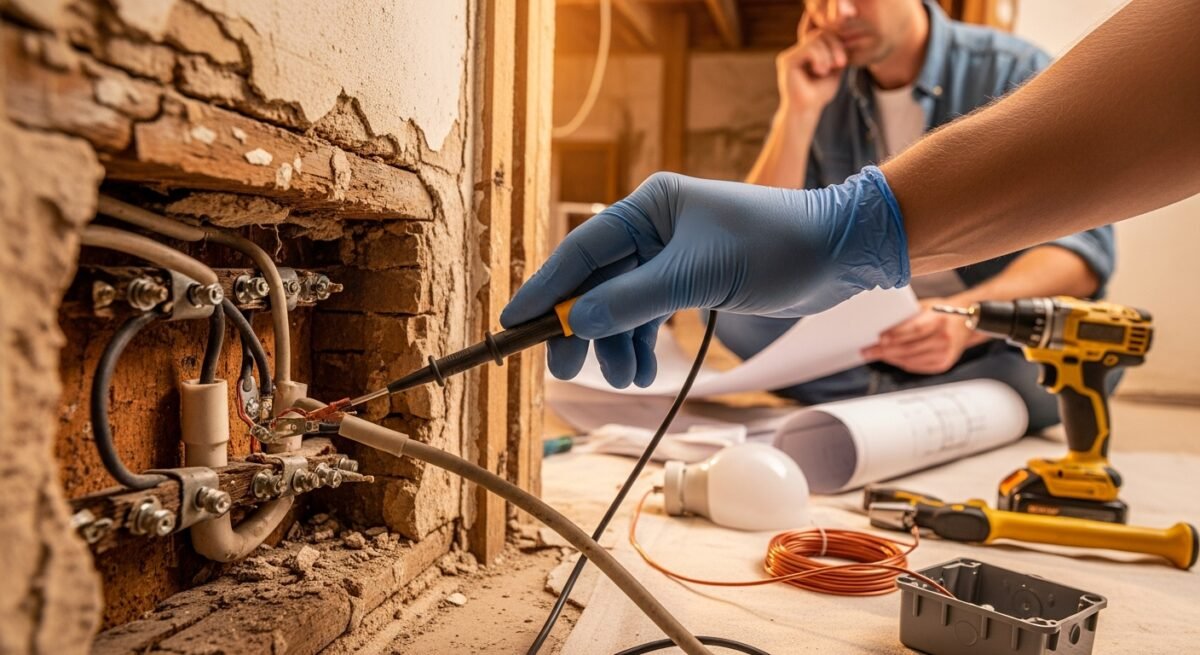
A professional electrician starts with a thorough evaluation. This involves visually inspecting accessible wiring in panels, attics, and basements, testing outlets for grounding and polarity, and assessing the overall load capacity of your system. This audit creates a clear map of what you have and what you need.
Based on the findings, the solution might be a targeted upgrade rather than a full rewire. For example, they might add new dedicated circuits just for your kitchen remodel or home office, while leaving other functional, grounded circuits in place. They will ensure all new work meets the National Electrical Code (NEC) and is properly permitted.
- Evaluation & Planning: A full inspection and creation of a circuit map.
- Targeted Solutions: This could be rewiring specific rooms, upgrading the main service panel, or adding Ground Fault Circuit Interrupter (GFCI) protection for safety.
- Integration: Skillfully tying new wiring into the existing system where possible, always prioritizing safety over convenience.
Schedule your pre-remodel wiring assessment online and let our experts create a custom plan that fits your budget and safety needs.
Warning Signs You Should Never Ignore
Even before you start demolition, your home might be telling you the wiring needs attention. These signs are red flags that should be addressed immediately, especially before a remodel adds more demand to the system.
If you notice any of the following, it strongly indicates your wiring is struggling and may not be suitable for a renovation without significant upgrades. Ignoring these signs can put your home and family at serious risk.
Ensure your remodel is safe and up to code. Call 📞833-700-4293 or visit Schedule Electrical Evaluation to schedule a professional electrical evaluation today.
- Frequent Breaker Trips or Blown Fuses: This is a clear sign of circuit overload.
- Burning Smell or Discolored Outlets/Switches: Indicates overheating and is a serious fire hazard.
- Flickering or Dimming Lights: Especially when appliances turn on, signaling poor connections or undersized wiring.
- Buzzing or Sizzling Sounds from Outlets or Switches: Never ignore this,it means electricity is arcing, which is extremely dangerous.
- Tingling Sensation from Appliances or Fixtures: This indicates a shock hazard due to faulty grounding or wiring.
What Affects the Cost of Wiring Work During a Remodel
The cost of electrical work in a remodel can vary widely. It’s not a one-price-fits-all service. Understanding the factors helps you budget realistically and understand the value of the investment.
The primary cost drivers are the size of your home, the extent of the rewiring needed (full vs. partial), and the accessibility of your walls. Opening up walls during a remodel can actually reduce labor costs for wiring, as electricians have clear pathways. Other factors include local permit and inspection fees, the cost of materials (wire, panels, outlets), and the complexity of your new layout.
How to Choose the Right Electrical Professional
This is not a job for a general handyman. Electrical work in an older home, especially during a remodel, requires specific expertise, licensing, and insurance. Choosing the right professional is crucial for your safety and the success of your project.
Always verify that the electrician is licensed, bonded, and insured for residential work. Look for experience specifically with older homes, as they present unique challenges. A reputable pro will always pull the proper permits for the work, which ensures it will be inspected to code. Finally, get everything in writing,a detailed scope of work and a fixed-price quote protect both you and the contractor.
The Long-Term Benefits of Addressing Wiring
Investing in your home’s electrical system during a remodel pays dividends for years to come. It’s an upgrade that enhances safety, functionality, and even your home’s value all at once.
You’ll gain peace of mind knowing your family is protected from electrical hazards. You’ll enjoy the convenience of ample, well-placed outlets and reliable power for all your devices. Furthermore, modern, up-to-code wiring is a major selling point that appraisers and home inspectors look for, making your home more attractive and valuable on the market. It’s a foundational improvement that makes every other part of your remodel work better.
Frequently Asked Questions
Is knob-and-tube wiring always a problem?
Not always, but it often is. If it’s in good condition, untouched, and not buried in insulation, it may function. However, most building codes require it to be removed if you’re doing significant renovations, and most insurance companies charge higher premiums or refuse coverage for homes with it.
Can I just add new outlets to old wiring?
You can, but only if the existing circuit has the capacity and is in good condition. An electrician must check the wire gauge, confirm it’s grounded (or use a GFCI outlet for protection), and ensure adding another outlet won’t overload the circuit. It’s not a simple DIY job.
What does “ungrounded” wiring mean?
It means your electrical system lacks a third wire (the ground wire) that provides a safe path for stray electricity. This is a shock hazard. While you can use GFCI outlets or breakers to add protection on ungrounded circuits, a full rewire is the best permanent solution.
Will I have to rewire my entire house for a kitchen remodel?
Not necessarily the whole house, but the kitchen will almost certainly need new circuits. Modern code requires multiple dedicated circuits for refrigerators, dishwashers, microwaves, and small appliances. An electrician can often run these new circuits from your panel without rewiring other rooms.
How disruptive is a partial rewire during a remodel?
It’s significantly less disruptive when walls are already open for renovation. Electricians can work efficiently, minimizing the need for additional drywall cuts and repairs. Timing the electrical work with the demolition and framing phase is key.
What is a service panel upgrade, and will I need one?
This is upgrading your main electrical panel (breaker box). Older homes often have 60 or 100-amp service. Modern homes need 200 amps to handle all our appliances and devices. If your panel is old, full, or low-amperage, an upgrade is usually required to support new wiring.
Does updated wiring really increase home value?
Absolutely. It’s a major selling point. Homebuyers and inspectors see new electrical systems as a huge benefit, reducing a significant point of negotiation and concern. It demonstrates the home has been properly maintained and is safe.
Remodeling an older home is an exciting journey. By giving your electrical system the professional attention it deserves from the start, you ensure that your beautiful new spaces are powered safely, efficiently, and reliably for decades to come. A smart electrical plan is the foundation of a successful and stress-free renovation.
Ensure your remodel is safe and up to code. Call 📞833-700-4293 or visit Schedule Electrical Evaluation to schedule a professional electrical evaluation today.
Learn more about Electrical and Wiring Repair for guides, costs, and what to expect.
Compare Electrical and Wiring Repair Pros Near You
Enter your ZIP code to compare top-rated local professionals and request free quotes.