
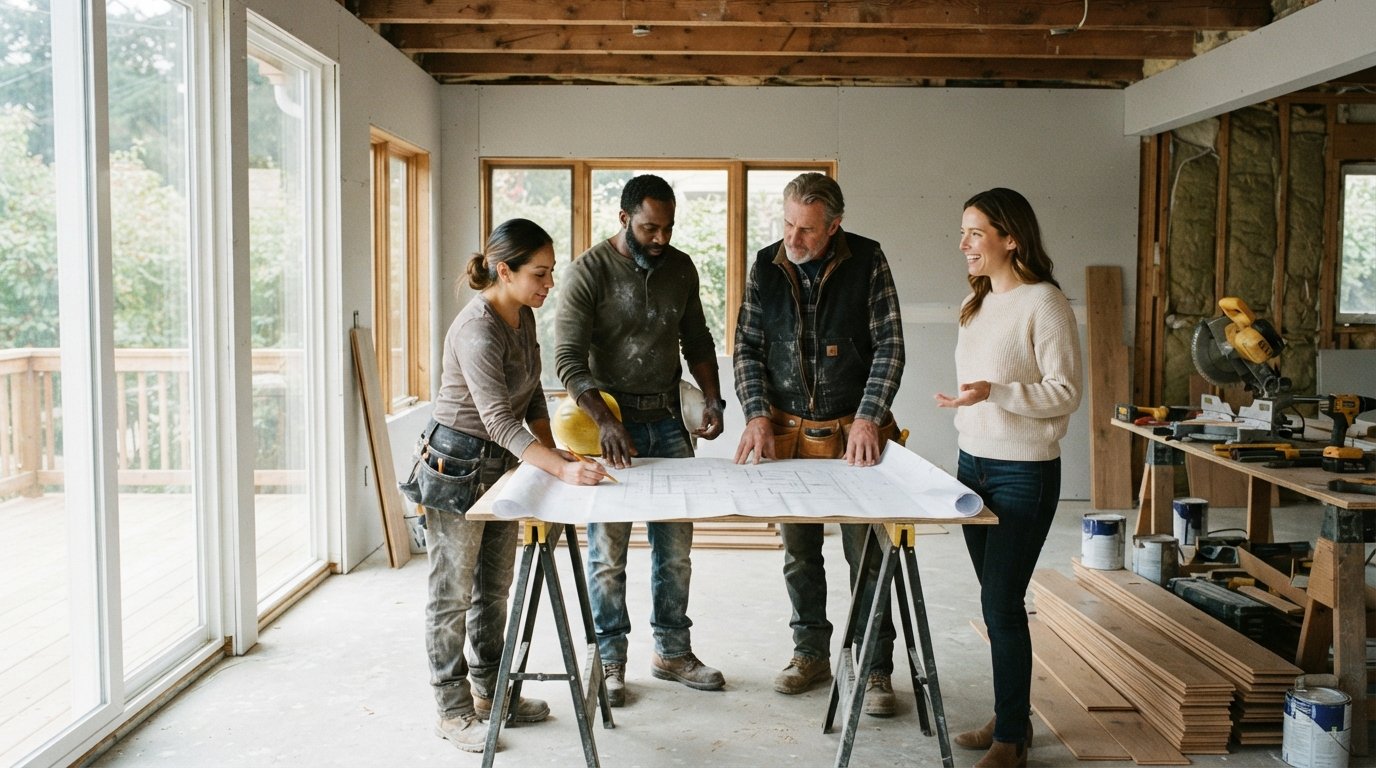
Whole House Remodeling: Plan Your Full Renovation
Plan a successful whole house remodel with our expert guide on budgeting, hiring contractors, and managing the renovation process from start to finish.
By Peter Hubert
Learn more about Home Remodeling for guides, costs, and what to expect.
Compare Home Remodeling Pros Near You

Enter your ZIP code to compare top-rated local professionals and request free quotes.
Walking into a home that feels outdated, cramped, or simply no longer fits your lifestyle can be frustrating. You might dream of a brighter kitchen, a spa-like primary suite, or a more functional layout, but the thought of tackling everything at once can feel overwhelming. This is exactly where whole house remodeling steps in. Unlike single-room updates, a whole house remodel is a comprehensive project that touches every corner of your property, from the foundation to the roof. It is a significant investment, but when done correctly, it transforms your living experience and can dramatically increase your home's value. This guide will walk you through the critical steps of planning a full home renovation, helping you avoid common pitfalls and achieve the home you have always wanted.
Before you pick up a hammer or call a contractor, it is essential to understand that whole house remodeling is not just about aesthetics. It is a complex process involving structural changes, electrical and plumbing updates, and design cohesion. Many homeowners make the mistake of jumping straight into design choices without a solid plan, leading to budget overruns and delays. In this article, we will break down the entire journey, from defining your vision and setting a realistic budget to working with professionals and managing the construction phase. By the end, you will have a clear roadmap, and you will understand how a platform like USremodel can connect you with trusted contractors who can bring your vision to life.
Defining Your Vision and Scope for a Whole House Remodel
The first and most crucial step in any whole house remodeling project is to define your vision clearly. Sit down with your family and list what is not working in your current home. Is the kitchen too small? Are the bathrooms outdated? Do you need an additional bedroom or a home office? Create a wish list, then categorize it into 'must-haves' and 'nice-to-haves.' This will help you prioritize when you face budget constraints, which is almost inevitable. Your vision should also consider the architectural style of your home. A modern farmhouse aesthetic may not work in a mid-century ranch, so think about how to blend your personal taste with the existing structure.
Once you have a general idea, you need to decide the scope of the remodel. A true whole house remodel includes gutting the interior down to the studs, replacing major systems like HVAC, plumbing, and electrical, and then rebuilding. However, some homeowners opt for a less invasive approach, focusing on cosmetic updates in all rooms while only doing structural work in one or two areas. This decision will significantly impact your budget and timeline. For example, moving walls or adding square footage is far more expensive than updating finishes. To help you clarify your scope, consider these questions:
- Are you changing the floor plan, or keeping the current layout?
- Will you be updating all major systems (electrical, plumbing, HVAC)?
- Are you planning any additions, such as a bump-out or a second story?
- What is your priority: increasing home value, improving functionality, or both?
Answering these questions will give you and your contractor a clear understanding of the project's magnitude. Remember, a well-defined scope prevents 'scope creep,' which is the number one cause of budget overruns. Once you have this clarity, you can move on to the financial planning stage.
Setting a Realistic Budget for Your Full Home Renovation
Budgeting is where many homeowners feel the most anxiety, and for good reason. A whole house remodel is a major financial commitment. The national average for a full home renovation can range from $100,000 to $200,000 or more, depending on the size of your home, the quality of materials, and your location. However, these figures are just starting points. To create a realistic budget, you must factor in not only the cost of materials and labor but also permits, design fees, and a contingency fund for unexpected issues. Experts recommend setting aside at least 10% to 20% of your total budget for surprises, such as discovering rotting wood behind walls or outdated wiring that needs to be brought up to code.
One of the smartest moves you can make is to get multiple quotes from different contractors. This is where USremodel shines. Instead of spending weeks calling individual companies, you can submit a single request and receive customized quotes from several independent, vetted contractors in your area. This allows you to compare pricing, understand what is included in each bid, and choose a professional who fits your budget and communication style. When reviewing quotes, do not just look at the bottom line. Examine what materials are specified, the timeline proposed, and the payment schedule. A lower bid might use lower-quality materials, which could cost you more in the long run. As you refine your budget, consider the return on investment (ROI) for different upgrades. For instance, kitchen and bathroom remodels typically offer the highest ROI, while a luxury home theater may not add as much value when you sell.
The Importance of Hiring a General Contractor vs. Managing It Yourself
One of the biggest decisions you will make is whether to act as your own general contractor or hire a professional. A general contractor manages all aspects of the remodel, from hiring subcontractors (electricians, plumbers, carpenters) to scheduling inspections and ensuring everything adheres to local building codes. This is a full-time job, and for most homeowners, it is not a realistic DIY task, especially for a whole house project. A skilled general contractor brings years of experience, a network of reliable subcontractors, and the ability to solve problems quickly. They also carry insurance, which protects you if something goes wrong on the job site.
If you decide to manage the project yourself, you will need to coordinate multiple trades, understand building codes, and handle scheduling conflicts. This can be incredibly stressful and often leads to delays and mistakes. For a project as large as a whole house remodel, the value of a professional general contractor cannot be overstated. They ensure the work is done correctly, on time, and within budget. When you use USremodel, you are not hiring the contractor directly; you are submitting a request for quotes, and the contractors who reach out to you are independent professionals. This gives you the power to interview candidates, check their credentials, and select someone you trust. Always ask for references, verify their license and insurance, and ask how they handle change orders (changes to the original scope). A good contractor will have a clear process for managing these, which helps prevent disputes later.
Key Areas of Focus: Kitchen, Bathrooms, and Living Spaces
While every room in your house is part of the remodel, certain areas have a more significant impact on your daily life and your home's value. The kitchen is often called the heart of the home, and it is also the most expensive room to renovate. Focus on a functional layout, high-quality cabinetry, and durable countertops. Consider the 'work triangle' (the path between stove, sink, and refrigerator) and ensure there is ample counter space. Bathrooms are another critical area, and they can be challenging due to plumbing and waterproofing requirements. A well-executed bathroom remodel can transform your morning routine and add a touch of luxury. Think about walk-in showers, freestanding tubs, and double vanities.
Living spaces, such as the living room, dining room, and family room, are where you will spend most of your time. The goal here is to create a cohesive flow that connects these areas while maintaining their individual purpose. Open floor plans are still popular, as they allow for natural light and better social interaction. However, you might prefer defined spaces for a more traditional feel. When remodeling these rooms, consider the flooring, paint colors, and lighting. These elements set the tone for the entire house. For example, installing hardwood floors throughout creates a seamless look, while area rugs can define separate zones. Recessed lighting is a great way to modernize a space, but do not forget the importance of task lighting for reading or working. As you plan each room, always come back to your master plan to ensure everything works together harmoniously.
Navigating Permits, Codes, and Inspections
One of the least glamorous but most essential parts of a whole house remodel is dealing with permits and inspections. Building codes exist to ensure your home is safe, and they vary from city to city. Your contractor should be familiar with local regulations, but it is your responsibility as the homeowner to ensure the necessary permits are obtained. Failing to do so can result in fines, forced removal of unpermitted work, and problems when you try to sell your home. Common permits are required for structural changes, electrical work, plumbing, and HVAC modifications. Your contractor will typically pull the permits, but you should confirm this is included in your contract.
Inspections are scheduled at various stages of the project, such as after the rough-in electrical and plumbing is done but before the walls are closed up. This is a safety check to ensure the work meets code. It is a good idea to be present during these inspections to ask questions and understand what is being reviewed. While permits and inspections add time and cost to your project, they are non-negotiable for a safe and legal remodel. To get a sense of what is involved, here is a rough timeline of typical inspection points:
- After foundation or structural work is completed.
- After rough-in of plumbing, electrical, and HVAC.
- After insulation is installed.
- Final inspection after all work is done.
Each inspection is an opportunity to catch issues early and avoid more expensive fixes later. A reputable contractor will welcome this scrutiny, as it protects their work and reputation.
Selecting Materials and Finishes That Last
With your budget and scope in place, it is time for the fun part: choosing materials and finishes. This is where your vision truly comes to life, but it is also a place where costs can spiral if you are not careful. For a whole house remodel, you need to think about durability, maintenance, and style. For flooring, hardwoods and high-quality laminates are popular for their longevity, while tile is a must for wet areas like bathrooms and mudrooms. Countertops are a significant expense; quartz and granite offer durability and beauty, while butcher block and concrete provide a different aesthetic. Cabinetry is another major investment, and custom cabinets can be pricey. Semi-custom or stock cabinets can offer a similar look at a fraction of the cost.
When selecting paint, fixtures, and hardware, consider the overall style you want to achieve. Neutral color palettes are safe and timeless, but do not be afraid to add an accent wall or bold tile in a powder room. It is also wise to choose materials that are easy to clean and maintain, especially if you have children or pets. One tip is to visit a local showroom to see and touch materials before making a final decision. Online photos can be deceiving. Also, remember that high-end fixtures are not always better than mid-range options; focus on quality where it matters most, such as faucets and door hardware, which you use daily. Your contractor can provide valuable guidance on the best materials for your budget and climate.
Managing the Construction Phase and Timeline
Once the planning is done and materials are ordered, the actual construction begins. This is often the most disruptive phase, as your home becomes a construction site. A typical whole house remodel can take anywhere from 3 to 6 months or longer, depending on the scope. It is essential to have a realistic timeline and to communicate clearly with your contractor about your expectations. You will need to decide if you will live in the home during the remodel or move out temporarily. Living in a construction zone is possible, but it is stressful and not recommended for large projects. If you do stay, you will need to set up a temporary kitchen and bathroom, and you must be prepared for dust and noise.
Regular communication with your contractor is key to a smooth process. Ask for weekly progress updates and be available to make decisions quickly. Delays are common, often due to material backorders or unexpected structural issues. A good contractor will keep you informed and work to minimize disruptions. To help you stay organized, consider this simple project management checklist:
- Establish a weekly check-in meeting with your contractor.
- Create a shared document to track decisions and changes.
- Keep all receipts and contracts in one place.
- Take photos before, during, and after the remodel.
Remember that this is a marathon, not a sprint. Patience is vital. At the end of the project, do a final walkthrough with your contractor to create a punch list of any minor issues that need to be fixed before you make the final payment.
How to Ensure a Successful Outcome with the Right Help
A whole house remodel is a journey full of decisions, and having the right help makes all the difference. USremodel is designed to simplify the first and most critical step: finding the right contractor. By submitting a free, no-obligation request on their platform, you can receive multiple quotes from independent professionals in your area. This transparency allows you to compare not just prices, but also approaches and personalities. The platform partners with a network of vetted contractors who specialize in various services, including kitchen and bathroom remodeling, flooring, painting, and more. For a project as large as a whole house remodel, having a single point of contact for multiple trades is invaluable, and the contractors you find through USremodel can often provide that comprehensive service.
Beyond contractor matching, USremodel offers a wealth of educational resources on their website, including articles and FAQs that cover everything from cost breakdowns to maintenance tips. This information empowers you to make informed decisions throughout your project. When you are ready to start, you can request a quote for specific services, such as window replacement or HVAC installation, or you can use the platform to find a general contractor to oversee the entire project. Remember, the goal is not just to renovate your home, but to improve your quality of life and protect your investment. With careful planning, a realistic budget, and the right professional team, your whole house remodeling project can be a rewarding experience that turns your house into the home of your dreams.
As you move forward, keep in mind that the most successful remodels are the ones where the homeowner is informed and involved. Use the tools and resources available to you, ask questions, and do not rush the decision-making process. Your home is likely your largest asset, and the time and money you invest in it now will pay dividends in comfort, functionality, and value for years to come.
Learn more about Home Remodeling for guides, costs, and what to expect.
Compare Home Remodeling Pros Near You
Enter your ZIP code to compare top-rated local professionals and request free quotes.