
Walk In Shower Installation Cost And Design Guide
Walk in shower installation cost and design considerations explained, from budget conversions to luxury builds. Call 8337004293 for local contractor quotes.
By Chelsea Kris
Learn more about Shower and Bathtub Installation or Replacement for guides, costs, and what to expect.
Compare Shower and Bathtub Installation or Replacement Pros Near You

Enter your ZIP code to compare top-rated local professionals and request free quotes.
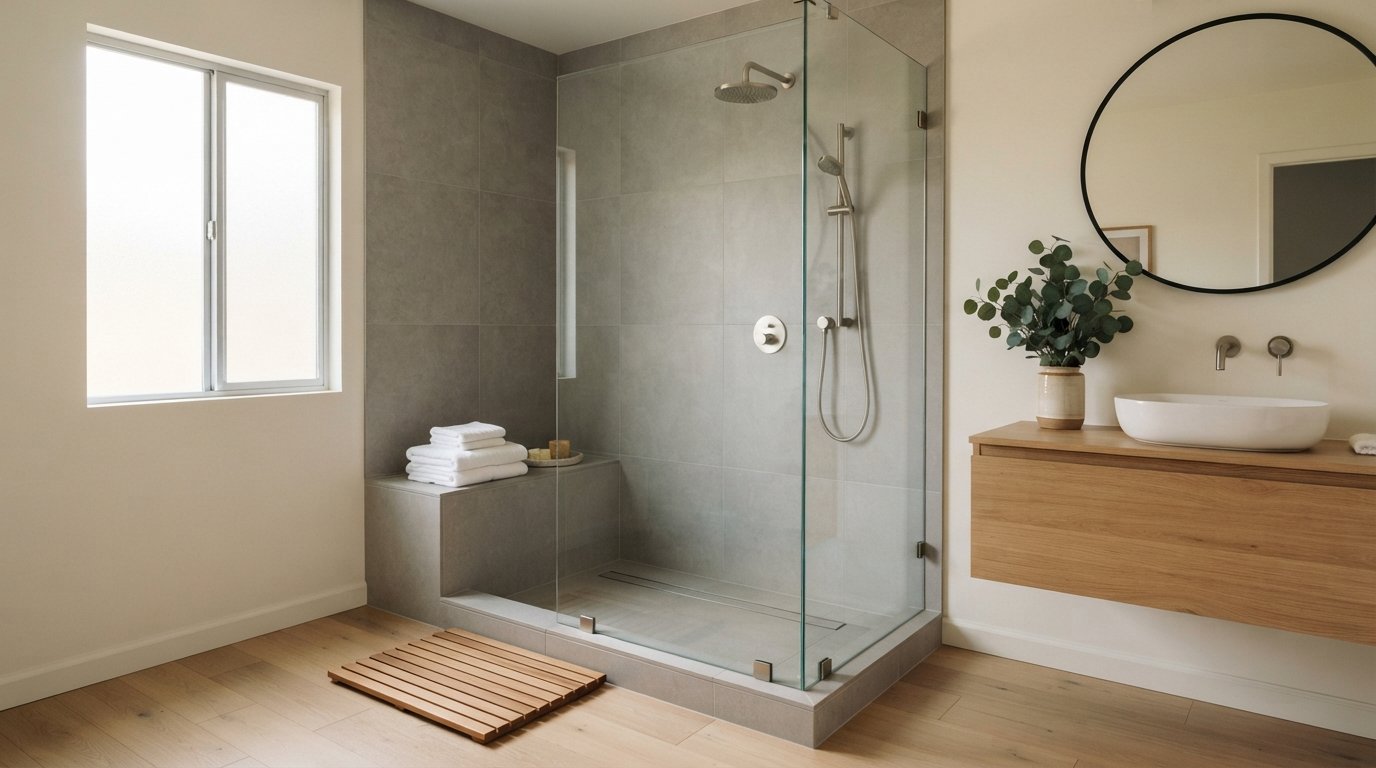
Picture a bathroom that feels like a private spa: no curb to trip over, no glass door swinging into your knee, just a clean sweep of tile and an open, airy footprint. That vision is exactly why walk in showers have become one of the most requested upgrades in American homes. They serve aging parents who need safer footing, busy families who want fewer surfaces to scrub, and anyone who simply wants a modern bathroom that looks like it belongs in 2026. But before you start browsing tile samples, you need a clear picture of what this project actually costs and which design decisions will shape your budget the most.
What Drives Walk In Shower Installation Cost
The honest answer to "how much does a walk in shower cost" is a range, not a number. Most homeowners spend somewhere between 2,500 dollars and 12,000 dollars, with the national average landing near 5,000 dollars to 7,000 dollars for a mid-range project. That spread is wide because a walk in shower is really three projects in one: demolition and plumbing, waterproofing and structure, and finish work like tile, glass, and fixtures. Change any one of those and the price moves.
Labor typically eats 40 to 50 percent of the total. Skilled tradespeople must remove the old tub or shower, reroute the drain and supply lines, build a sloped floor or install a pre-formed pan, apply waterproof membrane, set tile, and hang glass. In high-cost metros like San Francisco, New York, or Seattle, labor rates can push a standard project past 10,000 dollars. In the Midwest or South, the same scope might come in closer to 4,000 dollars. Material choices swing the other half of the budget, and that is where your design taste meets your wallet.
It also helps to understand how contractors actually price the job. Most quote either a fixed bid based on a defined scope or a time-and-materials estimate for projects with unknowns, such as hidden water damage behind old tile. A fixed bid protects you from surprise labor creep, but only if the scope is detailed. If a quote simply says "install walk in shower" with no line items, ask for a breakdown before you sign anything. In our guide on walk in shower installation, we explain how to compare quotes line by line so you can spot missing waterproofing or ventilation costs before they become change orders.
Typical Cost Ranges By Project Type
To make the numbers concrete, here is how three common versions of the same bathroom upgrade tend to price out. These figures include materials and labor for a standard 60-inch by 30-inch footprint unless noted otherwise.
- Budget refresh (tub-to-shower conversion): 2,500 to 5,000 dollars. Uses a pre-made acrylic or fiberglass pan and wall kit, basic chrome fixtures, and a shower curtain or sliding door. Fast, waterproof, and easy to clean.
- Mid-range custom tile shower: 6,000 to 12,000 dollars. Includes a custom mud-set pan, porcelain or ceramic tile, a niche, a bench, and frameless or semi-frameless glass. This is the most popular tier for resale value.
- Luxury wet-room or curbless design: 12,000 to 25,000 dollars or more. Linear drains, large-format stone, body sprays, steam units, heated floors, and structural floor lowering push costs up quickly.
Notice that the jump from budget to mid-range is not just about prettier tile. It reflects real construction differences: a custom pan requires proper slope and a waterproof membrane like Schluter Kerdi or a liquid-applied system, while a pre-made pan arrives ready to set. That labor and material difference is why two showers that look similar in a photo can differ by 5,000 dollars in reality.
Design Considerations That Change The Price
Design is not decoration, it is engineering. Every aesthetic choice you make has a cost and a consequence. A curbless entry sounds elegant until you learn the floor joists may need to be cut and sistered to create the recess for the drain, which adds framing labor and inspection time. A bench looks luxurious until you realize it must be framed, waterproofed, and tiled on all sides. Understanding these trade-offs before you fall in love with a Pinterest photo will save you from budget shock.
Size is the first lever. A 36-inch by 36-inch shower is the practical minimum for comfort, but many homeowners want at least 48 inches wide. Every additional foot of width adds tile, glass, and labor. If you are removing a tub, measure the alcove carefully: standard tubs are 60 inches long, so a replacement shower often fits that same footprint with minimal framing changes, which keeps costs down.
Drain placement is the second lever. A center drain is the default and usually the cheapest because the pan slopes evenly in four directions. A linear drain along one wall allows larger tiles and a sleeker look, but the pan must slope in one direction, which requires more precise framing and often a curbless or low-curb entry. That precision costs money.
Glass is the third big swing factor. A framed sliding door might cost 400 to 900 dollars installed. A semi-frameless pivot door runs 900 to 1,800 dollars. A fully frameless 3/8-inch or 1/2-inch tempered glass panel with custom hardware can hit 2,500 dollars or more, especially if the opening is not perfectly plumb. Glass is priced by the square foot, so a wider opening multiplies the cost fast.
Waterproofing is the invisible line item that separates a shower that lasts 30 years from one that leaks into your subfloor in five. A proper system includes a sloped substrate, a waterproof membrane, sealed seams, and a flood test before tile goes down. If a contractor skips the flood test or uses only cement board and paint-on sealer, walk away. This is not a place to save 300 dollars.
Ventilation matters too, and it is often overlooked. A walk in shower releases far more steam into the room than a tub with a curtain. Without a properly sized exhaust fan vented to the exterior, you risk mold in the walls and peeling paint. Adding or upgrading a fan can cost 250 to 700 dollars installed, but it protects the entire renovation.
If you are planning a broader bathroom overhaul at the same time, it often makes sense to coordinate trades rather than hire them separately. Platforms like 180Remodel connect homeowners with vetted contractors across roofing, windows, flooring, plumbing, and bathroom remodeling, which can simplify scheduling and keep one point of contact accountable for the whole scope.
How To Budget Without Surprises
A realistic budget starts with a contingency fund. Contractors who open walls regularly find rotted subfloor, corroded pipes, or outdated wiring that was hidden behind the old tub. Set aside 15 to 20 percent of your project total for these discoveries. On a 7,000-dollar shower, that means keeping 1,050 to 1,400 dollars in reserve. If you do not need it, you have money for a nicer glass door or a heated floor mat.
Next, decide what you will not compromise on. For most homeowners, the non-negotiables are waterproofing, ventilation, and structural soundness. The negotiables are tile brand, fixture finish, and whether you need a built-in bench. A bench can be replaced with a teak stool for 100 dollars instead of 800 dollars in framing and tile. A niche can be replaced with a corner caddy. These swaps preserve the look while protecting the budget.
Get at least three quotes and compare them on scope, not just price. One bid may include a licensed plumber and a flood test; another may use a handyman and skip the permit. A permit is not optional in most jurisdictions, and unpermitted work can complicate a future home sale. Ask each contractor whether the quote includes permit fees, debris removal, and final inspection sign-off.
Financing is another tool worth considering. Many homeowners use home equity lines of credit, personal loans, or contractor-offered payment schedules tied to milestones. A typical schedule might be 30 percent at contract signing, 30 percent at rough-in completion, 30 percent at tile and glass installation, and 10 percent at final walkthrough. Never pay the full amount upfront, and never pay in cash without a receipt.
Working With Contractors And Getting Quotes
The contractor you choose matters more than the tile you pick. A great installer will catch a framing issue before it becomes a leak, communicate clearly about timeline changes, and stand behind the work. A poor one will disappear after the final payment. Protecting yourself starts with verification: confirm the license number, ask for a certificate of insurance, and check references from projects completed at least a year ago so you can ask how the shower has held up.
When you request quotes, provide the same information to every contractor so the bids are comparable. Share measurements, photos of the existing space, your must-have features, and your target budget range. Contractors who know your budget can suggest value engineering, such as using a porcelain tile that mimics marble at a fraction of the cost, rather than guessing and overbidding.
Timeline is another factor to discuss upfront. A simple tub-to-shower conversion with a pre-made pan can be finished in 5 to 10 business days. A custom tile shower with a curbless entry and frameless glass often takes 3 to 5 weeks because of waterproofing cure times, tile setting, grouting, and glass templating. Glass alone can add a week or more if it is custom-cut. Plan for at least one bathroom to be out of service during that window.
Finally, put everything in writing. The contract should list specific materials with model numbers, the payment schedule, the start and completion dates, the permit responsibility, and the warranty terms. A one-year workmanship warranty is standard; some contractors offer two. If a contractor resists putting details in writing, that is a red flag, not a shortcut.
Frequently Asked Questions
Is a walk in shower worth the cost?
For most homeowners, yes. Beyond the daily enjoyment, a well-executed walk in shower is one of the few bathroom upgrades that appeals to nearly every buyer. Real estate agents frequently cite updated bathrooms as a top value driver, and a curbless or low-threshold design is especially attractive to older buyers. You may not recoup every dollar at resale, but you will recoup more than you would from a cosmetic change like new paint alone.
Can I convert a tub to a walk in shower myself?
You can handle demolition and maybe tile setting if you are experienced, but plumbing relocation and waterproofing are not DIY-friendly. A failed waterproofing job can cause thousands of dollars in hidden water damage. For the pan, drain, and membrane, hire a licensed professional. The savings from DIY are rarely worth the risk on the wet area of a bathroom.
How long does installation take?
Expect 1 to 2 weeks for a prefabricated pan and wall kit, and 3 to 5 weeks for a fully tiled custom shower with frameless glass. Add time if structural changes, permit inspections, or special-order materials are involved. Always ask the contractor for a written schedule with milestones.
Whatever direction you choose, the smartest first step is getting real numbers from local professionals rather than relying on national averages. A walk in shower is a significant investment, but with a clear scope, a sensible contingency, and a contractor you trust, it can transform both your daily routine and your home's value. Start by collecting quotes, compare them carefully, and let the details, not the hype, guide your decision.
Learn more about Shower and Bathtub Installation or Replacement for guides, costs, and what to expect.
Compare Shower and Bathtub Installation or Replacement Pros Near You
Enter your ZIP code to compare top-rated local professionals and request free quotes.