
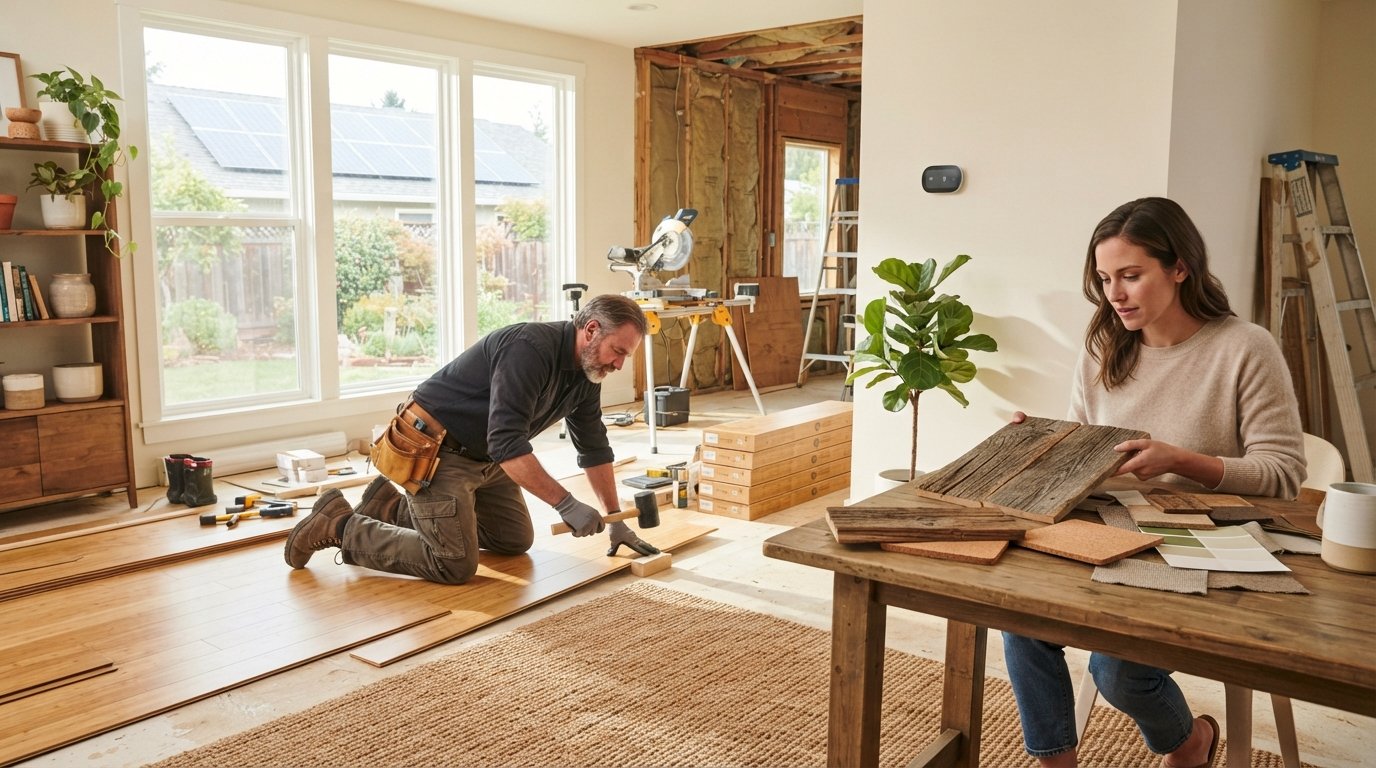
Sustainable Home Remodeling: Eco Friendly Upgrades
Sustainable home remodeling eco friendly upgrades cut bills and boost comfort. Call 8337004293 for vetted local contractors and free quotes.
By James Morgan
Learn more about Solar Panel Installation and Repair for guides, costs, and what to expect.
Compare Solar Panel Installation and Repair Pros Near You

Enter your ZIP code to compare top-rated local professionals and request free quotes.
Every renovation decision you make ripples through your budget, your comfort, and the planet. Sustainable home remodeling eco friendly upgrades are no longer a niche preference for environmentalists; they are a smart financial play for any homeowner who wants lower utility bills, healthier indoor air, and a property that holds its value in a changing market. Whether you are replacing a leaky window, gutting a bathroom, or planning a full kitchen overhaul, the materials and systems you choose today will shape your home's performance for decades. The good news: going green rarely means sacrificing style or blowing your budget. With the right plan and the right professionals, eco friendly choices often cost the same or less than conventional ones once you factor in rebates, tax credits, and long-term savings.
Why Eco Friendly Upgrades Matter More Than Ever
Energy costs have climbed steadily, and extreme weather events are stressing homes from coast to coast. At the same time, buyers are increasingly willing to pay a premium for properties with documented efficiency improvements. A sustainable remodel addresses all three pressures at once: it cuts monthly expenses, hardens your home against climate swings, and makes your listing stand out when it is time to sell. According to national remodeling data, energy efficient renovations consistently rank among the projects with the strongest return on investment, especially when they replace aging systems that are already near the end of their service life.
There is also a health dimension that homeowners often overlook. Conventional building materials can off-gas volatile organic compounds (VOCs) for years, contributing to headaches, allergies, and respiratory issues. Eco friendly alternatives such as low-VOC paints, natural fiber flooring, and formaldehyde-free cabinetry improve indoor air quality immediately. When you combine those material choices with better ventilation and moisture control, you create a living environment that supports your family's well-being every single day. That is a benefit you cannot put a price tag on, though the resale market increasingly tries.
Finally, sustainable remodeling is about resilience. A home with a well-sealed envelope, efficient HVAC, and smart water management handles heat waves, cold snaps, and storms far better than one built to minimum code from decades ago. If you have been putting off upgrades because you assume green means expensive, it is worth revisiting that assumption with current incentives in hand.
Start With an Energy Audit Before You Swing a Hammer
The single most effective first step in any sustainable remodel is a professional energy audit. For a few hundred dollars, an auditor will use blower door testing, thermal imaging, and duct leakage measurements to identify exactly where your home is losing energy. That data turns guesswork into a prioritized punch list. You might discover that your drafty living room is caused by a $200 insulation gap rather than the $15,000 window replacement you were considering. Fixing the cheap problem first frees budget for the upgrades that actually move the needle.
An audit also helps you sequence projects correctly. If you plan to replace siding, for example, you should add exterior insulation at the same time because the wall cavity is already open. If you are remodeling a bathroom, that is the moment to upgrade the exhaust fan and add a heat recovery ventilator. Timing your eco friendly upgrades to coincide with planned renovations reduces labor costs dramatically, since contractors are already on site and walls are already exposed.
Once you have the audit report, sort recommendations into three buckets: quick wins (air sealing, LED lighting, smart thermostats), mid-range projects (insulation, duct sealing, heat pump water heater), and major investments (HVAC replacement, solar panels, window upgrades). Tackle them in that order to see immediate savings that can help fund the bigger items. For homeowners who want a structured planning framework, the guide on smart home remodeling benefits and planning walks through how to integrate technology and efficiency goals from day one.
The Highest-Impact Eco Friendly Upgrades for Your Money
Not all green upgrades deliver the same return. Some are cheap and transformative; others are expensive and marginal. The following projects consistently rank at the top for savings, comfort, and resale value, and most qualify for federal tax credits or local utility rebates that shrink the upfront cost.
- Attic and wall insulation: Adding or upgrading insulation is often the fastest payback in the entire house, sometimes under two years. Blown-in cellulose and spray foam outperform older fiberglass batts by wide margins.
- High-performance windows: ENERGY STAR certified windows with double or triple glazing reduce heat transfer, block UV damage to interiors, and cut outside noise. They also improve curb appeal.
- Heat pump HVAC systems: Modern heat pumps heat and cool with far greater efficiency than legacy furnaces and qualify for substantial federal incentives.
- Heat pump water heaters: These units use roughly a third of the energy of standard electric resistance tanks and can be installed in most garages or basements.
- Solar panel installation: Paired with net metering, solar can offset most or all of your electricity bill and typically pays for itself within seven to twelve years.
Notice that this list mixes envelope improvements (insulation, windows) with system replacements (HVAC, water heating, solar). That is intentional. A tight envelope makes every downstream system work less, so the order matters. Installing a smaller, cheaper heat pump after you air-seal and insulate is smarter than buying an oversized unit to compensate for a leaky house.
For homeowners who want to compare these upgrades side by side with local pricing, working through a platform that connects you with vetted contractors saves weeks of phone calls. Services like 180Remodel help homeowners request multiple quotes for roofing, windows, HVAC, flooring, painting, plumbing, and solar so you can evaluate real numbers rather than national averages.
Sustainable Materials That Look and Perform Beautifully
Eco friendly remodeling is not limited to mechanical systems. The finishes and fixtures you select have their own environmental footprint, and many sustainable materials now rival or exceed conventional options in durability and design. Bamboo and cork flooring, for example, regenerate quickly and offer warm, resilient surfaces that work in kitchens and living areas. Reclaimed hardwood brings one-of-a-kind character while diverting material from landfills. Recycled glass countertops and quartz composites made with post-consumer content deliver the polished look buyers expect without the mining impact of virgin stone.
In kitchens and bathrooms, look for cabinetry made from FSC-certified wood or recycled composites, low-VOC adhesives, and water-saving fixtures such as dual-flush toilets and low-flow aerators. These choices reduce indoor toxins and cut water consumption without any noticeable change in daily routine. Paint is another easy win: most major manufacturers now offer zero-VOC lines in every color, so there is no reason to bring solvent-heavy formulas into your home.
Durability is the hidden sustainability story. A material that lasts fifty years is greener than one that must be replaced in ten, even if its initial footprint is higher. When you evaluate options, ask suppliers about expected lifespan, maintenance requirements, and end-of-life recyclability. Contractors in the USremodel network can help you weigh these factors against your budget and design goals so you are not choosing between beauty and responsibility.
Water Efficiency: The Overlooked Eco Upgrade
Most homeowners focus on energy, but water is an increasingly expensive and constrained resource in many regions. Simple upgrades can cut your water bill by 20 to 40 percent while protecting your home from moisture damage. Low-flow showerheads and faucet aerators cost almost nothing and install in minutes. High-efficiency toilets use less than 1.3 gallons per flush compared with the 3.5 gallons of older models. Tankless and heat pump water heaters eliminate standby losses that waste both water and energy as you wait for the tap to warm.
Outdoors, drought-tolerant landscaping (often called xeriscaping) replaces thirsty lawns with native plants, mulch, and drip irrigation. Rain barrels and permeable pavers capture stormwater that would otherwise run off your property, reducing erosion and easing pressure on municipal systems. If you are planning an exterior remodel, this is the ideal time to regrade soil away from the foundation, add gutters and downspout extensions, and install a smart irrigation controller that adjusts to local weather.
Inside the house, fix leaks promptly. A single dripping faucet can waste thousands of gallons per year, and hidden slab or wall leaks cause far more expensive damage. During any remodel, have your contractor inspect supply lines, shutoff valves, and drain connections while the walls are open. Upgrading to PEX or copper where appropriate and adding a whole-house shutoff valve gives you both efficiency and peace of mind.
Financing Your Green Remodel Without Breaking the Bank
The upfront cost of sustainable upgrades is the biggest barrier for most homeowners, but the financial landscape has never been more favorable. Federal tax credits cover a significant percentage of the cost of qualifying insulation, windows, doors, heat pumps, and solar systems. Many states and utilities add their own rebates on top, and some lenders offer green mortgages or energy efficiency loans with below-market rates. Stacking these incentives can reduce your net cost by 30 percent or more.
It also helps to think in terms of cash flow rather than sticker price. A heat pump water heater that costs $1,800 after rebates might save $300 per year on electricity, delivering a six-year payback and then pure savings for the remaining decade of its life. Solar panels frequently produce positive cash flow from month one when financed, because the loan payment is smaller than the utility bill it replaces. When you present the numbers this way, green upgrades stop looking like an expense and start looking like an investment with a measurable rate of return.
To capture every available incentive, keep detailed receipts and documentation, confirm that your contractor uses qualifying equipment, and file for rebates promptly, since many programs are first-come, first-served. A knowledgeable local contractor can usually tell you exactly which programs apply in your zip code and what paperwork you will need.
Working With the Right Contractors for Sustainable Results
Sustainable remodeling succeeds or fails on installation quality. A top-tier heat pump performs poorly if the ductwork is leaky; the best windows underperform if they are flashed incorrectly. That is why choosing experienced, licensed contractors is just as important as choosing the right products. Look for professionals who have completed energy efficient projects before, who can show you references, and who are willing to coordinate with your energy auditor.
Before hiring anyone, get at least three itemized quotes so you can compare scope, materials, and warranties apples to apples. Ask specifically how they handle air sealing, moisture management, and commissioning of new systems. A contractor who dismisses these details is not the right fit for a green remodel. You should also verify licensing, insurance, and any certifications such as BPI or NARI credentials, which signal additional training in building science.
If the process of finding qualified pros feels overwhelming, a lead generation platform can shortcut the search. USremodel connects homeowners across the United States with independent local contractors for remodeling, renovation, and repair projects, and it is free for homeowners to request customized quotes. You describe your project, receive multiple competitive bids, and choose the professional who best matches your goals and budget. That competition keeps pricing honest and gives you leverage to negotiate better materials or added scope.
Once work begins, stay engaged. Ask for daily or weekly updates, inspect progress at key milestones, and confirm that insulation, sealing, and ventilation details match the plan. Small oversights during construction can undermine years of expected savings, so a few minutes of verification each week is time well spent.
Common Mistakes to Avoid in Green Remodeling
The most frequent error is upgrading systems before improving the building envelope. Homeowners replace an old furnace with a high-efficiency model, then wonder why bills barely drop; the real problem was air leakage and missing insulation. Always tighten the envelope first, then size the mechanical systems to the improved load. Another common mistake is chasing rebates for products that do not fit the house. A solar array makes little sense on a heavily shaded roof, and a heat pump may struggle in a home with poorly designed ductwork. Match the technology to the site, not the other way around.
Finally, do not overlook maintenance. Sustainable systems require periodic service to perform as rated: filters must be changed, solar panels washed, gutters cleared, and HVAC units inspected annually. Skipping maintenance erodes efficiency and can void warranties. Build a simple seasonal checklist and treat it as part of your home's routine, just like changing smoke detector batteries. Homeowners who do this consistently report the lowest utility bills and the fewest surprise repairs.
Done thoughtfully, sustainable home remodeling eco friendly upgrades transform your house into a more comfortable, valuable, and responsible asset. Start with an audit, prioritize the envelope, choose durable materials, stack your incentives, and hire contractors who understand building science. Your wallet, your family, and the planet will all thank you for it.
Learn more about Solar Panel Installation and Repair for guides, costs, and what to expect.
Compare Solar Panel Installation and Repair Pros Near You
Enter your ZIP code to compare top-rated local professionals and request free quotes.