
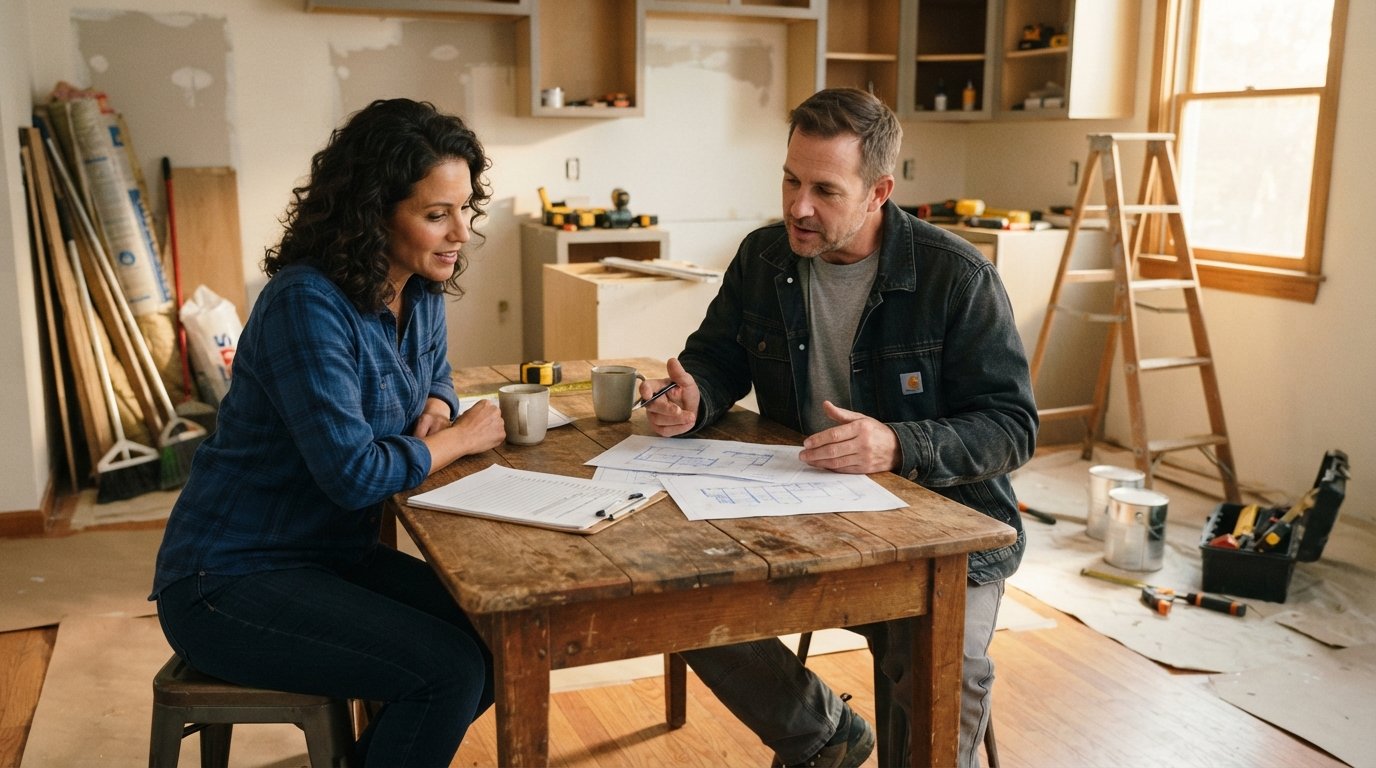
Questions to Ask Remodeling Contractors Before Hiring
Before you hire, know the key questions to ask remodeling contractors. Call 8337004293 to get matched with trusted local pros and avoid costly mistakes.
By Jackson Sawyer
Learn more about Home Remodeling for guides, costs, and what to expect.
Compare Home Remodeling Pros Near You

Enter your ZIP code to compare top-rated local professionals and request free quotes.
Hiring a remodeling contractor is one of the most consequential decisions you will make as a homeowner. Whether you are planning a kitchen overhaul, a bathroom refresh, or a full home addition, the professional you choose determines not only the quality of the work but also your budget, timeline, and peace of mind. Yet many homeowners rush this step, seduced by a low bid or a smooth sales pitch, only to face delays, cost overruns, and shoddy craftsmanship later. The remedy is preparation. By asking the right questions before you sign anything, you shift the power dynamic in your favor and set the stage for a successful project.
This guide walks you through the essential questions to ask remodeling contractors before hiring, organized by theme: credentials, experience, project management, costs, and communication. You will learn what answers to expect, what red flags to watch for, and how to verify the information you receive. The goal is not to interrogate contractors but to have a transparent conversation that protects your home and your wallet. When you are ready to compare multiple professionals, platforms like verified remodeling contractors can streamline the process by connecting you with vetted local pros.
Start With Licensing, Insurance, and Credentials
Before you discuss design ideas or timelines, confirm that the contractor is legally allowed to operate in your area. Licensing requirements vary by state and municipality, but most require a valid license for any project above a certain dollar threshold. Ask directly: Are you licensed? What is your license number? Can you provide a copy of your insurance certificates? A legitimate professional will answer without hesitation and provide documentation. If they dodge the question or claim licensing is not necessary, treat that as a serious warning sign.
Insurance is equally critical. You need to see proof of general liability insurance, which covers property damage, and workers compensation insurance, which covers injuries to workers on your property. If a worker gets hurt and the contractor lacks workers comp, you could be held liable. Ask for a certificate of insurance and call the insurer to verify it is current. Do not accept a verbal assurance. This step alone can save you from financial disaster.
Beyond the basics, inquire about specialized certifications. For example, if your project involves lead paint in an older home, the contractor must be certified by the EPA in lead-safe practices. For energy-efficient upgrades, look for certifications from manufacturers or trade organizations. These credentials demonstrate a commitment to ongoing education and adherence to industry standards.
Here are the essential credential questions to ask:
- Are you licensed and bonded? What is your license number?
- Can you provide certificates of general liability and workers compensation insurance?
- Do you have any specialized certifications relevant to my project (e.g., EPA lead-safe, NARI, or manufacturer certifications)?
- Will you pull all necessary permits, or will I be responsible for that?
Permits are another non-negotiable. Reputable contractors pull the required permits and schedule inspections. If a contractor suggests skipping permits to save time or money, walk away. Unpermitted work can lead to fines, failed inspections, and difficulty selling your home later. It also voids many insurance policies. Always verify that the contractor will handle permitting and that the final inspection will be passed before final payment.
Evaluate Experience and Project Fit
Not all remodeling contractors are created equal. A general contractor who excels at roofing may not have the finesse required for a high-end kitchen renovation. Ask about their specific experience with projects like yours. How many similar projects have you completed in the past year? Can you provide references from those clients? A contractor who specializes in your type of project will anticipate challenges, suggest cost-effective solutions, and deliver a smoother experience.
When you contact references, go beyond the standard questions. Ask former clients about the contractor's communication style, adherence to timeline, and how they handled unexpected issues. Would they hire this contractor again? A pattern of positive feedback across multiple references is a strong indicator of reliability. Conversely, if references are vague or reluctant to share details, that is a red flag.
Consider the contractor's familiarity with local building codes. Codes vary significantly from one jurisdiction to another, and a contractor who works primarily in a different area may miss critical requirements. Ask how they stay updated on code changes and whether they have worked in your specific municipality. This is especially important for structural changes, electrical work, and plumbing modifications.
For larger projects, you may also want to ask about their team. Will the contractor use their own employees or subcontractors? If subcontractors are used, how are they vetted and supervised? You want to ensure that everyone on your job site is qualified and accountable. A contractor who cannot clearly explain their team structure may lack control over the quality of work.
Finally, consider the contractor's design capabilities. Some homeowners prefer a design-build approach where one firm handles both design and construction. Others hire an architect separately. Ask whether the contractor has in-house designers or works with preferred architects. This affects both the cost and the level of coordination required from you.
Understand Project Management and Timelines
Even the best-laid plans can go awry without solid project management. Ask the contractor how they schedule work, communicate progress, and handle delays. A detailed project timeline should include start and end dates, milestones, and dependencies. Be wary of contractors who promise unrealistically short timelines or refuse to put a schedule in writing. Weather, material shortages, and permit delays can all impact the schedule, but a professional will build contingencies into their plan.
Ask who will be your main point of contact. Will the contractor be on-site daily, or will a project manager handle day-to-day operations? How often will you receive updates? Daily communication is ideal for major remodels, while weekly check-ins may suffice for smaller jobs. Clarify how changes to the scope of work will be documented and priced. A clear change-order process prevents misunderstandings and unexpected charges.
Another key question: How do you handle cleanup and waste removal? Remodeling generates a significant amount of debris, and responsible contractors include dumpster rental and daily cleanup in their scope. If the contractor expects you to handle cleanup, that should be reflected in the price. Also ask about site security. Will tools and materials be secured overnight? Will the site be left in a safe condition for children and pets?
Here is a short list of project management questions to ask:
- Can you provide a written timeline with milestones and a completion date?
- Who will be my primary contact, and how often will we communicate?
- How do you handle change orders and unexpected issues?
- What is your policy on cleanup and waste removal?
The answers to these questions reveal how organized and professional the contractor is. A contractor who hesitates or provides vague answers may cause delays and frustration. Trust your instincts: if the process feels disorganized during the interview, it will likely feel worse during construction.
Get Clear on Costs, Payments, and Contracts
Budget is often the most sensitive topic, but it is essential to address it head-on. Ask for a detailed written estimate that breaks down labor, materials, permits, and any other costs. Avoid contractors who provide only a lump-sum figure. A line-item estimate allows you to compare bids fairly and identify potential hidden costs. Be cautious of estimates that are significantly lower than others; they may indicate omitted work or inferior materials.
Discuss the payment schedule. A common industry standard is a deposit of 10 to 30 percent upfront, with subsequent payments tied to project milestones. Never pay the full amount before work begins, and never pay in cash without a receipt. Final payment should be made only after you have inspected the work and confirmed that all punch-list items are complete. If a contractor demands a large upfront payment, that is a major red flag.
Ask about the contract itself. It should include the scope of work, materials specifications, timeline, payment schedule, warranty terms, and a dispute resolution clause. Read it carefully before signing. If anything is unclear, ask for clarification. A reputable contractor will welcome your questions and provide a contract that protects both parties.
Warranty is another critical element. Ask what is covered, for how long, and whether it is transferable. A one-year warranty on workmanship is standard, but some contractors offer longer terms. Get the warranty in writing and understand what constitutes a valid claim. Also ask about manufacturer warranties on materials, such as roofing shingles or windows, and whether the contractor will register them on your behalf.
Finally, discuss how the contractor handles disputes. Do they have a mediation clause? Are they willing to provide a lien waiver at the end of the project? A lien waiver protects you from subcontractors or suppliers who might otherwise file a lien against your property if the contractor fails to pay them. This is a crucial detail that many homeowners overlook.
Communication, Compatibility, and Red Flags
You will be spending weeks or months with your contractor, so compatibility matters. Do they listen to your ideas and respond thoughtfully? Do they explain technical details in plain language? A good contractor educates rather than intimidates. They should be willing to answer all your questions, no matter how basic. If you feel rushed or dismissed during the interview, consider other candidates.
Pay attention to punctuality and follow-through. Did they arrive on time for the estimate? Did they deliver the proposal when promised? These small courtesies are leading indicators of how they will manage your project. A contractor who is late or disorganized during the sales process is unlikely to improve once work begins.
Watch for these common red flags:
- No physical address or a P.O. box only.
- Reluctance to provide references or insurance certificates.
- Pressure to sign a contract immediately or offers that expire today.
- Requests for large cash payments or payment in full upfront.
- No written contract or vague scope of work.
- Negative online reviews that mention poor communication or unfinished work.
If you encounter any of these, proceed with caution. There are plenty of qualified contractors available, and you should never feel pressured to hire someone who makes you uncomfortable. Trust your gut. A professional contractor will respect your need to verify credentials and take your time.
For homeowners who want a streamlined way to find and compare contractors, consider using a platform like 180 Remodel. They connect homeowners with licensed professionals across a wide range of services, from roofing and windows to bathroom remodeling and HVAC. Using a reputable matching service can save you time and reduce the risk of hiring an unqualified contractor.
Final Steps Before You Sign
Once you have narrowed your list to two or three contractors, do a final round of due diligence. Check online reviews on multiple platforms, including the Better Business Bureau, Google, and Angie's List. Look for patterns in complaints, not just isolated incidents. Verify that the contractor's license is active and in good standing with your state licensing board. A quick phone call or online search can confirm this.
Ask for a copy of their certificate of insurance directly from the insurer, not from the contractor. This prevents forged documents. If the contractor uses subcontractors, ask for their insurance information as well. You want to be certain that everyone working on your property is covered.
Finally, review the contract one more time with a fine-tooth comb. Ensure that every detail you discussed is included: the scope of work, materials, timeline, payment schedule, warranty, and change-order process. If something is missing, ask for it to be added. Do not sign until you are completely satisfied. A well-negotiated contract is your best protection against disputes and disappointments.
By asking the questions outlined in this guide, you demonstrate that you are an informed homeowner who expects professionalism and transparency. The right contractor will appreciate your diligence and reward you with quality work. The wrong one will reveal themselves early, saving you from a costly mistake. Take your time, do your homework, and choose wisely.
Learn more about Home Remodeling for guides, costs, and what to expect.
Compare Home Remodeling Pros Near You
Enter your ZIP code to compare top-rated local professionals and request free quotes.