Mold Remediation: A Homeowner’s Complete Guide to Safe Removal
Mold is more than an unsightly stain on your wall. It is a hidden hazard that can compromise your home’s structure and your family’s respiratory health. When moisture finds its way into drywall, wood, or carpet, mold spores begin to colonize within 24 to 48 hours. Left unchecked, these colonies release allergens and irritants that trigger asthma, allergies, and even chronic sinus infections. That is why professional mold remediation is not a luxury: it is a necessity for any homeowner who values indoor air quality and property value.
Many people confuse mold removal with simple cleaning. Scrubbing visible mold with bleach might remove the surface discoloration, but it does not address the root cause: trapped moisture and porous material contamination. True remediation involves containment, HEPA filtration, source elimination, and structural drying. This article walks you through every step of the process, explains when to bring in a professional, and shows how USremodel can connect you with qualified contractors who handle the job safely and efficiently.
Understanding Mold and Its Risks
Mold is a type of fungus that thrives in damp, warm environments. It reproduces by releasing microscopic spores that float through the air. When these spores land on a wet surface, they begin to grow. Common indoor molds include Stachybotrys chartarum (black mold), Aspergillus, Penicillium, and Cladosporium. Each type can cause varying degrees of health problems, especially for people with weakened immune systems, respiratory conditions, or allergies.
Beyond health concerns, mold damages building materials. It feeds on cellulose found in drywall, wood, paper, and fabric. Over time, it weakens structural integrity, leading to sagging ceilings, warped floors, and rotting framing. The presence of mold also reduces your home’s resale value because buyers and inspectors view it as a red flag for water intrusion and poor maintenance.
Common Sources of Moisture That Lead to Mold
Mold cannot grow without water. The most common sources of excess moisture in homes include:
- Leaky roofs or plumbing pipes that drip behind walls
- Poorly ventilated bathrooms and kitchens where steam condenses
- Flooding from storms, burst pipes, or sewer backups
- High indoor humidity (above 60 percent) in basements or crawlspaces
- Clogged gutters that allow water to seep into the foundation
Identifying and fixing the moisture source is the first and most critical step in any mold remediation plan. If you stop the water but leave the mold intact, you are simply waiting for the next leak to reactivate dormant spores.
When to DIY vs. Hire a Professional
Not every mold problem requires a certified remediation contractor. Small patches of mold on hard surfaces (less than 10 square feet) can often be cleaned with detergent and water by a healthy homeowner. Examples include mold on a shower tile, a windowsill, or a small section of drywall that has been dry for days. Always wear gloves, an N95 mask, and eye protection during cleanup.
However, professional mold remediation is essential in these scenarios:
- Large areas: Any mold growth covering more than 10 square feet should be handled by a pro. Large infestations require negative air pressure enclosures to prevent spores from spreading to other rooms.
- HVAC contamination: If mold has colonized inside your heating, ventilation, and air conditioning system, it will circulate spores throughout the entire house. A technician must clean ducts and replace filters.
- Hidden mold: Mold behind walls, under flooring, or inside attic insulation cannot be fully removed without cutting into building materials and applying antimicrobial treatments.
- Health risks: If anyone in your home has asthma, allergies, or a compromised immune system, do not risk exposure. Professionals use HEPA vacuums, air scrubbers, and protective suits to keep occupants safe.
Attempting a large-scale removal without the right equipment often makes the problem worse. Disturbing mold colonies releases a burst of spores into the air, which then settle on new surfaces and start additional colonies. A professional contractor has the training and tools to contain, remove, and dispose of mold safely.
The Mold Remediation Process: Step by Step
Proper mold remediation follows a systematic protocol recognized by the Environmental Protection Agency (EPA) and the Institute of Inspection Cleaning and Restoration Certification (IICRC). Here is what a typical job entails when you hire a qualified contractor through USremodel.
Step 1: Inspection and Moisture Assessment
The contractor begins by locating all visible mold and using moisture meters to detect hidden water sources. Infrared cameras help identify damp spots behind walls and ceilings. Air samples may be taken to measure spore counts before and after remediation to confirm success.
Step 2: Containment
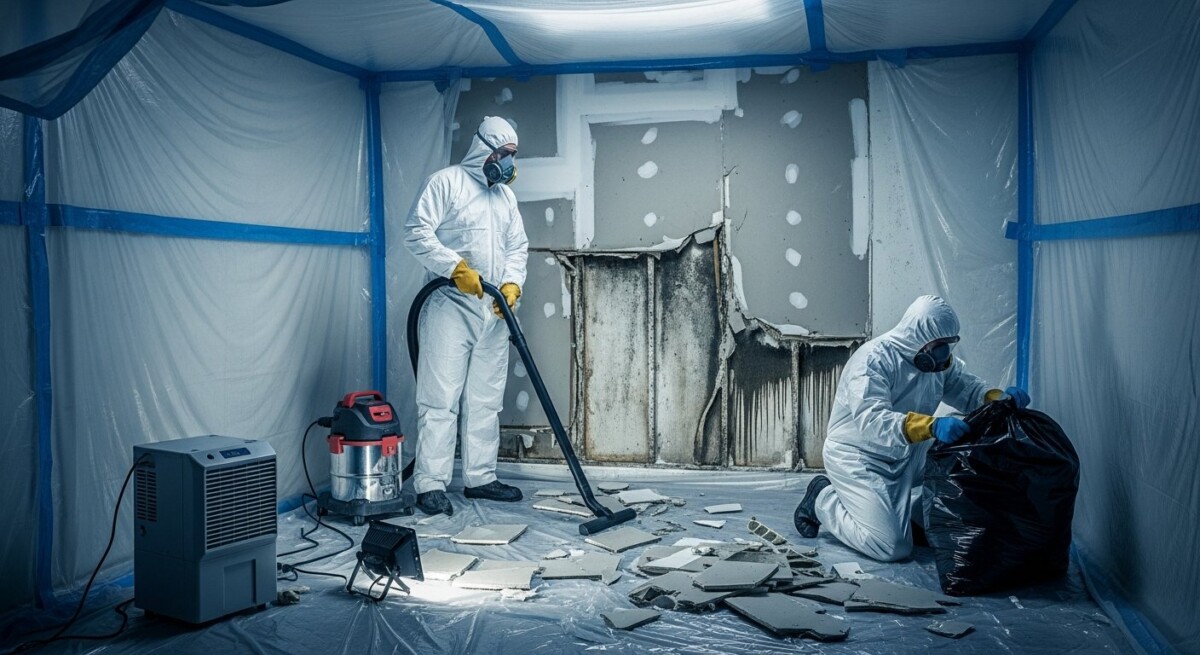
To prevent cross-contamination, the work area is sealed off with heavy-duty plastic sheeting and negative air pressure machines. These HEPA-filtered units pull air out of the containment zone and exhaust it outside. All openings such as doors, vents, and windows are taped shut.
Step 3: Air Filtration
HEPA air scrubbers run continuously during the process, capturing airborne spores. This reduces the chance of mold spreading to unaffected areas and improves air quality for the workers and the rest of the house.
Step 4: Removal of Contaminated Materials
Porous materials that cannot be fully cleaned such as drywall, carpet, insulation, and ceiling tiles are cut out and bagged in heavy-duty plastic. These materials are disposed of according to local regulations. Non-porous surfaces like metal, glass, and hard plastics are scrubbed with antimicrobial solutions.
Step 5: Cleaning and Disinfection
All remaining surfaces within the containment zone are wiped down with EPA-registered disinfectants. This step kills any lingering spores and prevents regrowth. The contractor also cleans and vacuums the area with HEPA vacuums to remove fine particles.
Step 6: Drying and Monitoring
Industrial-grade dehumidifiers and air movers are placed to dry the structure completely. Moisture levels are monitored daily until they fall below the threshold where mold can regrow (typically below 15 percent moisture content in wood).
Step 7: Post-Remediation Verification
A final inspection and air sample test confirm that the space is mold-free. If the spore counts are within normal outdoor levels, the containment is dismantled and the area is restored with new drywall, paint, or flooring as needed.
Each step is critical. Skipping containment or drying often leads to a return of mold within weeks, wasting time and money. That is why hiring a contractor who follows the IICRC standard is the safest choice.
Preventing Future Mold Growth
Once remediation is complete, the next priority is keeping mold from coming back. The most effective prevention strategy is moisture control. Keep indoor humidity between 30 percent and 50 percent. Use exhaust fans in bathrooms and kitchens, and vent them to the outside rather than into the attic. Fix leaks immediately and dry out wet areas within 48 hours.
Consider installing a dehumidifier in basements or crawlspaces, especially if your home is in a humid climate. Ensure gutters and downspouts carry water at least five feet away from the foundation. Regularly inspect your roof for missing shingles or flashing damage. Finally, schedule an annual home maintenance checkup that includes plumbing and HVAC inspection. USremodel can connect you with contractors for these preventive services as well.
How USremodel Connects You with Trusted Contractors
Finding a reliable mold remediation specialist can feel overwhelming. You need someone who is licensed, insured, and experienced with the specific type of mold in your home. USremodel simplifies this process. You submit a brief description of your project through the site, and within hours you receive free, customized quotes from multiple independent contractors in your area.
These contractors are vetted to ensure they meet professional standards. You can compare their approaches, pricing, and timelines before making a decision. The platform is designed to give you control and transparency, eliminating the guesswork of searching through online directories or relying on recommendations from neighbors. Whether you need a full-scale remediation or a minor moisture assessment, USremodel helps you find the right expert without pressure or upselling.
Beyond mold remediation, USremodel offers connections for related services such as water damage restoration, attic ventilation improvements, and plumbing repairs. Addressing these issues proactively reduces the chance of mold reoccurrence and protects your home investment.
Mold remediation is not a task to take lightly. The health of your family and the integrity of your home depend on a thorough, professional approach. By understanding the process and using a trusted platform to find qualified help, you can resolve the problem efficiently and prevent it from returning. Start with a free quote today and take the first step toward a safe, mold-free home.