
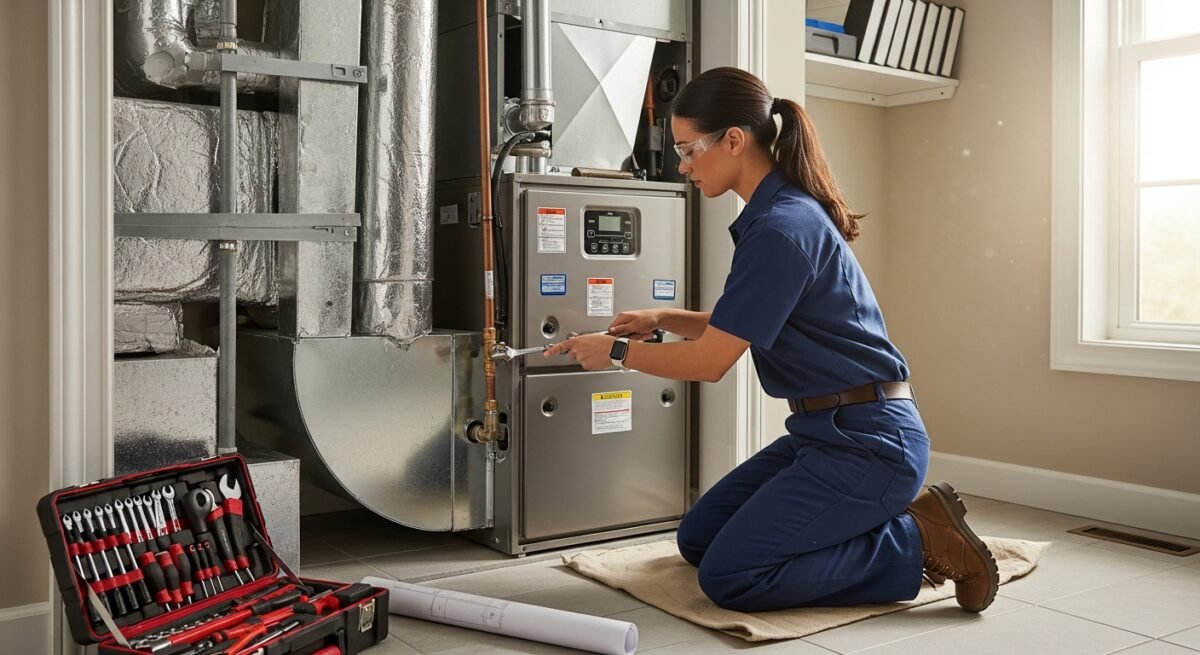
Water Heater Replacement Guide for Homeowners
A complete guide to water heater replacement. Learn the signs you need a new unit, the replacement process, cost factors, and how to choose the right professional for the job.
By Chelsea Kris
Learn more about Water Heater Repair or Maintenance for guides, costs, and what to expect.
Compare Water Heater Repair or Maintenance Pros Near You

Enter your ZIP code to compare top-rated local professionals and request free quotes.
One day, you step into your morning shower and the water never gets warm. Your water heater, a silent workhorse for years, has finally reached its limit. Replacing it can seem like a big, complicated project, but with the right information, you can make confident decisions for your home and family.
For a safe, efficient solution, call 📞833-700-4293 or visit Get a Professional Quote to schedule your free, no-obligation estimate today.
Understanding Water Heater Replacement
Water heater replacement is the complete process of removing your old, failing unit and installing a new one. It’s more than just a simple swap; it involves proper sizing, selecting the right type of unit for your home, ensuring safe connections to gas, water, and venting, and disposing of the old tank responsibly.
While it may seem straightforward, a proper installation is critical for your home’s safety and the efficiency of your new investment. A professional installation ensures everything from the water pressure to the gas line and electrical connections meets local codes and manufacturer specifications.
More Than Just a New Tank
Modern replacement often includes upgrading components like the expansion tank, drain pan, or shut-off valves. It’s also the perfect time to consider if a different type of system, like a tankless model, better suits your household’s needs. Our comprehensive tankless water heater guide can help you explore that option in detail.
Why It Matters for Homeowners
A reliable hot water supply is central to daily comfort. From showers and laundry to washing dishes, a failing heater disrupts your entire routine. Replacing it before a catastrophic failure saves you from the mess and stress of a major leak or a cold house.
More importantly, a new water heater is a smart investment in safety and savings. Old units, especially gas models, can develop dangerous issues like gas leaks or carbon monoxide problems. A new, high-efficiency model uses less energy to heat the same amount of water, lowering your utility bills month after month.
Don’t wait for a disaster to strike. If you’re noticing persistent issues, a professional assessment can determine if repair or replacement is the right call. For a deeper look at common problems, our expert water heater repair guide outlines what technicians look for.
Common Issues and Their Causes
Most water heaters give plenty of warning before they fail completely. The issues usually stem from age and the harsh environment inside the tank. Over years, sediment (minerals like calcium and lime) settles at the bottom of the tank.
This sediment acts like an insulator, forcing the burner or heating elements to work harder and longer. This leads to overheating, increased wear on the tank lining, and ultimately, failure. Other common causes include a failing anode rod (the part that sacrificially corrodes to protect the tank), a faulty thermostat, or a cracked tank from internal pressure.
- Rusty Water: Brown or reddish water from your hot taps signals internal tank corrosion.
- Rumbling Noises: Loud popping or rumbling sounds are caused by sediment overheating and boiling at the tank’s bottom.
- Leaks Around the Tank: Puddles or consistent dripping often mean the tank itself is corroded and failing.
- Inconsistent Temperatures: Water that fluctuates between hot and cold can point to a failing heating element or sediment issues.
- Not Enough Hot Water: Running out of hot water faster than usual indicates the tank’s capacity or heating ability is compromised.
How Professionals Fix the Problem
A professional replacement is a systematic process designed for safety and longevity. It starts with a thorough assessment of your home’s needs,the number of bathrooms, peak usage times, and available fuel sources (gas, electric, propane). This ensures the new unit is correctly sized.
The technician will then safely shut off the power and water supply, drain the old tank, and disconnect it. They prepare the installation area, which may involve installing a new drain pan or checking the venting. The new water heater is carefully positioned, leveled, and connected to the water, gas, and venting systems. After everything is secure, they fill the tank, purge air from the lines, light the pilot (for gas), and test for leaks and proper operation.
- Assessment & Sizing: Evaluating your home’s needs and selecting the right unit.
- Safe Removal: Shutting down utilities, draining, and disconnecting the old heater.
- Preparation & Installation: Preparing the space and connecting the new unit.
- Testing & Activation: Filling the tank, checking for leaks, and ensuring proper function.
Signs You Should Not Ignore
Some signs are subtle, while others are urgent red flags. Paying attention can mean the difference between a planned replacement and an emergency call.
A small leak from the tank itself is a critical sign. What starts as a drip can quickly become a burst, causing significant water damage to your home. Similarly, if you see water pooling around the tank or notice a musty smell from the closet or basement where it’s located, investigate immediately.
For a safe, efficient solution, call 📞833-700-4293 or visit Get a Professional Quote to schedule your free, no-obligation estimate today.
- Water Around the Base: Any moisture or a small puddle signals a potential tank leak.
- Age Over 10-12 Years: Most traditional tank heaters have a lifespan in this range.
- Persistent Rusty Water: If flushing the tank doesn’t clear rusty water, the tank is corroding.
- Loud, Persistent Noises: Constant banging or rumbling indicates advanced sediment buildup.
- Cold Water Only: The heater has completely stopped working.
Cost Factors and What Affects Pricing
The total cost of a water heater replacement isn’t just the price of the new unit. Several key factors influence the final investment. The type of heater you choose (standard tank, high-efficiency tank, or tankless) is the biggest variable, with tankless models having a higher upfront cost but potential long-term savings.
Labor is another significant component. The complexity of the installation,such as moving the location, upgrading gas lines or electrical circuits, or installing new venting,will affect the labor time and cost. Finally, local permit fees and the cost to haul away and dispose of your old unit are included in a professional quote.
How To Choose the Right Professional or Service
Choosing the right professional is as important as choosing the right water heater. Look for a licensed, insured company with specific experience in water heater installation. Proper licensing ensures they understand local building and safety codes.
Always ask for a detailed, written estimate that breaks down the cost of the unit, labor, materials, permits, and disposal. Be wary of quotes that seem unusually low, as they may cut corners on quality or licensing. Read reviews and ask for references to gauge the company’s reputation for reliability and clean workmanship.
Long-Term Benefits for Your Home
Investing in a new water heater pays off for years. The most immediate benefit is peace of mind. You won’t worry about cold showers or coming home to a flooded basement. Modern units are significantly more energy-efficient, which translates to lower monthly utility bills.
You also gain improved performance with better temperature control and more consistent hot water supply. A professionally installed unit ensures your family’s safety from gas or electrical hazards. Finally, a new, efficient appliance can even add to your home’s value, making it an all-around smart upgrade.
Frequently Asked Questions
How long does a water heater replacement take?
A standard replacement for a like-for-like unit typically takes 2 to 4 hours for a professional crew. More complex jobs involving relocation or system upgrades may take a full day.
Can I replace a water heater myself?
While it’s physically possible, we strongly advise against DIY replacement. Incorrect installation can lead to gas leaks, carbon monoxide poisoning, water damage, electrical hazards, and voided warranties. It’s a job for licensed professionals.
What size water heater do I need?
Size is based on your home’s peak hot water demand (number of bathrooms, occupants, and appliances). A professional will calculate the required gallon capacity (for tanks) or flow rate (for tankless) to ensure adequate supply.
Should I switch to a tankless water heater?
Tankless heaters provide endless hot water on demand and are more energy-efficient, but have a higher upfront cost. They are ideal for homes with high hot water usage. Consider your budget and long-term savings.
What are the main types of water heaters available?
The main types are conventional storage tank heaters (gas or electric), tankless (on-demand) heaters, heat pump water heaters, and solar-powered systems. Each has different pros, cons, and costs.
How can I make my new water heater last longer?
Annual maintenance is key. This includes flushing the tank to remove sediment (for tank models) and having a professional inspect the anode rod, pressure relief valve, and connections.
Does a new water heater come with a warranty?
Yes, manufacturers offer warranties on the tank and parts, typically ranging from 6 to 12 years. A professional installation is almost always required to keep the warranty valid.
What should I do with my old water heater?
A reputable installation company will include haul-away and recycling of your old unit in their service. Never attempt to dispose of it yourself due to its weight and potential environmental hazards.
Replacing your water heater is a significant home investment that restores comfort, safety, and efficiency. By understanding the process and working with a trusted professional, you can ensure a smooth installation and enjoy reliable hot water for years to come.
For a safe, efficient solution, call 📞833-700-4293 or visit Get a Professional Quote to schedule your free, no-obligation estimate today.
Learn more about Water Heater Repair or Maintenance for guides, costs, and what to expect.
Compare Water Heater Repair or Maintenance Pros Near You
Enter your ZIP code to compare top-rated local professionals and request free quotes.