
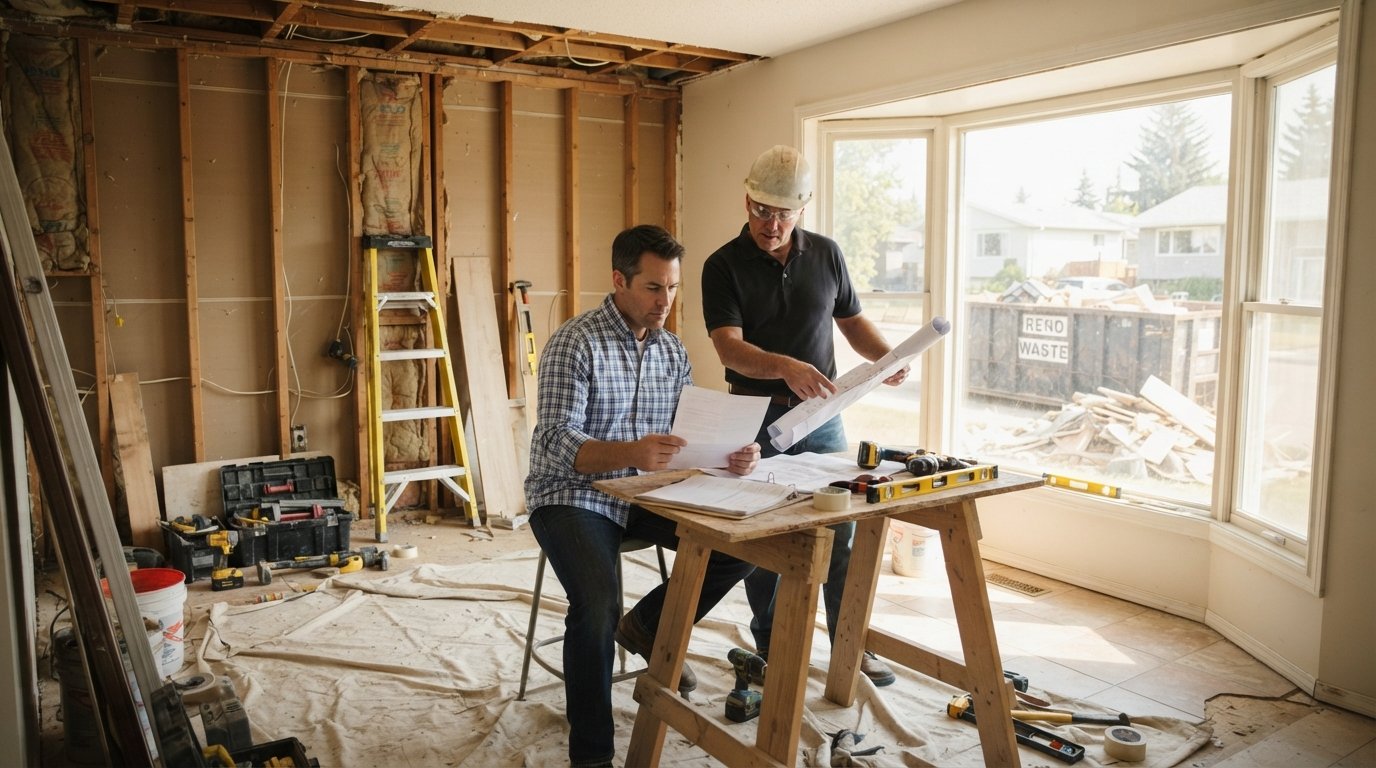
Home Remodel Insurance Protection During Renovation
Home remodel insurance protection during renovation keeps your project covered. Call 8337004293 for vetted contractors and free quotes.
By Jackson Sawyer
Learn more about Home Remodeling for guides, costs, and what to expect.
Compare Home Remodeling Pros Near You

Enter your ZIP code to compare top-rated local professionals and request free quotes.
Your renovation budget is set, the contractor is hired, and the dumpster just landed in your driveway. Then a pipe bursts behind the new tile, a ladder goes through a bay window, or a worker slips on your stairs. Who pays? The answer almost always comes down to home remodel insurance protection during renovation, and the gaps in coverage surprise more homeowners than any construction delay. Understanding how your policy behaves once walls come down is one of the smartest moves you can make before demolition day.
Standard homeowners insurance is built for a finished, occupied house, not an active job site. Carpenters, electricians, and heavy materials change the risk profile of your property overnight. A policy that quietly sat in a drawer for years suddenly matters more than the blueprints. This guide walks through what is typically covered, what is often excluded, how to verify a contractor's coverage, and the exact steps to close gaps before work begins.
Why Your Standard Homeowners Policy May Not Be Enough
Most homeowners assume their policy simply continues as normal through a remodel. In reality, insurers view renovation as a material change in risk. A kitchen torn down to the studs, a roof stripped of shingles, or a bathroom with no fixtures is more vulnerable to water damage, theft, and weather than a finished home. If you fail to tell your insurer about the project, a claim could be reduced or denied precisely when you need it most.
The core problem is that a standard HO-3 policy is priced for a completed dwelling. During construction, several things shift at once: the home's replacement cost changes as materials and finishes are upgraded, the occupancy pattern changes if you move out temporarily, and liability exposure rises because contractors and delivery crews are walking through your property daily. Each of these shifts can trigger coverage conditions buried in the fine print.
There is also the question of who insures what. Your policy generally covers your dwelling and personal property. Your contractor's policy generally covers the contractor's tools, employees, and workmanship. When those two worlds collide, a burst supply line or a dropped beam, the question of fault determines whose insurer pays. That is why a short conversation with your agent before the first hammer swings can save you tens of thousands of dollars.
One more layer: many policies include a vacancy clause. If you move out during a major renovation for more than 30 or 60 days, depending on the carrier, coverage for vandalism, theft, and even some water damage may be suspended unless you add a vacancy permit. Homeowners who temporarily relocate during a large project are often shocked to learn their home was effectively uninsured for weeks.
What Home Remodel Insurance Protection During Renovation Typically Covers
When your policy is properly updated for a renovation, several categories of protection usually remain active or can be added. The exact list depends on your carrier and state, but most homeowners can expect the following elements to apply, sometimes with endorsements or riders.
- Dwelling and structure coverage: Damage to the home itself from fire, wind, hail, or sudden water events, even while under construction, provided the insurer was notified of the project.
- Personal property protection: Theft or damage to furniture, electronics, and belongings, though high-value items may need scheduling before crews arrive.
- Personal liability: Injuries to visitors, delivery personnel, or non-employee workers on your property, subject to policy limits.
- Loss of use: Hotel, rental, and additional living expenses if the home becomes uninhabitable during the remodel.
- Building ordinance or law coverage: The extra cost of rebuilding to current codes when the original structure was grandfathered in.
Notice what is missing from that list: faulty workmanship. If a contractor installs a shower pan incorrectly and water quietly rots the subfloor for a year, your policy will likely deny the claim because it stems from defective work, not a sudden accident. That loss belongs to the contractor's liability insurance, which is why verifying their coverage is not optional.
Another subtle point involves materials stored on site. Tile, cabinetry, and appliances waiting for installation are usually covered as personal property up to your policy limits, but only if they are on your premises. If a delivery truck is hijacked en route, that is a commercial loss, not yours, assuming you have not already paid in full without a delivery guarantee.
Common Exclusions That Catch Homeowners Off Guard
Even a well-updated policy has limits. Knowing them in advance prevents the ugly surprise of a denied claim. The following exclusions appear frequently in renovation-related claims.
Faulty workmanship and design defects. As noted, poor construction, improper installation, and flawed engineering are excluded. Your remedy is the contractor's insurance and your written contract, not your own policy. This is why a detailed scope of work and a clear warranty clause matter as much as the insurance certificate.
Gradual damage. Slow leaks, mold that develops over months, and deterioration from deferred maintenance are typically excluded. If a renovation exposes hidden rot behind a wall, your policy may cover the resulting water damage but not the rot itself, because it developed over time. Discuss this scenario with your adjuster before work starts so expectations are clear.
Vacancy. As mentioned, most policies suspend certain coverages when a home sits empty beyond a set period. A renovation that keeps you out of the house for three months can trigger this clause. Ask your agent for a vacancy permit or a builder's risk endorsement to keep protection intact.
Employee injuries. If a contractor's employee is hurt on your property, workers' compensation should respond, not your homeowners liability. But if the contractor has no workers' comp coverage, the injured worker may come after you. Always confirm that every contractor and subcontractor carries active workers' compensation.
Business property. If you run a home business and expensive equipment is damaged during the remodel, your homeowners policy may cap or exclude it. A separate business property policy or endorsement closes that gap.
How to Verify Your Contractor's Insurance Before Work Begins
Your contractor's insurance is the first line of defense for construction-related losses. A certificate of insurance is a good start, but it is not enough on its own. Certificates can be forged, expire, or list limits that look impressive but exclude the very work being done. Take these steps to confirm coverage is real and current.
- Request a certificate of insurance directly from the contractor's insurance agent, not from the contractor.
- Call the insurance company to confirm the policy is active and the limits match the certificate.
- Ask to be listed as an additional insured on the general liability policy for the duration of the project.
- Verify workers' compensation coverage for every employee who will be on site.
- Check that the policy covers the specific type of work being performed, such as roofing, electrical, or plumbing.
Being named as an additional insured is a powerful protection. It means the contractor's liability policy can respond to certain claims involving your property without you having to prove fault first. Not every contractor will agree, but the ones who carry proper coverage usually will. If a contractor hesitates or pressures you to skip this step, treat it as a red flag.
Also confirm that subcontractors carry their own coverage. General contractors sometimes assume their policy extends to every trade on the job, but that is not always true. A roofer, electrician, or plumber who is an independent subcontractor may need separate insurance, and if they lack it, the liability can flow back to you.
Builder's Risk and Renovation Endorsements: When You Need Them
For major renovations, a standard homeowners policy with a renovation endorsement may not be enough. A builder's risk policy is a specialized form of property insurance designed for structures under construction or significant renovation. It typically covers the structure, materials on site, and sometimes soft costs like architectural fees if the project is delayed by a covered loss.
Builder's risk is especially valuable when the project involves structural changes, an addition, or a full gut renovation. It can fill gaps that a standard policy leaves open, including coverage for materials not yet installed and for the increased replacement cost of upgraded finishes. Some carriers offer a renovation endorsement instead, which modifies your existing policy for a defined project period.
If you are planning a major remodel, ask your agent whether a builder's risk policy or a renovation endorsement is the better fit. The answer depends on the scope, duration, and value of the project. For a cosmetic refresh, a simple notification and endorsement may suffice. For a second-story addition or a full kitchen and bath overhaul, a dedicated builder's risk policy is often the safer choice.
Keep in mind that builder's risk is usually purchased by the homeowner or the contractor, not both. Clarify in your contract who is responsible for obtaining it. If the contractor agrees to carry it, ask for a copy of the policy and confirm the coverage limits before demolition begins. For luxury projects with high-end finishes, understanding how pricing and coverage interact is essential, and a resource like this luxury renovation pricing guide can help you frame the budget conversation with your insurer and contractor.
Practical Steps to Protect Yourself During a Renovation
Insurance is only one part of a solid risk management plan. The rest comes down to documentation, communication, and a few habits that keep small problems from becoming expensive claims. The following steps are simple but powerful.
- Notify your insurer in writing before work begins, and keep a copy of the acknowledgment.
- Photograph and video the entire home before demolition, including closets, attics, and basements.
- Store valuables, jewelry, and important documents off site or in a secure safe.
- Keep a project folder with contracts, change orders, certificates of insurance, and receipts.
- Review the contract for insurance requirements, indemnification clauses, and dispute resolution terms.
Documentation is your best friend if a claim arises. Before-and-after photos establish the condition of the home. Receipts prove the value of materials and finishes. A written record of your insurer notification proves you did not hide the project. Together, these items make the claims process faster and more favorable.
Communication matters too. If the scope of work changes, tell your insurer. Adding a bathroom, converting a garage, or upgrading electrical service can all affect your premium and coverage. A quick call now prevents a denied claim later.
Working With Contractors Who Carry Proper Coverage
Finding a contractor who carries robust insurance is easier when you work through a platform that vets professionals in advance. USremodel connects homeowners with independent contractors across a wide range of services, from roofing and windows to bathroom remodeling, HVAC, flooring, painting, and plumbing. Because the platform is built around free, customized quotes from multiple contractors, you can compare not just price but also the insurance and credentials each professional brings to the table.
When you request quotes through a service like 180Remodel, you can ask each contractor directly about their general liability limits, workers' compensation coverage, and willingness to add you as an additional insured. That conversation is far more productive when you already understand the basics of home remodel insurance protection during renovation. You are not just comparing bids; you are comparing risk.
Remember that the cheapest bid is rarely the safest. A contractor who cuts corners on insurance is likely to cut corners elsewhere. Paying slightly more for a fully insured professional is a form of insurance itself, because it shifts catastrophic risk away from your family and onto the businesses equipped to handle it.
Filing a Claim During a Renovation: What to Expect
If something goes wrong during your remodel, the claims process follows a predictable path. Knowing it in advance helps you respond calmly and protect your rights.
First, document the damage immediately with photos, video, and written notes. Second, notify your insurer as soon as possible, ideally within 24 to 48 hours. Third, do not authorize repairs or cleanup beyond what is necessary to prevent further damage until the adjuster has seen the scene, unless emergency action is required. Fourth, keep every receipt and communication. Fifth, cooperate fully with the investigation while also protecting your interests.
If the loss stems from contractor negligence, your insurer may pursue subrogation against the contractor's policy. That is a normal part of the process and does not require action from you beyond providing documentation. If the contractor's insurer disputes the claim, your own policy may step in, depending on the cause of loss and your coverage. This is why having both policies active and coordinated is so valuable.
Finally, do not accept a quick settlement before you understand the full scope of damage. Hidden moisture, structural issues, and mold can appear weeks later. A professional inspection before you sign off on a claim is a wise investment.
Renovation is exciting, but it is also a period of elevated risk. With the right coverage, a vetted contractor, and a clear paper trail, you can move forward with confidence. Verify insurance before the first nail is pulled, notify your carrier before the first wall comes down, and keep records as carefully as you keep design inspiration. Your home is your largest asset, and a few hours of insurance preparation can protect it through every phase of the project.