A Homeowner’s Guide to Roof Repair and Protection
Your roof is your home’s first line of defense, shielding you from rain, wind, sun, and snow. Over time, even the strongest roof can develop problems. Knowing when and how to address roof repair is key to preventing small issues from turning into costly, stressful emergencies that compromise your home’s safety and comfort.
A Simple Breakdown of Roof Repair
Roof repair is the process of fixing specific, damaged areas of your roofing system to restore its integrity. It’s different from a full replacement, which involves removing the entire old roof. Think of it like fixing a broken window instead of rebuilding the whole wall.
Repairs can range from replacing a few cracked shingles to sealing a leak around a chimney or fixing damaged flashing. The goal is always the same: stop the damage, protect the underlying structure of your home, and extend the life of your roof.
A professional repair starts with a thorough inspection to find the true source of the problem, not just the visible symptom. This ensures the fix is complete and lasting.
When Repair is the Right Choice
Roof repair is typically the best and most cost-effective solution when damage is localized. If the problem is confined to one area and the rest of the roof is in good condition, a targeted repair makes perfect sense. This approach saves you money and avoids unnecessary waste.
Why It Matters for Homeowners
Ignoring a roof issue, no matter how small it seems, is a risk no homeowner should take. A tiny leak can silently soak insulation, rot wood framing, and ruin ceilings and walls. What starts as a minor repair can quickly escalate into a major project involving not just roofing, but also drywall, painting, and mold remediation.
Beyond preventing damage, a well-maintained roof protects your investment. It keeps your energy bills in check by maintaining proper insulation, enhances your home’s curb appeal, and provides peace of mind during heavy storms. Proactive repair is an act of home care that safeguards your family and your finances.
Call 800-123-4567 Now for a Free Inspection
Common Issues and Their Causes
Most roof repairs address a handful of common problems. Understanding these can help you know what to look for.
Weather is the most common culprit. High winds can lift and tear shingles. Hail can bruise or crack them. Constant sun exposure makes materials brittle over time. The freeze-thaw cycle in winter can break apart seals and flashing.
Other times, the cause is related to installation, age, or lack of maintenance. Poor ventilation in the attic can cause excessive heat and moisture, which warps decking and degrades shingles from the inside out. Overhanging tree branches can scrape and damage the roof surface.
- Leaks: Often from cracked flashing, broken shingles, or worn sealant.
- Missing or Damaged Shingles: Caused by wind, impact, or old age.
- Damaged Flashing: The metal strips around chimneys, vents, and valleys can rust or come loose.
- Clogged or Failing Gutters: When water can’t flow away, it backs up under the roof edge.
- Pooled Water: On flat roofs, this leads to premature deterioration and leaks.
How Professionals Fix the Problem
A professional roofing repair follows a logical, safe process to ensure a quality, lasting result. It begins with a detailed inspection, often from both the exterior and inside the attic, to assess the full scope of damage.
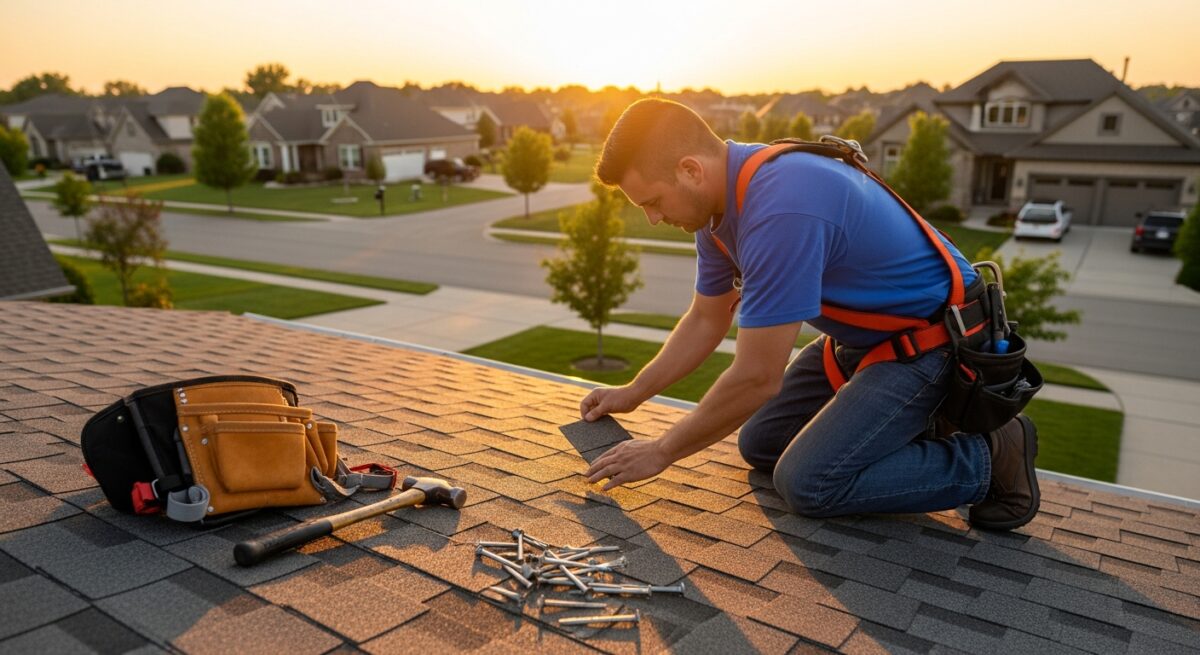
The roofer will then secure the work area, carefully remove the damaged materials, and inspect the underlying wood decking for rot or weakness. Any compromised decking is replaced to create a solid foundation. New, matching shingles or other materials are then installed with proper nailing techniques and sealed securely. The final step always involves a cleanup of the property and a walk-through to explain the work done.
- Inspection & Diagnosis: Finding the true source, not just the symptom.
- Material Preparation: Sourcing correct, matching materials.
- Safe Removal & Prep: Removing damage and preparing a solid base.
- Expert Installation: Precise installation using proven techniques.
- Cleanup & Review: Leaving your property clean and explaining the work.
Signs You Should Not Ignore
Your roof often sends clear signals that it needs attention. Catching these signs early is the secret to affordable maintenance.
Outside, look for shingles that are curling, buckling, or completely missing. Check for dark streaks from algae or piles of granules in your gutters, which mean shingles are wearing out. Inside your home, be alert for water stains on ceilings or walls, especially after rain, or any signs of mold in the attic.
- Water stains or drips in your attic or on ceilings.
>Missing, cracked, or curling shingles.
>Excessive granules in gutters (looks like coarse, black sand).
>Daylight visible through the roof boards in the attic.
>Sagging areas on the roof plane.
Cost Factors and What Affects Pricing
Roof repair costs vary because every job is unique. The main factors are the extent of damage, the type of roofing material, and the accessibility of your roof. A simple repair of a few asphalt shingles is very affordable, while fixing a leak on a steep, high roof with specialty tiles will cost more.
Labor is a significant component. Repairs that require precise workmanship, like fixing intricate flashing around a skylight or chimney, involve more skill and time. Always remember that investing in a proper, professional repair now is far less expensive than dealing with the structural damage a neglected leak can cause. For a deeper look at budgeting for larger projects, our overview of roof replacement costs provides helpful context.
Get a Clear, Upfront Quote Today. Call 800-123-4567
How To Choose the Right Professional or Service
Selecting the right roofer is as important as the repair itself. Look for a licensed, insured contractor with strong local references. A trustworthy professional will always offer a free, detailed inspection and a written estimate that clearly outlines the scope of work and costs.
Ask about warranties on both materials and labor. A company that stands behind its work is a company you can trust. Avoid door-to-door solicitors after storms and never feel pressured to sign a contract on the spot. Taking the time to choose a reliable local expert ensures quality workmanship and peace of mind.
Long-Term Benefits for Your Home
Timely roof repair delivers lasting value. It extends the lifespan of your entire roofing system, delaying the major expense of a full replacement. It protects the structural bones of your home from water rot and mold, preserving your equity.
A watertight roof also improves energy efficiency by keeping your insulation dry and effective, which lowers heating and cooling bills. Ultimately, consistent maintenance through professional repair means greater safety, comfort, and financial protection for your family for years to come.
Frequently Asked Questions
How long does a typical roof repair take?
Most common repairs, like fixing a leak or replacing a section of shingles, are completed in one day. More extensive repairs may take two to three days. Your contractor will give you a clear timeline after the inspection.
Can I repair my roof myself?
While replacing a single shingle might seem simple, DIY roof repair is risky. Professionals have the safety training, tools, and expertise to diagnose the real issue and ensure a watertight seal. An improper fix can void warranties and lead to more damage.
How often should I have my roof inspected?
It’s wise to have a professional inspection at least once every two to three years, and always after a major storm. You should also do a visual check from the ground each spring and fall.
Will my homeowner’s insurance cover roof repair?
Coverage depends on your policy and the cause of damage. Repairs needed due to sudden, accidental events (like storm damage) are often covered, while repairs due to normal wear and tear or lack of maintenance are not. Always consult your insurance agent.
What’s the difference between repair and replacement?
Repair fixes specific, localized damage. Replacement involves removing all old roofing materials and installing a completely new roof. A professional can advise which option is right based on the age and overall condition of your roof.
How can I prevent future roof problems?
Regular inspections, keeping gutters clean, trimming overhanging tree branches, and ensuring your attic is properly ventilated are the best ways to prevent common issues and extend your roof’s life.
Your roof works hard for you every day. Giving it the professional care it needs at the first sign of trouble is a smart investment that protects your home, your budget, and your peace of mind. Don’t wait for a small issue to become a big headache—taking action now ensures your shelter remains safe and sound for years to come.