
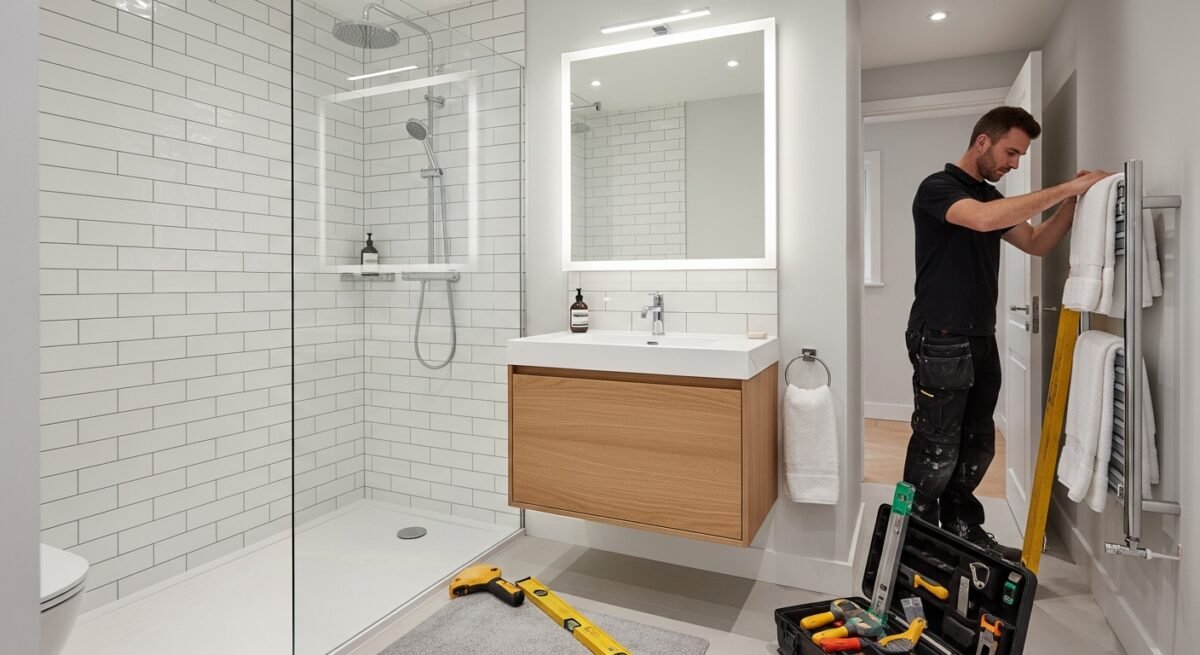
A Homeowner’s Guide to a Small Bathroom Remodel
Maximize space and style with a small bathroom remodel. Our guide explains how to transform a cramped bathroom into a functional, beautiful retreat that adds value to your home.
By Eric Andrew
Learn more about Bathroom Remodel for guides, costs, and what to expect.
Compare Bathroom Remodel Pros Near You

Enter your ZIP code to compare top-rated local professionals and request free quotes.
Looking at your small bathroom, you might feel stuck. It’s cramped, outdated, and maybe things just aren’t working anymore. You dream of a space that feels bigger, brighter, and truly functional. A small bathroom remodel is a smart project that can solve these frustrations and add real value to your home. It’s about clever design and professional execution to transform a tight space into one of your favorite rooms.
Call 📞833-700-4293 for a personalized consultation or visit Start Your Remodel to start planning your small bathroom transformation.
Understanding a Small Bathroom Remodel
A small bathroom remodel is more than just a simple update. It’s a strategic redesign focused on maximizing every square inch. The goal is to improve the layout, storage, lighting, and overall feel of the room without expanding the footprint.
The process typically involves replacing old fixtures, updating surfaces, and rethinking the storage solutions. It’s a balance between aesthetics and pure functionality. A successful remodel makes the space appear larger, work better for your daily routine, and reflect your personal style, all while ensuring durable, quality workmanship.
Core Goals of the Project
The primary goals are to enhance space perception, improve utility, and update style. This often means choosing space-saving fixtures like wall-hung vanities or a walk-in shower, using light colors and large-format tiles to visually expand the area, and integrating smart storage like recessed medicine cabinets or niche shelves.
Why a Small Bathroom Remodel Matters for Homeowners
Remodeling a small bathroom delivers benefits you’ll enjoy every single day. It turns a source of daily frustration into a personal oasis. A well-planned remodel improves your morning and evening routines, making them more efficient and pleasant.
Beyond daily comfort, it’s a solid financial investment. Updated bathrooms consistently offer a high return on investment when you sell your home. They are a key selling point for potential buyers. Furthermore, addressing underlying issues like old plumbing or poor ventilation during a remodel prevents costly water damage and mold problems down the line, protecting your home’s structure.
Ready to explore what’s possible for your space? Our comprehensive guide to bathroom remodeling is a great place to start envisioning your project.
Common Issues and Their Causes in Small Bathrooms
Homeowners with small bathrooms often face the same set of challenges. The most common complaint is a severe lack of storage, leading to cluttered countertops and floors. This is usually caused by poor initial design that didn’t utilize vertical space or incorporate built-in solutions.
Another frequent issue is a dark, cramped feeling. This stems from insufficient or poorly placed lighting, dark color schemes, and small, busy tile patterns that make the room feel even smaller. Layout problems are also common, where the door swings awkwardly, or the toilet is placed too close to the shower, making the space difficult to use.
- Poor Layout: Fixtures are crammed together, blocking movement.
- Inadequate Lighting: A single ceiling fixture creates shadows and a cave-like feel.
- Outdated or Failing Fixtures: Leaky faucets, inefficient toilets, and worn tubs waste water and look tired.
- Zero Storage: No place for towels, toiletries, or cleaning supplies.
- Worn Surfaces: Cracked tiles, peeling vinyl, and stained grout make the room feel unsanitary and old.
How Professionals Approach a Small Bathroom Remodel
A professional remodel follows a clear, organized process. It starts with a detailed consultation to understand your needs, budget, and vision. Experts then take precise measurements and create design plans, often with 3D renderings, so you can see the final result before any work begins.
The construction phase is managed systematically. Professionals handle the complex order of operations: protecting your home, safely demolishing old materials, updating plumbing and electrical as needed, installing new surfaces, and finally, placing fixtures and finishes. They coordinate all the tradespeople and inspections, ensuring the project meets building codes and quality standards. For insights on planning this phase, our home remodel planning guide offers valuable steps.
- Plan & Design: Finalize layout, materials, and fixtures.
- Demolition: Carefully remove old materials.
- Rough-In: Update plumbing lines, electrical wiring, and framing.
- Installation: Set drywall, flooring, tile, and fixtures.
- Finishing: Apply paint, caulk, hardware, and final clean-up.
Signs You Should Not Ignore
Some issues in your bathroom are more than just cosmetic. They signal that a remodel is not just a want, but a need. Persistent problems often indicate deeper, more serious concerns that can affect your home’s safety and value.
If you notice water stains on walls or ceilings, soft spots in the floor, or a persistent musty smell, these are red flags for water damage and potential mold growth. These issues typically stem from leaky plumbing, failing shower pans, or poor ventilation. Ignoring them can lead to expensive structural repairs.
Call 📞833-700-4293 for a personalized consultation or visit Start Your Remodel to start planning your small bathroom transformation.
- Persistent leaks or water damage around fixtures, walls, or the ceiling.
- Mold or mildew growth that returns after cleaning.
- Outdated electrical systems like ungrounded outlets or insufficient lighting.
- Cracked or lifting tiles and deteriorating grout.
- A layout that is unsafe or inaccessible for your family’s needs.
Cost Factors and What Affects Pricing
The cost of a small bathroom remodel can vary widely. The biggest factors are the scope of work and the materials you choose. A cosmetic refresh with new paint, fixtures, and flooring will cost significantly less than a full gut renovation that changes the layout and replaces all plumbing.
Material selections have a major impact. The price difference between standard ceramic tile and natural stone or between a stock vanity and a custom-built one is substantial. Labor costs are also a key component, influenced by your location, the project’s complexity, and the experience level of the contractor. It’s crucial to set and manage your bathroom remodeling budget carefully from the start. Always include a contingency fund of 10-20% for unexpected issues discovered once walls are opened.
How to Choose the Right Professional for the Job
Selecting the right contractor is the most important decision in your remodel. Look for a licensed, insured professional with specific, proven experience in bathroom renovations. They should understand the unique challenges of small spaces.
Ask for references and look at photos of their completed bathroom projects. A trustworthy contractor will provide a detailed, written contract outlining the scope, timeline, payment schedule, and materials. They should also handle pulling the necessary permits. Good communication is essential; you want someone who listens to your ideas, answers your questions clearly, and keeps you updated throughout the process.
Long-Term Benefits for Your Home
A professionally done small bathroom remodel pays off for years. You gain a durable, easy-to-clean space with modern fixtures that use less water, lowering your utility bills. The improved ventilation protects against moisture damage, and the quality materials stand up to daily use.
Most importantly, you enhance your home’s livability and market value. You create a personal retreat that makes your entire home feel more polished and cared-for. It’s an upgrade that provides daily joy and long-term financial security, a true win-win for any homeowner.
Frequently Asked Questions
How long does a small bathroom remodel usually take?
A typical small bathroom remodel takes 2 to 4 weeks from start to finish. The timeline depends on the project’s complexity, material availability, and whether any unexpected issues are found during demolition. Your contractor should provide a detailed schedule.
Can you remodel a bathroom without moving the plumbing?
Yes, and it’s one of the best ways to control costs. By keeping the toilet, shower, and sink in their existing locations, you avoid expensive plumbing rerouting. A skilled designer can still create a fresh, new look with this constraint.
What is the best layout for a very small bathroom?
A walk-in shower (instead of a tub-shower combo) often saves the most space. A wall-hung vanity opens up floor area visually. The classic three-fixture layout (toilet, sink, shower) or a well-designed wet room are efficient options for tight spaces.
How can I make my small bathroom look bigger?
Use large-format, light-colored tiles on floors and walls. Install a large mirror or mirrored cabinet. Ensure plenty of ambient and task lighting. Choose a glass shower door instead of a curtain. Keep the color palette light and consistent.
What is the most expensive part of a bathroom remodel?
Labor and plumbing work are typically the largest cost segments. For materials, shower systems and custom cabinetry often represent significant investments. Changing the room’s layout by moving plumbing lines also adds considerable expense.
Is a bathroom remodel a good investment?
Absolutely. Bathroom remodels offer one of the highest returns on investment of any home improvement project, often recouping 60-70% or more of the cost at resale. The added daily enjoyment and functionality are invaluable.
A small bathroom remodel is a powerful way to enhance your home’s comfort, style, and value. With thoughtful planning and the help of experienced professionals, you can overcome the limitations of a compact space and create a bathroom that is both beautiful and brilliantly functional for years to come.
Call 📞833-700-4293 for a personalized consultation or visit Start Your Remodel to start planning your small bathroom transformation.
Learn more about Bathroom Remodel for guides, costs, and what to expect.
Compare Bathroom Remodel Pros Near You
Enter your ZIP code to compare top-rated local professionals and request free quotes.