
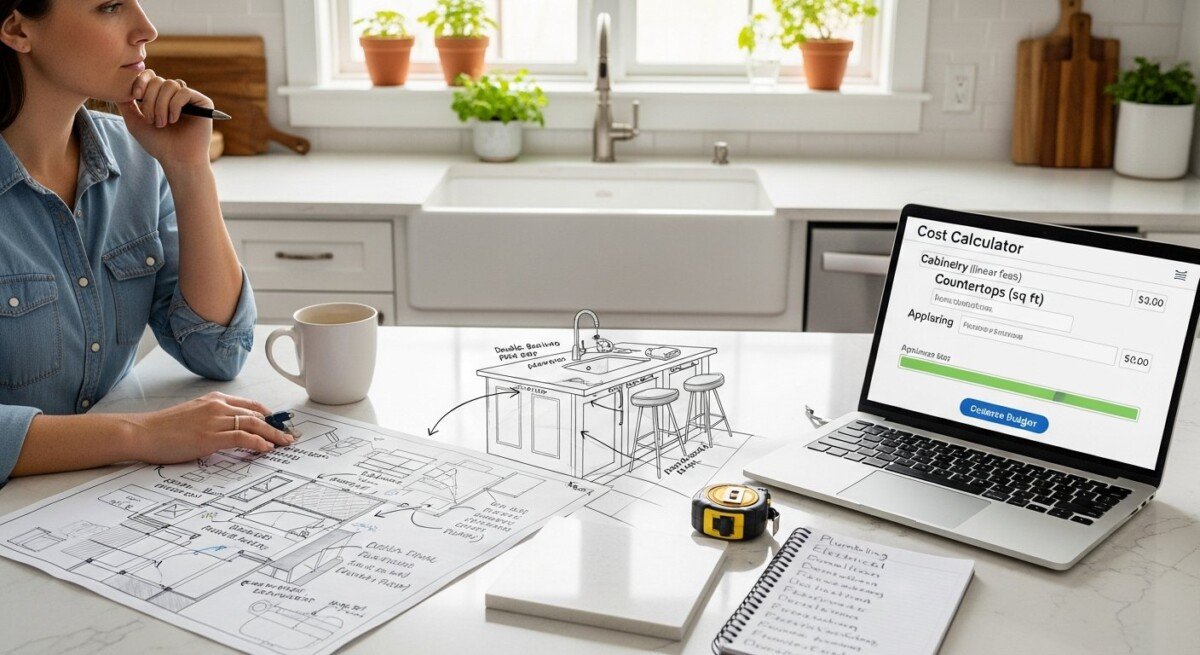
Your Guide to Using a Remodeling Cost Calculator
Learn how to use a remodeling cost calculator as a starting point, and why a professional estimate is essential for an accurate budget and successful project.
By Eric Andrew
Learn more about Exterior Painting for guides, costs, and what to expect.
Compare Exterior Painting Pros Near You

Enter your ZIP code to compare top-rated local professionals and request free quotes.
You’ve been dreaming of a new kitchen or a bathroom refresh for years. You finally decide to start planning, but the first question that stops you is, “How much will this actually cost?” You search online for answers and find a dizzying array of remodeling cost calculators. You plug in some numbers, but the results feel vague, confusing, and wildly different from one site to the next. This uncertainty can lead to serious problems, from setting an unrealistic budget to choosing a contractor based on a flawed estimate. Ignoring the need for accurate, personalized cost planning is how many homeowners end up with half-finished projects or financial stress they never anticipated.
Understanding Remodeling Cost Calculators
A remodeling cost calculator is an online tool designed to give you a preliminary budget range for a home improvement project. You input basic details like your zip code, the type of room, and the project’s size or scope. The calculator then uses average regional cost data to generate a rough estimate.
These tools are popular because they offer a quick, free starting point. They can help you understand the general ballpark for a project before you dive deeper. However, they are based on broad averages and assumptions, not the specific conditions of your home.
Every home is unique. A calculator doesn’t know if your walls contain old plumbing, if your subfloor is damaged, or if your local permit fees are unusually high. It provides a helpful snapshot, but it’s not a substitute for a detailed, on-site professional estimate.
Why This Matters for Your Home
Relying solely on a generic calculator can set you up for disappointment and financial strain. If the estimate is too low, you may commit to a project you can’t afford to finish properly, leading to cut corners or a stalled renovation. If the estimate seems too high, you might abandon a valuable improvement that could have been done affordably with the right planning.
Accurate cost planning protects your investment. A well-executed remodel increases your home’s value, improves your daily comfort, and ensures the work is done safely and to code. Underestimating costs often leads to DIY attempts on complex tasks, which can create safety hazards, violate building codes, and cause expensive damage that requires a professional to fix later.
If you notice signs of this issue in your home, it may help to speak with a qualified contractor. Request a free quote or call to explore your repair or remodeling options.
Common Problems Homeowners Experience
The gap between an online calculator’s estimate and reality is where most homeowners run into trouble. You might budget $20,000 for a bathroom remodel based on a tool, only to receive quotes starting at $30,000. This discrepancy isn’t because contractors are overcharging; it’s because the calculator missed critical factors.
These tools often fail to account for the true cost of quality materials, skilled labor in high-demand areas, and the “unknowns” hidden behind your walls. This leads to a cycle of frustration, where homeowners feel they can’t trust any numbers, delaying important upgrades that maintain their home’s integrity.
- The “Scope Creep” Surprise: Calculators estimate for basic work, but once you start, you discover needed upgrades (like electrical panel updates) that weren’t in the initial scope.
- Material Quality Mismatch: The estimate might be for builder-grade materials, but you desire mid-range or custom finishes, which significantly change the price.
- Hidden Condition Costs: Mold, outdated wiring, structural issues, or water damage are invisible to an online tool but are major cost drivers.
- Labor Cost Variations: Calculators use regional averages, but labor costs can vary dramatically even within a city based on contractor expertise and demand.
- Permit and Fee Omissions: Many calculators forget to include the cost of building permits, inspections, and potential design fees.
- Waste Removal & Cleanup: The expense of dumping old materials and daily cleanup is rarely factored into digital estimates.
How Professionals Solve the Problem
An experienced contractor brings the online estimate to life with real-world precision. They start with a detailed consultation and a thorough inspection of your space. This allows them to identify potential challenges and opportunities that a calculator could never see.
They then create a detailed, line-item estimate that breaks down every cost: materials, labor, permits, and a contingency for unexpected issues. This transparent approach gives you a true financial picture and a reliable contract to work from, eliminating guesswork and preventing stressful mid-project surprises. For a deeper look at what goes into these numbers, our guide on Understanding Your Remodeling Cost Breakdown is a great resource.
- On-Site Assessment: A professional visits your home to evaluate the project area, its structure, and existing systems.
- Detailed Scope Definition: Together, you define exactly what work will be done, down to the brand of faucet or type of flooring.
- Material Selection & Pricing: The contractor gets actual quotes from suppliers for your chosen materials.
- Labor & Timeline Planning: They calculate the hours needed for each trade and create a project schedule.
- Comprehensive Quote Delivery: You receive a written estimate that includes all costs, payment schedules, and warranty information.
A professional inspection can reveal hidden issues before they become expensive repairs. Compare contractor quotes here or call to discuss your project.
Warning Signs You Should Not Ignore
While dreaming about your new space, pay attention to the signs that your project might be more complex,and costly,than a basic calculator suggests. These red flags indicate underlying issues that need professional diagnosis and will impact your budget.
Addressing these signs early with a contractor’s inspection can actually save you money. It allows you to plan for necessary repairs within the overall project budget, rather than being hit with an emergency fix later that stops work and adds unforeseen expenses.
- Your home was built before 1980 and has never been fully rewired or replumbed.
- You notice uneven floors, cracks in walls, or doors that no longer close properly in the area you want to remodel.
- There are signs of past water damage, like stained ceilings, warped flooring, or a musty smell.
- Your current electrical system struggles with modern appliances (frequent breaker trips).
- You want to remove walls and aren’t sure if they are load-bearing.
- The project involves changing the home’s footprint, adding windows, or modifying the roofline.
What Affects the Cost of Repairs or Installation
Understanding what drives remodeling costs empowers you to have better conversations with contractors and make informed choices. The final price tag is a combination of many variables, most of which require a professional eye to assess accurately.
Your choices also play a huge role. Opting for custom cabinetry over stock units, quartz countertops over laminate, or a luxury freestanding tub over a standard alcove model will move your project into a different price tier. A good contractor will help you navigate these choices to align with your vision and budget.
- Project Scope & Size: A full gut renovation costs more than a cosmetic update. Square footage is a primary factor.
- Material Quality & Selection: From economical to high-end, material choices have the largest swing on budget.
- Labor Intensity & Skill: Complex tile work, custom carpentry, and intricate plumbing require more skilled hours.
- Site Accessibility: A third-floor bathroom or a backyard with narrow access can increase labor time and equipment needs.
- Home Age & Condition: Older homes often need system upgrades (wiring, plumbing) to meet code, adding to the project cost.
- Geographic Location: Labor and material costs are higher in major metropolitan areas than in rural regions.
Costs can vary depending on the condition of your home. The best way to know the price is to get a personalized estimate. Request free quotes from contractors or call today.
How to Choose the Right Contractor
Once you understand that a professional estimate is essential, the next step is finding the right partner for your project. The lowest bid is not always the best value. You want a contractor who is communicative, transparent, and experienced with projects like yours.
Take your time during this selection process. A trustworthy contractor will welcome your questions, provide clear references, and offer a detailed, written contract. They are your guide through the complexities of remodeling, turning the uncertainty of an online calculator into a clear, executable plan.
- Verify Licenses & Insurance: Always check for a valid state contractor’s license and proof of liability and workers’ compensation insurance.
- Read Reviews & Ask for References: Look at online reviews and ask to speak to past clients about their experience.
- Review Detailed, Written Estimates: Compare quotes that itemize costs for materials, labor, and profit. Avoid vague, lump-sum bids.
- Meet Face-to-Face: Gauge your comfort level with the contractor. You’ll be working closely with them for weeks or months.
- Ask About Experience: Ensure they have successfully completed several projects similar in size and style to yours.
Long-Term Benefits of Professional Work
Investing in a professional remodel with accurate cost planning pays dividends long after the project is complete. Quality workmanship and proper installation mean your new space will be durable, functional, and beautiful for years to come.
Beyond daily enjoyment, a well-done remodel is a strategic financial investment. It increases your home’s market value and appeal to future buyers. Perhaps most importantly, it gives you peace of mind, knowing the work was done safely, to code, and with warranties that protect you.
- Enhanced Safety & Compliance: Professionals ensure all work meets building codes, preventing fire, electrical, or structural hazards.
- Superior Durability: Correct installation techniques extend the life of your materials, reducing the need for premature repairs.
- Improved Energy Efficiency: Proper insulation, windows, and HVAC updates can lower your utility bills for the life of your home.
- Increased Property Value: A professionally completed kitchen or bathroom remodel offers one of the highest returns on investment in home improvement.
- Reduced Future Maintenance: Doing the job right the first time minimizes callbacks and fixes down the road.
FAQs
Is a remodeling cost calculator accurate?
It provides a very rough starting point based on averages. It cannot account for your home’s specific conditions, material choices, or local labor rates. Think of it as a general research tool, not a reliable quote. For accuracy, you need an on-site estimate from a licensed contractor.
How much should I add to a calculator’s estimate for unexpected costs?
A common rule of thumb is to add a 10-20% contingency buffer to any preliminary estimate for unforeseen issues. However, a professional contractor will identify many potential “unknowns” during their inspection, making your contingency more accurate and often smaller than if you relied on a generic tool.
What’s the difference between an estimate and a quote?
An estimate is an educated guess of the project cost, which can change. A quote (or bid) is a fixed-price offer for the defined scope of work. After their inspection, a contractor should provide a detailed written quote that becomes the contract price, offering you much more financial certainty than an online estimate.
Why are contractor quotes higher than online calculators?
Contractor quotes reflect real-world costs: actual material prices, skilled labor wages, insurance, permits, and profit to run a business. Online calculators use simplified, averaged data and often omit critical cost categories, making them artificially low. Our article on remodeling cost breakdowns explains these components in detail.
Can I use a calculator to budget for a DIY project?
You can use it for material cost research, but it remains limited. You still risk missing costs for tools, equipment rentals, permit fees, and waste disposal. For DIY, it’s wise to get a professional quote for comparison,sometimes the savings are less than you think, and the value of professional warranty and expertise is significant.
How many contractor quotes should I get?
It’s recommended to get at least three detailed written quotes. This allows you to compare not just price, but also the proposed scope, timeline, materials, and your confidence in each contractor. Be wary of any quote that is significantly lower than the others; it may indicate inexperience or cost-cutting on materials or labor.
What questions should I ask a contractor about their estimate?
Ask what is included (e.g., cleanup, permits), the payment schedule, the projected timeline, who will be on-site daily, and about warranties for both materials and labor. A transparent contractor, as discussed in our guide to understanding costs, will answer these clearly and include them in writing.
How long is a contractor’s quote valid?
Most quotes are valid for 30 to 90 days, as material prices and labor availability can fluctuate. If you delay your decision, it’s courteous to check if the quote needs updating. Starting the project promptly after signing helps lock in the quoted price.
Starting your remodeling journey with an online calculator is a common first step, but it shouldn’t be your last. The true cost of your dream project is found not in algorithms, but in the detailed assessment of a skilled professional. By moving from a generic estimate to personalized quotes, you protect your budget, your home, and your peace of mind. Take the next step today by comparing detailed estimates from qualified local contractors, and turn your remodeling vision into a well-planned reality.
Learn more about Exterior Painting for guides, costs, and what to expect.
Compare Exterior Painting Pros Near You
Enter your ZIP code to compare top-rated local professionals and request free quotes.