
Your Complete Guide to Air Conditioning Repair and Maintenance
A clear guide to air conditioning repair, helping homeowners understand common issues, recognize warning signs, and make informed decisions to restore cool comfort.
By Eric Andrew
Learn more about Handyman for guides, costs, and what to expect.
Compare Handyman Pros Near You

Enter your ZIP code to compare top-rated local professionals and request free quotes.
Your air conditioner works hard to keep your home comfortable, but when it starts making strange noises, blowing warm air, or struggling to cool, it can feel like an emergency. Understanding what’s happening with your system is the first step toward a cool, comfortable home again.
Don’t let minor issues become major repairs. Call 📞833-700-4293 or visit Schedule AC Service to schedule your professional AC service today.
Understanding Air Conditioning Repair
Air conditioning repair is the process of diagnosing and fixing problems within your home cooling system. It’s more than just a quick fix; it’s about restoring your unit to its optimal performance to ensure your family’s comfort and safety during the hottest months.
A professional repair addresses everything from minor component replacements to complex system overhauls. The goal is always the same: to return cool, clean air to your living spaces efficiently and reliably. Think of it as essential healthcare for one of your home’s most critical systems.
Why It Matters for Homeowners
Timely air conditioning repair is crucial for more than just comfort. A struggling AC unit works much harder, leading to skyrocketing energy bills. A simple repair can often restore efficiency, saving you significant money each month.
Ignoring small problems can lead to complete system failures, often at the most inconvenient times. Furthermore, certain issues, like refrigerant leaks or electrical problems, can pose health and safety risks to your household. Proactive care protects your investment and your peace of mind.
Just as with plumbing systems, addressing AC issues early prevents minor concerns from becoming major, costly disasters. It’s a key part of responsible homeownership.
Common Issues and Their Causes
Most air conditioning problems stem from a handful of common issues. Lack of cool air often points to low refrigerant levels, a dirty evaporator coil, or a failing compressor. Strange noises like grinding, squealing, or banging usually indicate loose or broken mechanical parts.
Poor airflow can be caused by a clogged air filter, blocked ductwork, or a failing blower fan. Short cycling, where the unit turns on and off too frequently, often relates to an oversized unit, a faulty thermostat, or refrigerant issues. Understanding these common culprits helps you communicate clearly with a technician.
- Warm Air Blowing: Often caused by refrigerant leaks or compressor failure.
- Weak Airflow: Typically due to clogged filters, blocked vents, or blower motor issues.
- Frequent Cycling: Can be triggered by an oversized unit, thermostat problems, or electrical issues.
- High Humidity: May indicate the system is not cycling properly or is the wrong size for your home.
- Water Leaks: Usually from a clogged condensate drain line or a frozen evaporator coil.
How Professionals Fix the Problem
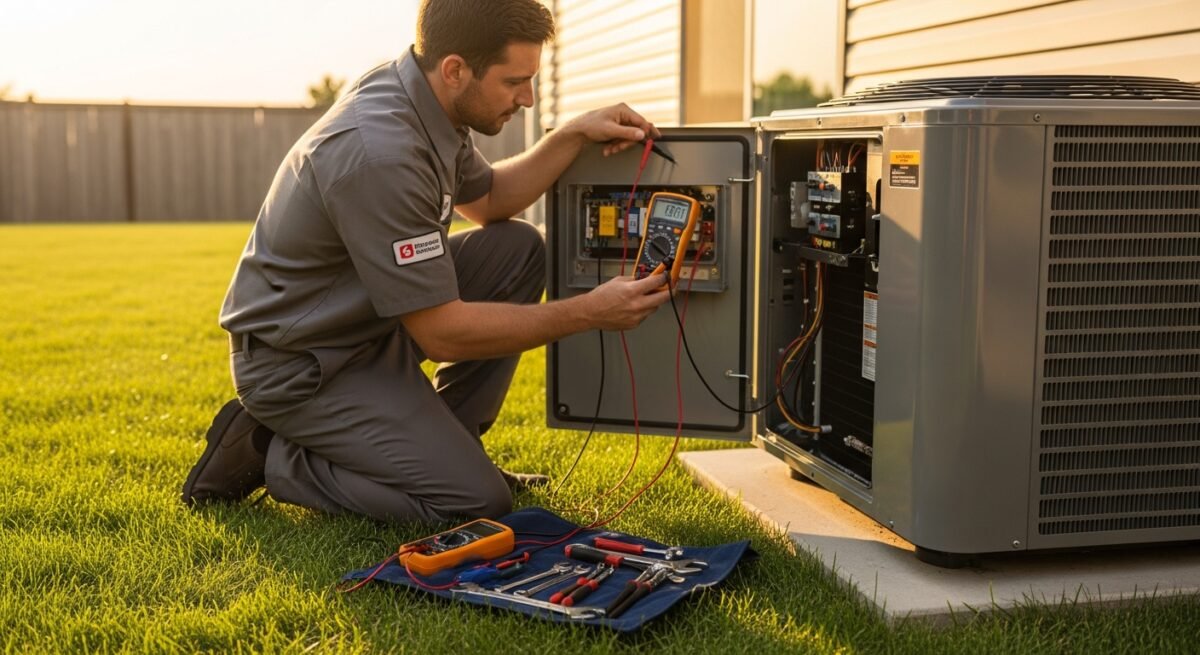
A professional repair begins with a thorough diagnosis. A certified technician will inspect your entire system, from the thermostat to the condenser unit outside. They use specialized tools to check pressures, electrical currents, and temperatures to pinpoint the exact issue.
The repair process is methodical. After explaining the problem and providing a clear estimate, the technician will safely address the root cause. This could involve sealing refrigerant leaks, replacing a capacitor, cleaning coils and drain lines, or repairing electrical connections. Every step is performed with precision to ensure long-lasting results.
- Comprehensive Inspection: Checking all system components for wear, damage, or malfunction.
- Accurate Diagnosis: Using tools and expertise to find the true source of the problem.
- Clear Communication: Explaining the issue, the fix, and the cost before any work begins.
- Quality Repair: Performing the necessary repairs with high-quality parts and skilled workmanship.
- System Testing: Verifying the repair is successful and the system runs efficiently and safely.
Signs You Should Not Ignore
Your air conditioner often sends clear signals when it needs help. Paying attention to these warnings can prevent a minor repair from turning into a major replacement. Unusual sounds or smells are never normal and should be investigated promptly.
A sudden spike in your energy bill with no change in usage is a red flag that your system is losing efficiency. If some rooms are cool while others are warm, it could indicate ductwork issues or a failing component. Don’t wait for a total breakdown; these signs mean it’s time to call a professional.
- Unusual Sounds: Grinding, screeching, or banging from the indoor or outdoor unit.
- Foul Odors: Musty smells (often mold) or burning electrical smells.
- Moisture or Leaks: Pooling water around the indoor unit or refrigerant leaks.
- Thermostat Issues: The house temperature doesn’t match the thermostat setting.
- Constant Running: The system never seems to shut off or cycles on and off every few minutes.
Cost Factors and What Affects Pricing
The cost of an air conditioning repair depends on several factors. The primary driver is the specific part that needs replacement. A simple capacitor swap is far less expensive than replacing a compressor or an entire evaporator coil. Labor time is another key component.
The age and accessibility of your system also matter. Older units or systems in hard-to-reach locations may require more time to service. Additionally, the season can impact price; emergency repairs during a weekend heatwave may cost more than a scheduled maintenance visit in the spring. A trustworthy technician will always provide a transparent, upfront estimate.
Don’t let minor issues become major repairs. Call 📞833-700-4293 or visit Schedule AC Service to schedule your professional AC service today.
Similar to managing gutter repair costs, getting multiple estimates and addressing problems early are the best ways to ensure fair pricing for your AC repair.
How To Choose the Right Professional or Service
Selecting the right technician is as important as the repair itself. Always look for proper licensing and insurance, which protect you and your home. Check for certifications from organizations like NATE (North American Technician Excellence), which indicate advanced training.
Read reviews and ask for references to gauge the company’s reputation for quality and reliability. A good professional will offer a clear, written estimate, answer all your questions patiently, and prioritize your safety and satisfaction. They should also provide a warranty on both parts and labor.
Long-Term Benefits for Your Home
Investing in professional repair extends the life of your air conditioner, delaying the need for a costly full replacement. A well-maintained system operates at peak efficiency, which lowers your monthly utility bills and reduces your home’s environmental footprint.
Most importantly, it ensures consistent comfort and improved indoor air quality for your family. Proper repairs eliminate moisture issues that can lead to mold and protect other home systems from strain. Just like a solid roof protects your home’s structure, a properly functioning AC system protects your home’s environment and your investment.
FAQs
How often should I service my air conditioner?
We recommend a professional tune-up at least once a year, ideally in the spring before the cooling season begins. This preventive maintenance can catch small issues early and ensure your system is ready for summer’s demand.
Can I repair my AC myself?
While you can change the air filter and keep the area around the outdoor unit clear, most repairs require specialized tools, knowledge, and handling of refrigerants (which requires a license). DIY attempts can void warranties, cause safety hazards, and lead to more expensive damage.
How long does a typical repair take?
Many common repairs, like replacing a capacitor or contactor, can be completed in one to two hours. More complex issues, such as fixing a refrigerant leak or replacing a compressor, may take half a day or longer. Your technician will give you a clear timeframe.
What’s the difference between repair and replacement?
Repair fixes a specific component. Replacement involves installing a entirely new system. A good rule of thumb is if repair costs approach 50% of the value of a new, efficient unit, or if your system is over 10-15 years old, replacement is often the wiser long-term investment.
Why is my AC freezing up?
An AC unit can freeze due to low refrigerant, restricted airflow (from a dirty filter or blocked vents), or a failing blower fan. It requires professional diagnosis. Turn the system off to let the ice melt and call a technician.
What does “short cycling” mean?
Short cycling is when your AC turns on and off every few minutes. It doesn’t allow for a full cooling cycle, puts immense wear on components, and kills efficiency. Causes can include an oversized unit, a faulty thermostat, or a refrigerant issue.
How can I improve my AC’s efficiency?
Change filters monthly, keep vents unblocked, ensure your outdoor unit is clear of debris, use a programmable thermostat, and schedule annual professional maintenance. These simple steps can significantly boost performance.
Is there an emergency service for AC repairs?
Yes, most reputable HVAC companies offer 24/7 emergency service for situations like complete loss of cooling during extreme heat, refrigerant leaks, or electrical issues that pose a safety risk. There is typically a premium for after-hours calls.
A functioning air conditioner is vital for your home’s comfort and your family’s well-being. By understanding common problems, recognizing warning signs, and partnering with a skilled professional, you can ensure your system provides cool, reliable air for years to come. Don’t wait for a breakdown—proactive care is the key to peace of mind.
Don’t let minor issues become major repairs. Call 📞833-700-4293 or visit Schedule AC Service to schedule your professional AC service today.
Learn more about Handyman for guides, costs, and what to expect.
Compare Handyman Pros Near You
Enter your ZIP code to compare top-rated local professionals and request free quotes.