HVAC Services: Your Complete Guide to Home Comfort
Your home’s heating and cooling system is its silent partner in comfort, working every day to keep your family cozy in winter and cool in summer. But like any complex system, it needs regular care and occasional repair to run smoothly. When your HVAC system isn’t working right, it’s more than an inconvenience—it affects your comfort, your wallet, and even your home’s air quality. Understanding what professional HVAC services include can help you protect your investment and ensure your home is a haven year-round.
Don’t wait for a breakdown—protect your home comfort and investment. Schedule your professional HVAC inspection today by calling 📞833-700-4293 or visiting Schedule HVAC Service.
Understanding HVAC Services for Your Home
HVAC stands for Heating, Ventilation, and Air Conditioning. It encompasses all the equipment and systems that control your home’s temperature, humidity, and air quality. Think of it as your home’s climate control network.
Professional HVAC services are the comprehensive suite of tasks performed by trained technicians to install, maintain, and repair this vital system. This isn’t just about fixing a broken air conditioner on the hottest day of the year. It’s a proactive approach to home care that ensures efficiency, reliability, and safety for you and your family.
What Do HVAC Services Include?
HVAC services cover a wide range of needs. Key offerings include seasonal maintenance check-ups, emergency repairs for heating or cooling failures, complete system installations, and essential services like duct cleaning or indoor air quality improvements. A full-service HVAC provider is your single point of contact for everything related to your home’s climate.
Why Professional HVAC Services Matter for Homeowners
Investing in professional HVAC care delivers tangible benefits that go far beyond basic temperature control. A well-maintained system operates at peak efficiency, which directly translates to lower monthly energy bills. You’re not just paying for a service call; you’re investing in long-term savings and preventing minor issues from becoming major, costly breakdowns.
Perhaps most importantly, professional services ensure safety. Your furnace, for example, involves combustion and can pose risks like carbon monoxide leaks if not properly serviced. A certified technician will check for these hazards. Furthermore, regular maintenance improves your indoor air quality by ensuring filters are changed and ducts are clean, which is crucial for family members with allergies or asthma.
Your home comfort system is a significant investment. Professional installation and maintenance protect that investment, extending the life of your equipment and maintaining its performance and value for years to come. It’s the smart way to care for your home.
Common HVAC Issues and Their Causes
Many homeowners first call for HVAC services when they notice a problem. Understanding what causes these common issues can help you describe them to your technician and sometimes even prevent them.
One of the most frequent complaints is reduced airflow or weak heating/cooling. This is often caused by a clogged air filter, which is the simplest fix, or by more complex issues like blocked ductwork, a failing blower motor, or refrigerant leaks in an AC system. Another common problem is strange noises—screeching, banging, or rattling—which usually point to mechanical problems like a loose part, a failing belt, or issues with the compressor or inducer motor.
Systems that short cycle (turning on and off frequently) or that won’t turn on at all often have electrical or sensor-related causes. A dirty flame sensor can shut down a furnace, while a faulty thermostat or tripped safety switch can prevent any system from starting. Here are a few typical culprits:
- Neglected Maintenance: Skipping annual tune-ups leads to dirt buildup, wear, and inefficiency.
- Dirty Filters & Coils: Restricted airflow forces the system to work harder, increasing wear and energy use.
- Thermostat Problems: Incorrect calibration, dead batteries, or faulty wiring can send the wrong signals to your HVAC unit.
- Refrigerant Leaks: In AC systems, low refrigerant means poor cooling and can damage the compressor.
- Normal Wear and Tear: Components like capacitors, contactors, and motors simply wear out over years of use.
How HVAC Professionals Diagnose and Fix Problems
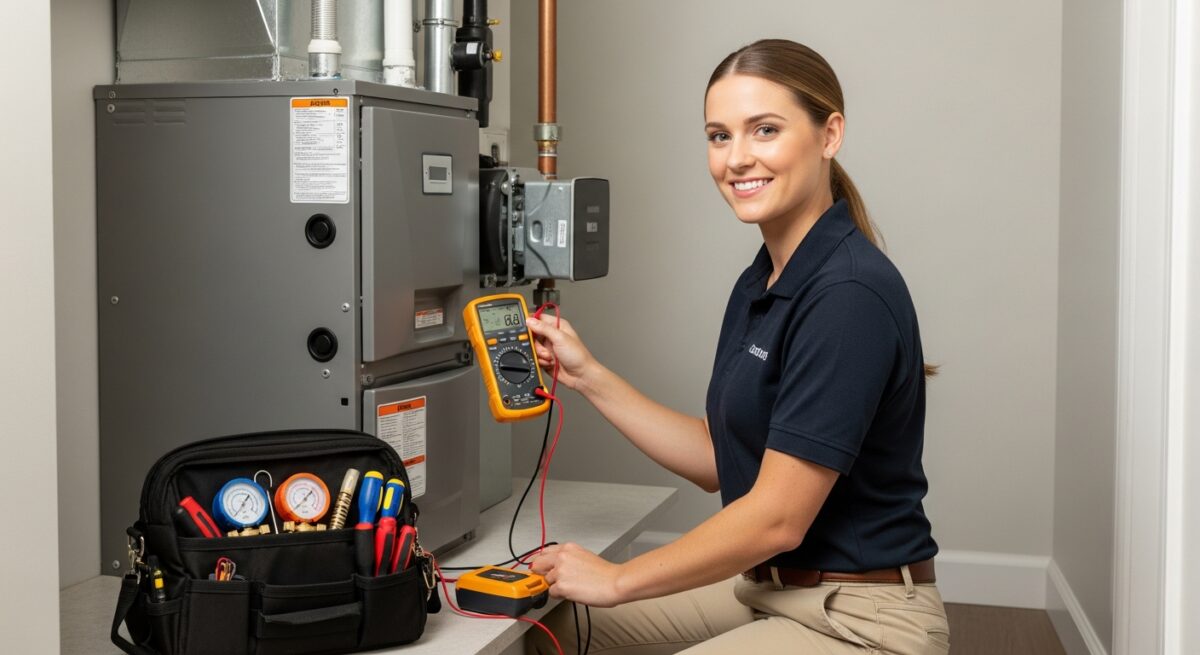
When you call a professional, they follow a systematic process to accurately diagnose and resolve your HVAC issue. It starts with a detailed conversation with you about the symptoms—when the problem started, what sounds you hear, and which areas of the home are affected. This information provides crucial clues.
The technician then performs a thorough inspection. They will examine the thermostat, check electrical connections, measure refrigerant levels, test system pressures and temperatures, and inspect all major components for signs of wear or damage. They use specialized tools like multimeters, pressure gauges, and leak detectors to pinpoint the exact cause, avoiding guesswork.
Once diagnosed, the technician will explain the problem, present repair options, and provide a clear estimate. For repairs, they will replace only the necessary parts with high-quality components. The process typically involves:
- Safety First: Shutting off power/gas to the unit.
- Precise Repair: Swapping out the faulty component or sealing the leak.
- System Testing: Restoring power, starting the system, and verifying it operates correctly across all cycles.
- Final Check: Ensuring safety controls are active and explaining what was done.
Warning Signs You Should Not Ignore
Your HVAC system often sends clear signals when it needs attention. Paying attention to these early warnings can prevent a minor issue from turning into a full-system failure, especially during extreme weather.
Some signs are obvious, like a system that blows warm air when the AC is on, or cold air when the heat is on. Other signs are more subtle but just as important. A sudden spike in your energy bill with no change in usage is a major red flag that your system is struggling to operate efficiently. Musty odors, excessive dust in your home, or visible ice on the refrigerant lines or evaporator coil are all calls for professional help.
Don’t ignore these critical warning signs
Don’t wait for a breakdown—protect your home comfort and investment. Schedule your professional HVAC inspection today by calling 📞833-700-4293 or visiting Schedule HVAC Service.
- Unusual Sounds: Grinding, screeching, or loud banging from the indoor or outdoor unit.
- Strange Smells: A burning electrical smell or the odor of rotten eggs (which could indicate a gas leak).
- Poor Airflow: Weak air coming from vents, or some rooms feeling much hotter/colder than others.
- Frequent Cycling: The system turning on and off every few minutes.
- High Humidity: Your AC should dehumidify; sticky indoor air means it’s not working properly.
HVAC Service Cost Factors and What Affects Pricing
Understanding what goes into the cost of HVAC services helps homeowners budget effectively and avoid surprises. Pricing is not one-size-fits-all; it depends on the type and scope of service needed. A simple seasonal tune-up has a relatively standard cost, while emergency repairs or new system installations vary widely.
The primary factors affecting cost include the type of repair (a capacitor replacement is less expensive than a compressor), the brand and age of your equipment (parts for older or uncommon models may be costlier), and the time required for the job. Emergency or after-hours service typically carries a premium rate due to the immediate response.
For installations, the biggest factors are the size (tonnage) and efficiency (SEER rating) of the new unit, the complexity of the installation (like modifying ductwork), and the quality of the brand and components chosen. While it’s tempting to choose the lowest bid, remember that quality installation by a certified professional ensures efficiency, longevity, and reliability, providing greater value over the system’s lifetime.
How To Choose the Right HVAC Professional
Selecting the right HVAC company is as important as the service itself. You want a partner you can trust with your home’s comfort and safety. Start by verifying essential credentials: proper state and local licensing, insurance for liability and workers’ compensation, and certifications from organizations like NATE (North American Technician Excellence), which indicate advanced training.
Look for established companies with strong local reputations. Read online reviews and ask for references. A trustworthy contractor will always perform a load calculation before recommending a new system size—they won’t just guess. They should also provide a detailed, written estimate that breaks down costs for labor and parts, with no hidden fees.
Excellent customer service is key. Pay attention to how they communicate from the first call. Are they prompt, courteous, and willing to answer your questions? A professional technician will respect your home, wear shoe covers, and clean up after the job. Choosing based on these criteria, rather than the lowest price alone, ensures a positive experience and a job done right.
Long-Term Benefits of Professional HVAC Care for Your Home
Committing to professional HVAC services pays continuous dividends for your home and family. The most immediate benefit is consistent, reliable comfort in every season. You gain peace of mind knowing your system is safe and less likely to fail when you need it most.
Financially, the savings are substantial. A well-maintained system uses significantly less energy, lowering your utility bills year after year. Proactive maintenance also avoids the high cost of emergency repairs and premature system replacement, stretching your equipment’s lifespan to its full potential—often 15 years or more.
Finally, you invest in your home’s health. Clean, well-maintained systems circulate better-quality air, reducing allergens and contaminants. This creates a healthier living environment and protects one of your home’s most valuable mechanical assets, ensuring it supports your comfort and your home’s value for the long haul.
Frequently Asked Questions About HVAC Services
How often should I have my HVAC system serviced?
You should schedule professional maintenance twice a year: once for your cooling system in the spring and once for your heating system in the fall. This proactive approach catches small issues before they become big problems and keeps your system running efficiently.
What’s included in a standard HVAC maintenance visit?
A standard tune-up includes cleaning coils and components, checking refrigerant levels, testing system controls and safety switches, lubricating moving parts, inspecting electrical connections, tightening belts, and checking airflow. The technician will provide a full report on your system’s condition.
How long does a typical HVAC system last?
With proper annual maintenance, a typical central air conditioner or heat pump lasts 12-15 years, while a furnace can last 15-20 years. Systems that are neglected or constantly repaired may need replacement much sooner.
What size HVAC system does my home need?
Size is critical and is determined by a professional load calculation (Manual J). It considers your home’s square footage, insulation, windows, climate, and more. A system that’s too large or too small will be inefficient, uncomfortable, and wear out quickly.
Can I perform any HVAC maintenance myself?
Yes, homeowners can and should replace the air filter every 1-3 months, keep the outdoor unit clear of debris like leaves and grass, and ensure vents inside are not blocked by furniture. All other maintenance and repairs should be left to licensed professionals for safety and warranty reasons.
What are the benefits of a programmable or smart thermostat?
These thermostats automatically adjust temperatures when you’re asleep or away, reducing energy use without sacrificing comfort. They can lower your heating and cooling bills by up to 10% and offer convenient remote control via your smartphone.
How do I know if I need to repair or replace my HVAC system?
Consider the “5,000 Rule”: multiply the repair cost by the age of the equipment. If the result is over $5,000, replacement is often the better option. Also, consider replacement if your system is over 10 years old, inefficient, and causing rising energy bills or frequent repairs.
What is the most important thing I can do for my HVAC system?
Changing the air filter regularly is the single most important and easiest task. A clean filter protects your system, improves efficiency, and enhances indoor air quality. Set a reminder on your phone to check it monthly.
Your HVAC system is the heart of your home’s comfort, and caring for it with professional services is a decision that pays off every day. From lower energy bills and improved air quality to the peace of mind that comes with reliability and safety, the value is clear. By partnering with a trusted, certified HVAC professional, you’re not just fixing a machine—you’re ensuring your home remains a comfortable, healthy, and efficient sanctuary for you and your family through every season.
Don’t wait for a breakdown—protect your home comfort and investment. Schedule your professional HVAC inspection today by calling 📞833-700-4293 or visiting Schedule HVAC Service.