
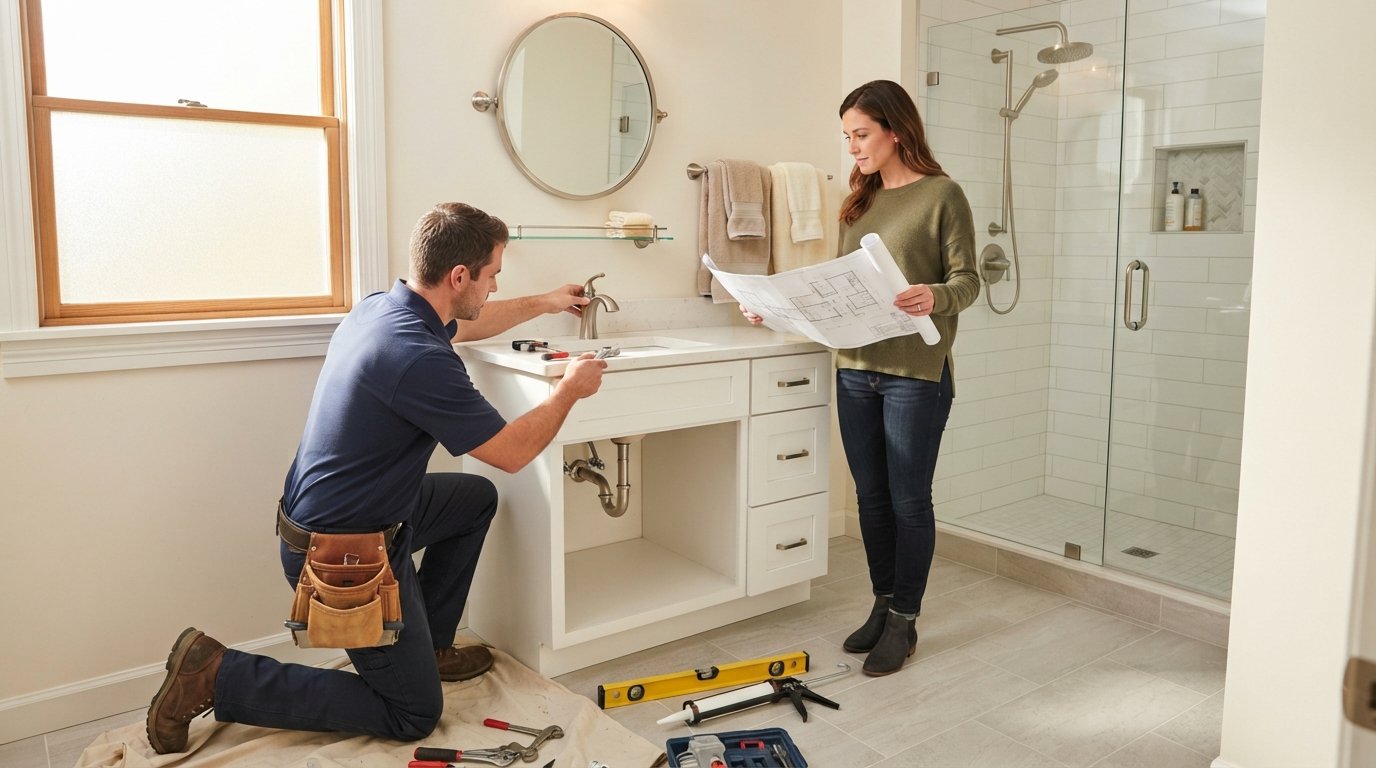
Small Bathroom Remodel Ideas That Add Value
Small bathroom remodel ideas that add value can boost resale and daily comfort. Call (833)-700-4293 to compare local contractor quotes today.
By Alexia Mabel
Learn more about Bathroom Remodel for guides, costs, and what to expect.
Compare Bathroom Remodel Pros Near You

Enter your ZIP code to compare top-rated local professionals and request free quotes.
A small bathroom can still deliver a big return. Whether you are planning a quick refresh before listing your home or simply want a more functional space for daily life, the right upgrades can transform a cramped, dated room into a feature that buyers notice and appraisers reward. The challenge is spending wisely: in a compact footprint, every square foot and every dollar has to work harder. This guide walks through practical, high-impact small bathroom remodel ideas that add value, with an eye on what actually moves resale numbers and what simply looks nice in photos.
Why small bathroom remodels deliver outsized returns
Bathrooms are one of the few rooms in a home where minor updates can shift perceived value quickly. Buyers scan bathrooms for signs of moisture problems, outdated fixtures, and storage shortages. A clean, bright, well-ventilated bathroom signals a well-maintained home, while a tired one raises red flags about hidden plumbing or mold issues. According to remodeling industry data, mid-range bathroom remodels consistently return a substantial portion of their cost at resale, often outperforming larger, more personalized renovations. For a small bathroom, the ratio can be even better because the scope is contained: fewer materials, shorter timelines, and less disruption.
The key is to focus on improvements that address both form and function. A vanity that fits the room properly, a shower that feels larger than its footprint, and lighting that banishes shadows all contribute to a sense of quality. These are the elements that buyers remember when they compare homes. They are also the elements that make the room more pleasant to use every day, which matters if you plan to stay put for years. Before committing to a budget, it helps to understand typical cost ranges and where the money goes; our bathroom remodel cost guide for homeowners breaks down line items so you can plan with confidence.
Another reason small bathrooms respond well to remodeling is that problems are easier to diagnose and fix. In a tight space, a leaky faucet or failing exhaust fan is more noticeable. Replacing dated plumbing fixtures and improving ventilation can prevent costly water damage, which is a value-protection move as much as an aesthetic one. When you combine preventive maintenance with cosmetic upgrades, you get a room that looks better, functions better, and is less likely to generate repair requests during a home inspection.
Space-saving vanity, storage, and mirror choices
The vanity is often the first thing to reconsider in a small bathroom. A standard-depth vanity can crowd the room and make circulation awkward. Switching to a shallow-depth model, typically 18 to 20 inches instead of 21 to 24, frees up floor space without sacrificing a usable countertop. Wall-mounted vanities take this further by eliminating legs and making the floor easier to clean, which visually expands the room. If storage is a concern, consider a vanity with drawers rather than cabinet doors; drawers make better use of vertical space and keep small items organized.
Storage should be layered throughout the room, not concentrated in one spot. A recessed medicine cabinet adds storage without protruding into the room, and it can replace a flat mirror that offers no function beyond reflection. Open shelving above the toilet or on a narrow wall can hold towels and baskets, but keep it minimal to avoid visual clutter. In a small bathroom, visible clutter makes the room feel smaller, so closed storage is generally a better choice for everyday items.
Mirrors are a strategic tool for adding perceived space. A large mirror that spans the width of the vanity reflects light and makes the room feel deeper. Backlit mirrors or mirrors with integrated LED lighting reduce the need for separate sconces and create a clean, modern look. When choosing a mirror, consider the reflection: if it faces a blank wall, it will add little; if it reflects a window or a well-lit area, it will amplify light and openness. Pair the mirror with a vanity that fits the room's proportions, and you create a focal point that feels intentional rather than squeezed in.
Here are a few storage and vanity ideas that work well in tight footprints:
- Shallow-depth vanity (18 to 20 inches) to preserve floor space
- Recessed medicine cabinet for hidden storage without protrusion
- Wall-mounted vanity to open up the floor and ease cleaning
- Drawer-based vanity for better organization than cabinet doors
- Large, frameless mirror to reflect light and expand visual depth
Each of these choices contributes to a more functional room, and together they signal thoughtful design to potential buyers. A bathroom that feels organized and spacious, even when it is small, reads as a higher-quality home.
Walk-in shower conversions in tight footprints
Trading a tub for a walk-in shower is one of the most impactful changes you can make in a small bathroom, but it comes with trade-offs. A walk-in shower eliminates the need to step over a tub wall, which improves accessibility and safety, and it can make the room feel larger because the shower enclosure is often lower and more open. In a compact space, a curbless shower with a linear drain can create a seamless transition from floor to shower, reducing visual barriers and making the room feel more spacious. However, removing a tub can affect resale if the home has only one bathroom and buyers expect a tub for children or resale conventions. If your home has another bathroom with a tub, converting the smaller one to a shower is usually a safe value play.
When designing a walk-in shower in a tight footprint, focus on glass and light. A frameless glass enclosure minimizes visual obstruction and makes the shower feel like part of the room rather than a separate box. Choose a clear glass panel over frosted or textured glass unless privacy is a concern. A fixed glass panel with a hinged door is often more practical than a sliding door in a small space, but a sliding door can save swing clearance. Consider a shower niche for shampoo and soap; it eliminates the need for hanging caddies and keeps the space tidy. Bench seating can add luxury, but in a very small shower, a fold-down teak bench or a built-in corner seat may be more practical than a full bench.
Drainage and waterproofing are critical. A linear drain allows for larger-format tiles and a cleaner look, and it can be positioned at the shower entrance to slope the floor gently away from the room. Proper waterproofing behind the tile is non-negotiable; a failed shower pan can cause extensive damage. This is a project where professional installation matters, and it is worth getting multiple quotes from licensed contractors. You can use a platform like ContractorHomeQuotes to compare bids and verify credentials before committing. A well-installed walk-in shower adds both daily convenience and resale appeal, especially in primary bathrooms where buyers prioritize a modern shower experience.
Lighting and ventilation upgrades that prevent moisture damage
Lighting and ventilation are often overlooked in small bathroom remodels, yet they have a direct impact on both comfort and long-term value. A dim bathroom feels smaller and less inviting, while bright, layered lighting makes the room feel larger and cleaner. In a small bathroom, aim for three types of light: ambient light for general illumination, task lighting around the vanity for grooming, and accent light for atmosphere or night use. Replacing a single ceiling fixture with a combination of recessed lights, vanity sconces, and a dimmable exhaust fan with integrated light can transform the room.
Ventilation is equally important. Small bathrooms generate a lot of moisture, and poor ventilation leads to mold, peeling paint, and deteriorated drywall. An exhaust fan that is properly sized for the room's square footage and vented to the exterior is essential. Look for a fan with a low sone rating (quiet operation) and a humidity sensor or timer so it runs long enough to clear moisture. If your current fan is noisy or ineffective, upgrading it is a low-cost improvement that protects the home's structure and signals to buyers that the bathroom is well maintained.
Consider the color temperature of your lighting as well. Warm white light (around 2700K to 3000K) is flattering for skin tones and creates a cozy feel, while cooler light (4000K) is better for task areas. Dimmable fixtures give you flexibility. If you have a window, keep it unobstructed to maximize natural light; if privacy is an issue, use frosted glass or a top-down bottom-up shade. Skylights are a bigger investment but can flood a small bathroom with daylight and reduce the need for artificial lighting during the day. For many homeowners, a well-lit, well-ventilated bathroom is a top priority, and these upgrades often pay for themselves in avoided repairs and improved daily experience.
Material choices that hold up in small, humid rooms
Materials in a small bathroom need to withstand moisture, humidity, and frequent cleaning. In a compact room, every surface is visible and within reach, so durability and easy maintenance matter. For flooring, porcelain or ceramic tile is a reliable choice; it is water-resistant, easy to clean, and available in formats that mimic wood or stone. Luxury vinyl plank is another option that offers water resistance and a softer feel underfoot, and it can be a cost-effective alternative to tile. Avoid materials that swell or warp with moisture, such as certain engineered woods or laminate without a water-resistant core.
For walls, tile is common in wet areas, but you can also use moisture-resistant drywall with a high-quality semi-gloss paint in dry zones. Semi-gloss and satin finishes are easier to clean and resist mold better than flat paint. In a small bathroom, lighter colors reflect light and make the room feel larger, but do not be afraid of a bold accent wall or a patterned tile floor; a small space can handle a strong design statement if the rest of the palette is calm. Just keep the number of materials limited to avoid visual noise.
Countertops should be non-porous and easy to maintain. Quartz is a popular choice because it resists moisture and stains, and it does not require sealing. Solid surface materials like Corian are also practical and can be integrated with the sink for a seamless look. Avoid porous natural stones like marble in a small bathroom unless you are prepared for regular sealing and maintenance. For fixtures, choose finishes that resist water spots and tarnish, such as brushed nickel, chrome, or matte black. These finishes are durable and stylish, and they hold up well in humid environments.
Here are material guidelines to keep in mind:
- Porcelain or ceramic tile for floors and wet walls
- Quartz or solid surface countertops for low maintenance
- Semi-gloss or satin paint in dry areas for moisture resistance
- Brushed nickel, chrome, or matte black fixtures for durability
- Luxury vinyl plank as a water-resistant flooring alternative
These choices balance cost, durability, and style, and they help ensure that the remodeled bathroom looks good and performs well for years. When selling, buyers appreciate materials that are easy to clean and maintain, and appraisers view durable finishes as a sign of quality.
Expected resale return on a small bathroom refresh
Homeowners often ask whether a small bathroom remodel is worth the investment. The answer depends on the scope and the local market, but the general trend is favorable. A minor bathroom remodel, which might include a new vanity, fixtures, lighting, paint, and flooring, typically recoups a significant percentage of its cost at resale, often in the range of 60 to 70 percent nationally. A mid-range remodel that includes a new shower, tile, and updated layout can also perform well, though the return may be slightly lower. The key is to avoid over-improving for the neighborhood; a luxury spa bathroom in a modest home may not return its cost, while a clean, functional, updated bathroom will appeal to the broadest pool of buyers.
To maximize resale return, focus on improvements that buyers value most: a clean, modern vanity, good lighting, efficient ventilation, and a shower that feels spacious and well-maintained. Neutral colors and timeless materials have broader appeal than bold, personalized choices. If you plan to sell soon, consider a cosmetic refresh rather than a full gut renovation; new paint, fixtures, and a regrouted tile floor can make a big difference for a modest investment. If you plan to stay, invest in quality where it matters most, such as waterproofing and ventilation, because these prevent future problems.
Getting accurate local numbers is important. Contractor rates and material costs vary by region, and a quote from a local professional will give you a clearer picture than national averages. USremodel can connect you with independent contractors in your area who can assess your bathroom and provide customized quotes for your project. Comparing multiple bids helps you understand the going rate and avoid overpaying. With a clear budget and a focus on value-adding upgrades, a small bathroom remodel can be one of the smartest investments you make in your home.
Ultimately, the best small bathroom remodel ideas that add value are the ones that improve daily function, protect the home from moisture damage, and appeal to a wide range of buyers. Start with the vanity and storage, address the shower and ventilation, choose durable materials, and keep the design timeless. Whether you are preparing to sell or planning to enjoy your home for years to come, a well-executed small bathroom remodel delivers returns that go beyond the bottom line.
Learn more about Bathroom Remodel for guides, costs, and what to expect.
Compare Bathroom Remodel Pros Near You
Enter your ZIP code to compare top-rated local professionals and request free quotes.