
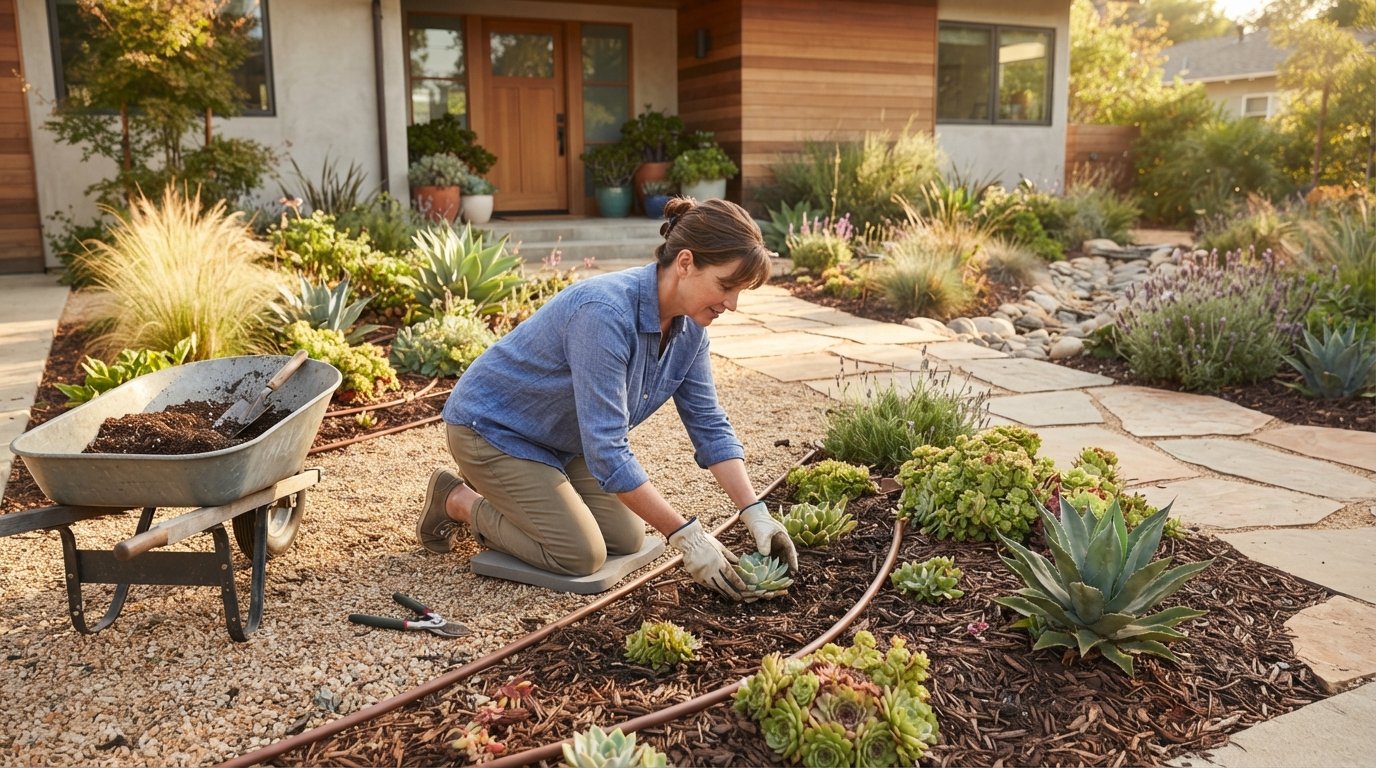
Low Maintenance Landscaping Ideas That Add Value in 2026
Low maintenance landscaping ideas that add value can cut water bills and boost curb appeal. See the plants, hardscape, and smart irrigation that do the work for you.
By Alexia Mabel
Learn more about Outdoor Landscaping and Design for guides, costs, and what to expect.
Compare Outdoor Landscaping and Design Pros Near You

Enter your ZIP code to compare top-rated local professionals and request free quotes.
A well-designed yard does more than look good from the curb. It quietly protects your home, cuts weekend chores, and can return real money when you sell. The catch is that many homeowners assume a beautiful landscape requires constant watering, pruning, and replanting. That trade-off is a myth. With the right plant choices, hardscape materials, and irrigation strategy, you can create an outdoor space that thrives on its own while lifting your property value. This guide walks through practical, low maintenance landscaping ideas that add value, whether you are preparing to list your home or simply want to enjoy your weekends again.
Why Low Maintenance Landscaping Pays Off
Landscaping is one of the few home improvements that works on two fronts at once: it reduces ongoing costs and increases resale appeal. According to real estate industry research, homes with well-maintained, drought-tolerant landscaping often sell faster and command higher offers than comparable properties with overgrown or high-water yards. Buyers in hot markets like Dallas, Denver, and Los Angeles increasingly view native and low-water plants as a plus, not a compromise.
There is also a practical math to consider. A traditional lawn can consume thousands of gallons of water per month and demand weekly mowing, fertilizing, and pest control. Replacing even a portion of that lawn with hardy groundcover, mulched beds, or decorative gravel instantly lowers your water bill and eliminates hours of labor. Those savings compound year after year, which is why smart homeowners treat low maintenance landscaping as an investment rather than an expense.
If you are planning a broader exterior refresh, it helps to think about landscaping as part of a larger value strategy. Our guide on landscaping upgrades that increase home value explains how curb appeal projects interact with other renovations, and it pairs well with the ideas below.
Start With a Realistic Plan for Your Climate
Before you buy a single plant, identify your USDA hardiness zone and your region's typical rainfall. A landscape that thrives in Portland will struggle in Phoenix unless you commit to irrigation. The most reliable low maintenance designs lean on plants that are native or adapted to your local climate. Native species have evolved to survive local pests, soil conditions, and temperature swings with minimal intervention.
It also pays to map out how you actually use your yard. Do you need a play area for kids, a patio for entertaining, or simply a clean view from the kitchen window? Zoning your yard into functional areas prevents you from overplanting and makes maintenance easier to manage. A simple sketch on graph paper, or a free online planning tool, can save you from costly mistakes later.
Once you have a rough plan, group plants by their water and sunlight needs. Hydrozoning, the practice of placing thirsty plants together and drought-tolerant plants together, allows you to water efficiently and avoid the common problem of overwatering some plants while underwatering others. This single strategy can cut irrigation costs significantly while keeping your landscape healthy.
Choose Plants That Work Harder Than You Do
Plant selection is the single biggest factor in how much maintenance your landscape will require. Fortunately, there are dozens of attractive, low-effort options that look great in nearly every region. The key is to prioritize perennials over annuals, evergreens over deciduous varieties that drop leaves, and slow-growing shrubs over fast-spreading invasives.
Here are some categories of plants that consistently deliver low maintenance and high visual impact:
- Ornamental grasses: Varieties like fountain grass, blue fescue, and switchgrass add texture and movement, need little water once established, and require only an annual trim.
- Succulents and sedums: Perfect for sunny, dry spots, these plants store water in their leaves and thrive on neglect. They also work beautifully in containers.
- Native shrubs: Plants like viburnum, ninebark, and oakleaf hydrangea are adapted to local conditions and resist pests and disease without chemical sprays.
- Groundcovers: Creeping thyme, ajuga, and vinca minor suppress weeds and eliminate the need to mulch large areas every year.
- Dwarf evergreens: Compact versions of juniper, boxwood, and holly provide year-round structure with minimal pruning.
When you shop, look for plants labeled drought-tolerant or low-water. Many nurseries now group these plants together, making selection easy. Avoid fast-growing trees and shrubs near your foundation, since their aggressive roots can damage pipes and walkways, creating expensive repairs down the road.
Reduce or Replace Your Lawn
A lush, emerald lawn is the classic American dream, but it is also the most labor-intensive and water-hungry part of most landscapes. You do not have to remove every blade of grass, but shrinking your lawn is one of the highest-impact low maintenance moves you can make.
Consider converting high-maintenance turf areas into mulched beds, gravel patios, or wildflower meadows. In drier climates, artificial turf has become a popular alternative that stays green year-round and requires no watering, mowing, or fertilizing. If you prefer a natural look, clover or buffalo grass offers a lower-growing, drought-tolerant option that needs far less mowing than traditional fescue or bluegrass.
A good rule of thumb is to keep grass only where you actually walk or play. Borders, slopes, and hard-to-reach corners are prime candidates for replacement with groundcover or hardscape. This approach not only saves water but also reduces the time you spend behind a mower each week.
Invest in Smart Irrigation and Drainage
Even low-water landscapes need some irrigation during establishment and occasional dry spells. The difference is that a smart system delivers water only when needed, preventing waste and plant disease. Drip irrigation, soaker hoses, and smart controllers with weather sensors are affordable upgrades that pay for themselves within a few seasons.
Drainage is equally important. Poor drainage leads to root rot, mosquito breeding, and foundation problems. French drains, dry creek beds, and rain gardens are attractive solutions that manage stormwater while adding visual interest. A dry creek bed filled with river rock, for example, can turn a soggy problem area into a design feature.
If you are unsure about the right system for your yard, a professional landscaper or irrigation specialist can assess your soil and slope. Many homeowners find that a one-time consultation saves them from costly trial and error. For homeowners tackling multiple exterior projects, connecting with vetted contractors through 180Remodel can simplify the process of finding qualified help for landscaping, drainage, and related improvements.
Use Hardscape to Cut Maintenance and Boost Appeal
Hardscape elements like patios, walkways, and retaining walls are virtually maintenance-free once installed, and they add immediate structure and value to your yard. Natural stone, pavers, and gravel all weather well and require only occasional sweeping or rinsing.
Beyond practicality, hardscape creates outdoor living space that buyers love. A well-designed patio extends your home's usable square footage and provides a natural gathering spot. Fire pits, built-in seating, and pergolas can transform a plain backyard into a destination, all without adding a single plant to maintain.
When choosing materials, consider local availability and climate. In freeze-thaw regions, concrete pavers with flexible joints outperform solid slabs. In hot, sunny climates, light-colored stone stays cooler underfoot. Gravel is an excellent low-cost option for paths and utility areas, though it may need occasional replenishing.
Mulch, Edging, and Other Maintenance Shortcuts
Even the most self-sufficient landscape benefits from a few smart maintenance habits. Mulch is your best friend: a three-inch layer of bark, wood chips, or gravel suppresses weeds, retains soil moisture, and gives beds a clean, finished look. Organic mulches break down over time and improve soil health, while inorganic options like gravel last longer but do not enrich the soil.
Edging creates a crisp line between beds and lawn, reducing the need for string trimming and preventing grass from invading your plantings. Steel, aluminum, and plastic edging are all affordable and easy to install. Once in place, they dramatically reduce upkeep.
Finally, consider adding a few container plants near your entryway or patio. Containers allow you to enjoy colorful annuals or tender perennials without committing to a full garden bed. They are easy to refresh each season and can be moved to suit your mood or the sun's angle.
Low Maintenance Landscaping Ideas by Region
What works in one part of the country may fail in another. Here is a quick look at region-specific strategies that add value while keeping upkeep low.
Dallas and the South
Hot, humid summers and occasional freezes call for heat-tolerant plants like lantana, salvia, and ornamental grasses. Zoysia and Bermuda grass are common, but replacing struggling lawn areas with native Texas sage or esperanza reduces water use. Mulch heavily to retain moisture and suppress weeds.
Denver and the Mountain West
Dry air, intense sun, and cold winters make native plants essential. Coneflower, yarrow, and blue grama grass thrive with little water. Xeriscaping, which uses rocks, gravel, and drought-tolerant plants, is both practical and stylish in this region. Smart irrigation with freeze sensors protects your system and plants.
Los Angeles and the Southwest
Drought conditions have made California native plants like California lilac, manzanita, and hummingbird sage increasingly popular. Artificial turf and gravel yards are common, but a well-designed succulent garden can be just as striking and far more sustainable. Drip irrigation is essential for establishing new plantings.
How to Phase Your Project Without Breaking the Budget
You do not have to overhaul your entire yard in one weekend. In fact, phasing your landscaping over several seasons often produces better results and spreads out the cost. Start with the areas that have the biggest visual impact, such as the front entry or the view from your main living space.
A practical sequence looks like this:
- Remove problem areas: Tear out invasive plants, dead shrubs, or failing lawn sections first.
- Fix drainage and irrigation: Address water issues before planting to avoid future damage.
- Install hardscape: Patios, paths, and edging create the framework for your design.
- Plant in layers: Start with trees and shrubs, then add perennials and groundcover.
- Finish with mulch and accents: Mulch beds and add containers or lighting for polish.
This step-by-step approach keeps each phase manageable and lets you adjust your plan as you learn what thrives in your specific yard. It also makes it easier to hire help for the heavy lifting, such as excavation or hardscape installation, while handling planting yourself.
Avoid Common Low Maintenance Landscaping Mistakes
Even well-intentioned homeowners can accidentally create more work for themselves. One common mistake is planting too densely. While it looks full immediately, overcrowded plants compete for water and nutrients, leading to disease and extra pruning. Follow the spacing recommendations on plant tags, even if it leaves gaps at first.
Another pitfall is ignoring mature plant size. A cute shrub that grows six feet wide will eventually swallow your walkway. Research the mature dimensions of every plant before you buy, and choose dwarf or compact varieties where space is limited.
Finally, do not skip soil preparation. Compacted or nutrient-poor soil undermines even the toughest plants. Adding compost and aerating before planting gives roots a healthy start and reduces the need for fertilizers and extra watering later.
When to Call a Professional
Some landscaping tasks are safe for DIY, but others benefit from professional expertise. If your project involves grading, retaining walls, irrigation systems, or large tree removal, hiring a qualified contractor is the safer and often more cost-effective choice. Professionals can also help you navigate local water restrictions and rebate programs for turf removal.
If you are planning a larger exterior renovation that includes landscaping alongside roofing, windows, or painting, coordinating multiple contractors can be a headache. A platform like USremodel connects you with independent local contractors who can handle each piece of the project, so you can compare quotes and timelines without endless phone calls.
Low maintenance landscaping is not about doing nothing. It is about designing a yard that supports itself, so you can spend your time enjoying it rather than maintaining it. By choosing climate-appropriate plants, reducing lawn, investing in smart irrigation, and using hardscape strategically, you create a space that looks beautiful, costs less to keep, and adds measurable value to your home. Start with one or two changes this season, and you will quickly see how a low-effort landscape can deliver high-impact returns.
Learn more about Outdoor Landscaping and Design for guides, costs, and what to expect.
Compare Outdoor Landscaping and Design Pros Near You
Enter your ZIP code to compare top-rated local professionals and request free quotes.