
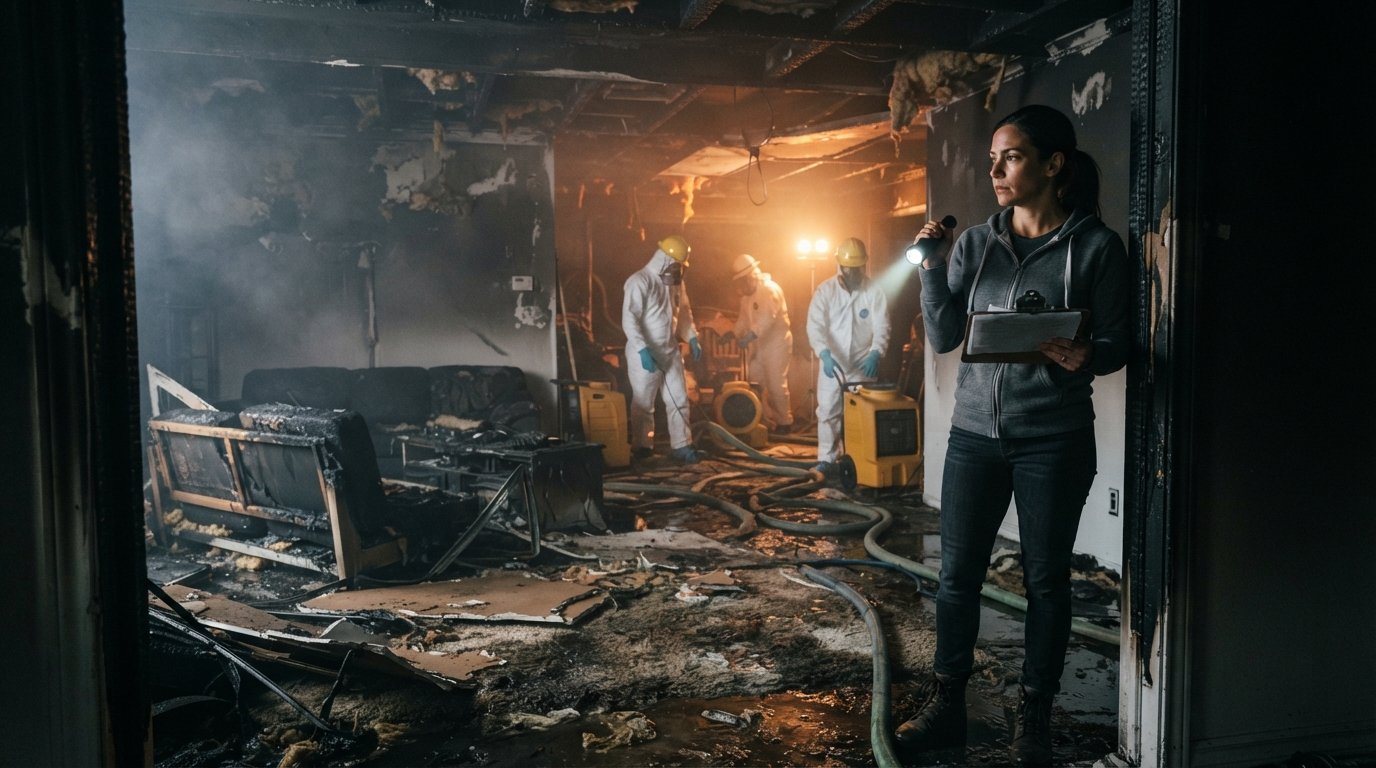
Home Restoration Near Me After Fire or Water Damage
Home restoration near me after fire or water damage starts with safety, documentation, and the right certified crew. Call (833)-700-4293 to get matched with local pros.

By Eric Andrew
Learn more about Water Damage Cleanup and Restoration for guides, costs, and what to expect.
Compare Water Damage Cleanup and Restoration Pros Near You

Enter your ZIP code to compare top-rated local professionals and request free quotes.
Smoke is still hanging in the air, or the carpet squelches underfoot, and your first instinct is to search for home restoration near me after fire or water damage. That search is the right move, but the decisions you make in the next few hours matter as much as the company you eventually hire. Restoration is a sequence, not a single service call, and understanding that sequence helps you protect your family, your property, and your insurance claim while professionals are still on the way.
This guide walks through what to do before crews arrive, how mitigation differs from reconstruction, how to document damage while work proceeds, and how to choose a restoration contractor with the right certifications. It is written for homeowners facing an emergency, not for contractors, so the focus stays on decisions you can actually make under pressure.
Immediate Steps Before Restoration Crews Arrive
The moments between discovering damage and the arrival of a restoration team are when secondary damage takes hold. Water wicks into drywall, smoke residue etches into surfaces, and mold spores begin colonizing damp materials within 24 to 48 hours. Fire damage brings its own timeline: soot is acidic and continues corroding metal and finishes until it is removed. Your job in this window is not to clean, it is to stabilize and document.
Safety comes first, and it is non-negotiable. If the fire department or utility company has not cleared the structure, do not enter. Water and electricity are a lethal combination, and standing water can hide damaged wiring, sharp debris, and compromised subflooring. Once the structure is declared safe, take these steps in order:
- Shut off utilities if instructed. If gas or water is still flowing and it is safe to reach the shutoff, turn it off. Do not touch electrical panels in wet areas.
- Stop the source of water if possible. For a burst pipe or failed supply line, close the nearest valve. For roof leaks or storm intrusion, place buckets and move valuables rather than climbing onto a wet roof.
- Photograph and video everything before moving it. Walk through each affected room and capture wide shots, close-ups, and serial numbers on damaged appliances and electronics.
- Remove what can be saved. Move furniture, rugs, and electronics off wet flooring and away from smoke-affected walls. Do not drag items through contaminated water.
- Ventilate without spreading contamination. Open windows in fire-damaged rooms only if it does not pull soot into unaffected areas. Use fans to move air out, not around.
One caution deserves its own paragraph: do not start demolition. Homeowners sometimes tear out drywall or carpet to "help" before the restoration team arrives, and that can destroy evidence the insurance adjuster needs and expose hidden hazards like asbestos or lead paint in older homes. If materials are wet but intact, leave them for the professionals to assess. Your documentation and stabilization efforts are enough.
If you are unsure who to call first, our guide on finding local restoration pros fast walks through how to vet emergency responders and what information to have ready when you call.
Mitigation vs. Reconstruction: Understanding the Two Phases
Homeowners often assume restoration is a single service, but the industry splits the work into two distinct phases, and understanding the difference helps you evaluate bids and insurance estimates. Mitigation, sometimes called remediation or emergency services, is the work that stops ongoing damage and stabilizes the property. Reconstruction, sometimes called build-back, is the work that returns the home to its pre-loss condition or better.
Mitigation typically includes water extraction, drying and dehumidification, smoke and soot removal, odor treatment, mold remediation, board-up and tarping, and content cleaning. These tasks are time-sensitive and often billed by the hour or day for equipment use. Reconstruction covers drywall replacement, flooring installation, cabinetry, painting, roofing, and structural repairs. The two phases may be handled by the same company or by separate firms, and your insurance policy may treat them differently in terms of deductibles and coverage limits.
Why does this distinction matter to you? Because a bid that lumps mitigation and reconstruction into one line item is harder to audit, and because the transition between phases is where projects stall. A mitigation company that dries your home and then hands you off to a separate general contractor can leave you managing two schedules, two invoices, and two sets of expectations. When you search for home restoration near me after fire or water damage, ask each company whether they perform both phases in-house or coordinate with a build-back partner. Neither answer is wrong, but you should know which model you are hiring.
Timelines follow the same logic. Mitigation for a typical water loss takes three to five days of drying, with monitoring visits to confirm moisture readings. Reconstruction can take weeks to months depending on scope and material availability. Understanding that gap helps you plan temporary housing and set realistic expectations with your family and your insurer.
Documenting Damage for Insurance While Work Proceeds
Your insurance claim is built on evidence, and evidence degrades quickly after a loss. Water-damaged materials get torn out, smoke residue gets cleaned, and damaged contents get discarded. The documentation you create in the first 48 hours often determines how smoothly your claim proceeds and how much of your recovery is covered.
Start a dedicated file, digital and physical, and organize it around these categories:
- Photos and video: Wide shots of each room, close-ups of damage, and footage of water lines on walls or furniture. Include timestamps where possible.
- Inventory of damaged items: List each item, its approximate age, purchase price if known, and replacement cost. Photograph serial numbers and receipts when available.
- Receipts for emergency expenses: Hotel stays, meals during displacement, temporary repairs, and equipment rentals are often reimbursable under loss-of-use coverage.
- Contractor and adjuster communications: Save emails, texts, and written estimates. Note dates and names of everyone who visits the property.
- Moisture readings and daily logs: If you are doing any drying yourself, record readings and conditions each day. Restoration companies will provide their own logs, but your records support the timeline.
Share your documentation with your adjuster early, but do not sign anything that releases the insurer from further liability until you understand the full scope of damage. Hidden damage is common in both fire and water losses: water travels behind cabinets and under flooring, and smoke penetrates wall cavities and HVAC systems. A restoration contractor with experience in insurance work will help you identify concealed damage and document it properly for a supplemental claim.
One practical tip: keep a running log of every phone call and visit, including who said what and when. If a dispute arises later, a dated log is far more persuasive than memory. And if your insurer recommends a preferred contractor, you are generally not required to use them, though you should understand how that choice affects the claims process before deciding.
Selecting a Restoration Contractor with the Right Certifications
Restoration is a specialty trade, and the certifications a company holds tell you what kind of training its technicians have received. The most widely recognized credentials come from the Institute of Inspection, Cleaning and Restoration Certification (IICRC), which offers designations such as Water Restoration Technician (WRT), Applied Structural Drying (ASD), Fire and Smoke Restoration Technician (FSRT), and Applied Microbial Remediation Technician (AMRT). A company that handles both water and fire losses should have technicians credentialed in both areas, not just one.
Certification alone is not enough, but it is a useful filter. When you call a company, ask these questions and listen for specific answers rather than general assurances:
- Are your technicians IICRC-certified, and in which disciplines? Ask for the specific certifications relevant to your loss type.
- Do you carry general liability and workers' compensation insurance? Request a certificate of insurance and verify it with the carrier if possible.
- Are you licensed in this state and local jurisdiction? Licensing requirements vary; a legitimate company will know and provide its number.
- Do you perform mitigation and reconstruction, or coordinate with a build-back partner? Understand the handoff before you sign.
- How do you document and bill for insurance work? Look for experience with Xactimate or similar estimating platforms and willingness to communicate directly with your adjuster.
Beyond credentials, evaluate responsiveness and transparency. A company that answers the phone at 2 a.m. and arrives with moisture meters, thermal imaging, and a written scope of work is demonstrating the operational discipline you want. Be wary of anyone who demands a large upfront payment before any assessment, pressures you to sign an authorization form on the spot, or cannot explain in plain language what the first 24 hours of work will involve. Reputable firms will give you a written estimate and explain how insurance billing works.
If you want a structured starting point for comparing bids and understanding pricing, resources like ContractorHomeQuotes provide cost guides and contractor selection advice that can help you ask better questions and spot outliers in your estimates. The goal is not to find the cheapest bid but the most complete and transparent one.
What to Expect During the Restoration Process
Once you have selected a contractor, the project moves through a predictable arc, though the specifics vary by loss type. For water damage, the first visit includes a moisture assessment, extraction, and placement of drying equipment. Technicians return daily or every other day to monitor readings, and drying is considered complete when materials reach acceptable moisture levels, typically within three to five days for a contained loss. Mold remediation, if needed, follows a separate protocol with containment barriers and negative air pressure.
For fire damage, the sequence starts with board-up and roof tarping to secure the structure, followed by soot removal, odor treatment, and content cleaning. Smoke odor is notoriously persistent and may require thermal fogging, ozone treatment, or hydroxyl generators, depending on the contractor's assessment and the sensitivity of occupants and pets. Reconstruction begins only after mitigation is complete and the scope is agreed upon with your insurer.
Throughout the process, you should receive written documentation of work performed, moisture readings, and progress photos. Ask for these at each stage and keep them in your claim file. If your contractor is coordinating with your insurer, confirm that you are copied on all communications. You are the policyholder, and the claim is yours, not the contractor's.
Expect some disruption. Restoration is invasive by nature, and rooms will be unusable for a period. Temporary housing, if covered, should be arranged early, and you should confirm with your adjuster how long loss-of-use coverage extends. Keep a realistic timeline in mind and build in buffer for material lead times, which can stretch reconstruction schedules.
One final point on the search itself: when you look for home restoration near me after fire or water damage, prioritize companies that can respond quickly, document thoroughly, and explain the process in plain language. Speed matters, but so does the quality of the handoff between mitigation and reconstruction. The right contractor will treat your claim like a project with a beginning, middle, and end, and will keep you informed at every stage.
Restoration after a fire or flood is stressful, but it is a well-trodden path. With the right sequence, solid documentation, and a credentialed contractor, you can move from emergency to recovery with fewer surprises and a stronger claim.
Learn more about Water Damage Cleanup and Restoration for guides, costs, and what to expect.
Compare Water Damage Cleanup and Restoration Pros Near You
Enter your ZIP code to compare top-rated local professionals and request free quotes.