
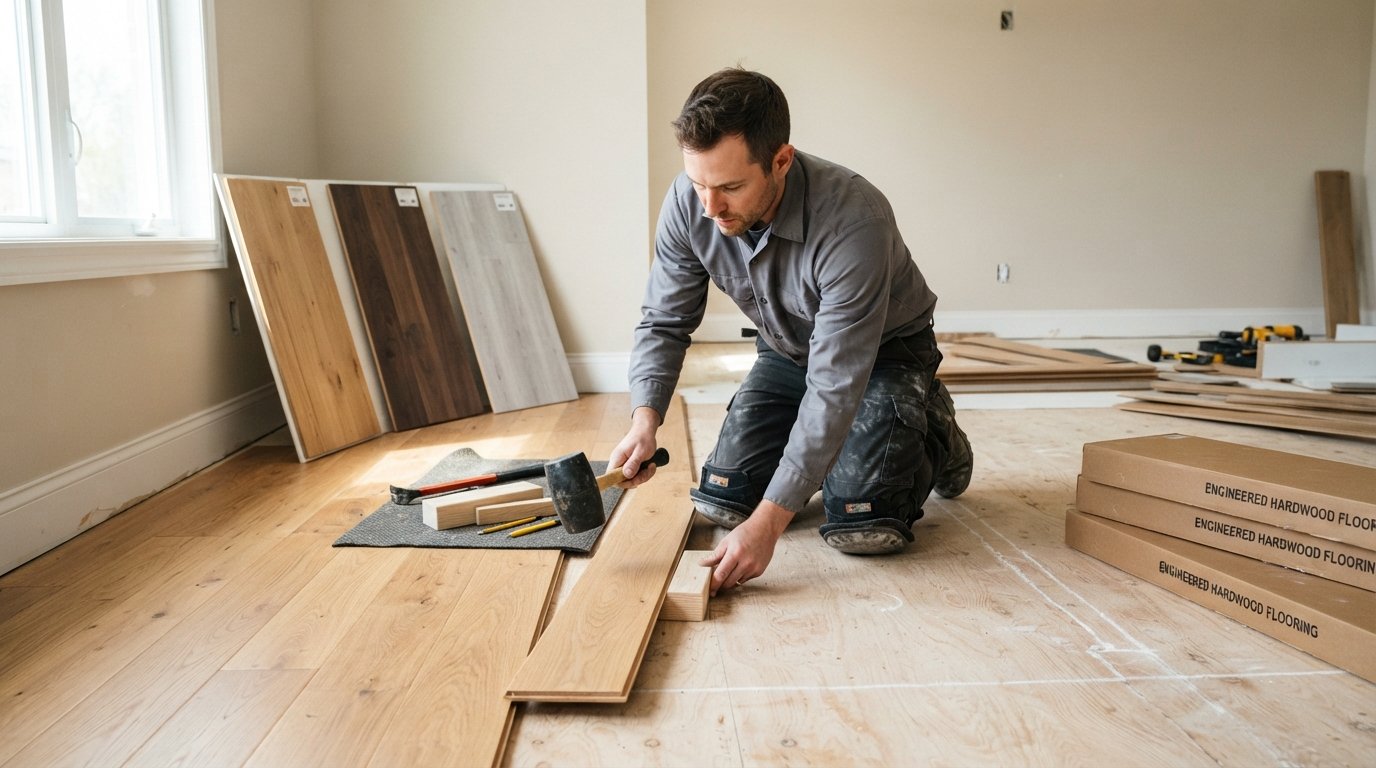
Flooring Installation Options and Professional Services Guide
Compare flooring installation options and professional services, from hardwood to vinyl, and call (833)-700-4293 to get matched with vetted local installers.

By Eric Andrew
Learn more about Floor Installation or Replacement for guides, costs, and what to expect.
Compare Floor Installation or Replacement Pros Near You

Enter your ZIP code to compare top-rated local professionals and request free quotes.
Your floor takes more daily punishment than almost any other surface in your home. It absorbs foot traffic, furniture drags, spills, pet accidents, and the slow wear of time. When it starts to look tired, buckle, or stain beyond cleaning, the decision you face is not just cosmetic: it is a choice between flooring installation options and professional services that will shape your budget, timeline, and long term satisfaction. This guide walks you through the major material categories, the real world durability and maintenance tradeoffs, the subfloor work most homeowners underestimate, and the point at which hiring a professional installer stops being optional and becomes the smartest money you will spend.
Comparing the Main Flooring Installation Options
The first fork in the road is material selection, and it deserves more than a quick browse through a showroom. Each flooring type carries its own installed cost range, comfort profile, moisture tolerance, and maintenance routine. Choosing well means matching the material to the room, the household, and how long you plan to stay in the home.
Hardwood remains the benchmark for warmth and resale value. Solid hardwood planks can be sanded and refinished multiple times over decades, which makes their higher upfront cost easier to justify in living rooms, dining rooms, and bedrooms. Engineered hardwood offers a similar look with better dimensional stability, making it a practical choice over concrete slabs and in homes with humidity swings. Both options demand care around water, so kitchens, bathrooms, and laundry rooms are usually better served by other materials.
Tile, whether porcelain, ceramic, or natural stone, wins on water resistance and longevity. It handles spills, pet messes, and heavy traffic with ease, and it never needs refinishing. The tradeoffs are hardness underfoot, grout lines that require periodic cleaning, and a more labor intensive installation that raises professional labor costs. Laminate and luxury vinyl plank (LVP) have closed much of the gap with wood and tile looks at lower price points. Modern LVP is waterproof, comfortable underfoot, and forgiving of minor subfloor imperfections, which makes it a favorite for basements, kitchens, and busy family rooms. Carpet still owns the bedroom and closet market thanks to its softness, insulation value, and low material cost, though it demands more frequent cleaning and replacement.
Durability, Maintenance, and Cost Considerations
Installed cost is where many homeowners get surprised. Material price per square foot is only part of the equation; underlayment, trim, transitions, old floor removal, and labor all add up. As a rough planning framework, carpet is typically the least expensive installed option, laminate and vinyl sit in the middle, and tile and hardwood climb toward the top, with natural stone and specialty hardwood at the premium end. These ranges shift by region, so treat any number as a starting point for quotes rather than a final budget.
Maintenance expectations matter just as much as price. Consider how each option fits your household:
- Hardwood: Sweep or vacuum weekly, keep humidity between 35 and 55 percent, and plan on refinishing every 10 to 20 years depending on traffic.
- Tile: Mop regularly and seal grout periodically; cracked tiles can be replaced individually but matching dye lots can be tricky.
- Laminate and vinyl plank: Damp mop with manufacturer approved cleaners; avoid standing water and use felt pads under furniture.
- Carpet: Vacuum high traffic areas several times a week, deep clean annually, and expect replacement every 7 to 12 years in busy rooms.
Durability also depends on the wear layer and finish quality within each category. A budget laminate with a thin wear layer will show traffic patterns years before a premium LVP with a commercial grade top coat. Ask installers to explain wear layer thickness, AC ratings for laminate, and the difference between site finished and factory finished hardwood, because those details drive how the floor will look in year ten, not just on installation day.
Subfloor Preparation and Installation Considerations
Every flooring failure story you have heard, from popping tiles to squeaking planks, usually traces back to the subfloor. The surface beneath the finished floor must be clean, dry, flat, and structurally sound. Concrete slabs need moisture testing before any wood, laminate, or vinyl goes down; a simple plastic sheet test or calcium chloride test can reveal moisture vapor that would otherwise destroy the new floor from below. Wood subfloors need inspection for loose panels, squeaks, and deflection, and any soft spots from past leaks should be repaired before installation begins.
Flatness tolerances vary by material. Tile generally demands the strictest tolerance, often no more than 1/8 inch variation over 10 feet, which may require self leveling compound. Hardwood and laminate want a flatter surface than many older homes naturally provide, and carpet tolerates minor imperfections better than any other option but still needs a sound tack strip and smooth underlayment. Radiant heat systems, transitions between rooms, stair nosings, and door clearances all get resolved during this phase, and skipping them leads to return visits and extra charges.
Removal and disposal of the old floor is another line item homeowners forget. Pulling up glued down hardwood, tile with wire mesh, or multiple layers of vinyl can add significant labor hours. Ask every installer whether demolition, haul away, and furniture moving are included in the quote, and get the answer in writing. For a broader look at how to evaluate installation professionals across exterior projects too, our guide on fence installation options and choosing the right professional covers the same vetting principles that apply indoors.
When to Hire a Professional Flooring Installer
Some flooring projects genuinely suit a confident do it yourselfer: a small carpet tile job in a closet, a peel and stick vinyl refresh in a laundry room, or a floating laminate floor in a perfectly flat, dry room. Most projects, however, involve variables that punish inexperience. Large format tile, herringbone patterns, stair installations, and any floor over a concrete slab or radiant heat system are firmly in professional territory. So are homes where the subfloor condition is unknown, since correcting it is skilled work in its own right.
Professional installation also protects your warranty. Most flooring manufacturers require installation by a qualified professional according to their written specifications, and a DIY error like an inadequate expansion gap can void coverage on an otherwise defective product. A licensed installer brings moisture meters, leveling tools, and the pattern layout experience that separates a floor that looks custom from one that looks almost right. Insurance and liability matter too: if a contractor damages a water line or a door frame during installation, their coverage handles it, while a DIY mistake lands entirely on you.
Use a simple decision framework before you commit to either path:
- Assess the room: moisture exposure, traffic level, and subfloor condition.
- Match the material to those conditions rather than to a photo you liked online.
- Get at least three written quotes that itemize material, labor, demolition, and disposal.
- Verify licensing, insurance, and manufacturer certification before signing anything.
That third step is where many homeowners save the most money and stress. Comparing itemized quotes side by side exposes lowball estimates that hide demolition fees or underlayment costs, and it gives you leverage to ask informed questions. Platforms such as Contractor.Homes connect homeowners with pre vetted local contractors and free quote requests, which shortens the search for reliable flooring installers in your area.
Getting Multiple Flooring Quotes Through USremodel
Once you have narrowed your material shortlist, the practical next step is gathering competitive quotes from independent local contractors. USremodel is built for exactly this moment: homeowners submit their project details once and receive customized, affordable quotes from multiple contractors in their area at no cost. That competition does two things. It reveals the realistic price band for your specific room and material, and it lets you compare how different installers approach subfloor prep, scheduling, and warranty terms before you commit.
To get the most useful quotes, prepare a short project brief before you submit your request. Note the room dimensions, the existing flooring and whether it needs removal, any known subfloor issues, your preferred material and budget range, and your ideal timeline. Contractors who receive clear details respond with accurate numbers instead of vague ranges, and you can spot the outliers quickly. Ask each contractor for references from similar projects, proof of licensing and insurance, and a written scope that lists every inclusion. A quote that is 20 percent below the others is usually missing something, and the itemized comparison will tell you what.
Finally, think beyond the immediate room. If you are planning several upgrades, bundling flooring with painting or trim work can reduce mobilization costs, and coordinating schedules early avoids the classic problem of new floors being installed after cabinets or baseboards are already in place. A flooring project done right adds comfort, cleanliness, and resale appeal for years, and the difference between a good and a great outcome usually comes down to the material decision and the professionalism of the crew that installs it.