
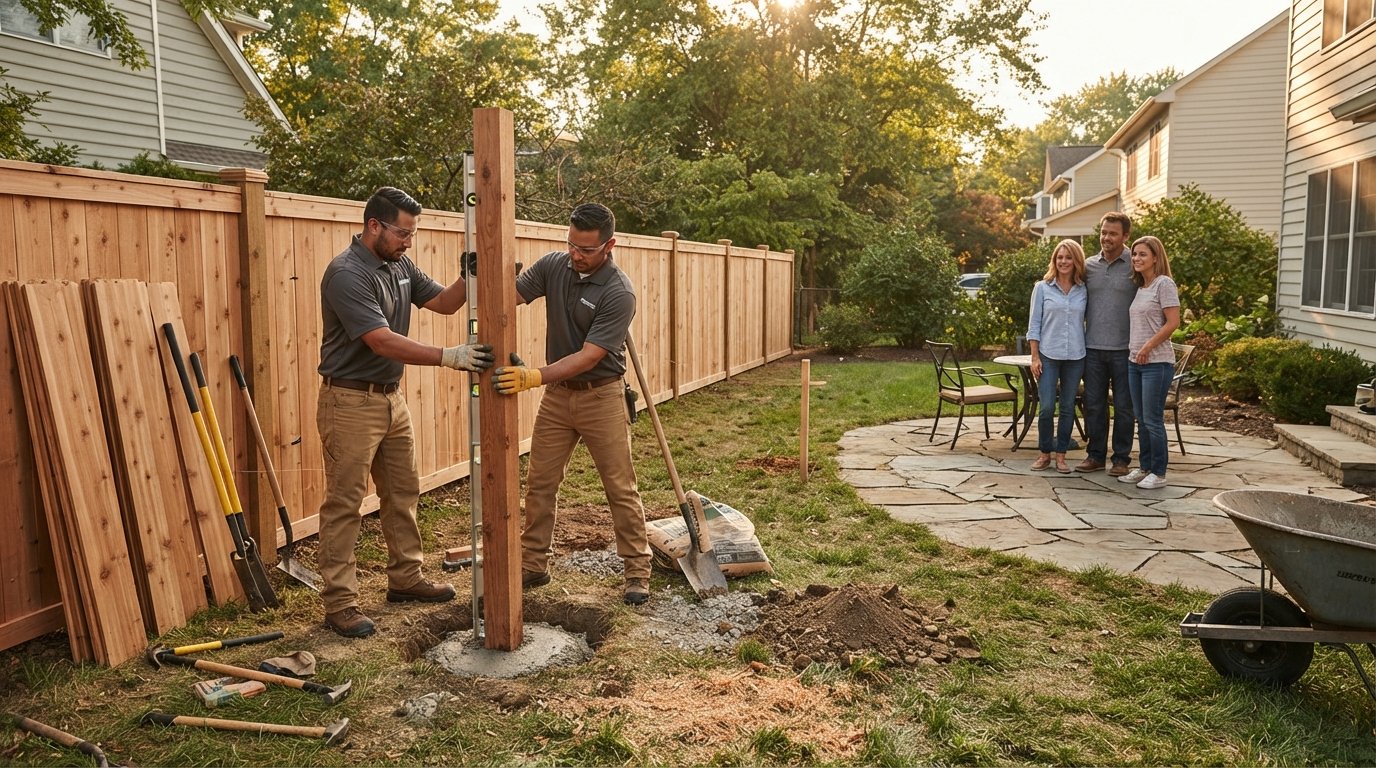
Fence Installation Options: Choose the Right Professional
Compare fence installation options and learn how to choose the right professional, from materials and hiring methods to red flags and quotes.
By Peter Hubert
Learn more about Fence and Gate Installation for guides, costs, and what to expect.
Compare Fence and Gate Installation Pros Near You

Enter your ZIP code to compare top-rated local professionals and request free quotes.
Your property line deserves more than a rushed decision. A fence shapes privacy, security, curb appeal, and even resale value, yet many homeowners pick a contractor based on a single quote and a friendly handshake. The result is often a wobbly gate, a sagging post line, or a dispute over property boundaries that costs thousands to fix. Choosing the right professional starts with understanding your fence installation options, then matching them to your soil, climate, budget, and long-term plans.
This guide walks through the major fence materials, the pros and cons of hiring methods, the questions that expose unqualified bidders, and the red flags that signal trouble ahead. Whether you are enclosing a backyard for a new puppy or replacing a storm-damaged privacy fence, the goal is the same: a straight, sturdy, code-compliant fence installed by someone who stands behind the work.
Start With Material: Your First Real Decision
Material choice drives cost, maintenance, lifespan, and the installation expertise required. A contractor who is excellent with chain-link may rarely touch cedar, and a mason who builds beautiful brick columns may not handle composite panels. Before you call anyone, decide which category fits your property and lifestyle.
Wood remains the classic American fence. Cedar and pressure-treated pine dominate because they are affordable, easy to repair, and simple to stain or paint. They offer natural texture and can be built tall enough for real privacy. The trade-off is maintenance: without sealing every few years, wood warps, grays, and invites termites in humid regions.
Vinyl and composite fences have grown rapidly in popularity. They resist rot, insects, and fading, and most need nothing more than an occasional rinse. The upfront price runs higher than wood, and cheap vinyl can crack in extreme cold. Composite blends wood fiber and plastic, mimicking timber while adding durability.
- Wood (cedar, pine): Budget-friendly, classic look, needs periodic sealing.
- Vinyl: Low maintenance, long lifespan, higher upfront cost.
- Composite: Wood appearance with plastic durability, mid-to-high price.
- Aluminum and steel: Strong, sleek, ideal for pools and security, can rust if poorly coated.
- Chain-link: Cheapest per foot, best for pets and boundaries, limited privacy.
- Masonry (brick, stone): Premium look and permanence, requires skilled masons and permits.
Each material also demands different foundations. Wood and vinyl typically sit on concrete-set posts; masonry needs footings engineered for weight; metal often uses smaller footings but requires precise alignment. If you live on a slope or in an area with expansive clay soil, the foundation plan matters as much as the panels themselves. A contractor who skips soil assessment is gambling with your fence's lifespan.
Climate adds another layer. Coastal salt air corrodes metal fasteners, so stainless steel or hot-dipped galvanized hardware is essential. Desert heat can warp low-grade vinyl. Freeze-thaw cycles heave posts that were not set below the frost line. When you review bids, ask how the contractor plans to handle your specific conditions, not just how many linear feet they will install.
Understanding Your Contractor Hiring Options
Once you know the material, the next decision is who installs it. Homeowners generally choose among three paths: a general contractor, a dedicated fence company, or an independent handyman. Each carries different risk, cost, and accountability.
A general contractor is useful when fencing is part of a larger project, such as a full exterior renovation or landscaping overhaul. They coordinate trades, pull permits, and carry insurance, but they often subcontract the fence itself. That adds a layer of markup and, occasionally, a layer of confusion about who warranties the work. A dedicated fence company lives and breathes fencing. They own the right equipment, stock common materials, and can usually install faster. Their pricing is often competitive because fencing is their core business, not a side job.
A handyman can be the cheapest option for small repairs or short runs, but many are not licensed or insured for structural work. A fence is a series of posts under constant load from wind and soil movement. One improperly set post can pull an entire section out of alignment. Saving a few hundred dollars on labor can cost thousands in repairs within two years.
For homeowners who want competitive bids without calling a dozen companies, a lead generation platform streamlines the process. USremodel connects homeowners with independent local contractors across remodeling, repair, and exterior services. You submit your project details once, then receive multiple customized quotes, which makes comparing credentials and pricing far easier than chasing individual companies. For a broader look at how exterior upgrades fit together, see our guide on exterior siding options for remodeling.
What to Verify Before You Sign Anything
Credentials separate professionals from pretenders. Ask every bidder for the same documents, and do not accept verbal assurances. A legitimate fence contractor should provide proof of licensing where required, general liability insurance, and workers' compensation coverage. If a worker is injured on your property and the company lacks workers' comp, you could face liability.
Permits are another checkpoint. Many municipalities limit fence height, require setbacks from property lines, and regulate materials near pools or easements. A professional will know local code, pull the permit, and schedule inspections. A contractor who suggests skipping the permit to save time is handing you a future problem: fines, forced removal, or a failed home sale inspection.
Finally, verify the business itself. Check online reviews across multiple platforms, ask for two or three local references from the past year, and confirm the company's physical address. A contractor with only a cell phone number and a magnetic sign on a truck may vanish before the warranty period ends. Established companies have a reputation to protect and a process for handling callbacks.
Comparing Quotes Apples to Apples
Three quotes mean nothing if each one describes a different project. The cheapest bid often excludes post concrete, gate hardware, old fence removal, or permit fees. Ask each contractor to itemize materials, labor, disposal, and any extras. That way you can see whether the low bid is genuinely lower or just incomplete.
Ask about post depth and spacing, concrete type, fastener material, and gate construction. A quality fence uses posts set at least two feet deep (deeper in cold climates), spaced no more than eight feet apart, and secured with galvanized or stainless fasteners. Gates should have a diagonal brace or steel frame to prevent sagging. If a bidder cannot explain these details, they likely follow shortcuts.
Warranty terms also vary widely. A one-year workmanship warranty is common; five years or more signals confidence. Ask whether the warranty covers labor, materials, or both, and whether it transfers if you sell the home. Get it in writing. Verbal promises disappear when the crew drives away.
Payment schedules deserve scrutiny. A small deposit to reserve materials is normal. Paying half or more upfront is not. A safe structure is a modest deposit, a progress payment after posts are set, and final payment only after you walk the fence line and test every gate. Never pay in cash without a receipt, and never pay the full balance before the final inspection.
Red Flags That Should End the Conversation
Some warning signs are subtle; others are obvious. Any contractor who pressures you to decide on the spot, offers a cash-only discount, or refuses to put terms in writing is not worth your money. Door-to-door solicitors claiming leftover materials from a neighbor's job are almost always unlicensed.
Watch for bids that are dramatically lower than the rest. Fencing has real material costs, and a bid that undercuts everyone by 40 percent usually means thinner posts, less concrete, or skipped permits. Also be wary of contractors who cannot provide a certificate of insurance directly from the insurer, who ask you to pull the permit yourself, or who demand full payment before delivery.
Communication matters too. If a contractor is slow to return calls during the sales phase, imagine how responsive they will be when a gate sags six months later. Professional outfits answer questions, provide documentation promptly, and set realistic timelines. They also schedule a pre-construction walkthrough to mark utilities and confirm the layout.
Coordinating Fencing With a Larger Remodel
Fencing rarely happens in isolation. It often follows a deck build, a landscaping refresh, or an exterior painting project. Sequencing matters: install the fence after heavy equipment has finished grading and trenching, but before delicate plantings go in. If you are planning multiple exterior upgrades, a single trusted resource can simplify scheduling.
For homeowners tackling broader improvements, 180 Remodel connects homeowners with professional contractors for roofing, windows, flooring, painting, and more. Coordinating those trades through one point of contact reduces the chance of a fence crew arriving while the deck is still under construction.
Also consider how fencing interacts with other systems. Irrigation lines, landscape lighting, and drainage swales often run along property lines. A contractor who digs post holes without checking for these can sever a sprinkler main or disrupt drainage. Marking utilities is free in most areas, and calling 811 before digging is required in many states. A professional will handle that step; an amateur will not.
Making the Final Choice
The right professional is not always the cheapest or the fastest. It is the one who asks about your soil, explains code requirements, provides proof of insurance, and offers a written warranty. It is the one who shows up when promised and leaves a clean site. That combination of competence and reliability protects your investment for decades.
Start by defining your material and budget, then gather at least three itemized quotes from vetted contractors. Compare not just the bottom line but the specifications, warranties, and payment terms. Check references, verify credentials, and trust your instincts about communication. A fence is a long-term structure, and the installation experience should feel as solid as the finished product.
When you are ready to move forward, request multiple free quotes from local fencing and exterior professionals. The few minutes spent comparing options can save you thousands and deliver a boundary line you are proud to show off.