
Emergency Roof Leak: What to Do Before Help Arrives
Facing an emergency roof leak? Call (833)-700-4293 for fast contractor connections and follow these steps to contain damage, document losses, and protect your claim.
By Jackson Sawyer
Learn more about Roof Repair or Maintenance for guides, costs, and what to expect.
Compare Roof Repair or Maintenance Pros Near You

Enter your ZIP code to compare top-rated local professionals and request free quotes.
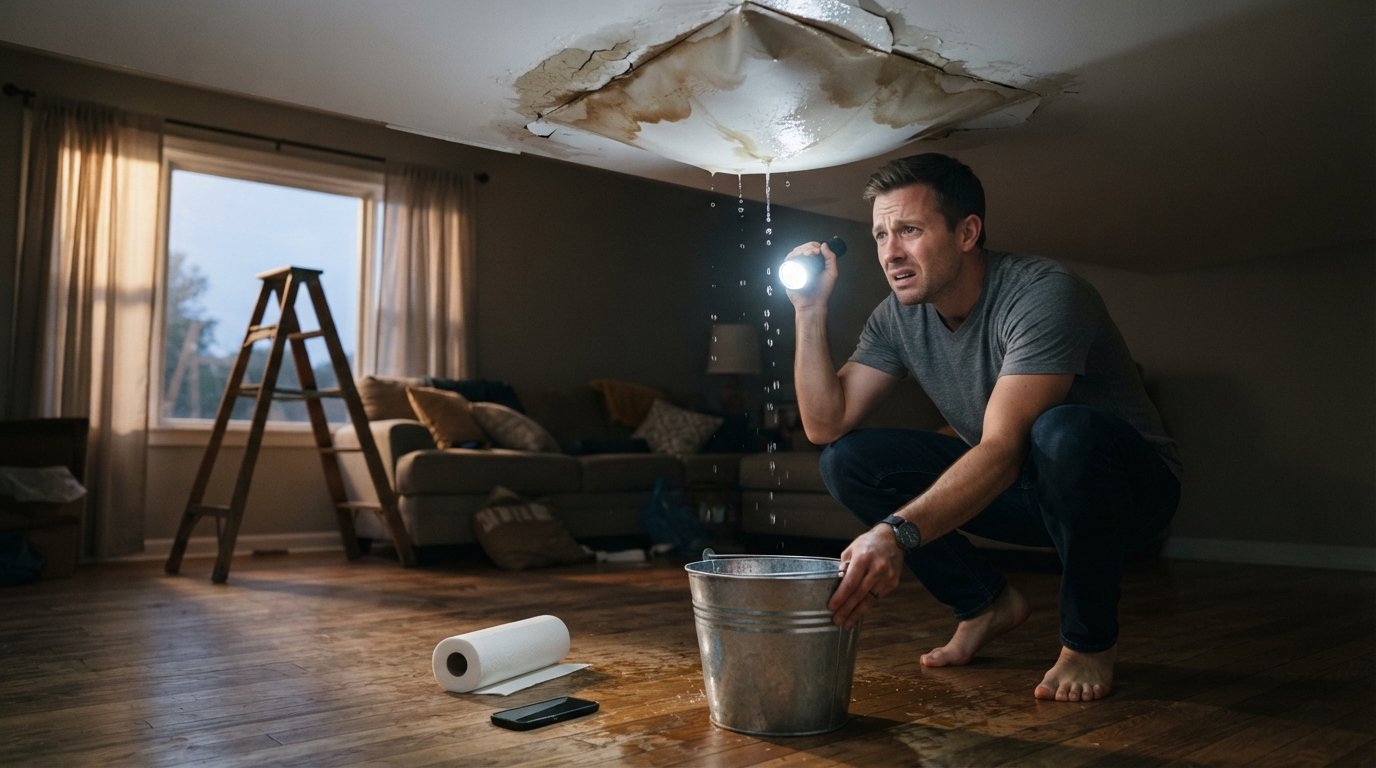
Water is dripping through your ceiling, the stain is spreading, and every minute feels like an hour. An active roof leak is one of the most stressful emergencies a homeowner can face, but the actions you take in the first 30 to 60 minutes can mean the difference between a manageable repair and a catastrophic insurance claim. This guide walks you through exactly what to do before professional help arrives, from safe containment strategies that protect your home (and your warranty) to documentation tactics that strengthen your insurance claim. Whether the leak is a slow seep or a steady pour, stay calm, act methodically, and let this step-by-step playbook guide you through the chaos.
Immediate Safety First: Protect People Before Property
Before you grab a bucket or climb a ladder, your first priority is the safety of everyone in the home. Water and electricity are a dangerous combination, and a roof leak can quickly compromise your home's electrical system without any visible warning. If you see water pooling near light fixtures, outlets, or your electrical panel, do not enter the room. Instead, shut off power to the affected area at your circuit breaker panel, but only if you can reach the panel without walking through standing water. If the panel itself is wet or sparking, evacuate the home and call an electrician or emergency services immediately.
Once electrical hazards are addressed, consider the structural risks. Sagging ceilings, bulging drywall, and cracks that appear suddenly are signs that water has accumulated and the ceiling may be ready to collapse. Keep family members and pets out of the affected rooms, and remove valuables only if it is safe to do so quickly. If the ceiling is visibly sagging, do not puncture it yourself, as this can cause a sudden and dangerous collapse. Instead, place a bucket or tub beneath the sag and call a professional immediately. Remember that your safety and the safety of your family always outweigh any furniture or flooring that might get damaged.
Finally, think about slip hazards. Water on hard floors, tile, or stairs creates an invisible danger, especially for children and older adults. Lay down towels or non-slip mats in walking paths, and if the leak is near a staircase, block access to that area until the water is cleaned up. These first few minutes of caution set the stage for a safer, more controlled response to the emergency.
Contain the Leak with Temporary Measures That Do Not Void Warranties
Once the immediate safety of your household is secured, you can move on to containing the water. The goal here is not to fix the roof, it is to minimize damage to your home's interior while you wait for professional help. Start by placing buckets, large pots, or plastic storage bins under the drip points. If the leak is spreading across the ceiling, you may need multiple containers. To reduce splashing, place a towel inside the bucket or line it with a plastic bag, which helps muffle the sound and keeps water from spraying onto walls and floors.
Next, protect your belongings. Move furniture, electronics, and rugs out of the affected area if it is safe to do so. If moving large items is not possible, cover them with plastic sheeting or waterproof tarps. For water that has already reached the floor, use towels, mops, and a wet/dry vacuum to remove standing water as quickly as possible. This step is critical because standing water can warp hardwood floors, stain carpets, and promote mold growth within 24 to 48 hours. Open windows and use fans to increase ventilation, which helps dry the area and reduce humidity.
Many homeowners wonder if they should climb onto the roof to apply a temporary patch. The short answer is: only if you can do so safely and without voiding your roofing warranty. Most roofing manufacturers require that any repairs, even temporary ones, be performed by a licensed professional to keep the warranty valid. Walking on a wet, damaged roof is extremely dangerous and can cause further damage to shingles or flashing. If you have a second-story window that opens onto the roof and you can safely reach the leak source without stepping on damaged areas, you might consider placing a tarp over the affected section. However, for most homeowners, the safest approach is to stay off the roof entirely and let a professional handle any exterior work.
Here are the key temporary containment steps to follow while you wait for help:
- Place buckets or containers under drips and line them with towels to reduce splashing.
- Move or cover furniture and electronics with plastic sheeting.
- Use towels and a wet/dry vacuum to remove standing water from floors.
- Increase ventilation with fans and open windows to slow mold growth.
- Avoid climbing onto the roof unless you can do so safely and without voiding your warranty.
After you have contained the water, take a moment to check for signs that the leak has reached insulation or electrical systems. Water-soaked insulation loses its effectiveness and can become a breeding ground for mold. If you notice sagging drywall or a soft spot in the ceiling, the insulation is likely saturated. In that case, do not attempt to remove it yourself, as it may be contaminated or hiding electrical wires. Similarly, if you see water staining around light fixtures or hear buzzing or crackling sounds, turn off the power to that circuit and call an electrician. These signs indicate that the leak has moved beyond a simple drip and requires immediate professional attention.
Document the Damage for Your Insurance Adjuster
Before you clean up or throw anything away, document everything. Your insurance adjuster will rely on photos and videos to assess the extent of the damage and process your claim. Grab your smartphone and take clear, well-lit photos of the leak itself, the water stains on ceilings and walls, and any damaged belongings. Capture wide shots that show the context of the room, as well as close-ups of specific damage. If water is actively dripping, take a short video to show the severity. Do not delete any photos or videos, even if they seem redundant, as they may be useful later.
In addition to visual evidence, create a written inventory of damaged items. List each item, its approximate age, and its estimated value. If you have receipts or photos of the items before the damage, gather them now. For furniture and electronics, note the brand and model number if possible. This inventory will help your adjuster calculate the payout for personal property. Also, keep a record of any temporary repairs you make, including receipts for materials like tarps, buckets, or fans. Some policies reimburse homeowners for reasonable expenses incurred to prevent further damage, so keep every receipt.
Timing matters for insurance claims. Contact your insurance company as soon as you have contained the immediate leak to report the damage and start the claims process. Most policies require you to report damage promptly, and delays can complicate your claim. While you wait for the adjuster, do not make permanent repairs or throw away damaged materials unless they pose a health hazard. The adjuster may want to inspect the damage firsthand. If you must discard something for safety reasons, photograph it first and keep a small sample if possible.
Understanding when a leak becomes an insurance claim versus a simple repair is important. Generally, if the damage exceeds your deductible or if the leak is caused by a covered peril (such as a storm, fallen tree, or sudden pipe burst), it is worth filing a claim. However, if the leak is due to neglected maintenance, such as worn flashing or missing shingles, your insurer may deny the claim. Review your policy and speak with your agent to understand what is covered. For leaks related to plumbing systems, our guide on pipe leak repair explains how to distinguish between sudden emergencies and maintenance issues that may not be covered.
Find Emergency Roofing Contractors Quickly
Once the immediate danger has passed and the damage is documented, your next priority is to get a professional on the roof. Emergency roofing contractors specialize in rapid response and temporary repairs, and they can often arrive within hours. Start by calling roofing companies in your area that advertise 24/7 emergency services. If you do not have a regular roofer, ask neighbors, friends, or your insurance agent for recommendations. When you call, be ready to describe the leak, its location, and any visible damage. Ask about their availability, response time, and whether they can provide a temporary fix to prevent further water intrusion.
Before you hire anyone, verify their credentials. A legitimate emergency roofer should have a valid license, insurance, and a physical business address. Ask for their license number and verify it with your state's contractor licensing board. Also, request a written estimate for both the temporary repair and the permanent fix. Be wary of contractors who demand large upfront payments in cash or who pressure you to sign a contract immediately. Reputable professionals will give you a clear scope of work and a reasonable timeline.
If you are unsure where to start, a directory of pre-vetted contractors can save you time and stress. PlanRemodel is a comprehensive online resource that connects homeowners with qualified contractors for roofing and other home improvement projects. Their directory includes detailed service listings and educational articles, making it easier to find a trusted professional in your area. Using a vetted network reduces the risk of hiring an unqualified contractor during a stressful emergency.
When the contractor arrives, walk them through the damage and share your documentation. Ask them to explain the cause of the leak and the recommended repair strategy. If the repair is extensive, they may need to coordinate with your insurance adjuster. Keep a record of all communication, including emails, text messages, and receipts. This paper trail will be valuable if you need to follow up on the claim or warranty work later.
Prevent Future Leaks with Proactive Maintenance
Once the emergency is over and the repairs are complete, take steps to prevent future leaks. Regular roof inspections are your best defense. Schedule a professional inspection at least once a year, and after any major storm. Inspectors can identify loose shingles, damaged flashing, clogged gutters, and other issues before they become leaks. If you have trees near your roof, trim branches to prevent them from scraping shingles and to reduce the risk of falling limbs during storms.
Keep your gutters clean. Clogged gutters can cause water to back up under shingles and into your home, leading to leaks that are often mistaken for roof failures. Clean gutters at least twice a year, and consider installing gutter guards to reduce debris buildup. Also, check your attic regularly for signs of moisture, such as damp insulation, water stains on rafters, or musty odors. Catching a small leak early can save you thousands of dollars in repairs.
Finally, review your homeowner's insurance policy annually to ensure you have adequate coverage for roof damage. Some policies have separate deductibles for wind and hail damage, and older roofs may be depreciated. Understanding your coverage before an emergency helps you respond confidently and avoid surprises during the claims process. With the right preparation and a reliable contractor network, you can protect your home from the worst effects of an emergency roof leak.
An emergency roof leak is a test of both your nerves and your preparation. By following these steps, you can minimize damage, document your losses, and get professional help quickly. Remember that your safety comes first, and that a calm, methodical response is your best tool in a crisis. When you need to connect with a trusted roofing professional, USremodel can help you find multiple quotes from qualified contractors in your area, making it easier to get your home back to normal.
Learn more about Roof Repair or Maintenance for guides, costs, and what to expect.
Compare Roof Repair or Maintenance Pros Near You
Enter your ZIP code to compare top-rated local professionals and request free quotes.