
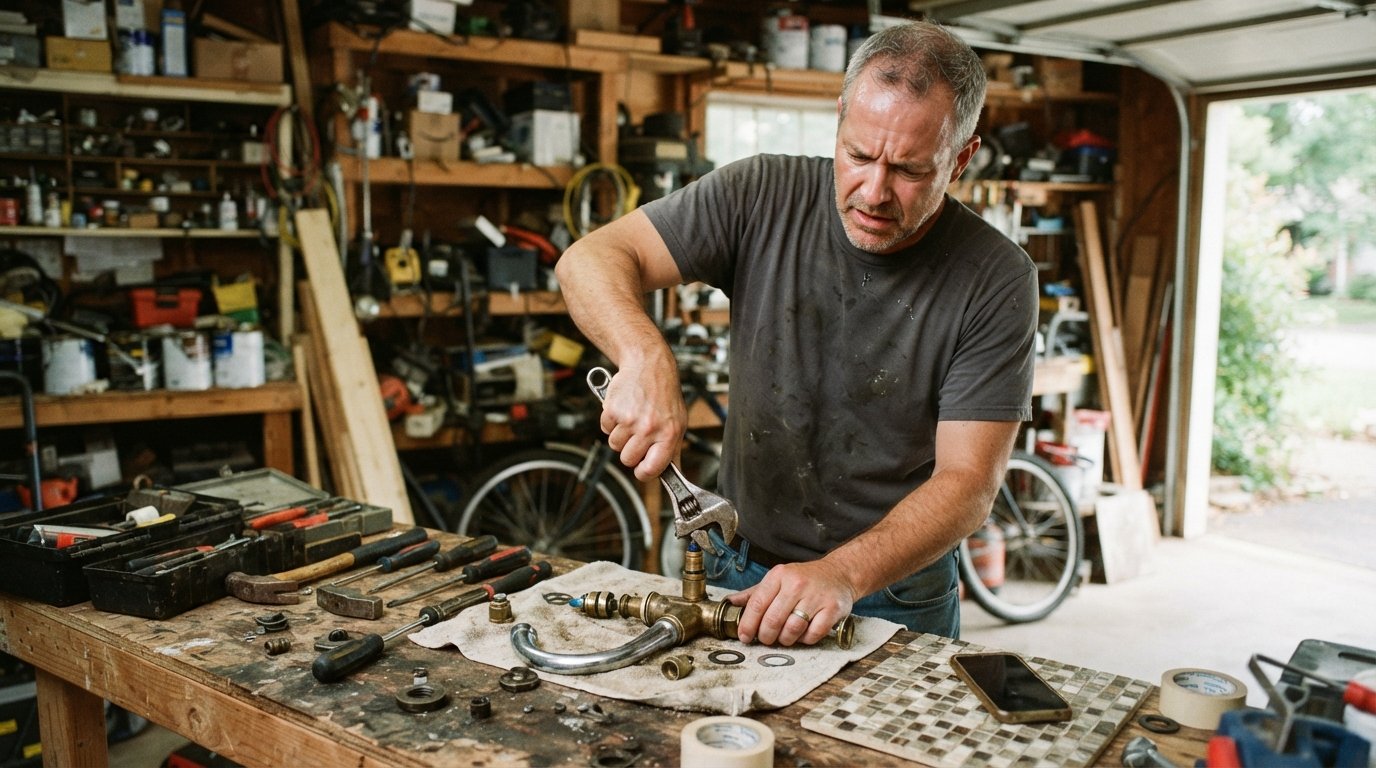
DIY vs Professional Home Repairs: When to Hire a Pro
DIY saves money until a mistake costs thousands. Call (833)-700-4293 to compare local pros and avoid surprise bills. Get your free quote today.

By Alexia Mabel
Learn more about Handyman for guides, costs, and what to expect.
Compare Handyman Pros Near You

Enter your ZIP code to compare top-rated local professionals and request free quotes.
Your Saturday morning starts with a dripping faucet and ends with a flooded cabinet because a washer went in backward. Or maybe you are staring at a hairline crack in the drywall that seems to be spreading. Every homeowner faces a moment of truth: grab the toolbox or grab the phone. The decision between DIY vs professional home repairs when to hire a pro is not about pride or saving face. It is about protecting your largest investment, your safety, and your wallet from expensive mistakes. This guide cuts through the noise with practical frameworks, real cost comparisons, and the permit rules you cannot ignore.
The Real Cost of Getting It Wrong: DIY vs Professional Home Repairs
The appeal of DIY is obvious. A YouTube tutorial is free, and a pro costs money. But the true cost of a repair is not just the materials or the labor invoice. It is the total expense of doing it right the first time versus the cost of fixing a botched job later. When you compare DIY vs professional home repairs, you must factor in hidden costs like wasted materials, tool purchases, permit fees, and the potential for water or structural damage that can run into the thousands.
Consider a simple tile job in a bathroom. A DIYer might spend $300 on tile and thinset. A professional might charge $1,200 in labor. On paper, DIY saves $900. But if the waterproofing membrane is installed incorrectly, water seeps behind the tile, rots the subfloor, and creates mold. The repair bill for that mistake often exceeds $5,000. Professional labor includes liability insurance and a warranty, which means the cost of a mistake is transferred away from you. That peace of mind has a measurable dollar value.
Beyond direct repair costs, insurance and resale value play a massive role. Unpermitted work discovered during a home inspection can derail a sale or force you to tear out walls to expose the work for inspection. Many homeowner insurance policies exclude damage caused by faulty workmanship. If your DIY plumbing repair leaks and ruins your ceiling, the insurer may deny the claim because the work was not done by a licensed professional. When weighing DIY vs professional home repairs, the question is not just can I do this, but can I afford the consequences if I get it wrong.
Projects That Are Safe for DIY (and Where to Draw the Line)
Not every repair requires a license. Homeowners can safely handle cosmetic updates and basic maintenance that do not involve the home's structural, electrical, or plumbing systems. These tasks build confidence and save money without putting the house at risk. However, even within DIY-friendly projects, there is a line. Painting a wall is safe; painting over mold without fixing the moisture source is a disaster waiting to happen.
The following tasks are generally safe for a confident homeowner with the right tools and a willingness to follow instructions carefully:
- Interior painting and trim work: Cosmetic, reversible, and low risk if you prep properly.
- Changing light bulbs, switch plates, and fixture covers: Simple swaps that do not require new wiring.
- Caulking and weatherstripping: Sealing drafts and preventing moisture intrusion around windows and doors.
- Replacing toilet seats, showerheads, and faucet aerators: Basic swaps that do not involve the water supply lines.
- Landscaping and yard maintenance: Planting, mulching, and basic pruning away from the foundation.
Even in these cases, preparation is everything. A sloppy paint job can peel, and incorrect caulking can trap moisture. If you are not confident in your ability to prep the surface or follow the manufacturer's cure times, hiring a pro for painting or exterior sealing is often worth the modest cost. The goal is not to avoid all DIY, but to reserve your effort for tasks where a mistake is cosmetic, not catastrophic.
Repairs That Require a Licensed Professional
Certain systems in your home are governed by building codes for a reason. Electrical, plumbing, gas, and structural work can kill or cause fires if done improperly. These are the areas where the DIY vs professional home repairs debate ends. A licensed professional brings code knowledge, specialized tools, and the ability to pull permits. More importantly, they carry insurance and a warranty that protects you from liability.
You should always hire a licensed pro for the following:
- Electrical work beyond swapping a fixture: Adding outlets, replacing a breaker panel, or running new circuits requires a licensed electrician and a permit.
- Plumbing repairs inside walls or under the slab: Replacing a water heater, repairing a sewer line, or rerouting supply lines requires a licensed plumber.
- Gas line installation or repair: Any work on gas appliances or lines is dangerous and legally restricted to licensed professionals.
- Roof repairs and replacement: Fall risk, structural integrity, and warranty requirements make roofing a pro-only job.
- HVAC installation and refrigerant handling: Handling refrigerants and sizing systems requires certification and licensing.
- Structural changes: Removing a wall, adding a beam, or foundation repair requires an engineer and a licensed contractor.
If you are unsure whether a task requires a license, call your local building department. They will tell you what permits are required and what inspections are necessary. For a deeper dive into the specific trade-offs and project examples, see this guide on DIY vs professional home repairs to help you decide. If the job involves a permit, it almost certainly requires a licensed professional to sign off on the work.
Permits, Insurance, and the Hidden Risks of DIY
Permits exist to protect you, your family, and future owners. When you pull a permit, a municipal inspector reviews the work to ensure it meets safety codes. Skipping the permit saves a few hundred dollars upfront but creates a trail of liability. If you sell your home, the buyer's inspector will likely spot unpermitted work. The buyer may demand a discount, or the sale may fall through entirely. In some cases, you may be forced to remove the work and start over.
Insurance is the other silent partner in every home repair. Standard homeowner policies cover sudden and accidental damage, but they typically exclude damage caused by poor workmanship or lack of maintenance. If your DIY electrical job sparks a fire, the insurer may investigate and deny the claim, leaving you responsible for the entire loss. Similarly, if a DIY plumbing repair fails and floods the basement, the water damage claim could be denied if the insurer determines the work was not done by a licensed professional. The few hundred dollars you saved on labor can evaporate in an instant.
Professional contractors carry general liability insurance and workers' compensation. If a worker is injured on your property, their insurance covers it. If you hire an uninsured handyman and they fall off a ladder, your homeowner policy might be on the hook. Always verify a contractor's license and insurance before work begins. This is not red tape; it is the barrier between you and financial ruin.
Cost Comparison: DIY Materials vs Professional Labor and Warranties
A fair cost comparison must look beyond the sticker price of materials. DIY projects often require tool purchases, material waste from mistakes, and your time. Professional projects include labor, overhead, insurance, and a warranty. The breakeven point depends on the project's complexity and your skill level.
Let's look at a common project: installing a new bathroom vanity. The DIY route might cost $400 for the vanity, $50 for plumbing supplies, and $100 for a new saw blade and drill bits. Total: $550. The professional route might cost $1,000 in labor on top of the $400 vanity. Total: $1,400. The DIY savings appear to be $850. But if the DIY installation leaks because the drain was not aligned properly, the repair bill for water damage could be $2,000 or more. The professional's warranty covers the installation, so a leak is their problem, not yours.
Professional labor also buys speed and expertise. A pro can install a vanity in two hours. A DIYer might spend an entire weekend, including multiple trips to the hardware store. If your time is worth $50 per hour, that weekend represents $400 in opportunity cost. When you factor in the value of your time and the risk of rework, the gap between DIY vs professional home repairs narrows significantly. For high-value projects that require permits or specialized tools, the professional often wins on total cost of ownership.
How to Hire the Right Pro and Avoid Surprise Bills
Once you decide to hire a professional, the next challenge is finding a reliable one. The market is full of contractors, and quality varies widely. The best defense against surprise bills and shoddy work is a thorough vetting process. Start by getting multiple quotes, not just one. A single quote gives you no context. Three quotes reveal the market rate and expose outliers who are either too cheap or too expensive.
For a streamlined way to connect with vetted local contractors, ContractorHomeQuotes offers a platform where homeowners can request free, customized quotes for their specific project. This service helps you compare multiple offers side by side, ensuring you do not overpay or settle for the first bid. Whether you need a roofer, plumber, or electrician, getting multiple quotes is the single most effective way to protect your budget.
When you have your quotes, verify the following before signing anything:
- License and insurance: Ask for the license number and a certificate of insurance. Verify both with your state licensing board and the insurer.
- Written contract: The contract should detail the scope of work, materials, timeline, payment schedule, and warranty terms.
- Permit responsibility: Clarify who pulls the permit. In most cases, the contractor should pull the permit, and the cost should be included in the bid.
- Payment schedule: Never pay the full amount upfront. A standard schedule is 10 to 30 percent deposit, progress payments, and final payment upon completion and inspection.
- References: Ask for references from similar projects completed in the last year. Call them and ask about timeliness, cleanliness, and whether the final bill matched the quote.
Following these steps reduces the risk of hiring a bad contractor and ensures you have recourse if something goes wrong. The goal is to make the professional route as predictable and safe as possible, so the premium you pay for labor is justified by the quality and protection you receive.
When to Call a Pro Immediately
Some situations do not allow time for comparison shopping or DIY research. Active water leaks, electrical burning smells, gas odors, and structural cracks are emergencies. In these cases, call a licensed professional immediately. Attempting a DIY fix on an active leak can cause thousands of dollars in additional damage in minutes. A gas leak is a life safety issue. An electrical burning smell indicates a fire risk. These are not the moments to test your skills.
Emergency repairs often cost more, but the cost of delay is far higher. Keep a list of trusted emergency contacts for plumbing, electrical, and roofing before you need them. If you do not have a list, search for 24-hour licensed professionals in your area and save their numbers. When an emergency strikes, you will not have time to vet a contractor from scratch. Having a pre-vetted contact saves time and reduces the risk of hiring a fly-by-night operator in a moment of panic.
For non-emergency projects that are beyond your skill level, plan ahead. Use a platform like USremodel to request quotes, compare contractors, and schedule the work on your timeline. Planning turns a stressful repair into a manageable project with a predictable budget and a reliable outcome.
Making the Decision: A Practical Framework
To make the DIY vs professional home repairs decision quickly, use a simple three-question framework. First, does the task require a permit or a license? If yes, hire a pro. Second, does a mistake risk water, fire, gas, or structural damage? If yes, hire a pro. Third, do you have the tools, time, and confidence to do the job correctly the first time? If any answer is no, hire a pro. If all answers are no, DIY is a reasonable option.
This framework removes emotion from the decision. It prevents you from overestimating your abilities or underestimating the risk. It also helps you justify the cost of a professional to yourself and your family. The money you spend on a licensed contractor is not lost; it is invested in the safety, value, and longevity of your home. For projects that pass the DIY test, you save money and gain satisfaction. For projects that fail the test, you protect your home and your peace of mind.
Every home repair is a trade-off between cost, risk, and time. The smartest homeowners know their limits and build a team of trusted professionals before problems arise. Whether you tackle a weekend painting project or hire a licensed electrician for a panel upgrade, make the choice that keeps your home safe and your budget intact. When in doubt, get a quote. The information is free, and it often clarifies the decision faster than any online tutorial. Call (833)-700-4293 to speak with a home improvement advisor and get connected with local pros who can handle the jobs you should not.
Learn more about Handyman for guides, costs, and what to expect.
Compare Handyman Pros Near You
Enter your ZIP code to compare top-rated local professionals and request free quotes.