
Bathroom Remodel for Aging in Place: Safety Meets Style
Discover how a bathroom remodel for aging in place can boost safety, comfort, and home value while letting you stay independent.
By Alexia Mabel
Learn more about Bathroom Remodel for guides, costs, and what to expect.
Compare Bathroom Remodel Pros Near You

Enter your ZIP code to compare top-rated local professionals and request free quotes.
When you think about the future of your home, the bathroom often becomes the first place where safety and accessibility start to matter. A bathroom remodel for aging in place is not just about installing grab bars; it is about creating a space that supports your independence, comfort, and dignity for decades to come. Whether you are planning for yourself or for an aging parent, the decisions you make today can mean the difference between a home that feels restrictive and one that adapts gracefully to your changing needs.
Many homeowners hesitate to start this kind of project because they worry about cost, disruption, or losing the aesthetic they love. But with thoughtful planning and the right professional guidance, you can design a bathroom that is both universally beautiful and exceptionally functional. In fact, a well-executed aging in place remodel often becomes one of the most rewarding investments you can make in your home, improving daily life while also boosting resale value.
Why Aging in Place Bathroom Design Matters More Than Ever
The concept of aging in place has moved from a niche idea to a mainstream priority. According to the U.S. Census Bureau, nearly 90% of adults over 50 express a desire to stay in their own homes as they age. Yet most existing bathrooms are not designed with that goal in mind. Slippery floors, high tub thresholds, and hard-to-reach storage create daily hazards that can lead to serious falls.
Falls are the leading cause of injury among older adults, and the bathroom is one of the most dangerous rooms in the house. A single fall can result in a hip fracture, a hospital stay, or a permanent loss of independence. By investing in a bathroom remodel for aging in place, you are not just upgrading fixtures; you are building a protective barrier against these risks. This proactive approach allows you to maintain your lifestyle without the fear of an accident every time you step onto wet tile.
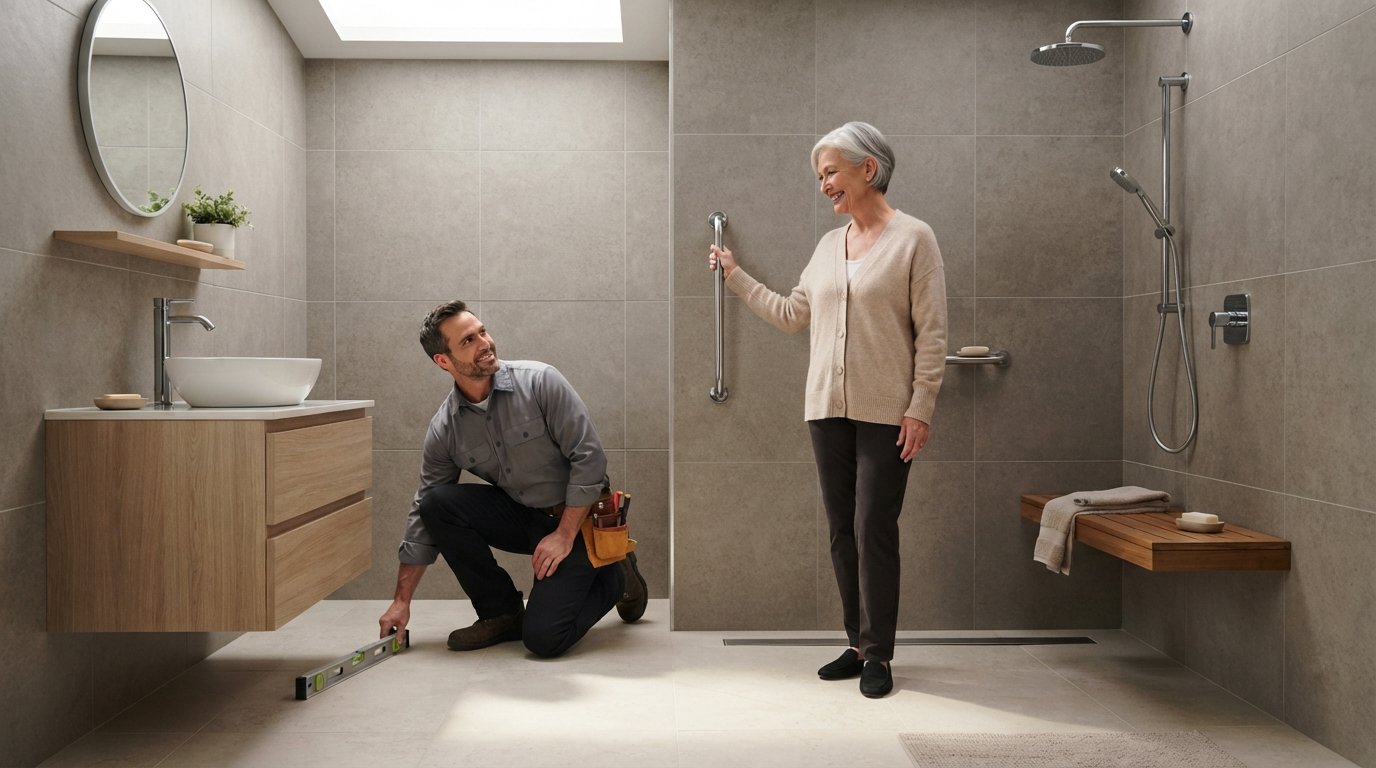
Moreover, the design philosophy behind aging in place has evolved. It is no longer about clinical, institutional-looking spaces. Today's universal design blends accessibility with warm materials, natural lighting, and contemporary finishes. You can have a curbless shower with a built-in bench that looks like it belongs in a luxury spa, or a vanity with knee space that still feels like a stylish centerpiece. The goal is to create a room that serves everyone in the family, from young children to grandparents, without calling attention to any particular need.
Key Safety Features to Prioritize in Your Remodel
Before you pick out tiles or fixtures, you need to establish a clear safety foundation. While every home is unique, certain features are non-negotiable for a successful aging in place bathroom. Here are the core elements to discuss with your contractor:
- Curbless or low-threshold showers: Eliminating the step-over barrier reduces trip hazards and allows for wheelchair or walker access if needed.
- Comfort-height toilets: These are approximately 17 to 19 inches from floor to seat, which is several inches taller than standard models, making sitting down and standing up much easier on the knees.
- Grab bars in strategic locations: Install them near the toilet, inside the shower, and at the entrance. Choose models that coordinate with your fixtures and can support at least 250 pounds.
- Non-slip flooring: Use textured tile, luxury vinyl, or treated stone that provides traction even when wet.
- Handheld shower wand: A flexible showerhead allows for seated showering and makes it easier to clean the shower or bathe a loved one.
These features are not just for those with existing mobility issues. They are smart investments that prevent future problems. For example, installing grab bars during a remodel costs very little compared to the expense and stress of modifying a bathroom after an injury has already occurred. Similarly, choosing a curbless shower during a full renovation is far more economical than trying to lower the floor later.
Another layer of safety involves lighting. As we age, our eyes need more light to see clearly, especially at night. Plan for layered lighting that includes ambient overhead lights, task lighting near the mirror, and a dim night light that illuminates the path from the bed to the bathroom. Motion-sensor lights are an excellent addition because they switch on automatically, preventing the fumbling for a switch in the dark.
Design Strategies for Comfort and Accessibility
Once your safety essentials are in place, you can turn your attention to the comfort and usability of the space. The layout of your bathroom should minimize the distance between key fixtures. For instance, placing the toilet and sink close together reduces the amount of walking needed, which is especially helpful for someone using a walker or wheelchair.
Consider the turning radius. A standard wheelchair requires a 60-inch circle to turn around comfortably. Even if you do not currently use a wheelchair, designing for future accessibility is wise. If you have a larger bathroom, you can easily incorporate this clearance. For smaller spaces, you might need to be creative, such as using a pocket door instead of a traditional swinging door to free up valuable floor area.
Storage is another critical element that is often overlooked. Reachable shelving and cabinets should be installed between 15 and 48 inches from the floor, which is the comfortable range for most people, whether standing or seated. Pull-out drawers under the sink are far more convenient than deep cabinets where items get lost in the back. For the shower, built-in niches or caddies placed at chest height prevent the need to bend over to retrieve shampoo bottles.
When it comes to the shower itself, a built-in bench or fold-down teak seat offers a place to rest while washing. If you plan to be the caregiver for a spouse or parent, a hand-held sprayer with a long hose and a shower chair can make the bathing process easier for both of you. The bench should be placed on the wall opposite the controls, so the bather can sit and adjust the water temperature before getting wet.
Temperature regulation is another subtle but vital aspect. Anti-scald devices, such as pressure-balancing valves or thermostatic mixing valves, prevent sudden bursts of hot water that can cause burns, which is especially important for individuals with reduced sensitivity to heat. Set your water heater to a maximum of 120 degrees Fahrenheit to add another layer of protection.
Budgeting and Planning Your Aging in Place Remodel
One of the biggest concerns homeowners have is the cost. A bathroom remodel for aging in place can range from a modest $10,000 for minor updates to $40,000 or more for a complete gut renovation with high-end materials. The final price depends on the size of your bathroom, the quality of fixtures you choose, and the extent of structural changes, such as widening doorways or reconfiguring plumbing.
To keep costs manageable, start by defining your non-negotiable safety items and your nice-to-have aesthetic upgrades. For example, a curbless shower requires the floor to be sloped correctly, which can be more labor-intensive than a traditional shower pan. However, you might save money in other areas by choosing mid-range tile instead of premium stone. A skilled contractor can help you allocate your budget where it matters most for safety and resale value.
If you are planning a full remodel, it is wise to research typical costs in your area. In our guide on bathroom remodel costs for 2026, we break down the expenses associated with different scope levels, materials, and labor, so you can set realistic expectations before you start. Remember that the most expensive option is not always the best; focus on durability and ease of maintenance.
Another important planning step is to consider how you will manage during the construction period. If this is your only bathroom, you may need to arrange for a portable toilet or plan to stay with family for a few days. Discuss the timeline with your contractor and ask for a detailed schedule. A professional team will also handle permits and inspections, which are crucial for ensuring your new fixtures meet local building codes.
Choosing the Right Contractor for Your Project
The success of your aging in place remodel hinges on the expertise of the contractor you hire. You want someone who understands universal design principles, not just someone who can swing a hammer. Look for a contractor who has completed similar projects and can provide references. Ask them how they handle challenges like uneven floors, old plumbing, or tight spaces.
When you consult with multiple contractors, bring a list of your goals and your pain points. Be clear about your current mobility and any anticipated future needs. A good contractor will listen and offer solutions you might not have considered, such as a trench drain that sits flush with the floor for a completely seamless look. They should also be honest about what is feasible within your budget.
Since USremodel is a lead generation platform, you can use it to connect with vetted, local contractors who specialize in bathroom remodeling. The service allows you to receive multiple quotes from independent professionals, giving you the leverage to compare pricing, timelines, and design approaches. This process not only saves you time but also ensures you are making an informed choice based on transparent bids.
During the selection process, verify that the contractor is licensed and insured. Ask about their warranty on both labor and materials. A reputable professional will stand behind their work. Also, check if they belong to any professional organizations, such as the National Association of Home Builders (NAHB) Certified Aging in Place Specialist (CAPS) program. CAPS certification indicates that the contractor has received specialized training in designing and building accessible living spaces.
Enhancing Aesthetics Without Compromising Function
There is a common myth that an accessible bathroom cannot be stylish. In reality, modern design has embraced accessibility with open arms. Curbless showers are now a staple in high-end homes, celebrated for their clean, seamless look. A walk-in tub can be designed with beautiful tile and a glass enclosure that looks nothing like a medical device. The key is to choose materials and colors that reflect your personal taste while meeting your functional requirements.
For a cohesive look, consider using large-format tiles on the floor and shower walls. Fewer grout lines mean fewer places for mold to grow and easier cleaning. Select tiles with a textured finish or a slip-resistant rating (such as COF of 0.6 or higher) for the floor, but you can use smoother tiles on the walls for a sleek appearance. The color palette should be light and bright to make the space feel larger and to help you see details clearly.
Vanities also offer an opportunity to blend beauty and function. A floating vanity mounted at 34 inches high provides clearance for a wheelchair while also creating a modern, airy feel. Choose a vessel sink that is shallow enough to allow access, or install a sink that is set back from the edge to provide more knee space. Lever handles on faucets are easier to operate than round knobs, and they come in a variety of finishes from brushed nickel to matte black.
Don't forget the mirror. A large, well-lit mirror can open up the room, but you should also consider a tilting or magnifying mirror for grooming tasks. For those who use a wheelchair, a mirror that tilts downward or a separate lower mirror can be invaluable. Backlit mirrors with built-in lighting are a popular choice because they provide even illumination without shadows, which is perfect for applying makeup or shaving.
Future-Proofing Your Investment
Aging in place is not a one-time event; it is an ongoing process. As your needs evolve, so too should your home. When planning your remodel, think about the next 10 to 20 years. Can you easily add a stairlift later if you need one? Is there space for a future elevator or a first-floor bedroom? While you may not need these modifications today, incorporating pre-wiring or structural reinforcements now can save significant money later.
One way to future-proof is to install wiring for smart home devices. Voice-activated controls for lights, fans, and even the shower temperature can be a game-changer for someone with limited hand mobility. Smart sensors can detect falls and alert a caregiver or family member. These technologies are becoming more affordable and user-friendly, and they can be integrated seamlessly into your bathroom design.
Another aspect is ventilation. A high-quality exhaust fan with a humidity sensor helps prevent mold and mildew, which is critical for maintaining indoor air quality, especially for those with respiratory issues. Choose a quiet model with a timer so you don't have to remember to turn it off. Proper ventilation also extends the life of your paint and fixtures by reducing moisture damage.
Finally, think about the resale value of your home. An accessible bathroom is a major selling point, particularly as the population ages. Many homebuyers are looking for homes that can accommodate aging parents or their own future needs. A well-designed aging in place bathroom can set your property apart in a competitive market. Even if you plan to move in a few years, this investment is likely to pay off.
When you are ready to take the next step, companies like 180Remodel provide a network of professionals who specialize in aging in place renovations. Their expertise can help you navigate the design and construction process, ensuring that every detail is tailored to your comfort and safety. By partnering with experienced remodelers, you can transform your bathroom into a sanctuary that supports your independence for years to come.
In conclusion, a bathroom remodel for aging in place is a purposeful investment in your quality of life. It allows you to remain in the home you love, surrounded by memories, while adapting to the physical changes that come with time. With careful planning, a clear budget, and the right professional team, you can achieve a beautiful, safe, and functional bathroom that truly works for you.
Take the first step today by researching local contractors and discussing your vision. Your future self will thank you for the foresight and care you put into every decision, from the type of flooring to the height of the vanity. Aging in place is not about giving up your style; it is about gaining the freedom to enjoy your home without limitations.
Learn more about Bathroom Remodel for guides, costs, and what to expect.
Compare Bathroom Remodel Pros Near You
Enter your ZIP code to compare top-rated local professionals and request free quotes.