
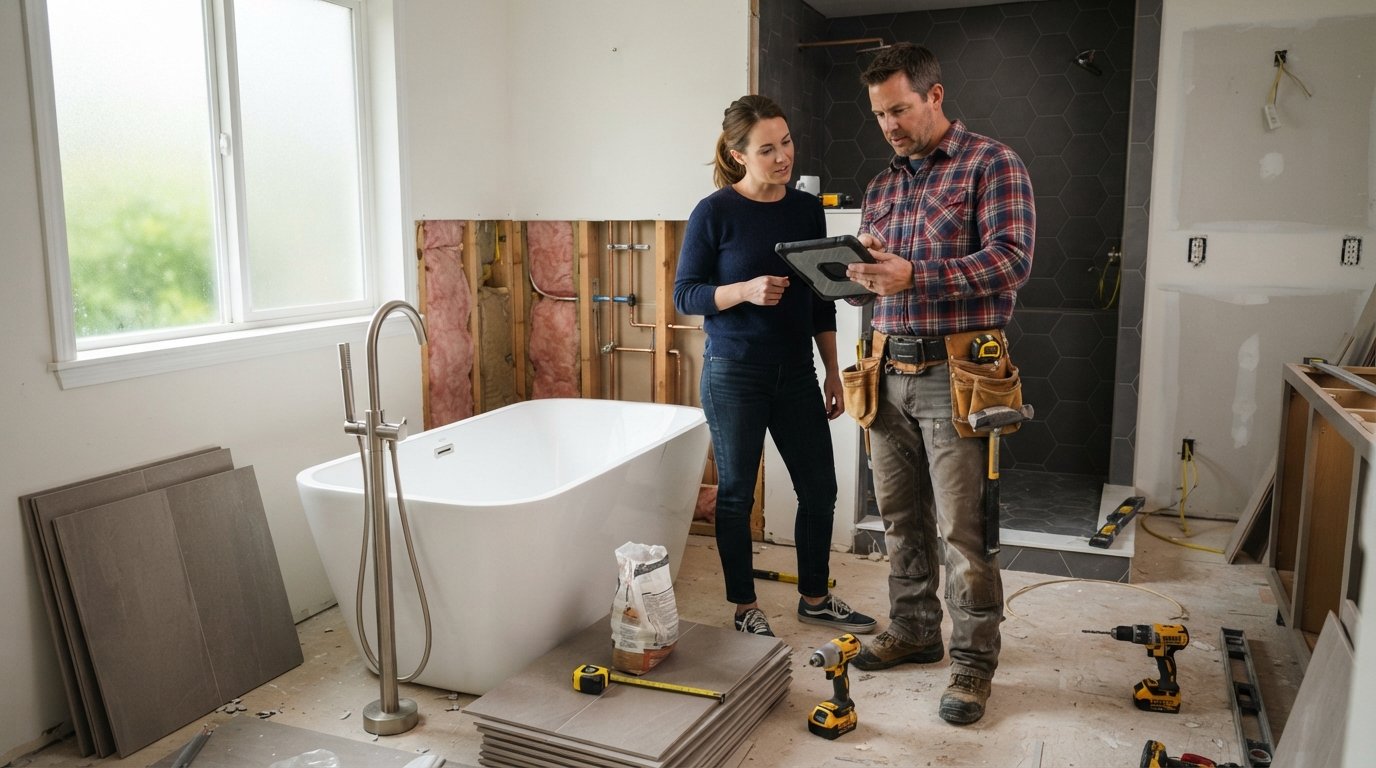
Bathroom Remodel Budget Guide 2026: Realistic Costs
Plan a successful renovation with this bathroom remodel budget guide 2026, covering realistic costs, saving strategies, and smart financing.
By Alexia Mabel
Learn more about Bathroom Remodel for guides, costs, and what to expect.
Compare Bathroom Remodel Pros Near You

Enter your ZIP code to compare top-rated local professionals and request free quotes.
Stepping into a bathroom renovation in 2026 feels different than it did just a few years ago. Prices for materials have shifted, labor availability varies by region, and the features you want may require more planning than you expect. The key to a successful project is not just picking beautiful tile or a freestanding tub; it is building a financial plan that protects you from surprises. A thoughtful approach to budgeting can turn a stressful construction zone into a satisfying update that adds real value to your home and daily life.
This bathroom remodel budget guide 2026 is designed to give you a clear, realistic picture of what you will spend. We will look at national averages, the factors that push costs up or down, and the smart money moves that keep your project on track. Whether you are refreshing a small powder room or completely gutting a master suite, your goal is the same: to make informed decisions before the work begins.
Why Bathroom Remodel Costs Vary So Much
You have likely seen figures ranging from $5,000 to over $50,000 for a bathroom remodel, and that wide gap is not a mistake. The final price of your project depends on several interconnected factors that go far beyond the size of the room. Understanding these variables is the first step in creating a budget that works for your specific situation.
One of the biggest drivers of cost is the scope of work. A simple cosmetic update, such as replacing fixtures, painting, and installing a new vanity, will be significantly cheaper than a full gut renovation that moves plumbing lines and changes the floor plan. If you are keeping the existing layout and the plumbing stack in the same location, you save thousands in labor and materials. Conversely, knocking down walls to expand the space or moving a toilet to a new location involves complex work that requires permits and professional expertise.
Material selection also plays a massive role in your budget. Standard ceramic tiles, builder-grade vanities, and basic chrome fixtures are budget-friendly. On the other hand, natural stone slabs, custom cabinetry, premium rainfall shower systems, and designer faucets can quickly multiply your costs. Additionally, your geographic location influences labor rates. A contractor in a major metropolitan area with a high cost of living will charge more per hour than one in a rural community. To get a sense of what is typical for your area, you can start by exploring local cost data in our guide on bathroom remodel cost guides.
Breaking Down the 2026 Average Budget
So, what is the realistic number for 2026? For a mid-range bathroom remodel, you should expect to invest between $15,000 and $30,000. This range typically covers a full renovation of a standard 5x8-foot or 6x8-foot bathroom, including new tile, fixtures, a vanity, lighting, and fresh paint. This is the sweet spot for many homeowners because it allows for quality materials and professional labor without venturing into luxury territory.
For a smaller powder room or a basic refresh, a budget of $7,000 to $12,000 might be sufficient. This type of project usually involves replacing the vanity, toilet, and lighting, plus cosmetic updates like painting and changing the mirror. On the higher end, a luxury master bathroom remodel can easily exceed $40,000. This price point includes high-end finishes, custom tile work, heated floors, frameless glass showers, and premium soaking tubs. The exact figure you land on will depend on your choices, but having a benchmark helps you set realistic expectations.
Where Your Money Actually Goes
Understanding the breakdown of costs helps you see where you have flexibility and where you should not cut corners. The largest portion of your budget in a full remodel is typically split between labor and materials, but specific percentages can help you plan. Here is a general breakdown of how a $20,000 mid-range budget might be allocated:
- Labor and Installation (40-50%): This is the cost for demolition, plumbing rough-in, electrical work, drywall, tile setting, and final installation. This is the area to protect, as skilled work ensures the job is done right.
- Plumbing Fixtures and Fittings (15-20%): This includes the toilet, sink, faucet, showerhead, and any valves. Choosing quality fixtures here prevents leaks and maintenance issues down the road.
- Cabinetry and Vanity (15-20%): The vanity is often the focal point of the room. Ready-to-assemble options are budget-friendly, while custom-built cabinetry commands a premium.
- Tile and Surfaces (15-20%): This covers flooring, shower walls, and backsplashes. The size, material, and layout pattern of the tile significantly affect both material cost and installation time.
- Lighting, Ventilation, and Extras (5-10%): This includes recessed lights, vanity lights, exhaust fans, mirrors, and accessories like towel bars and robe hooks.
These percentages are not set in stone, but they give you a baseline for how to allocate your funds. If you decide to splurge on high-end tile, you will need to make adjustments in another category, such as choosing a more standard vanity, to keep your total budget intact.
Creating Your Bathroom Remodel Budget Guide for 2026
Building a robust budget is more than picking a single number. It requires a structured plan that anticipates the unexpected. Before you start shopping for tiles or interviewing contractors, take the time to create a detailed financial roadmap. This plan will serve as your decision-making tool throughout the entire process.
Start by defining your goals. Are you remodeling to sell your home, or are you planning to stay for the next decade? If you are preparing to sell, you should focus on mid-range, widely appealing finishes that offer a good return on investment. If this is your forever home, you might prioritize personal comfort and high-end features that you will enjoy for years. This mindset sets the tone for every financial decision you make next.
Next, research and set a total budget number that is comfortable for you. Once you have that number, add a contingency fund of 15-20%. This is not an optional step; it is essential. Even with the most meticulous planning, you may discover hidden water damage behind the walls, outdated electrical wiring that needs to be brought to code, or plumbing pipes that need replacing once they are exposed. Having a financial cushion ensures that these surprises do not halt your project or force you to rack up credit card debt.
Finally, get detailed quotes from multiple contractors. Do not just look at the bottom line; examine what is included in each bid. A lower quote might exclude demolition, hauling, or specific fixtures, which will cost you more later. When you are ready to take this step, platforms like 180Remodel can help you connect with professionals who understand the scope of a full renovation. Ensure that every quote is for the same scope of work so you can compare them accurately.
Smart Ways to Save Money Without Sacrificing Quality
Even with a detailed plan, you will likely be looking for ways to stretch your dollars. The good news is that there are several strategic ways to save money without compromising the integrity of your project. The first rule is to avoid moving major plumbing lines. Keeping the toilet, sink, and shower in their existing locations saves thousands of dollars in labor, which is the most expensive part of any remodel.
Another significant saving comes from keeping the existing footprint of your bathroom. Expanding your bathroom by even a few feet can require structural work, new roofing, and extensive framing, which adds significant cost. A well-designed remodel within the same walls can feel brand new without the high price tag of an addition. You can also shop for materials strategically. Look for overstock tile, floor models of vanities, and clearance sales at home improvement stores. High-quality materials at a discount can dramatically improve the look of your bathroom without inflating the budget.
Consider a mix of high and low to balance your expenses. Splurge on a luxury showerhead or a high-performance toilet that you use daily, but save on items like the mirror or lighting fixtures. You might also choose to keep your existing bathtub and simply re-glaze it to look new. This is a fraction of the cost of replacing it. However, you should always reserve your savings for labor, as cutting corners on installation often leads to expensive problems later.
Financing Options for Your Renovation
Once you have a clear budget in mind, you need to figure out how you will pay for it. If you do not have cash on hand to cover the full cost, there are several common financing routes available to homeowners. Each option has its own pros and cons, so it is important to evaluate them against your financial situation.
- Home Equity Loan: This gives you a lump sum of cash with a fixed interest rate and fixed monthly payments. It is a good option if you have significant equity built up and want predictable payments.
- Home Equity Line of Credit (HELOC): This works more like a credit card, allowing you to draw from your equity as needed during your renovation. Interest rates are often variable, which can make budgeting more complicated.
- Cash-Out Refinance: This replaces your existing mortgage with a new, larger loan, and you receive the difference in cash. This can work well if you can secure a lower interest rate than your current mortgage.
- Personal Loan: These are unsecured loans that do not require you to put up your home as collateral. They typically have higher interest rates than home equity products but can be approved quickly.
Before committing to any loan, ensure the monthly payment fits comfortably into your budget. It is also wise to check your credit score, as this will significantly influence the interest rates you are offered. A remodel is an investment, and structuring the financing correctly is just as important as choosing the right tile.
Partnering with the Right Professional
A successful remodel depends heavily on the team you hire. Trying to save money by hiring an unlicensed handyman or doing the work yourself can lead to costly mistakes and safety hazards. For a project as complex as a bathroom remodel, hiring a licensed and insured professional is a necessity. They have the skills to handle plumbing, electrical, and structural issues safely and efficiently.
When interviewing contractors, ask for references and examples of their past work. A good contractor will be happy to share their portfolio and put you in touch with past clients. You should also verify their license and insurance coverage. This protects you from liability if an accident happens on your property. Clear communication is also vital. Your contractor should be willing to explain the timeline, the process, and any potential challenges that might arise.
To streamline this process, USremodel can connect you with pre-screened, independent contractors in your area who specialize in bathroom renovation. Their platform is designed to give you multiple quotes from local professionals, allowing you to compare pricing and services side by side. This comparison is key to finding a contractor who fits your budget and your expectations. By taking the time to hire the right expert, you protect your investment and ensure the finished bathroom matches the vision you have in mind.
Ultimately, a bathroom remodel is a significant undertaking, but it is one of the most rewarding home improvement projects you can complete. With a solid bathroom remodel budget guide for 2026, you have the power to control costs, avoid financial stress, and create a space that enhances your home's value and your daily comfort. Plan carefully, spend wisely, and you will enjoy the results for many years to come.
Learn more about Bathroom Remodel for guides, costs, and what to expect.
Compare Bathroom Remodel Pros Near You
Enter your ZIP code to compare top-rated local professionals and request free quotes.