
When to Hire a Professional for Small Home Repairs
Knowing when to hire a professional for small home repairs protects your budget and your safety. Learn the clear signs that a job needs expert hands.
By James Morgan
Learn more about Handyman for guides, costs, and what to expect.
Compare Handyman Pros Near You

Enter your ZIP code to compare top-rated local professionals and request free quotes.
A dripping faucet that will not stop. A crack in the drywall that seems to grow wider every month. A light switch that flickers when you flip it. Small home repairs have a way of piling up, and at some point every homeowner faces the same question: should I handle this myself, or is it time to call a professional? The answer is not always obvious, especially when the repair looks simple on the surface but hides bigger risks underneath. Hiring a professional for small home repairs is not about admitting defeat. It is about protecting your home, your budget, and your safety. The key is knowing exactly when a job crosses the line from a weekend DIY project into territory that demands licensed, insured expertise.
Why Small Repairs Are Rarely as Small as They Look
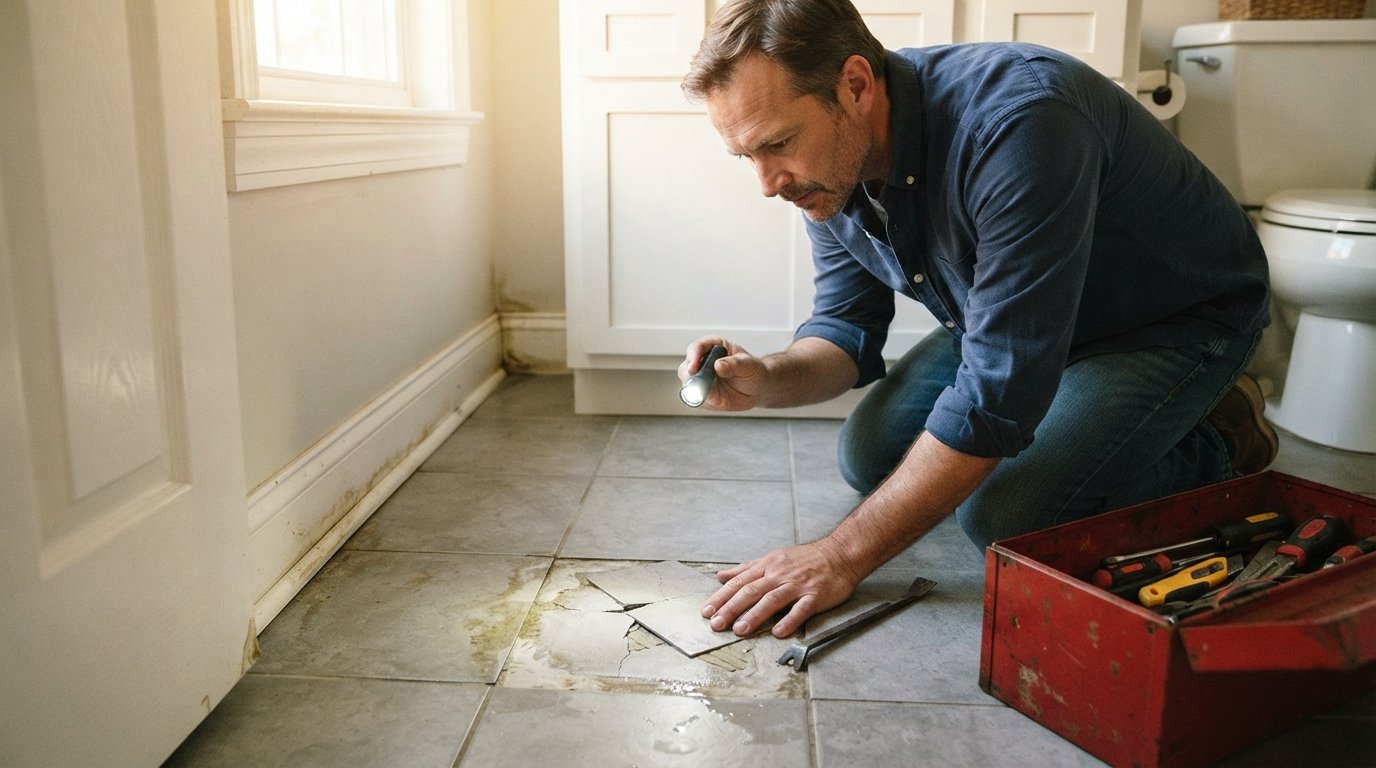
Homeowners often underestimate small repairs because the visible problem seems minor. A soft spot in the floor near the shower looks like a flooring issue. In reality, it usually signals water intrusion behind the wall, compromised subflooring, and possibly mold growth that has been spreading for months. A single cracked tile in the bathroom can point to a failing waterproof membrane underneath. A door that sticks in summer might mean foundation movement, not just humidity.
This gap between what you see and what is actually happening is the single biggest reason small repairs escalate into expensive projects. According to industry data, homeowners who delay professional assessment of seemingly minor water damage often pay three to five times more than those who address the issue early. The same pattern holds for electrical problems, roofing leaks, and plumbing issues. What starts as a fifty dollar fix becomes a five thousand dollar remediation when the underlying cause is ignored.
There is also the hidden cost of a failed DIY attempt. Improper repairs can void manufacturer warranties on appliances, roofing materials, and HVAC systems. They can fail a home inspection years later when you try to sell. And in the worst cases, they create safety hazards: electrical fires, gas leaks, or structural failures that put your family at risk. Understanding these stakes is the first step toward making smarter decisions about when to hand the job to a professional.
Clear Signs It Is Time to Call a Professional
Some situations remove all doubt. If a repair involves any of the following conditions, stop and call a licensed professional before you pick up a tool. These are not gray areas. They are firm boundaries that protect your home and your household.
- Electrical work of any kind: outlets, switches, wiring, breaker panels, or anything behind a wall. Electrical mistakes cause roughly 50,000 home fires in the United States each year.
- Plumbing inside walls or under slabs: hidden leaks, pipe replacement, water heater installation, or anything involving gas lines.
- Roof repairs above ground level: even a small shingle replacement requires proper safety equipment and fall protection.
- Structural elements: load-bearing walls, foundation cracks, floor joists, or anything that supports the weight of the home.
- Mold, asbestos, or lead paint: these require specialized containment, removal, and disposal procedures that only certified professionals can legally perform.
Beyond these hard stops, there are softer signals that a professional is the smarter choice. If you have attempted the repair once and it failed, calling a pro is usually cheaper than trying again. If the repair requires a permit, you will need a licensed contractor to pull it in most jurisdictions. If you cannot identify the root cause with confidence, a diagnostic visit from a professional will save you time and money compared to guessing.
Another practical signal is your own schedule and skill set. Some homeowners are genuinely handy and enjoy weekend projects. Others are not, and that is completely fine. The question is not whether you could learn to do the repair, but whether the time, tools, and risk are worth it. For most people, a professional handles the job faster, safer, and with a warranty that protects the work.
When DIY Actually Makes Sense
Not every small repair requires a professional. There are plenty of tasks where DIY is reasonable, cost-effective, and even rewarding. The key is knowing where the line sits. Cosmetic fixes, surface-level maintenance, and tasks with low risk of water, fire, or structural damage are usually safe to handle yourself.
Examples of repairs that typically fall into the DIY category include patching small nail holes and painting touch-ups, replacing light bulbs and air filters, unclogging a drain with a plunger or snake, tightening cabinet hardware, caulking around a tub or sink, replacing a toilet seat, and swapping out a showerhead. These jobs require basic tools, carry minimal risk, and can be completed in under an hour. They are also easy to redo if something goes wrong.
However, even DIY-friendly tasks come with conditions. If you are unsure about the correct technique, if the repair involves anything connected to water or electricity beyond the surface, or if you cannot complete the work safely on a ladder or in a tight space, call a professional. The cost of a service call is almost always less than the cost of fixing a botched attempt or treating an injury.
For homeowners who want to tackle bigger improvements but are unsure where to start, resources like our guide on small home renovation ideas for big impact can help clarify which projects are worth pursuing and which require professional support.
How to Evaluate the Risk of Any Repair
When you are staring at a repair and unsure whether to call someone, run it through a simple risk assessment. This framework takes less than two minutes and will give you a clear answer in most cases. Ask yourself these four questions in order.
First, does the repair involve water, electricity, gas, or structural support? If yes, the answer is almost always to hire a professional. These systems are interconnected and regulated for good reason. A mistake in any of them can cause damage far beyond the original problem.
Second, could a failed repair cause injury or significant property damage? A wobbly ceiling fan that falls, a gas line that leaks, a stair railing that gives way: these are not hypothetical risks. If the worst-case outcome of a failed repair is serious, hire a professional.
Third, does the repair require a permit or inspection? Most municipalities require permits for electrical, plumbing, structural, and HVAC work. If a permit is required, you need a licensed contractor. Attempting permitted work without a license can result in fines, forced removal of the work, and problems when you sell the home.
Fourth, do you have the right tools, materials, and experience? Some repairs require specialized equipment like pipe wrenches, voltage testers, or roofing harnesses. If you would need to buy more than fifty dollars in tools for a one-time repair, hiring a professional is usually more economical.
If you answered yes to any of the first three questions, call a professional. If you answered no to all four, the repair is likely safe to handle yourself. When in doubt, err on the side of caution. A diagnostic visit from a licensed contractor costs far less than repairing the consequences of a mistake.
The Real Cost Comparison: DIY vs. Professional
Homeowners often choose DIY because they assume it is cheaper. Sometimes it is. But the math changes quickly when you factor in tools, materials, time, and the risk of doing the job twice. A realistic cost comparison usually favors professionals for anything beyond the simplest cosmetic repairs.
Consider a small plumbing leak under a kitchen sink. A DIY attempt might cost forty dollars in parts and two hours of your Saturday. If the repair fails and water damages the cabinet, the floor, and the drywall below, the repair bill can easily exceed two thousand dollars. A professional plumber charges a service call fee plus parts, often under three hundred dollars total, and guarantees the work. The professional option is not just safer. It is frequently cheaper once risk is priced in.
The same logic applies to electrical work. Replacing a light fixture looks straightforward until you discover aluminum wiring, a missing ground, or a junction box that was never properly installed. An electrician will catch these issues during the visit and correct them before they become hazards. That kind of diagnostic value is nearly impossible to replicate as a DIYer.
There is also the value of your own time. If you earn fifty dollars an hour at work, spending six hours on a repair that a professional would complete in one hour costs you three hundred dollars in opportunity cost alone. Add the stress, the research, the trips to the hardware store, and the cleanup, and the true cost of DIY climbs higher still.
For homeowners who want multiple quotes from vetted local contractors without the hassle of cold calls and endless research, platforms like 180 Remodel simplify the process by connecting you with professionals who can handle everything from small repairs to full renovations. Getting two or three quotes takes minutes and gives you a clear picture of fair market pricing in your area.
How to Choose the Right Professional for Small Jobs
One reason homeowners avoid hiring professionals for small repairs is the fear of being overcharged or struggling to find someone willing to take a small job. Both concerns are valid, but both have practical solutions. The key is knowing how to vet contractors and how to present the job so it attracts the right professional.
Start by being specific about the scope of work. Contractors prioritize jobs with clear parameters. Instead of saying you have a plumbing problem, describe the symptoms: water pooling under the sink after the dishwasher runs, a slow drain in the bathroom, or a water heater that takes too long to recover. Clear descriptions help contractors quote accurately and decide whether the job fits their schedule.
Next, verify credentials before you hire. Every professional you consider should be able to provide the following on request.
- State or local license number: verify it through your state licensing board or local building department.
- General liability insurance: protects your home if the contractor causes damage during the repair.
- Workers compensation coverage: protects you if a worker is injured on your property.
- Written estimate: includes labor, materials, timeline, and payment terms.
- References or reviews: recent customers who had similar work done.
Do not skip these steps, even for a small repair. Unlicensed and uninsured contractors are the source of most homeowner horror stories. A licensed professional may cost slightly more upfront, but the protection is worth every dollar.
Finally, get multiple quotes. Prices for the same repair can vary by thirty to fifty percent between contractors. Collecting three quotes gives you a reliable benchmark and negotiating leverage. It also helps you identify which contractors are professional in their communication, punctual with estimates, and transparent about what the job involves. Those soft signals matter as much as the price.
Seasonal and Preventive Repairs That Deserve a Professional
Some small repairs are predictable. They show up every year at the same time, and they are easy to postpone until they become emergencies. Roof inspections before winter, gutter cleaning in autumn, HVAC servicing in spring, and caulking around windows and doors before the rainy season are all examples of preventive maintenance that professionals handle more thoroughly than most homeowners can.
These seasonal tasks are worth outsourcing for three reasons. First, professionals have the tools and training to spot problems you would miss. A roofer inspecting your shingles will notice flashing issues and soft spots that are invisible from the ground. An HVAC technician will catch refrigerant leaks and worn components before they cause a breakdown in July. Second, preventive maintenance extends the life of your home systems and appliances. A well-maintained roof lasts years longer than one that is ignored. Third, the cost of prevention is a fraction of the cost of repair. A hundred dollar HVAC tune-up prevents a two thousand dollar compressor replacement.
Homeowners who build a relationship with a trusted contractor or handyman often find that small repairs get handled faster and more affordably over time. That relationship also pays off during emergencies, when you need someone who already knows your home and can respond quickly. If you are not sure where to start, requesting quotes for a seasonal maintenance visit is a low-pressure way to meet local professionals and evaluate their work.
Making the Decision with Confidence
The decision to hire a professional for small home repairs is not about capability. It is about risk, time, and long-term value. Repairs that touch water, electricity, gas, or structure belong in the hands of licensed professionals. Repairs that are purely cosmetic and low-risk are reasonable DIY projects. Everything in between deserves a quick risk assessment using the four questions outlined above.
When you do hire a professional, take the time to vet credentials, collect multiple quotes, and communicate clearly about the scope of work. The small effort upfront saves significant money and stress later. And when a repair feels uncertain, trust that instinct. A diagnostic visit from a qualified contractor is one of the cheapest forms of insurance a homeowner can buy. Your home is your largest investment. Protecting it with professional help, when the situation calls for it, is always a smart decision.
Learn more about Handyman for guides, costs, and what to expect.
Compare Handyman Pros Near You
Enter your ZIP code to compare top-rated local professionals and request free quotes.