
Unexpected Remodeling Costs Homeowners Should Plan For
Hidden damage, code fixes, and change orders can blow up a renovation budget. See the unexpected remodeling costs homeowners should plan for before demo day.
By Margaret Sheridan
Learn more about Home Remodeling for guides, costs, and what to expect.
Compare Home Remodeling Pros Near You

Enter your ZIP code to compare top-rated local professionals and request free quotes.
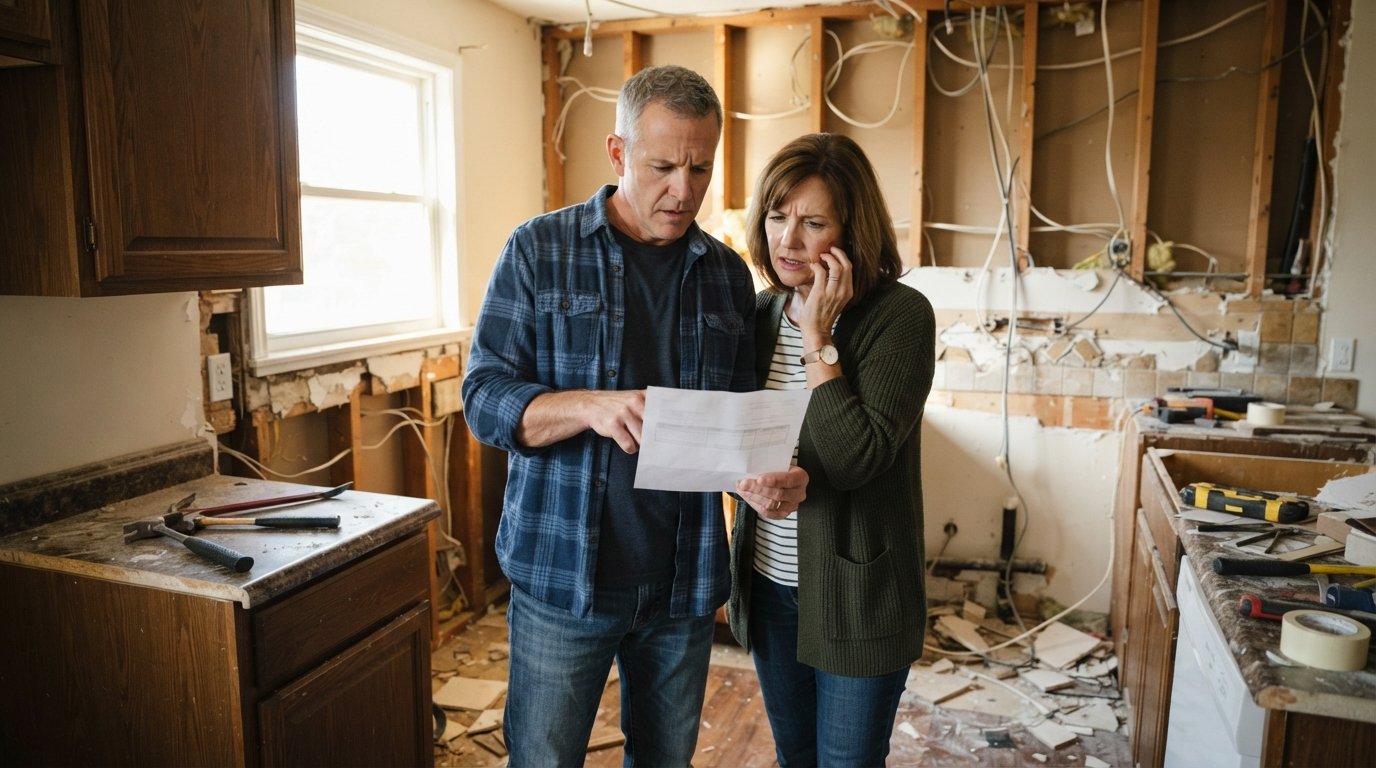
You have picked the tile, signed the contractor agreement, and mentally moved into your renovated kitchen. Then the first invoice arrives, and it is $4,200 higher than the estimate. This scenario plays out in kitchens, bathrooms, and basements across the country every single week, and it almost always traces back to the same handful of line items that were never discussed. Understanding the most common unexpected remodeling costs homeowners should plan for is not about being pessimistic. It is about walking into your project with a realistic budget, a written contingency plan, and the leverage to make calm decisions instead of panicked ones. This guide breaks down where surprise expenses hide, how much cushion you actually need, and how to protect yourself before demolition day.
Why Remodeling Estimates Rarely Match the Final Bill
A contractor estimate is a professional guess based on what is visible. The moment walls open up, the guess gets tested. Hidden water damage, outdated wiring, missing permits, and structural quirks are invisible until the first hammer swings, and each discovery adds labor, materials, and time. According to industry surveys, roughly half of homeowners end up spending more than they planned, with overruns commonly landing between 10 and 25 percent of the original budget.
The gap between estimate and final cost is not usually dishonesty. It is information asymmetry. Your contractor cannot price what they cannot see, and you cannot approve what nobody has explained. The fix is to treat the estimate as a starting point, not a promise, and to build a financial buffer before you sign anything. Homeowners who set aside a contingency fund of 15 to 20 percent of the project total consistently report far less stress when surprises appear, because the surprise becomes a line item instead of a crisis. If you want a structured method for building that number from scratch, our guide on how to estimate remodeling costs walks through the full budget framework step by step.
The Most Common Unexpected Remodeling Costs Homeowners Should Plan For
Certain surprises appear so often that they deserve their own budget line from day one. The list below covers the expenses that catch the most homeowners off guard, roughly in order of how frequently they show up on change orders.
- Hidden damage behind walls and floors: rotted framing, mold, pest damage, and old leaks that were painted over before you bought the house.
- Outdated electrical and plumbing systems: knob-and-tube wiring, undersized panels, galvanized pipes, and code violations that must be corrected before final inspection.
- Permit fees and inspection requirements: especially for structural, electrical, plumbing, and HVAC work that was never permitted in the first place.
- Material upgrades and substitutions: discontinued tiles, backordered fixtures, and the temptation to upgrade once you see options in person.
- Surprise structural work: load-bearing walls, sagging joists, and foundation issues that change the entire scope of the job.
Each of these items can add anywhere from a few hundred dollars to tens of thousands, depending on the size of the project. A bathroom remodel that uncovers mold behind the shower surround can jump by $3,000 to $8,000 in a single afternoon. A kitchen project that reveals a failing subfloor can add $5,000 or more once you account for demolition, repair, and the schedule delay that ripples through every trade behind it.
Hidden Damage: The Costliest Surprise in Any Renovation
Water is the number one enemy of a remodeling budget. It seeps behind tile, under flooring, and inside walls for years before anyone notices. When a contractor pulls up your old floor or opens a wall, they may find soft framing, black mold colonies, or termite damage that has been quietly spreading. Remediation is not optional, because covering it back up would fail inspection and create health hazards for your family.
Mold remediation alone typically runs $1,500 to $6,000 depending on the square footage and severity, and that cost often sits outside the original contract. Structural repairs to framing, subfloors, or joists can push well past $10,000 in serious cases. The best defense is a pre-renovation inspection, especially in older homes, so at least some of these issues surface before the project clock starts ticking.
Code Compliance, Permits, and Inspection Fees
Building codes exist to keep your home safe, but they also create costs that estimates frequently omit. If your electrical panel cannot handle the new kitchen appliances, you need an upgrade, and that runs $1,500 to $4,000. If your bathroom exhaust vents into the attic instead of outside, code requires a fix. If previous owners finished a basement without permits, you may be required to bring the entire space up to current standards before your new work can be approved.
Permit fees themselves are modest in most jurisdictions, often a few hundred dollars, but the process around them is not. Inspections can fail, corrections take time, and every delay adds labor hours and pushes your project back in the contractor queue. Homeowners should also expect separate permit costs for electrical, plumbing, and mechanical work in many cities, which adds up faster than most people anticipate.
Material Delays, Backorders, and Price Escalation
Supply chain disruptions have eased since their pandemic peak, but they have not disappeared. Specialty tiles, custom cabinetry, and imported fixtures can still carry lead times of eight to sixteen weeks, and a single delayed item can stall the entire project. When your contractor cannot finish a room, they often move to another job site, which means your project sits idle while you continue paying for temporary housing, storage, or both.
Price escalation is the quieter version of the same problem. If your contract does not lock in material pricing, a quote from three months ago may not hold when the order is finally placed. Ask your contractor how they handle price increases between contract signing and material delivery, and get the answer in writing.
Change Orders: Small Decisions With Big Price Tags
Change orders are formal amendments to the original contract, and they are the single most controllable source of budget overruns. Moving an outlet, adding a pot light, switching from a standard vanity to a floating one, or deciding mid-project that you also want the hallway painted, each of these feels minor in the moment. Together, they can add 10 to 20 percent to your final bill.
The discipline that prevents this is simple: make as many decisions as possible before work begins. Walk through the space with your contractor, finalize finishes, and resist the urge to redesign once demolition starts. When a change is truly necessary, ask for the cost in writing before you approve it, so there are no surprises on the next invoice.
Structural Surprises and the Domino Effect
Nothing derails a budget like discovering that the wall you wanted to remove is load-bearing, or that the second floor sags because a previous owner cut a joist. Structural repairs require engineering, permits, and specialized labor, and they often trigger a chain reaction. Fixing a beam may require opening the ceiling, which means new drywall, paint, and possibly rerouting electrical or ductwork that ran through the same space.
Foundation issues sit at the extreme end of this spectrum. A cracked foundation that needs underpinning or drainage correction can add $10,000 to $30,000 to a project overnight, and no cosmetic budget survives that kind of hit without a contingency fund in place.
How Much Contingency Do You Actually Need?
The standard advice is 10 to 20 percent of your total project cost, but the right number depends on what you are renovating and how old your home is. A cosmetic refresh in a newer house might only need 10 percent. A full gut renovation in a home built before 1980 should carry 20 percent, and if you already know about deferred maintenance, consider going higher.
Here is a practical way to set your number:
- Add up your known project costs, including labor, materials, permits, and design fees.
- Multiply by 0.15 for a standard project, or 0.20 for older homes and structural work.
- Keep that amount liquid and untouched. It is not a shopping fund for upgrades.
- Track change orders against it weekly so you always know how much cushion remains.
If your contingency runs out before the project ends, that is your signal to pause upgrades and focus on completing the essential scope. Contractors respect homeowners who understand this math, and it makes conversations about trade-offs far easier.
How to Protect Yourself Before Work Begins
Prevention is cheaper than repair, and it starts with the contractor you choose. Get at least three written estimates, ask each contractor how they handle hidden damage and change orders, and insist on a detailed scope of work that lists what is included and what is not. A written contract should spell out payment schedules, timelines, permit responsibilities, and the process for approving additional costs.
It also helps to work with a platform that connects you to vetted, independent professionals rather than hiring the first name you find. Services like 180Remodel match homeowners with contractors across categories like roofing, windows, bathroom remodeling, HVAC, flooring, painting, and plumbing, which gives you multiple quotes to compare and a clearer picture of realistic pricing before you commit. The more informed you are at the bidding stage, the fewer surprises you face once work begins.
Finally, verify licensing and insurance for every contractor who touches your home. Unlicensed work can void your homeowner insurance, fail inspection, and leave you paying twice for the same job. A few minutes of verification protects a budget of tens of thousands.
When the Unexpected Happens: A Calm Response Plan
Even the best-prepared homeowners hit a surprise. What matters is how you respond. First, stop and get the issue documented with photos and a written description from your contractor. Second, request a written change order with a fixed price before any additional work proceeds. Third, check the item against your contingency fund and decide whether to proceed, postpone, or adjust scope elsewhere. Fourth, update your overall budget and timeline so the rest of the project stays grounded in reality.
Panic decisions, like approving verbal changes or paying cash without documentation, are how small surprises become large disputes. A calm, documented process keeps the project moving and keeps your finances intact.
Remodeling will always carry some uncertainty, because you are working inside a structure that hides decades of history. The homeowners who come out ahead are not the ones who predicted every surprise. They are the ones who budgeted for the surprises they could not predict, chose contractors carefully, and kept every change in writing. Build your contingency, finalize your decisions early, and treat the unexpected as a line item rather than a crisis. Your renovated home, and your bank account, will thank you.