
Tile Installation and Repair Services: A Professional Guide
Master tile installation and repair services with this professional guide covering costs, materials, warning signs, and how to hire the right contractor.
By Alexia Mabel
Learn more about Tile Installation and Replacement for guides, costs, and what to expect.
Compare Tile Installation and Replacement Pros Near You

Enter your ZIP code to compare top-rated local professionals and request free quotes.
Your tile floors and walls take a beating every single day. From muddy boots in the entryway to steamy showers in the bathroom, tile endures constant wear while still being expected to look flawless. When a tile cracks, a grout line crumbles, or an entire floor starts to feel loose underfoot, the problem rarely fixes itself. In fact, small tile issues almost always snowball into expensive water damage, mold growth, or structural problems if left alone.
This professional guide walks you through everything homeowners need to know about tile installation and repair services. You will learn how to spot early warning signs, understand what a quality installation actually involves, compare material options, estimate realistic costs, and choose a contractor who will not disappear halfway through the job. Whether you are dealing with a single cracked tile in the kitchen or planning a full bathroom remodel, the information below will help you make confident, informed decisions.
Why Professional Tile Work Matters More Than You Think
Tile is one of those surfaces that looks simple but is surprisingly unforgiving. A successful installation depends on a long list of variables: proper substrate preparation, the right thinset or mortar, correct trowel size, accurate spacing, adequate drying time, and expert grouting. Skip or rush any one of these steps, and the result is a floor or wall that fails prematurely, sometimes within months.
DIY tile projects often look fine on the surface for the first few weeks. Then the problems begin. Hollow spots appear where tiles did not bond properly. Grout cracks along high-traffic paths. Tiles lift near moisture-prone areas like showers and entryways. By the time these issues become visible, water has often already seeped underneath, damaging the subfloor or wallboard.
Professional tile installation and repair services solve these problems at the source. Experienced installers know how to assess the substrate, choose the right materials for each environment, and apply industry-standard techniques that keep tile looking beautiful for decades. They also carry the tools, insurance, and warranty coverage that protect your investment if something goes wrong.
Common Signs You Need Tile Repair Services
Tile rarely fails without warning. The trick is knowing what to look for before a minor nuisance becomes a major renovation. Homeowners should pay attention to both visual cues and physical sensations when walking across tiled surfaces.
Here are the most common red flags that indicate it is time to call a tile repair professional:
- Cracked, chipped, or shattered tiles, especially in high-traffic zones or near heavy appliances
- Hollow sounds when tapping across the floor, which signal that tiles have separated from the substrate
- Crumbling, discolored, or missing grout that leaves gaps between tiles
- Loose or lifting tiles that rock slightly underfoot or peel away from walls
- Persistent mildew or dark stains along grout lines that return after cleaning
- Uneven surfaces or lippage where one tile edge sits higher than its neighbor
Any single item on this list deserves attention, but combinations are especially concerning. Hollow tiles plus cracked grout, for example, often point to a moisture problem beneath the surface. A loose shower tile combined with mildew suggests water is penetrating the wall cavity. In these cases, delaying repair almost always increases the final cost.
What a Professional Tile Installation Actually Involves
Understanding the installation process helps homeowners evaluate contractor bids and spot cut corners. A proper tile installation follows a clear sequence of stages, each of which matters for long-term performance.
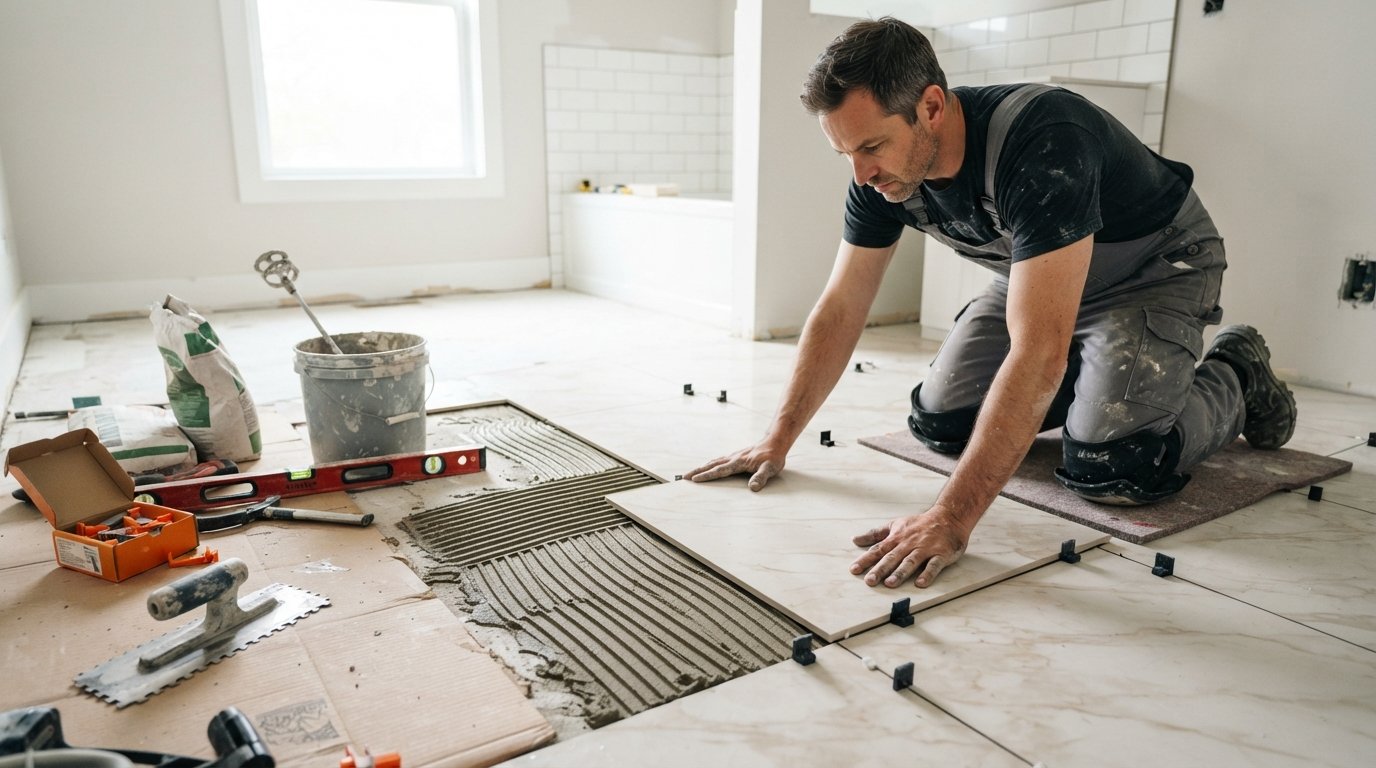
The process begins with surface preparation. Old flooring or wall coverings are removed, and the substrate is inspected for cracks, rot, or unevenness. Any damage is repaired, and the surface is cleaned and leveled. Skipping or rushing this stage is the number one cause of tile failure.
Next comes layout planning. A skilled installer measures the space, identifies the center point, and dry-fits tiles to minimize awkward cuts and visible seams. This step ensures symmetry and prevents the sliver cuts that make a room look amateurish.
Then comes the actual setting. The installer applies the appropriate mortar or thinset, sets each tile with consistent spacing, and checks for level and alignment as they go. Once the tiles cure, grout is applied, tooled, and sealed. Finally, the surface is cleaned and inspected, and any necessary touch-ups are completed.
A quality installation also includes waterproofing in wet areas. Showers, tub surrounds, and bathroom floors require a waterproof membrane behind the tile to prevent moisture from reaching framing and drywall. This step is invisible after completion but is absolutely critical for preventing mold and structural rot.
Tile Repair Versus Full Replacement: How to Decide
Not every tile problem requires a full tear-out. Minor issues like a single cracked tile, isolated grout erosion, or a small area of loose tiles can often be repaired without disturbing the surrounding surface. The decision usually comes down to the extent of the damage, the age of the installation, and whether matching replacement tiles are available.
Repair makes sense when the damage is localized, the substrate is sound, and the existing tile can be matched. A professional can remove the damaged tiles, clean the area, and reinstall new pieces that blend seamlessly with the original floor or wall.
Full replacement becomes the better option when damage is widespread, when the substrate itself is compromised, or when the tile is outdated and the homeowner wants an updated look. Replacement also makes sense when multiple repair attempts have failed, which usually indicates a deeper installation problem.
In many cases, a professional assessment is the fastest way to get a straight answer. A reputable contractor will inspect the area, test for hollow spots, check moisture levels, and give you an honest recommendation rather than pushing the most expensive option by default.
Choosing the Right Tile Material for Your Project
Tile selection affects durability, maintenance, cost, and appearance. The right choice depends on where the tile will be installed and how much traffic it will see. Homeowners who understand the trade-offs make better decisions and avoid costly mistakes.
Here are the most common tile materials and where they perform best:
- Ceramic tile: Affordable, easy to clean, and ideal for walls and low-traffic floors
- Porcelain tile: Denser and more water-resistant than ceramic, perfect for bathrooms, kitchens, and outdoor areas
- Natural stone (marble, granite, travertine): Luxurious and unique, but requires sealing and more maintenance
- Glass tile: Stylish for backsplashes and accent walls, though not suitable for floors
- Quarry tile: Extremely durable and slip-resistant, commonly used in mudrooms and commercial-style kitchens
Beyond material, homeowners should consider tile size, finish, and grout type. Larger tiles create a modern, seamless look but require a flatter substrate. Matte finishes offer better slip resistance than polished ones, which matters in bathrooms and entryways. Epoxy grout costs more upfront but resists stains and moisture far better than standard cement-based grout.
A professional installer can help match materials to the specific demands of each room, ensuring the finished surface performs as well as it looks.
Understanding Tile Installation and Repair Costs
Cost is always a top concern, and tile projects vary widely depending on scope, materials, and labor. Homeowners who understand the cost drivers can budget accurately and avoid surprise charges.
Several factors influence the final price of tile installation or repair:
- Square footage of the project area
- Type and quality of tile selected
- Condition of the existing substrate and whether removal is required
- Complexity of cuts, patterns, and layouts
- Waterproofing needs in showers, bathrooms, or outdoor spaces
- Local labor rates and contractor availability
As a general rule, simple repairs cost far less than full installations because they involve less labor and material. Replacing a handful of tiles might take a few hours, while installing a new floor can take several days. Homeowners should always request itemized quotes that break down labor, materials, and any additional fees.
It also helps to plan for contingencies. Older homes frequently reveal hidden damage once tiles are removed, such as rotted subfloor sections or previous installation errors. A reputable contractor will flag these issues immediately and provide a written change order before proceeding.
How to Hire a Qualified Tile Contractor
Hiring the right contractor is the single most important decision in any tile project. Good contractors deliver quality work, communicate clearly, and stand behind their results. Poor ones leave homeowners with cracked tiles, unfinished grout lines, and empty promises.
Start by verifying credentials. Ask for proof of licensing, insurance, and any required local permits. Then request references from recent projects and follow up with those homeowners. Photos of completed work are helpful, but direct feedback is far more reliable.
Get at least three written estimates. Compare not just the totals but the scope of work, materials specified, and timeline. The lowest bid is not always the best value, especially if it omits waterproofing, substrate repair, or cleanup.
Finally, insist on a written contract that spells out the schedule, payment terms, warranty coverage, and change-order process. Never pay the full amount upfront. A standard deposit followed by milestone payments protects both parties and keeps the project on track.
For homeowners who want a faster, more reliable way to find vetted professionals, platforms like 180Remodel connect you with contractors who handle tile work and a wide range of other home improvement projects. This kind of service streamlines the search and helps you compare multiple quotes without cold-calling dozens of companies.
Maintaining Tile to Extend Its Lifespan
Once your tile is installed or repaired, a little maintenance goes a long way. Regular care prevents the small issues that lead to big repair bills and keeps surfaces looking fresh for years.
Sweep or vacuum tile floors weekly to remove abrasive grit that dulls the finish. Clean with pH-neutral cleaners rather than harsh acids or bleach, which can erode grout over time. In bathrooms and kitchens, address mildew promptly with a soft brush and appropriate cleaner.
Inspect grout lines every few months. Reapply sealer as needed, especially in wet areas, and repair any cracks before moisture seeps in. For exterior tile, check for loose pieces after freeze-thaw cycles and reseal as recommended.
Homeowners who stay on top of these simple tasks often get decades of service from their tile. Those who ignore maintenance usually face premature replacement, which costs far more than routine care.
When to Call a Professional Immediately
Some tile problems require urgent attention. Any sign of water damage beneath the surface, such as soft spots in the floor, musty odors, or visible mold, should prompt a call to a professional right away. These issues rarely resolve on their own and can compromise the health and safety of your home.
Similarly, loose tiles in a shower or around a bathtub should be addressed quickly. Water can travel behind the wall and cause rot, mold, and even structural damage. A quick repair now is far cheaper than a full bathroom renovation later.
Cracked tiles in high-traffic areas also deserve prompt attention. A cracked tile can cut bare feet, and the underlying cause (often a shifting substrate) will continue to damage neighboring tiles until it is fixed.
When in doubt, get a professional opinion. Most reputable contractors offer free or low-cost assessments and will tell you honestly whether you need immediate repair or can safely wait.
Final Thoughts on Tile Installation and Repair
Tile installation and repair services professional guide content like this exists because homeowners deserve clear, practical information before they spend their money. Tile is a long-term investment, and the quality of the installation determines whether it lasts five years or fifty. By understanding the warning signs, the installation process, material options, and hiring best practices, you put yourself in a strong position to get excellent results.
Whether you are repairing a single cracked tile or planning a full room renovation, working with a qualified professional protects your home and your budget. Take the time to vet contractors, compare quotes, and ask the right questions. Your floors and walls will thank you for it.