
Smart Thermostats Installation Benefits: A 2026 Guide
Discover how smart thermostats installation benefits your home with lower energy bills, remote control, and increased comfort. A worthwhile upgrade.
By Peter Hubert
Learn more about Thermostat Installation or Repair for guides, costs, and what to expect.
Compare Thermostat Installation or Repair Pros Near You

Enter your ZIP code to compare top-rated local professionals and request free quotes.
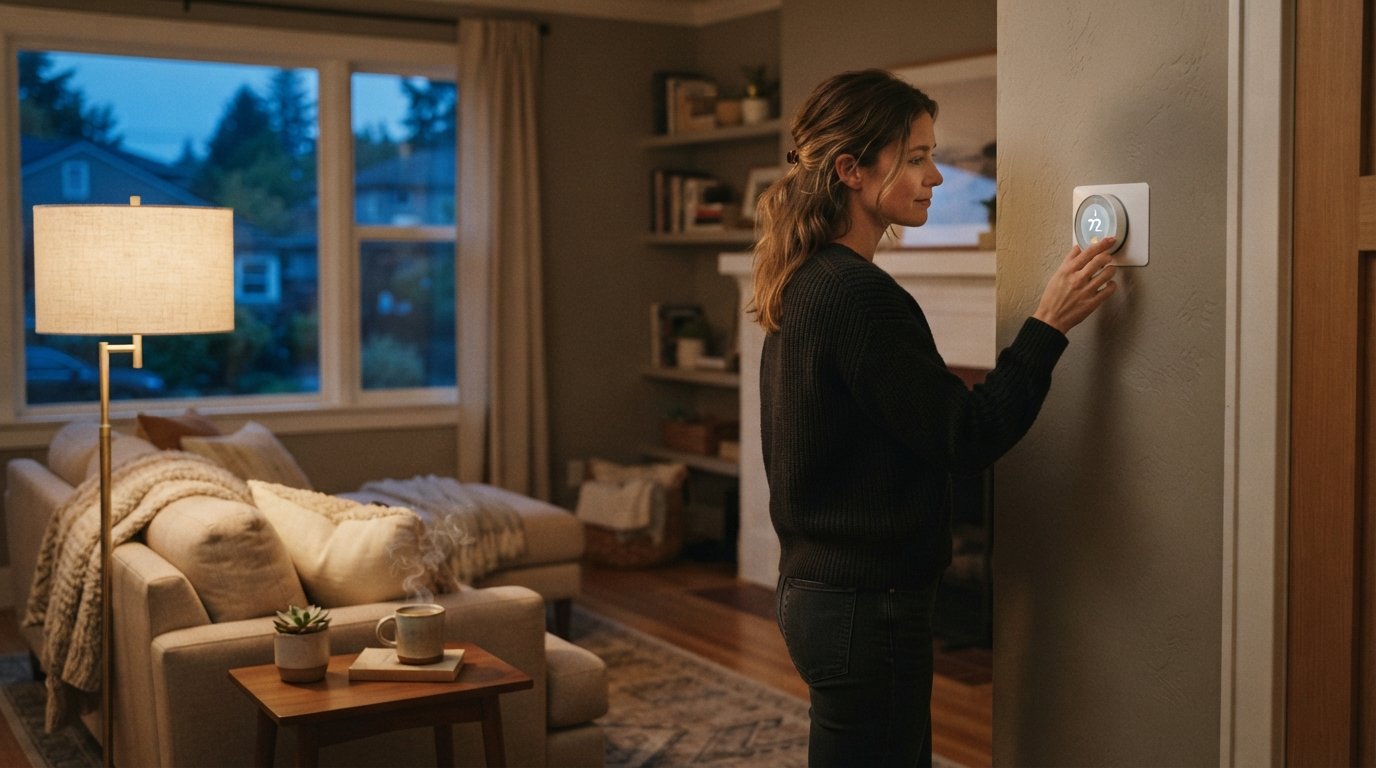
Imagine adjusting your home's temperature from bed, or having the house perfectly warm before you even step out of the car. This level of convenience is no longer futuristic; it is the everyday reality offered by smart thermostats. Beyond the cool factor, these devices deliver tangible, measurable advantages that impact both your wallet and your environmental footprint. For homeowners weighing a home improvement project, understanding the smart thermostats installation benefits is the first step toward a more efficient and comfortable living space. In this guide, we will explore why this upgrade is one of the smartest investments you can make, and how a professional installation can maximize your returns.
How Smart Thermostats Cut Your Energy Bills
The most immediate and compelling benefit of a smart thermostat is its ability to significantly reduce your heating and cooling costs. Traditional thermostats run on a fixed schedule, often heating or cooling an empty house for hours. Smart thermostats, however, learn your routine, your preferences, and even your home's unique heating and cooling characteristics. They then create an optimized schedule that reduces energy waste without sacrificing comfort.
According to ENERGY STAR, homeowners can save an average of 8% on their heating and cooling bills annually, which totals about $50 per year on a typical bill. Over the lifespan of the device, these savings easily cover the initial cost of the thermostat and installation. The key is in the device's ability to auto-adjust. For example, it can detect when you are away and switch to an eco-mode, or it can pre-cool your home before you arrive, ensuring you walk into a comfortable environment without paying for empty-house conditioning.
The Role of Geofencing and Learning Algorithms
Modern smart thermostats use two primary technologies to achieve these savings: geofencing and learning algorithms. Geofencing uses your smartphone's location to determine when you are away from home. When you leave a set radius, the thermostat automatically adjusts to a setback temperature. When you return, it ramps back up to your preferred setting. This feature alone eliminates the wasted energy of heating or cooling an empty home.
Learning algorithms take this a step further. Over the first week or two of use, the thermostat observes your temperature adjustments and daily patterns. It learns when you wake up, when you leave for work, when you return, and when you go to sleep. It then builds a personalized schedule that reflects your habits, removing the need for manual programming. This is not just about saving money; it is about effortless efficiency. The thermostat does the work for you, so you do not have to remember to adjust it.
Convenience and Control at Your Fingertips
Beyond savings, the convenience factor is a major reason homeowners make the switch. With a smart thermostat, you are no longer tied to a wall-mounted unit in the hallway. You have full control via a smartphone app, a tablet, or even voice commands through virtual assistants like Alexa or Google Assistant. This means you can adjust the temperature from anywhere in the world, whether you are lying in bed, at the office, or on vacation.
This remote access is particularly valuable for unexpected schedule changes. If you are running late from work, you can simply open the app and delay the heating start. If you are returning from a trip early, you can set the temperature to be comfortable upon arrival. This level of control also extends to monitoring. Many smart thermostats provide detailed energy usage reports, showing you exactly how much energy you are using each day, week, or month. This data helps you identify further savings opportunities and understand your home's energy profile better.
- Remote access via smartphone app: Adjust temperature from anywhere.
- Voice control compatibility: Use simple commands with your virtual assistant.
- Energy usage reports: Track your consumption and identify trends.
- Multi-zone management: Control different areas of your home independently.
The ability to create and manage multiple zones is another advantage, especially for larger homes. You can set the upstairs to be cooler at night while keeping the downstairs warmer, ensuring every room is at its ideal temperature. This not only increases comfort but also prevents energy waste by not conditioning unused spaces. While not all smart thermostats support multi-zone systems, those that do offer a level of customization that traditional units simply cannot match.
Seamless Integration with Your Smart Home Ecosystem
A smart thermostat is often the cornerstone of a modern smart home. It integrates seamlessly with other smart devices, creating a cohesive and automated environment. For instance, it can work with smart window shades to block out heat during the summer, or with smart fans to circulate air more efficiently. It can also communicate with your smart lighting system to create a comfortable and energy-efficient ambiance.
This integration extends to broader home automation routines. You can create an "Away" mode that adjusts the thermostat, turns off lights, and locks doors simultaneously. Or a "Good Morning" routine that warms the house, turns on the coffee maker, and plays your favorite news station. These aren't just gimmicks; they create a living space that anticipates your needs and responds intelligently. For homeowners who are planning a full smart home remodeling project, the thermostat is a natural starting point, as it's relatively simple to install and provides immediate benefits.
Professional Installation Ensures Maximum Efficiency
While some tech-savvy homeowners might consider a DIY installation, there are compelling reasons to hire a professional. A smart thermostat is only as effective as its installation. Incorrect wiring, poor placement, or an incompatible system can lead to operational issues, reduced efficiency, and even damage to your HVAC system. A licensed electrician or HVAC technician has the expertise to ensure everything is set up correctly the first time.
Professional installers also handle the crucial step of checking your system's compatibility. Older HVAC systems may not have a common wire (C-wire), which is needed to power the thermostat. Without it, your new device may not function properly. A professional can either adapt the existing wiring or install an adapter, ensuring your thermostat operates reliably. They also know the optimal location for the thermostat, typically on an interior wall away from direct sunlight, drafts, and heat sources, which can all affect temperature readings. This precision is essential for accurate temperature control and energy savings.
What to Expect During Installation
When you hire a professional through a platform like USremodel, the process is straightforward. First, a technician will assess your current system and wiring. They will then remove your old thermostat, install the new unit, and connect it to your Wi-Fi network. The installer will also walk you through the setup of the accompanying app, showing you how to create schedules, use geofencing, and monitor your energy usage. Most installations take less than an hour, but the peace of mind that comes from a job done right is invaluable.
Moreover, a professional installation often preserves your HVAC warranty. Many manufacturers require installation by a qualified professional to keep your warranty valid. If a DIY installation goes wrong, you could void your system's coverage. This is a risk that far outweighs the cost of professional installation. When you consider the long-term savings and the potential cost of repairs, professional installation is the smart choice.
The Environmental and Health Advantages
The environmental benefits of smart thermostats are significant. By reducing your energy consumption, you are directly lowering your home's carbon footprint. This aligns with a growing global focus on sustainability and energy efficiency. Many utility companies also offer rebates or incentives for installing smart thermostats, further reducing the upfront cost. These programs are designed to encourage homeowners to adopt energy-saving technologies, and they make the investment even more attractive.
In addition to environmental gains, smart thermostats can contribute to better indoor air quality. Some models come with built-in humidity sensors or are compatible with separate sensors. By maintaining optimal humidity levels, you can prevent the growth of mold and mildew, which can trigger allergies and respiratory issues. Some advanced thermostats also provide air quality alerts, notifying you when pollutant levels are high. This is a proactive approach to home health that traditional thermostats simply cannot offer.
Maximizing Your Home's Value and Appeal
For homeowners considering selling, a smart thermostat is a valuable selling point. Today's homebuyers are increasingly looking for properties with modern, energy-efficient features. A smart thermostat signals that the home is well-maintained and up-to-date, which can make it more attractive in a competitive market. While it may not dramatically increase the sale price, it can help your home stand out and potentially reduce the time it spends on the market.
Moreover, the energy savings are a tangible talking point. You can show potential buyers the energy reports from your thermostat, demonstrating the lower utility costs they can expect. This is a persuasive argument that resonates with budget-conscious buyers. In the broader context of home improvement, this is a low-cost, high-impact upgrade that fits perfectly into a wider smart home remodeling plan. It is a small change that yields immediate and long-term benefits.
Choosing the Right Smart Thermostat for Your Home
Selecting the right smart thermostat involves considering your home's specific needs and your lifestyle. There are several popular models on the market, each with its own strengths. The Nest Learning Thermostat is famous for its learning capabilities and sleek design. The ecobee series offers room sensors that help manage hot and cold spots. The Honeywell Home T9 also uses room sensors and has a user-friendly app. To make the right choice, consider these factors:
- Compatibility: Check if your HVAC system is compatible, especially the C-wire.
- Features: Determine which features are essential, such as geofencing, voice control, or energy reports.
- Design: Choose a model that matches your home's aesthetic and is easy to read.
- Budget: Set a budget, including installation costs, and find a model that fits.
Once you have chosen your thermostat, the next step is to ensure a proper installation. This is where connecting with a trusted professional through a platform like 180Remodel can make a significant difference. They can connect you with qualified technicians who will handle the installation correctly, ensuring you enjoy all the benefits we've discussed.
Conclusion
The decision to install a smart thermostat is a clear win for any homeowner. From substantial energy savings and enhanced convenience to improved home comfort and increased property value, the benefits are both immediate and long-lasting. The key to unlocking these advantages lies in professional installation and choosing the right device for your home. By taking this step, you are not just upgrading a device; you are investing in a smarter, more efficient, and more comfortable home. It is a simple change that pays dividends every day.
Learn more about Thermostat Installation or Repair for guides, costs, and what to expect.
Compare Thermostat Installation or Repair Pros Near You
Enter your ZIP code to compare top-rated local professionals and request free quotes.