
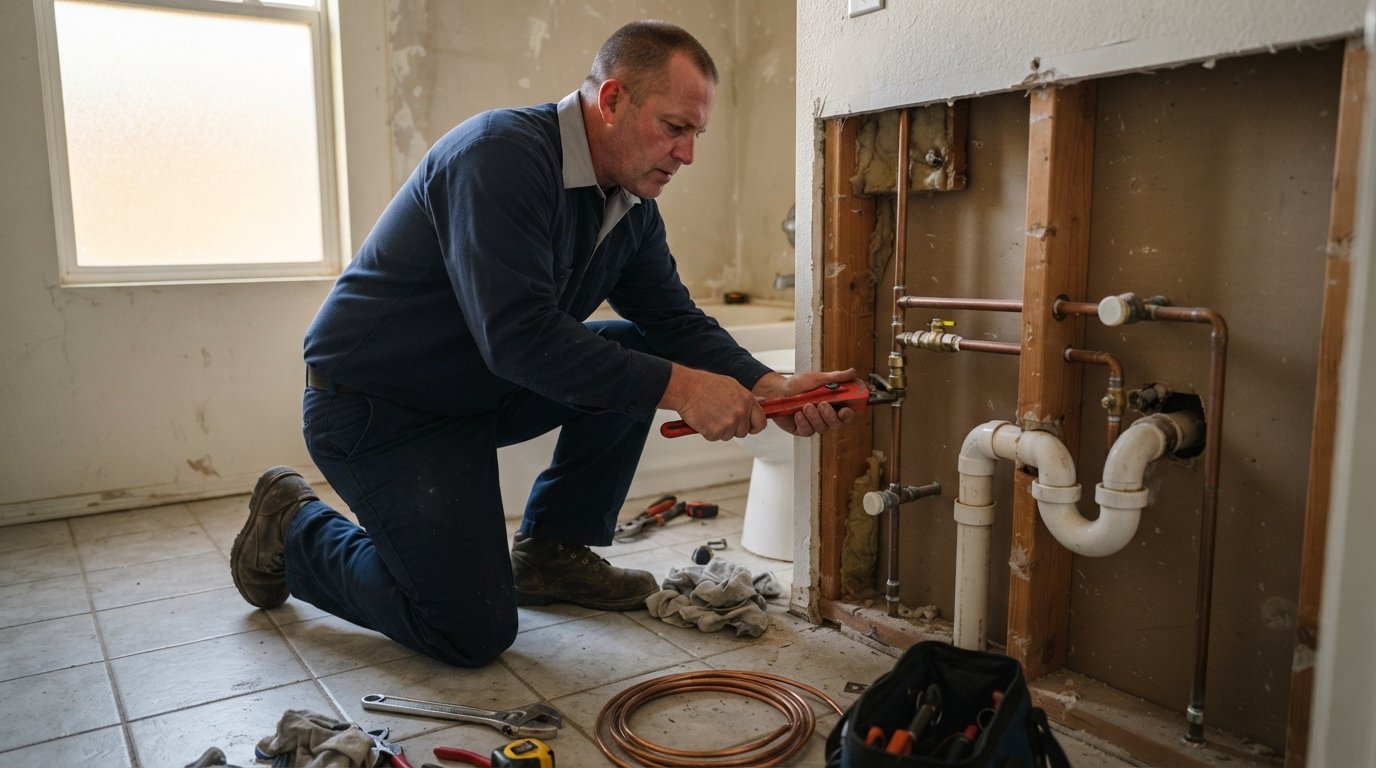
Signs Your Bathroom Remodel Needs a Professional Plumber
Spot the signs your bathroom remodel needs a professional plumber before costly damage hits. Call 8337004293 for trusted local plumbers and free quotes.
By Alexia Mabel
Learn more about Bathroom Remodel for guides, costs, and what to expect.
Compare Bathroom Remodel Pros Near You

Enter your ZIP code to compare top-rated local professionals and request free quotes.
Your dream bathroom can turn into a nightmare fast when water lines, drains, or venting are handled by anyone other than a licensed professional. A bathroom is the most plumbing-intensive room in the house: supply lines for the sink, toilet, shower, and tub, plus drain-waste-vent systems, all packed into a space that is often smaller than a walk-in closet. When you are planning a remodel, knowing the signs your bathroom remodel needs a professional plumber can save you thousands of dollars in water damage repairs, mold remediation, and failed inspections.
USremodel connects homeowners across the United States with independent, licensed contractors for bathroom remodeling and plumbing projects. That means you can get multiple customized quotes from vetted professionals without spending hours cold-calling local companies. But before you hire anyone, it helps to understand exactly when a project crosses the line from cosmetic refresh into professional plumbing territory.
Why Bathroom Remodels Are Plumbing-Intensive Projects
A bathroom remodel is not just about tile, paint, and a new vanity. Behind the walls and under the floor, there is a complex network of pipes that must be rerouted, replaced, or expanded to accommodate your new layout. Even a modest update, such as swapping a tub for a walk-in shower, can require moving the drain, adjusting the supply lines, and reworking the vent stack. These are not tasks for a general handyman or a weekend DIYer.
Building codes in most jurisdictions require that plumbing work be performed by a licensed plumber and inspected before the walls are closed up. If you skip this step, you risk failed inspections, voided homeowner insurance claims, and costly do-overs. According to industry data, water damage and plumbing failures are among the most common and expensive homeowner insurance claims, often stemming from improperly installed supply lines or drain connections.
The stakes are even higher in older homes. Galvanized steel pipes, lead solder, and cast iron drains may be hidden behind the walls. A remodel is the perfect opportunity to replace these aging materials, but only a professional plumber can evaluate their condition and recommend the right upgrade path. For a broader look at how professional remodeling services handle these complexities, see this guide on bathroom remodeling services that walks homeowners through the full process.
Clear Signs Your Bathroom Remodel Needs a Professional Plumber
Not every remodel requires a plumber on day one. But certain red flags should prompt you to call a licensed professional immediately. Recognizing these signs early can prevent small issues from becoming major structural problems.
- You are moving any fixture to a new location. Relocating a toilet, sink, shower, or tub requires rerouting drain lines and supply pipes, which demands precise slope calculations and code-compliant venting.
- You notice discolored water or low pressure. Brown or yellow water, rust particles, or sudden pressure drops often indicate corroded pipes that need replacement before the remodel proceeds.
- There are signs of existing water damage. Soft spots in the floor, peeling paint near the base of walls, or a musty smell can point to hidden leaks that a plumber must diagnose and repair.
- Your home was built before 1980. Older homes frequently have galvanized or polybutylene pipes that are prone to failure and should be replaced during a remodel.
- You are adding a new bathroom or expanding the existing one. Adding fixtures increases the load on your drain and vent system, which may require upsizing pipes or installing a new vent stack.
Each of these situations involves work that goes beyond surface-level aesthetics. A licensed plumber will assess your home’s existing plumbing infrastructure, pull the necessary permits, and ensure that every connection meets local building codes. Skipping this step to save money upfront often leads to leaks behind new tile, which can cost far more to fix than the original plumbing work.
Another sign is when your contractor tells you they can handle the plumbing themselves without a license. In most states, only a licensed plumber can legally perform plumbing work, and homeowner insurance policies may deny claims if unlicensed work causes damage. Always verify credentials before allowing anyone to touch your plumbing system.
What a Professional Plumber Actually Does During a Remodel
Many homeowners underestimate the scope of plumbing work in a bathroom remodel. A professional plumber is not just connecting pipes; they are designing a system that will function safely and efficiently for decades. Their responsibilities typically include:
- Inspecting existing plumbing. Before any demolition, the plumber evaluates the condition of supply lines, drains, and vents, identifying corrosion, leaks, or code violations.
- Planning the new layout. Based on your design plans, the plumber maps out new pipe routes, calculates drain slopes, and determines whether the existing vent stack can support additional fixtures.
- Pulling permits and coordinating inspections. Most municipalities require a plumbing permit for remodels. The plumber handles the paperwork and schedules inspections at rough-in and final stages.
- Installing and testing new lines. This includes running PEX or copper supply lines, installing PVC or ABS drains, and pressure-testing the system to ensure there are no leaks.
- Connecting fixtures and final testing. Once the walls are closed and finishes are installed, the plumber connects the toilet, sink, shower, and tub, then tests everything for proper drainage and water pressure.
This sequence matters because plumbing rough-in must happen before drywall and tile. If you delay hiring a plumber until after the walls are up, you will pay significantly more to open them again. A professional plumber also coordinates with your general contractor and other trades to keep the project on schedule.
For homeowners who want to simplify the process, USremodel offers a free platform to request quotes from licensed plumbers and remodeling contractors in your area. You can compare multiple bids side by side and choose the professional who best fits your budget and timeline. For a broader range of home improvement services, including plumbing, roofing, and solar, you can also explore trusted resources like 180Remodel to find additional contractor options.
The Risks of Skipping a Professional Plumber
DIY plumbing might seem like a way to cut costs, but the risks far outweigh the savings. A single improperly soldered joint or a drain line with the wrong slope can lead to slow leaks that go unnoticed for months. By the time you see water stains on the ceiling below, the damage may already include rotted subfloor, mold growth, and compromised structural framing.
Beyond physical damage, there are legal and financial consequences. Unpermitted plumbing work can cause a home sale to fall through when the buyer’s inspector flags it. Insurance companies may deny claims for water damage caused by unlicensed work, leaving you to pay out of pocket. And if a fire or flood results from faulty plumbing, the liability can be devastating.
Even minor mistakes, such as using the wrong type of fitting or failing to install a proper vent, can cause sewer gases to enter your home. These gases are not just unpleasant; they are a health hazard. A licensed plumber ensures that every part of the system is code-compliant and safe.
How to Choose the Right Plumbing Professional for Your Remodel
Hiring a plumber is not just about finding the lowest price. You want someone with experience in bathroom remodeling, not just emergency repairs. Look for a plumber who has worked on similar projects and can provide references. Verify their license number with your state’s licensing board and confirm that they carry both general liability insurance and workers’ compensation coverage.
Ask detailed questions during the bidding process. A good plumber will walk you through the scope of work, explain how they will handle inspections, and provide a written estimate that includes materials and labor. Be wary of any contractor who asks for a large upfront payment or who cannot provide a clear timeline.
USremodel makes this process easier by connecting you with multiple licensed plumbers in your area. You can request free, customized quotes and compare them without pressure. The platform also offers educational resources on bathroom remodeling costs, planning timelines, and contractor selection, so you can make an informed decision.
Planning Your Remodel with Professional Plumbing Support
The best time to bring a plumber into your bathroom remodel is during the planning phase, before you finalize your design. A plumber can tell you whether your dream layout is feasible without major infrastructure changes, potentially saving you thousands in unexpected costs. They can also recommend upgrades, such as installing a pressure-balancing valve or a tankless water heater, that improve comfort and energy efficiency.
Once the project is underway, clear communication between your plumber, general contractor, and other trades is essential. Schedule plumbing rough-in early, and make sure inspections are completed before drywall goes up. This sequencing keeps your project on track and avoids expensive delays.
Finally, think long-term. A bathroom remodel is an investment in your home. Using a professional plumber ensures that the work is done right the first time, protecting your investment and giving you peace of mind. Whether you are updating a hall bath or creating a spa-like master retreat, the signs your bathroom remodel needs a professional plumber are clear: if the project involves moving fixtures, updating old pipes, or adding new ones, call a licensed professional before you pick up a sledgehammer.
Learn more about Bathroom Remodel for guides, costs, and what to expect.
Compare Bathroom Remodel Pros Near You
Enter your ZIP code to compare top-rated local professionals and request free quotes.