
Seasonal Home Maintenance Checklist for Fall and Winter
Get your home ready for cold weather with our seasonal home maintenance checklist for fall and winter. Call (833)-700-4293 for expert help.

By Alexia Mabel
Learn more about Weatherization for guides, costs, and what to expect.
Compare Weatherization Pros Near You

Enter your ZIP code to compare top-rated local professionals and request free quotes.
When the first cold front rolls through, the last thing you want is a burst pipe, an icy draft, or a furnace that quits on the coldest night of the year. A seasonal home maintenance checklist for fall and winter is your best defense against costly surprises. It is not about spending every weekend on a ladder; it is about targeting the systems and surfaces that take the hardest hit when temperatures drop. Homeowners who invest a few focused hours now save hundreds, sometimes thousands, in emergency repairs later. This guide walks you through the essential tasks room by room, system by system, so you can head into the cold months with confidence.
Why Fall and Winter Maintenance Matters More Than You Think
Cold weather is unforgiving. Water expands when it freezes, and that expansion can split pipes, crack foundations, and push gutters away from the roofline. Snow and ice add weight to roofs and stress to gutters. Heating systems that sat idle for months suddenly run nonstop, exposing worn parts and clogged filters. And shorter days mean exterior lighting and safety devices need to be in top shape. A seasonal home maintenance checklist for fall and winter addresses these risks head-on, turning potential disasters into manageable tasks.
There is also a financial angle. Insurance companies increasingly expect homeowners to perform routine maintenance. Neglected gutters, unrepaired roof damage, and frozen pipes can lead to claim denials if the damage is traced to poor upkeep. By following a structured checklist, you protect your investment and your coverage. Plus, many tasks are simple enough to do yourself, while others are best handled by a pro. Knowing the difference is key.
Exterior Tasks: Gutters, Roof, Siding, and Foundation
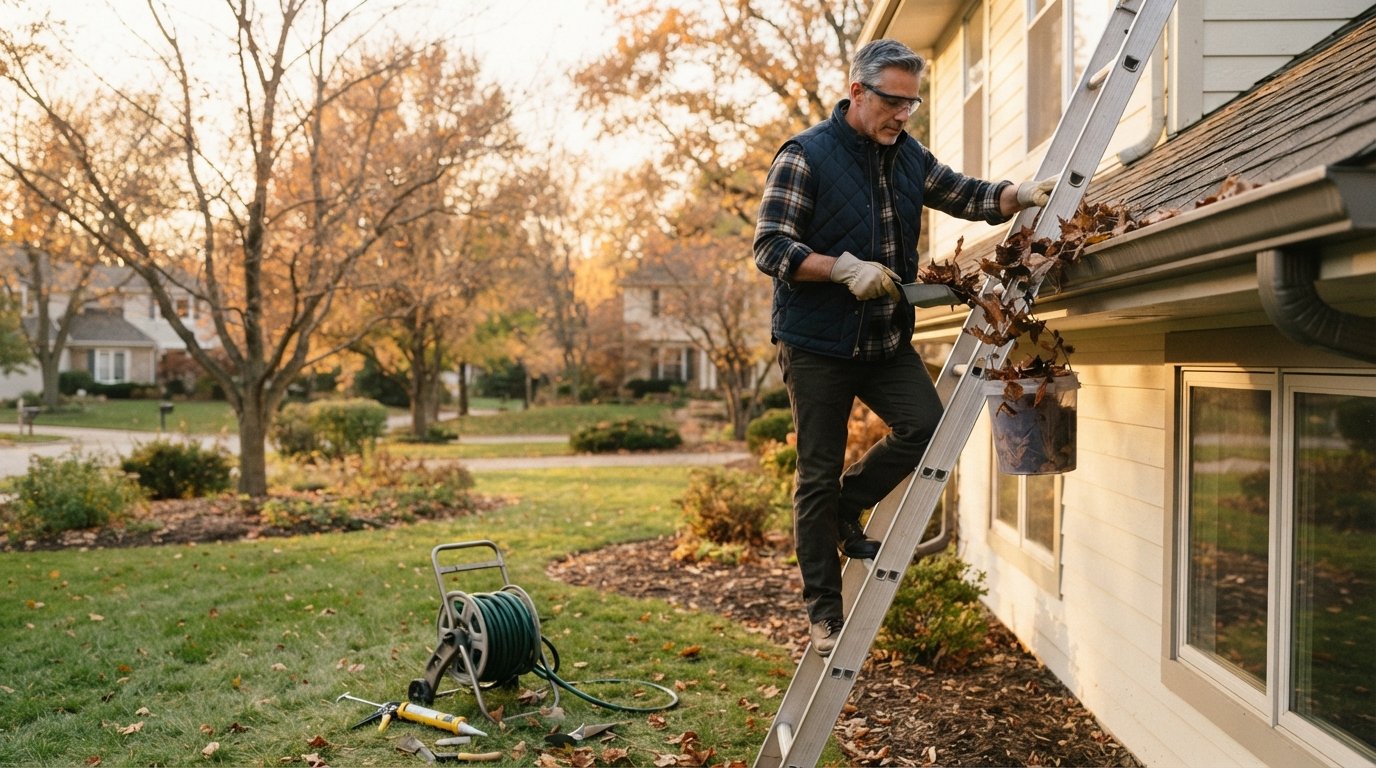
The exterior of your home takes the brunt of fall and winter weather. Leaves clog gutters, ice dams form on roofs, and freeze-thaw cycles open cracks in siding and foundation walls. Start with gutters: clear them of leaves and debris, then flush downspouts with a hose to ensure water flows away from the house. Check that downspouts discharge at least four to six feet from the foundation. If gutters are sagging or pulling away, reattach them or call a professional. Clogged gutters are a leading cause of basement flooding and fascia rot.
Next, inspect the roof. From the ground with binoculars, look for missing, curling, or damaged shingles. Check flashing around chimneys, skylights, and vents for gaps or rust. If you spot anything suspicious, schedule a professional roof inspection before snow flies. While you are at it, trim tree branches that hang over the roof; heavy snow can snap them and cause serious damage. For siding, walk the perimeter and look for loose or cracked pieces, and seal any gaps with exterior caulk. Pay special attention to areas around windows and doors, where drafts often start.
Finally, examine the foundation. Fill small cracks with hydraulic cement or polyurethane sealant. Make sure the ground slopes away from the foundation on all sides; if it settles toward the house, add soil to create a positive grade. This simple step directs meltwater away from your basement and crawl space. If you notice large cracks, bowing walls, or persistent moisture, it is time to call a foundation specialist. These fixes are not DIY-friendly and can worsen quickly.
HVAC Servicing and Filter Changes Before Heating Season
Your heating, ventilation, and air conditioning system works hardest in winter. Before you switch from cooling to heating, change the air filter. A clogged filter forces the system to work harder, raising energy bills and shortening equipment life. Check the filter monthly during heavy use and replace it every one to three months, depending on the type and your home's dust levels. While you are at it, clear the area around the furnace and remove any flammable materials. Vacuum the vents and registers to improve airflow.
Schedule a professional HVAC tune-up if you have not had one in the past year. A technician will clean the burners, check the heat exchanger for cracks, test the blower motor, and verify that the thermostat is calibrated. This service typically costs far less than an emergency repair and can catch problems before they become dangerous. For a deeper dive into seasonal HVAC care, see our HVAC maintenance checklist for seasonal comfort. It covers filter types, duct cleaning, and thermostat programming in detail.
Do not forget the outdoor unit. Remove leaves and debris from around the condenser, and if you cover it for winter, use a breathable cover to prevent condensation and rust. Inside, test your carbon monoxide detectors and ensure they are working properly. Any fuel-burning appliance, including furnaces, water heaters, and fireplaces, can produce carbon monoxide if not vented correctly. This is a safety check you cannot skip.
Plumbing Winterization: Insulating Pipes and Shutting Off Exterior Faucets
Frozen pipes are one of the most common and costly winter disasters. The fix is straightforward: insulate exposed pipes in unheated areas such as basements, crawl spaces, attics, and garages. Use foam pipe insulation or heat tape for vulnerable sections. Pay special attention to pipes along exterior walls and near drafty windows. If you plan to be away during a cold snap, leave the thermostat set to at least 55 degrees Fahrenheit and have someone check on the house.
Before the first freeze, disconnect garden hoses and shut off exterior faucets from the inside. Drain the lines by opening the outdoor spigot and letting any remaining water run out. If your home has a sprinkler system, blow out the lines with compressed air or hire a professional to do it. Also, locate your main water shut-off valve and make sure everyone in the household knows how to use it in an emergency. A few minutes of preparation can prevent thousands of dollars in water damage.
Check for leaks in and around the house. Fix dripping faucets and running toilets, which waste water and can freeze in exterior walls. Inspect the water heater for signs of corrosion or leaks, and flush the tank to remove sediment. If your water heater is older than 10 years, consider replacing it before it fails. These plumbing tasks are simple but easy to overlook. For more complex issues like repiping or emergency repairs, it is wise to bring in a licensed plumber.
Safety Checks: Smoke Detectors, Chimney, and Heating Systems
Fall is the perfect time to test smoke and carbon monoxide detectors. Replace batteries in all units, even if they are hardwired with battery backup. Press the test button to confirm they sound. If your detectors are more than 10 years old, replace them entirely. Newer models have sealed batteries that last a decade, but they still need testing. Also, review your fire extinguishers: check the pressure gauge and replace any that are expired or damaged.
If you use a fireplace or wood stove, have the chimney inspected and cleaned by a certified professional. Creosote buildup is highly flammable and can cause chimney fires. The inspector will also check for blockages, cracks, and proper venting. For gas appliances, ensure that vents are clear and that you have a carbon monoxide detector nearby. Never use a gas stove or oven to heat your home. Space heaters should be kept at least three feet from flammable materials and never left unattended.
Test your heating system before you need it. Turn on the furnace and listen for unusual noises, check for strange odors, and verify that warm air is coming from the vents. If you notice anything off, call a technician. It is also a good time to check the humidifier and replace its filter or wick. A whole-house humidifier can make your home more comfortable and reduce static electricity, but only if it is maintained.
When to Call Professionals for Seasonal Maintenance Tasks
Many fall and winter maintenance tasks are safe and simple for DIYers: changing filters, testing detectors, clearing gutters at ground level, and insulating pipes. But some jobs are risky or require specialized tools and knowledge. Roof work, chimney cleaning, HVAC repairs, and foundation fixes are best left to the pros. Climbing on a snowy or icy roof is a serious fall hazard. Likewise, attempting to repair a furnace or water heater without proper training can void warranties and create safety hazards.
If you need help with seasonal maintenance or discover issues that require expert attention, finding a qualified contractor is essential. A comprehensive online directory like Homes.Contractors can connect you with pre-vetted professionals in your area for roofing, HVAC, plumbing, and more. The site offers detailed service directories, educational articles, and an FAQ hub to guide your decisions. Whether you need a quick furnace tune-up or a full roof replacement, having a trusted resource makes the process easier.
For homeowners who prefer a streamlined approach, USremodel is a free platform that matches you with independent local contractors. You can request multiple customized quotes for projects like HVAC servicing, plumbing winterization, or roof repairs. This saves time and helps you compare options without pressure. When you are dealing with urgent repairs, having a network of vetted pros at your fingertips is invaluable. Do not wait until a pipe bursts to find a plumber.
Creating Your Personalized Seasonal Home Maintenance Checklist for Fall and Winter
Every home is different, so your checklist should reflect your specific systems, climate, and lifestyle. Start by walking through your home and noting areas that need attention. Use the categories above as a framework, then add tasks unique to your property. For example, if you have a sump pump, test it before winter. If you have a deck, clear snow and ice promptly to prevent rot. If you have skylights, check for leaks. The goal is to be proactive, not reactive.
Here is a simple timeline to keep you on track:
- Early fall (September-October): Clear gutters, inspect roof, schedule HVAC tune-up, test smoke detectors, and winterize exterior faucets.
- Mid-fall (October-November): Insulate pipes, seal drafts, have chimney inspected, and check heating system.
- Late fall (November): Final gutter check after leaves have fallen, stock up on ice melt, and review emergency contacts.
- Winter (December-February): Monitor for ice dams, keep vents clear of snow, and change furnace filters monthly.
Keep your checklist in a visible place or use a digital reminder. Set recurring reminders for tasks like filter changes and detector tests. After the first year, you will have a personalized routine that takes less time and prevents more problems. Remember, maintenance is not a one-time event; it is a habit that pays off year after year.
By tackling these seasonal home maintenance checklist for fall and winter tasks, you protect your home from the inside out. You will spend less on emergency repairs, enjoy a more comfortable living environment, and gain peace of mind knowing your property is ready for whatever the weather brings. Whether you do it yourself or hire a pro, a little preparation goes a long way.