
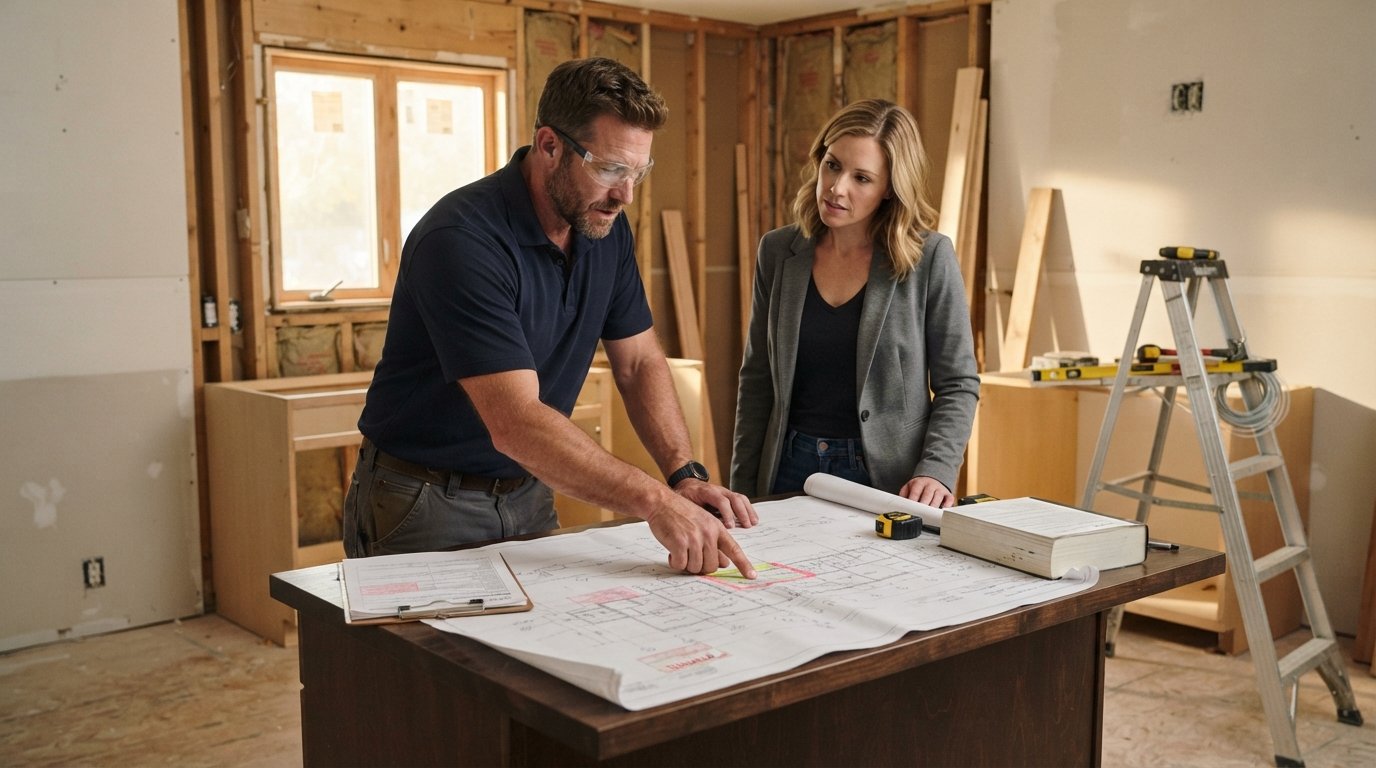
Local Building Code Changes to Check Before Renovating
Check local building code changes before you renovate to avoid failed inspections and surprise costs. Call (833)-700-4293 for vetted contractor quotes.

Learn more about Home Remodeling for guides, costs, and what to expect.
Compare Home Remodeling Pros Near You

Enter your ZIP code to compare top-rated local professionals and request free quotes.
That dream kitchen or extra bathroom can turn into a nightmare if you overlook the fine print in your city's building department. Every year, municipalities adopt new editions of model codes, tweak zoning ordinances, and roll out energy and safety mandates that directly affect how you renovate. Ignoring these local building code changes homeowners should check before renovating can lead to failed inspections, forced rework, and thousands of dollars in unexpected costs. Worse, work done without the right permits can complicate insurance claims and resale. The good news: a little homework upfront keeps your project on track and your budget intact. This guide walks you through where to find current requirements, what recent updates matter most, how to vet contractors, and why building to yesterday's rules is a risk you cannot afford.
Why Local Code Updates Matter for Your Renovation
Building codes are not static. They evolve in response to new research on fire safety, structural resilience, energy performance, and accessibility. Cities and counties typically adopt a new model code edition every three years, but they often amend specific provisions to suit local climate, infrastructure, and political priorities. That means the rules that applied when your neighbor built an addition five years ago may no longer be valid for your project today.
For homeowners, the stakes are both financial and legal. Submitting plans based on outdated assumptions can result in permit rejection, delaying your start date by weeks. Even if a permit is issued, inspectors evaluate your work against the code in effect at the time of permitting, so mid-project changes can trigger costly revisions. And if you sell your home, undisclosed or non-compliant work can derail a sale or expose you to liability. Staying current is not bureaucracy for its own sake; it is risk management.
Consider a common scenario: a homeowner plans a basement finish and budgets for standard electrical outlets. But the local jurisdiction recently adopted a newer code edition requiring tamper-resistant receptacles and arc-fault circuit interrupters in more locations. The electrical rough-in fails inspection, and the homeowner must pay the electrician to return, upgrade materials, and reschedule the inspector. Multiply that by several trades, and the overruns add up fast.
Where to Find Current Code and Permit Requirements Locally
Your first stop should be your local building department, usually a city or county office responsible for issuing permits and conducting inspections. Most departments maintain a website with downloadable documents, including the adopted code edition, local amendments, fee schedules, and submission checklists. Look for a page titled "Building Codes" or "Permit Information." If you cannot find what you need, call the department directly; staff are generally willing to clarify which code edition applies and what triggers a permit.
Beyond the building department, several other sources can fill in the gaps. Your state may have a statewide code that sets a floor, with local jurisdictions adding stricter requirements. The International Code Council (ICC) publishes the model codes most U.S. cities adopt, but always verify which edition and which amendments your city uses. For zoning matters such as setbacks, height limits, and lot coverage, contact your planning or zoning department. Homeowner association (HOA) rules can add another layer, so review your CC&Rs before finalizing plans.
Here is a practical checklist for gathering local requirements:
- Visit or call your city or county building department to confirm the adopted code edition and any local amendments.
- Download the permit application and submittal checklist for your project type (e.g., kitchen remodel, addition, deck).
- Ask whether your property is in a special overlay district (historic, floodplain, coastal) that imposes extra rules.
- Check your HOA's architectural review guidelines and approval process.
- Review your state's energy code adoption page, since energy rules often update on a different cycle.
Once you have these documents, read them with your contractor. A brief conversation now can prevent misunderstandings later. If you are planning a larger project, such as an addition, our guide on local building codes for home additions dives deeper into the specific requirements you will encounter.
Recent Trends in Energy and Safety Code Updates
Two forces are driving the most significant code changes right now: energy efficiency and life safety. On the energy side, many jurisdictions are adopting newer editions of the International Energy Conservation Code (IECC) or state-specific equivalents. These updates often mandate higher insulation levels, tighter envelope sealing, more efficient windows, and improved HVAC controls. Some cities now require electric-ready provisions for new construction or major renovations, meaning the home must have the infrastructure to support future electric appliances and vehicle charging.
Solar readiness is another emerging trend. A growing number of states and local governments require that new homes and certain additions be "solar-ready," with conduit and dedicated space for a future photovoltaic system. If you are remodeling a roof or adding a garage, check whether your jurisdiction has such a requirement. It may add a small upfront cost but can save significantly if you later decide to go solar. For homeowners exploring solar, freesolarpowerquotes.com offers educational resources and can connect you with vetted installers for no-obligation quotes.
On the safety front, updates to the International Residential Code (IRC) frequently address fire separation, egress windows, smoke and carbon monoxide alarms, and deck construction. For example, newer editions may require more robust deck ledger attachment details or expanded use of arc-fault circuit interrupters. Seismic and high-wind provisions also evolve, particularly in regions prone to natural disasters. If your renovation involves structural work, verify that your contractor is designing to the current lateral and uplift requirements.
Accessibility is a third area to watch. While residential accessibility rules are less prescriptive than commercial ones, some jurisdictions have begun requiring basic visitability features in certain renovation projects, such as a zero-step entrance or wider doorways on the ground floor. These changes are not universal, but they reflect a broader shift toward aging-in-place design. Even if not mandated, incorporating a few accessible features during a remodel can add long-term value and usability.
How Contractors Stay Current and What to Ask Them
Licensed contractors are required to keep up with code changes as part of their continuing education and licensing renewal. However, the quality of that ongoing training varies. A reputable contractor will maintain relationships with local building officials, subscribe to code update services, and review plan sets against the current adopted edition before submitting for permits. They should also be familiar with local amendments that go beyond the model code.
When interviewing contractors, ask direct questions about how they handle code compliance. For example:
- Which code edition does our city currently enforce, and how do you verify it before starting a project?
- Who pulls the permit, and how do you handle inspection corrections?
- Have you completed projects in this jurisdiction recently, and can you share references?
- How do you stay informed about local amendments and energy code updates?
Pay attention to how the contractor answers. Someone who dismisses permits as a formality or suggests skipping inspections is a red flag. A professional welcomes the process because it protects both of you. If you are comparing bids, ask each contractor to include permit fees and any anticipated code-related upgrades in their proposal. This transparency helps you compare apples to apples and avoid surprise change orders.
If you are unsure where to start, a lead generation platform like USremodel can match you with licensed contractors in your area who are familiar with local requirements. You can request multiple free quotes and ask each pro about their code compliance process, giving you a clearer picture of who is best equipped for your project.
Consequences of Building to Outdated Assumptions
The risks of ignoring code updates fall into three categories: financial, legal, and safety. Financially, the most immediate impact is rework. If an inspector finds that your framing, electrical, or plumbing does not meet the current code, you may need to remove finished surfaces, redo rough-in work, and pay for re-inspection. These costs can easily reach thousands of dollars and add weeks to your timeline.
Legally, unpermitted work can cloud your title and complicate a future sale. Many buyers and lenders require evidence that additions and major renovations were permitted and inspected. If you cannot provide that documentation, you may need to retroactively permit the work, which often involves opening walls for inspection and paying penalty fees. In some cases, insurance companies may deny claims for damage related to non-compliant work, leaving you on the hook for repairs.
Safety is the most serious concern. Code updates are written in blood, as the saying goes; they reflect lessons learned from fires, structural failures, and carbon monoxide incidents. Building to outdated assumptions can leave your family exposed to hazards that current codes are designed to prevent. For example, older electrical panels may lack modern arc-fault protection, and older deck designs may not adequately resist lateral loads. Upgrading to current standards during a renovation is an investment in peace of mind.
Finally, there is the resale factor. Even if you never plan to sell, a future buyer's inspector will note code deficiencies. Addressing them now, while walls are open and trades are on site, is far cheaper than retrofitting later. Think of code compliance as part of the value proposition of your renovation, not an add-on.
Practical Steps to Verify Code Compliance Before You Start
Before you sign a contract or order materials, take these steps to ensure your project aligns with current local codes. First, confirm the adopted code edition and any local amendments with your building department. Second, review your plans with your contractor and ask them to flag any elements that might trigger additional requirements, such as structural changes, new windows, or HVAC replacements. Third, verify that your contractor will pull the necessary permits and schedule inspections at the required stages.
If your project involves energy upgrades, check whether your utility offers rebates or incentives tied to code-compliant improvements. Many utilities provide rebates for high-efficiency HVAC systems, insulation, and windows that meet or exceed code. These incentives can offset some of the cost of upgrading. Similarly, if you are considering solar, explore federal and state incentives before finalizing your budget. A little research can turn a code requirement into a financial advantage.
Finally, document everything. Keep copies of permits, inspection reports, and product specifications. This paperwork protects you during resale and can be valuable if you ever need to file an insurance claim. It also demonstrates to future buyers that your renovation was done right.
Navigating local building code changes does not have to be overwhelming. By doing your homework, asking the right questions, and working with licensed professionals, you can ensure your renovation is safe, compliant, and built to last. If you are ready to connect with contractors who understand your local requirements, USremodel can help you get free, customized quotes from vetted professionals in your area.
Learn more about Home Remodeling for guides, costs, and what to expect.
Compare Home Remodeling Pros Near You
Enter your ZIP code to compare top-rated local professionals and request free quotes.