
Understanding Your HVAC Replacement Cost and Key Factors
Get a clear breakdown of HVAC replacement cost, key factors that affect price, and how to plan for this important home upgrade.
By Chelsea Kris
Learn more about Central Air Conditioning Installation or Replacement for guides, costs, and what to expect.
Compare Central Air Conditioning Installation or Replacement Pros Near You

Enter your ZIP code to compare top-rated local professionals and request free quotes.
Thinking about a new heating and cooling system can feel overwhelming, especially when you start to consider the price tag. You’ve probably heard a wide range of numbers from friends, neighbors, or online searches, and it’s hard to know what’s accurate for your specific home. We’re here to help clear up the confusion. Just like learning about the factors affecting roof replacement cost, your HVAC replacement cost depends on a combination of your home’s needs and the equipment you choose.
For a clear, upfront estimate tailored to your home, call 📞833-700-4293 or visit Get a Free Quote to schedule a detailed assessment with our HVAC experts.
A Simple Breakdown of HVAC Replacement Cost
The cost to replace your entire HVAC system,which includes both the furnace and the air conditioner,typically ranges from $6,500 to $12,500 or more for a standard single-family home. This is a significant investment, but it’s also one that affects your daily comfort, energy bills, and home’s value for the next 10 to 15 years.
It’s important to understand that this isn’t a one-size-fits-all price. The final number is an estimate that a qualified professional provides after considering your home’s size, your existing ductwork, and your comfort goals. Getting multiple, detailed estimates is the best way to ensure you receive fair value and a system that’s properly sized for your space.
What Does “Full System Replacement” Include?
When we talk about a full HVAC replacement, we generally mean swapping out both the indoor and outdoor units. This includes the furnace (or air handler) and the air conditioner (or heat pump). Replacing both units at the same time is often more cost-effective and ensures all components work together at peak efficiency.
Why It Matters for Homeowners
Understanding your HVAC replacement cost matters because it allows you to plan a major home expense intelligently. A new, high-efficiency system is a powerful upgrade that goes far beyond just keeping you warm or cool. It directly impacts your monthly budget by lowering utility bills, sometimes by 20% or more compared to an old, struggling system.
Beyond savings, the right system provides consistent comfort in every room, improves indoor air quality with better filtration, and operates much more quietly than an aging unit. It also enhances your home’s reliability; you won’t have to worry about a breakdown on the hottest day of summer or the coldest night of winter. Making a smart decision now prevents costly emergency repairs and band-aid fixes later.
Common Issues and Their Causes
Most homeowners start considering replacement when their current system begins to fail. Often, these problems are interconnected and signal that the equipment is simply wearing out. Frequent repairs are a major red flag; if you’re calling for service every year, the cumulative cost can quickly approach the price of a new unit.
Another common issue is poor performance. This might show up as uneven temperatures between rooms, the system constantly running but never reaching the thermostat setting, or a sudden spike in your energy bills. These problems are frequently caused by aging components losing efficiency, refrigerant leaks, or a system that was never properly sized for the home in the first place.
- Age: Systems over 10-15 years old are beyond their prime efficiency and reliability.
- R-22 Refrigerant: Older AC units use this phased-out refrigerant, making repairs prohibitively expensive.
- Frequent Breakdowns: Components like the compressor or heat exchanger are costly to fix.
- Poor Airflow & Duct Issues: Leaky or poorly designed ductwork can waste 30% of your system’s energy.
How Professionals Fix the Problem
A professional HVAC replacement is a detailed process focused on long-term performance. It starts with a comprehensive home evaluation. A technician will measure your home’s square footage, check insulation levels, assess your existing ductwork, and discuss your comfort preferences. This crucial step ensures the new system is neither too large nor too small.
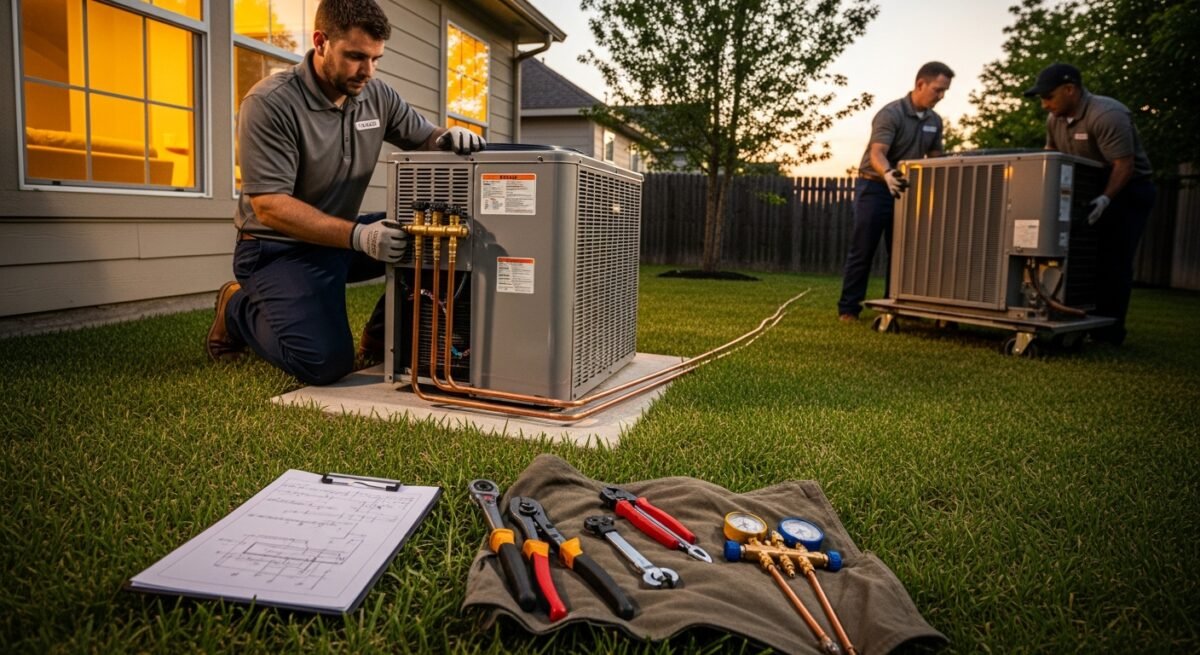
Once the right system is selected, the installation team follows a meticulous process. They will safely remove the old equipment, prepare the installation sites, and set up the new furnace and air conditioner. Proper installation includes sealing and testing ductwork connections, charging the refrigerant to exact specifications, and configuring the thermostat. The final step is a thorough system test and a walk-through with you to explain the new controls and maintenance schedule. A quality installation is just as important as the equipment you choose.
Signs You Should Not Ignore
Your HVAC system often gives clear warnings before it fails completely. Paying attention to these signs can help you plan a replacement on your terms, rather than facing an emergency in the middle of a heatwave. Unusual noises like grinding, screeching, or loud banging from the units are a definite signal that major components are failing.
Also, be mindful of your nose. Persistent musty or burning smells when the system runs can indicate mold in the ductwork, an overheating motor, or electrical issues. Other signs are more about comfort and wallet: if some rooms are too hot while others are too cold, or if your energy bills are climbing steadily despite normal usage, your system is likely struggling. Similar to noticing damage before a major garage door replacement project, catching HVAC issues early gives you control.
- System is 15+ years old.
- Rising energy costs with no change in usage.
- Uneven heating or cooling throughout the home.
- Excessive dust or humidity issues indoors.
- The need for frequent repairs.
Cost Factors and What Affects Pricing
Several key factors directly influence your final HVAC replacement cost. The first is the size and capacity of the system, measured in tons for cooling and BTUs for heating. A system that’s too small will run constantly, while one that’s too large will cycle on and off too quickly, leading to wear and discomfort. Your home’s square footage, layout, and insulation quality determine the correct size.
For a clear, upfront estimate tailored to your home, call 📞833-700-4293 or visit Get a Free Quote to schedule a detailed assessment with our HVAC experts.
The efficiency rating of the equipment is another major factor. High-efficiency models (with high SEER ratings for AC and AFUE ratings for furnaces) have a higher upfront cost but provide significant long-term savings on utility bills. Other cost factors include the complexity of the installation (like if new ductwork is needed), the brand and features of the equipment (such as variable-speed motors or smart thermostats), and local labor rates. Permits and any necessary electrical updates also contribute to the total.
How To Choose the Right Professional or Service
Choosing the right contractor is critical to ensuring your investment pays off. Look for a licensed, insured, and locally-established company with strong reviews and testimonials. They should perform a detailed load calculation (like a Manual J) to determine the correct system size, not just base it on your old unit.
A reputable professional will provide a written, itemized estimate that includes all equipment models, labor, warranty details, and a projected timeline. They should be willing to answer all your questions clearly and never use high-pressure sales tactics. Ask about their experience with your specific brand of choice and their post-installation support. Remember, the lowest bid is not always the best value if it compromises on proper sizing or installation quality.
Long-Term Benefits for Your Home
Investing in a new HVAC system delivers benefits that last for years. The most immediate is enhanced comfort,consistent temperatures and balanced humidity levels make your entire home more enjoyable. You’ll also gain peace of mind with modern safety features and a strong manufacturer’s warranty that protects your investment.
Financially, the savings on monthly energy bills will offset a portion of the system’s cost over time. A reliable, efficient system also increases your property value and makes your home more attractive to potential buyers. Finally, you’ll reduce your carbon footprint by using less energy and, if you choose, integrating with greener home solutions. It’s an upgrade that pays you back in comfort, savings, and reliability every single day.
Frequently Asked Questions
How long should a new HVAC system last?
A properly installed and maintained high-quality HVAC system should last between 15 to 20 years. Regular annual maintenance is the key to reaching its maximum lifespan and maintaining efficiency.
Can I just replace the outdoor AC unit and not the furnace?
It’s possible, but often not recommended. Mismatched indoor and outdoor units can lead to reduced efficiency, poor performance, and even premature failure. For optimal operation, they are designed to work together as a matched system.
What is the most important factor in HVAC replacement cost?
While equipment costs matter, proper sizing and professional installation are the most critical factors for long-term cost and performance. An improperly sized or installed system will cost more to operate and fail sooner.
Are there financing options available for HVAC replacement?
Yes, most reputable HVAC companies offer financing options to help manage the cost. These can include low-interest loans or payment plans, making the investment more manageable for your household budget.
What’s the difference between a SEER rating and an AFUE rating?
SEER (Seasonal Energy Efficiency Ratio) measures the cooling efficiency of an air conditioner or heat pump. The higher the SEER, the more efficient. AFUE (Annual Fuel Utilization Efficiency) measures how efficiently a furnace converts fuel to heat. A higher AFUE percentage means less wasted fuel.
How can I lower my HVAC replacement cost?
You can lower costs by getting multiple estimates, asking about off-season installation discounts, and selecting a system with a balance of efficiency and features that meet,but don’t exceed,your home’s actual needs. Avoid cutting corners on installation quality.
Will a new HVAC system really lower my energy bills?
Absolutely. Modern systems are significantly more efficient than those built even 10 years ago. Homeowners often see a 20-30% reduction in heating and cooling costs after upgrading to a properly sized, high-efficiency system.
What maintenance does a new system require?
Plan for professional maintenance twice a year: once for the cooling system in spring and once for the heating system in fall. You should also change your air filter every 1-3 months to keep the system running smoothly and maintain good air quality.
Replacing your HVAC system is a major decision, but with the right information and the right partner, it becomes a straightforward path to a more comfortable, efficient, and valuable home. By understanding the factors that influence cost and prioritizing quality installation, you can make an investment that pays dividends in comfort and savings for years to come.
For a clear, upfront estimate tailored to your home, call 📞833-700-4293 or visit Get a Free Quote to schedule a detailed assessment with our HVAC experts.
Learn more about Central Air Conditioning Installation or Replacement for guides, costs, and what to expect.
Compare Central Air Conditioning Installation or Replacement Pros Near You
Enter your ZIP code to compare top-rated local professionals and request free quotes.