
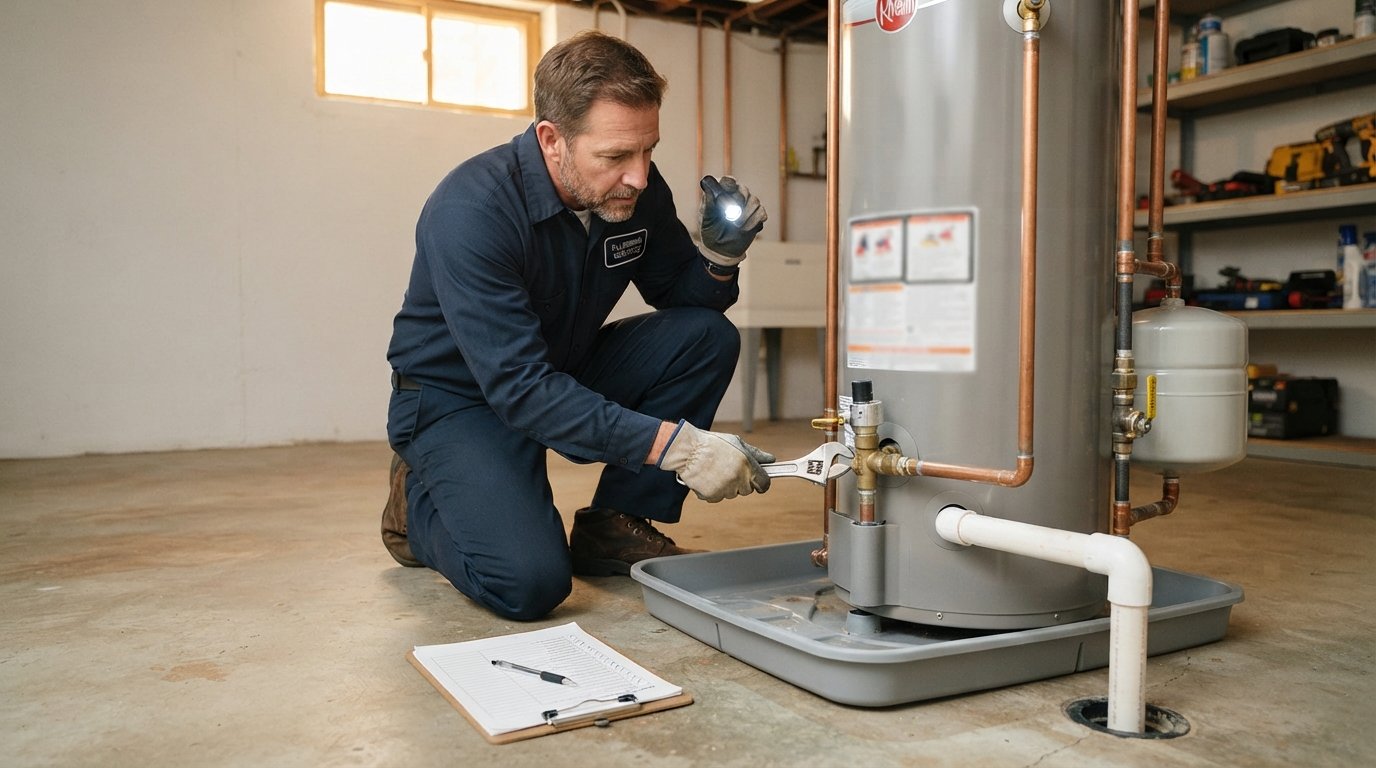
How to Stop Water Heater Problems Before They Start
Stop water heater problems before they start with simple maintenance tips that extend lifespan and prevent costly repairs. Call 8337004293 for help.
By Eric Andrew
Learn more about Water Heater Repair or Maintenance for guides, costs, and what to expect.
Compare Water Heater Repair or Maintenance Pros Near You

Enter your ZIP code to compare top-rated local professionals and request free quotes.
A cold shower on a busy morning has a way of exposing how much you depend on a single appliance. Water heaters run quietly for years, heating, storing, and delivering hot water on demand, until the day they leak, rumble, or quit entirely. The frustrating part is that most failures do not appear out of nowhere. Sediment builds up, pressure creeps higher, and a small corrosion spot slowly turns into a puddle. Homeowners who understand how to stop water heater problems before they start spend far less on emergency repairs and unexpected replacements.
This guide walks through the most common causes of water heater failure, the warning signs worth watching, and a practical maintenance routine that adds years to the unit sitting in your garage, basement, or utility closet. You will also learn when a repair no longer makes financial sense and how to line up a qualified plumber before a small issue becomes a flooded floor.
Why Water Heaters Fail (and Why Most Failures Are Predictable)
Water heaters are simple machines with a hard job. A tank-style unit stores dozens of gallons of heated water around the clock, exposing its steel interior to constant thermal expansion and contraction. Every heating cycle pushes the metal to flex slightly, and every cool-down pulls it back. Over eight to twelve years, that cycle repeats thousands of times, and the tank lining eventually gives way.
Tankless units avoid standing water, but they face their own enemies: mineral scale that clogs heat exchangers, undersized gas lines, and neglected descaling. Across both types, the same handful of culprits shows up again and again in service calls.
- Sediment and mineral scale collecting at the bottom of the tank or inside the heat exchanger
- Corrosion of the anode rod, which then allows the steel tank lining to rust
- Excessive tank pressure from a failing thermal expansion tank or a stuck valve
- Neglected flushing, which shortens the life of both the tank and the heating elements
- Poor installation, including incorrect venting, undersized pipes, or missing expansion control
What makes these causes useful is that almost all of them announce themselves in advance. A water heater rarely fails without at least one warning sign: a faint metallic taste in the hot water, a popping sound during heating, rust-colored water, or moisture near the base. Catching those signals early is the entire game. A twenty-dollar anode rod replaced on schedule can add years to a tank that would otherwise rust through from the inside out.
The Early Warning Signs Most Homeowners Miss
Water heater problems rarely start with a burst tank. They start with small, easy-to-dismiss changes that most people attribute to something else. That popping or rumbling sound coming from the tank is not normal operation. It is steam bubbling up through a layer of sediment that has hardened on the bottom, and it means the burner or element is working harder than it should to heat the same amount of water.
Rust-colored or metallic-tasting hot water is another clear signal. If the cold water runs clear but the hot side looks brown, the corrosion is happening inside the tank or on the anode rod, not in your home's supply lines. Similarly, moisture, a damp ring, or white mineral crust around the base of the unit points to a slow leak or a failing fitting that will only get worse.
Temperature inconsistency deserves attention too. If showers swing between scalding and lukewarm, the dip tube, thermostat, or heating element may be failing. On the pressure side, a discharge from the temperature and pressure relief valve is never something to ignore, because it usually means the tank is over-pressurized or the valve itself has failed. Any one of these signs is a reason to call a professional rather than wait for the situation to escalate.
Preventive Maintenance That Actually Extends Lifespan
Regular maintenance is the single most effective answer to how to stop water heater problems before they start. The good news is that most of it is inexpensive and requires only a few hours a year. The better news is that you do not have to handle the technical steps yourself. A licensed plumber can perform a full service visit that covers flushing, inspection, and part replacement in one appointment.
Here is a simple annual routine worth following, whether you do the light checks yourself or hand the whole list to a professional:
- Test the temperature and pressure relief valve by lifting the lever and confirming it releases water, then closes fully.
- Drain a few gallons from the tank to flush out loose sediment, or schedule a full flush if it has been more than a year.
- Inspect the anode rod and replace it if it is more than half consumed.
- Check the area around the unit for moisture, corrosion, or mineral deposits.
- Verify the thermostat setting, keeping it at 120 degrees Fahrenheit for safety and efficiency.
For tankless systems, the routine shifts slightly. Descaling the heat exchanger once a year removes the mineral buildup that causes hot spots and premature failure, and checking the intake and exhaust vents keeps airflow clean. Homeowners on well water or in hard water areas may need to service their units more often, sometimes twice a year, because mineral content accelerates wear.
Beyond the annual checklist, a few habits protect the system every day. Keep the area around the heater clear of boxes, paint cans, and flammable materials. Insulate exposed hot water pipes to reduce heat loss and cycling. If your home has a water softener, keep it maintained, since softened water dramatically reduces scale inside the tank. Finally, write the installation date on the unit itself so you always know how old it is. Most tank-style heaters last eight to twelve years, and tankless units can reach twenty with proper care.
Pressure, Parts, and Installation: The Hidden Risk Factors
Two water heaters can be identical models and have wildly different lifespans based on how they were installed and how much pressure they endure. Thermal expansion is a common but overlooked problem. When water heats, it expands, and in a closed plumbing system that extra volume has nowhere to go. A thermal expansion tank absorbs that pressure. If the tank is missing, waterlogged, or improperly sized, the excess stress lands on the heater's tank, fittings, and relief valve, wearing them out from the inside.
Water pressure itself matters as well. Homes with pressure above 80 psi put constant strain on every component in the system. A simple pressure-reducing valve installed at the main line can bring that down to a safe range and extend the life of the water heater, the pipes, and every fixture in the house. Anode rods are another hidden factor. These sacrificial metal rods corrode instead of the tank, but once they are consumed, the tank becomes the next target. Checking and replacing the anode rod every few years is one of the cheapest forms of insurance a homeowner can buy.
Installation quality ties all of these factors together. Improper venting on a gas unit can create a carbon monoxide hazard. Undersized gas lines cause incomplete combustion and soot buildup. Missing drip pans and discharge lines turn a small leak into serious water damage. This is why choosing a qualified installer matters as much as choosing the right unit. If you are planning a larger project around the utility area, our guide on sliding barn doors shows how thoughtful upgrades can improve both function and appearance in adjacent living spaces.
When to Repair, When to Replace, and How to Choose a Pro
Even with excellent maintenance, every water heater reaches the end of its service life. The decision to repair or replace usually comes down to age, cost, and the nature of the problem. A heating element or thermostat on a six-year-old tank is a straightforward repair. A leaking tank on a twelve-year-old unit is not, because once the steel shell is compromised, no repair will stop the corrosion from spreading.
As a general rule, if the unit is more than ten years old and the repair estimate exceeds half the cost of a new heater, replacement is the smarter financial move. The same logic applies if you are facing the second or third major repair in two years. New units also bring efficiency gains: modern heaters often use noticeably less energy than models built a decade ago, which offsets part of the upfront cost over time.
When it is time to act, the quality of the contractor matters as much as the equipment. Homeowners across the country use 180 Remodel to connect with vetted local professionals for plumbing, HVAC, and related home improvement projects, which takes the guesswork out of finding someone reliable. Whether you need a routine flush, a new expansion tank, or a full replacement, getting multiple quotes from licensed contractors helps you compare pricing and confirm that the work will meet local code.
Before any work begins, ask about licensing, insurance, and warranty terms on both parts and labor. A written estimate should spell out the model being installed, the expected timeline, and whether permit fees are included. These details protect you and ensure the new system starts its life on the right foot.
A Yearly Habit That Pays for Itself
Stopping water heater problems before they start is less about luck and more about attention. A thirty-minute annual inspection, a tank flush, and a quick look at the anode rod can push a heater past the decade mark and spare you a flooded garage or a midnight call for emergency service. The warning signs are almost always there first: the popping, the discolored water, the damp base. Recognizing them early turns a potential emergency into a routine appointment.
Set a reminder for the same month every year, keep the area around the unit clear, and call a licensed professional at the first sign of trouble. A well-maintained water heater is one of the quietest, most reliable systems in your home, and a little preventive care keeps it that way for years to come.
Learn more about Water Heater Repair or Maintenance for guides, costs, and what to expect.
Compare Water Heater Repair or Maintenance Pros Near You
Enter your ZIP code to compare top-rated local professionals and request free quotes.