
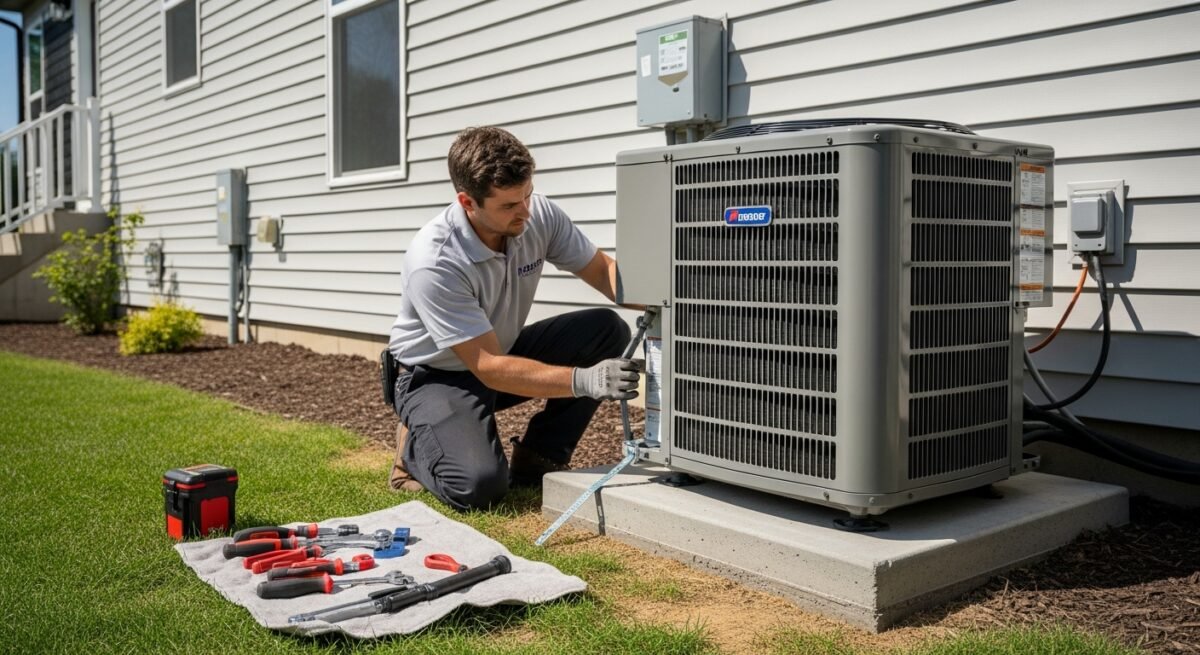
Energy Efficient HVAC Systems for Your Home
Discover how an energy efficient HVAC system can slash your utility bills and improve home comfort. Learn the key benefits and what to look for.
By Alexia Mabel
Learn more about Central Air Conditioning Installation or Replacement for guides, costs, and what to expect.
Compare Central Air Conditioning Installation or Replacement Pros Near You

Enter your ZIP code to compare top-rated local professionals and request free quotes.
If your energy bills seem to climb every summer and winter, you’re not alone. Many homeowners watch their hard-earned money vanish into thin air—quite literally—through an inefficient heating and cooling system. An outdated or poorly functioning HVAC system works much harder than it needs to, costing you more and keeping your home less comfortable. The good news is that modern energy efficient HVAC technology offers a powerful solution, turning your home into a haven of comfort while putting money back in your pocket.
Call 📞833-700-4293 or visit Get a Free Quote to schedule your free, no-obligation estimate for an energy efficient HVAC system today.
What Energy Efficient HVAC Means for Homeowners
Simply put, an energy efficient HVAC system uses less energy to heat or cool your home to your desired temperature. It’s like swapping an old car that guzzles gas for a new, smart hybrid. These advanced systems are designed with technology that minimizes wasted energy, ensuring more of the electricity or gas you pay for is converted directly into home comfort.
Efficiency is measured by ratings like SEER (Seasonal Energy Efficiency Ratio) for air conditioners and heat pumps, and AFUE (Annual Fuel Utilization Efficiency) for furnaces. A higher number means better efficiency. Today’s standard systems start around 14 SEER and 80% AFUE, while high-efficiency models can reach over 20 SEER and 98.5% AFUE.
The Role of Proper Installation and Maintenance
The most efficient unit on the market won’t save you money if it’s not installed correctly. Sealing ducts, ensuring proper refrigerant charge, and calibrating the system are critical. Even a small mistake during installation can reduce a system’s efficiency by 30% or more. That’s why professional installation is not just a recommendation—it’s a requirement for achieving the savings you expect.
Why It Matters for Homeowners
Investing in energy efficient HVAC matters because it directly impacts your daily life and finances. The most immediate benefit is lower utility bills. By consuming less power, these systems can cut your heating and cooling costs significantly, often by 20% to 40%. That adds up to hundreds of dollars saved each year, which can help offset the cost of the system over time.
Beyond savings, these systems provide superior comfort. They are designed to maintain more consistent temperatures from room to room, reduce humidity levels more effectively in summer, and operate more quietly. You’ll enjoy a home that feels better, without the annoying hot or cold spots and noisy startups of older equipment.
Common Issues and Their Causes
Even the best HVAC systems can develop problems that hurt their efficiency. Often, these issues start small and go unnoticed until your energy bill arrives. One of the most common culprits is dirty or clogged air filters. A filter choked with dust forces your system to strain, wasting energy and reducing airflow.
Another frequent problem is refrigerant leaks in air conditioning systems. When refrigerant levels are low, your AC must run longer cycles to cool your home, drastically increasing energy use. Ductwork issues, like leaks or poor insulation in your attic or crawlspace, are also major efficiency killers, letting conditioned air escape before it reaches your living spaces.
- Dirty Coils: Evaporator and condenser coils coated in grime can’t transfer heat properly.
- Failing Thermostat: An inaccurate or outdated thermostat sends wrong signals to your system.
- Aging Equipment: Components wear out over time; systems over 10 years old are often far less efficient.
- Poor Insulation: Inadequate attic or wall insulation makes your HVAC system fight a losing battle.
How Professionals Fix the Problem
When you call a professional HVAC technician, the first step is always a comprehensive assessment. We perform a full inspection of your current system, measure your ductwork, and evaluate your home’s insulation and sealing. This allows us to understand your home’s unique heating and cooling load—the precise amount of BTUs needed for comfort.
Based on this assessment, we can recommend the right size and model of equipment. Installing an oversized or undersized unit is a common mistake that leads to inefficiency and discomfort. Our installation process is meticulous, focusing on precise placement, secure duct connections, proper electrical work, and thorough testing. We ensure every component works in harmony for peak performance.
- Home Evaluation & Sizing Calculation
- Equipment Selection & Recommendation
- Professional Removal of Old Equipment
- Precision Installation & Sealing
- System Startup, Testing, and Client Walkthrough
Signs You Should Not Ignore
Your HVAC system often sends clear signals when it’s becoming inefficient. Paying attention to these warnings can save you from a costly breakdown and skyrocketing energy bills. A sudden, unexplained increase in your monthly energy costs is one of the biggest red flags. If your usage habits haven’t changed but your bill has, your system is likely working harder than it should.
Listen to your system, too. Strange noises like grinding, squealing, or rattling are not normal. Inconsistent temperatures, where some rooms are too hot while others are too cold, or a system that seems to run constantly without ever reaching the set temperature, are clear signs of an efficiency problem.
- Rising Energy Bills: Consistent increases without a change in thermostat settings.
- Frequent Cycling: The system turns on and off more often than usual.
- Excessive Dust: More dust around your home can indicate leaky ducts.
- Poor Airflow: Weak air coming from your vents.
- Age: If your system is more than 10-15 years old, it’s likely inefficient.
Cost Factors and What Affects Pricing
The cost of a new energy efficient HVAC system varies based on several key factors. The primary cost driver is the equipment itself. Higher SEER and AFUE ratings come with a higher initial price tag, but they also deliver greater long-term savings. The size and complexity of your home also play a huge role. A larger home or one with multiple stories requires more powerful equipment and potentially more complex ductwork modifications.
Call 📞833-700-4293 or visit Get a Free Quote to schedule your free, no-obligation estimate for an energy efficient HVAC system today.
Labor costs depend on the difficulty of the installation. Replacing a system with existing, well-placed ductwork is more straightforward than a full system overhaul that includes new ducts, electrical upgrades, or structural changes. Remember, the cheapest quote isn’t always the best. Quality installation is an investment that ensures your high-efficiency equipment performs as advertised for years to come.
How To Choose the Right Professional or Service
Selecting the right HVAC contractor is as important as choosing the right equipment. Always look for proper licensing, insurance, and certifications, like NATE (North American Technician Excellence). These credentials show a commitment to training and industry standards. Don’t hesitate to ask for references or read online reviews from past customers in your area.
A trustworthy professional will never give a quote over the phone without seeing your home first. They should perform a detailed load calculation and offer a written, itemized estimate. They should also be willing to explain your options, answer all your questions, and discuss the long-term value of different systems, not just the upfront cost.
- Verify licenses, insurance, and certifications.
- Read customer reviews and ask for references.
- Insist on an in-home evaluation before any quote.
- Get a detailed, written estimate.
- Choose a provider that offers a strong warranty on both parts and labor.
Long-Term Benefits for Your Home
The long-term benefits of an energy efficient HVAC system extend far beyond the first month’s lower bill. You are investing in enhanced home comfort and reliability. These systems often come with better warranties and, because they operate under less strain, typically experience fewer repairs over their lifespan. This means more peace of mind and fewer unexpected service calls.
You’re also increasing your home’s value and reducing your environmental footprint. An efficient system is a strong selling point for eco-conscious buyers. Most importantly, you gain predictable energy costs and protection against rising utility rates. The savings compound year after year, making your home more affordable to live in and enjoy for the long haul.
Frequently Asked Questions
How much can I really save with an energy efficient HVAC system?
Savings vary based on your climate, old system’s efficiency, and the new unit’s rating. On average, homeowners save 20-40% on heating and cooling costs. Upgrading from a 10 SEER AC to a 16 SEER model can cut cooling costs nearly in half.
What’s the difference between SEER and AFUE ratings?
SEER measures air conditioner and heat pump cooling efficiency. The higher the number, the better. AFUE measures furnace heating efficiency, shown as a percentage. A 95% AFUE furnace converts 95% of its fuel to heat, wasting only 5%.
Is a high-efficiency system worth the extra cost?
Absolutely. While the initial investment is higher, the monthly utility savings, potential rebates, increased comfort, and longer equipment life typically provide a strong return on investment, often paying for the price difference within a few years.
How long do energy efficient HVAC systems last?
With proper professional installation and regular maintenance, a high-quality energy efficient system can last 15 to 20 years or more, similar to standard systems but often with lower operating costs throughout its life.
Do I need to replace my ducts when I get a new system?
Not always, but it’s highly recommended to have them inspected. Leaky or poorly insulated ducts can undermine a new system’s efficiency by 30%. Sealing and insulating ducts is one of the most cost-effective ways to maximize performance.
Are there tax credits or rebates for energy efficient HVAC?
Yes. Federal tax credits for qualifying high-efficiency systems are often available, and many local utilities offer rebates. Your HVAC professional should be able to inform you of current incentives.
Can a smart thermostat improve my system’s efficiency?
Definitely. A smart thermostat optimizes run times based on your schedule, can be controlled remotely, and provides usage reports. Paired with an efficient system, it’s a powerful tool for maximizing savings.
How often should I service my energy efficient HVAC system?
We recommend professional maintenance twice a year—once in spring for your cooling system and once in fall for heating. This keeps it running at peak efficiency and helps prevent minor issues from becoming major repairs.
Upgrading to an energy efficient HVAC system is one of the smartest investments you can make in your home. It delivers immediate comfort, lasting savings, and valuable peace of mind. By partnering with a skilled professional, you ensure this investment performs flawlessly for years, transforming the way you live in and care for your home.
Call 📞833-700-4293 or visit Get a Free Quote to schedule your free, no-obligation estimate for an energy efficient HVAC system today.
Learn more about Central Air Conditioning Installation or Replacement for guides, costs, and what to expect.
Compare Central Air Conditioning Installation or Replacement Pros Near You
Enter your ZIP code to compare top-rated local professionals and request free quotes.